Introduction
Although, after its introduction, the precision of the Gregorian calendar and its system of “catch-up” intercalary days were hardly disputed, the same was not true of its internal structure.
The criticism first and foremost concerned, of course, its deliberately Christian character, through its feasts and its references to saints and martyrs.
Those who have read the page devoted to the Republican calendar will remember Maréchal and his Almanach des Honnêtes Gens (Almanac of Honest People, 1788). Others came before him, such as Clency with his calendrier des héros (Calendar of Heroes, 1772), or Joseph Vasselier with his Almanach nouveau de l'an passé (New Almanac of Last Year).
The other criticisms concerned the construction of the Gregorian calendar. They were (and still are) numerous:
- variation in the number of days from one month to another (from 28 to 31), leading to variations in working days and related economic consequences.
- change in weekday alignment from one year to the next. Let us remember (cf. eras and cycles) that it takes 28 years for the same weekdays to return to the same dates.
- shifting feasts and public holidays, beginning with the date of Easter.
Over the last three centuries, studies and proposals for reforming the structure of the Gregorian calendar have multiplied. The aim was simple: to build a “perpetual” calendar whose cycle would be as short as possible (as opposed to the Gregorian calendar's 28 years).
But what should be done, and how should it be done?
The year has 365 days and, from time to time, 366 days.
365 is divisible by 5 (= 73).
366 is divisible by 2 (=183), by 3 (=122), and by 6 (=61).
Conclusion: there is no common divisor that would allow us to split the year neatly. Also, what can be done with 5, the divisor of 365? Five seasons are too many; five months are far too few.
Ah, if only the year had 364 days! Then we could use several interesting divisors: 2 (=182), 4 (=91), 7 (=52), 13 (=28), 14 (=26). And 4, 13 and 14 are especially attractive: 4 quarters, 13 months, or even 14 months.
But the year has 365 days, and dreaming changes nothing... Unless... unless we treat the 365th day (and the 366th) as “outside the calendar”. After all, epagomenal days (a day or group of days counted outside the months of the year) already exist in other calendars.
From the above observations emerge two major calendar types: a “fixed calendar”, which is the subject of this page, and a “universal calendar”, covered on another page of this site. Each type exists in several variants.
If by unit we mean the smallest repeatable element, the unit in “fixed” calendars is the month, whereas in “universal” (or perpetual) calendars it is the quarter.
Below are the fixed-calendar pages we will discuss later:
The “Blank Day”
Whether they are of one type or another, the calendars we are about to examine share at least one common feature: the use of one additional day (or two in leap years) outside the basic unit. These days may be numbered or not, named or not. We find here the same notion of epagomenal days as in calendars such as the Republican calendar or the Egyptian calendar.
In July 1745, in the London periodical The Gentleman's Magazine, an article signed by Hirossa Ap-Iccim (a pseudonym of uncertain origin) introduced the notion of a day “out of time”, which we will call a “blank day”.
In a calendar project we will examine in more detail later, he proposes inserting, outside the year, a blank day between two 364-day years. That day would be dedicated to the birth of Christ. We will come back to this.
In 1837, the Italian priest Marco Mastrofini (born 25 April 1763 in Rome, died 4 March 1845 in Rome), in a work entitled Amplissimi Frutti da Raccogliersi sul Calandario Gregoriano Perpetuo (conclusions of research on a perpetual Gregorian calendar), used the blank day again. This time, however, it was placed at the end of the year, outside both months and weeks. We discuss this in the page devoted to perpetual calendars.
Fixed Calendars
These calendars are characterized by 13 months of 28 days plus 1 or 2 blank days. Variants are naturally numerous: position of the thirteenth month with or without a name, placement of blank days with numbering within the year or month, first weekday, etc. We will study several and list others whose authors or structure are poorly documented.
If you have further details on the calendars listed, please contact me.
Auguste Comte (1849)
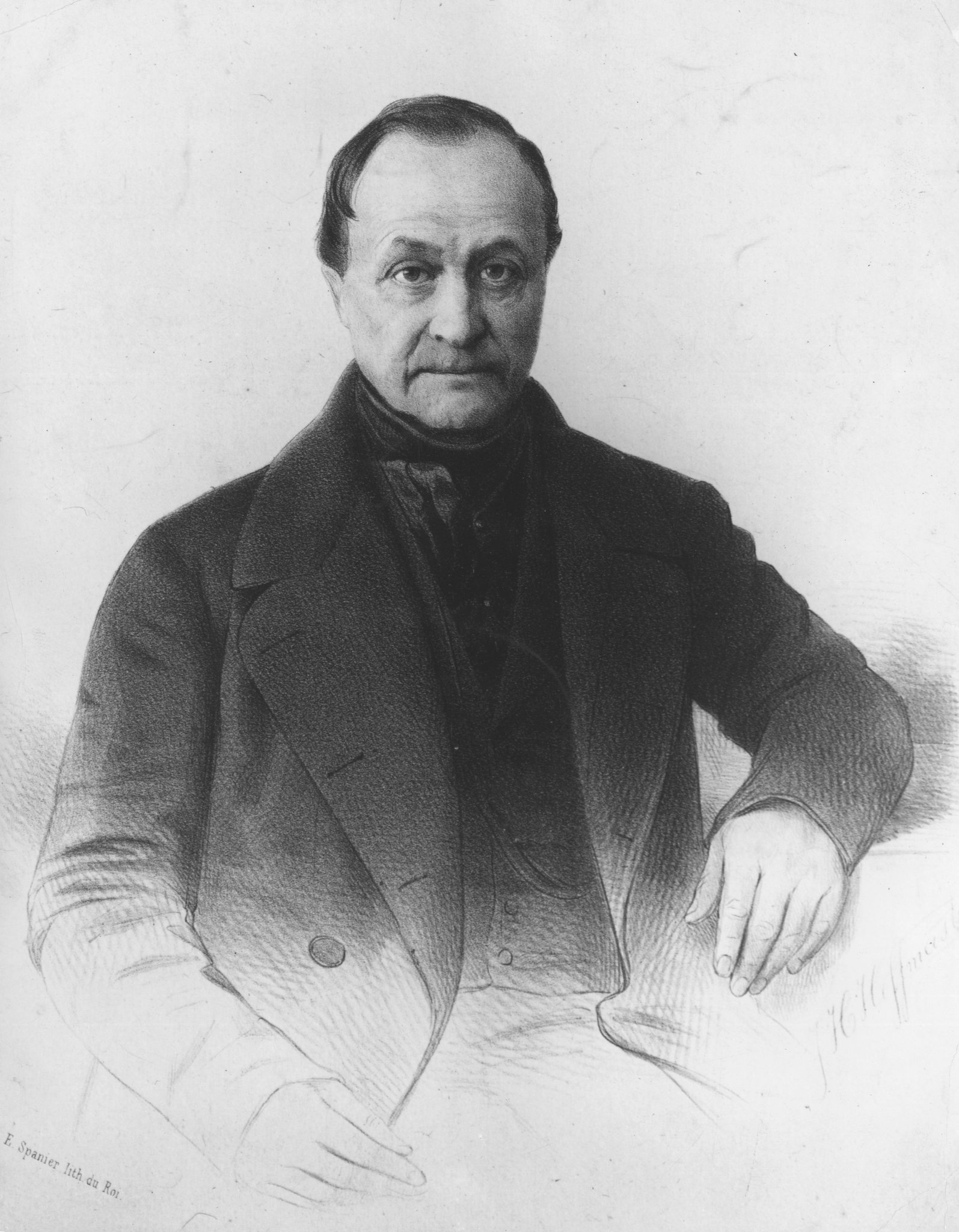
Auguste Comte was born in Montpellier in 1798. From 1830 to 1842, he published the six volumes of his Cours de philosophie positive. In his view, the tendency of the human mind leads toward positivism, which he defines as establishing laws on the scientific model. He proposes a classification of sciences ordered from the most concrete to the most abstract.
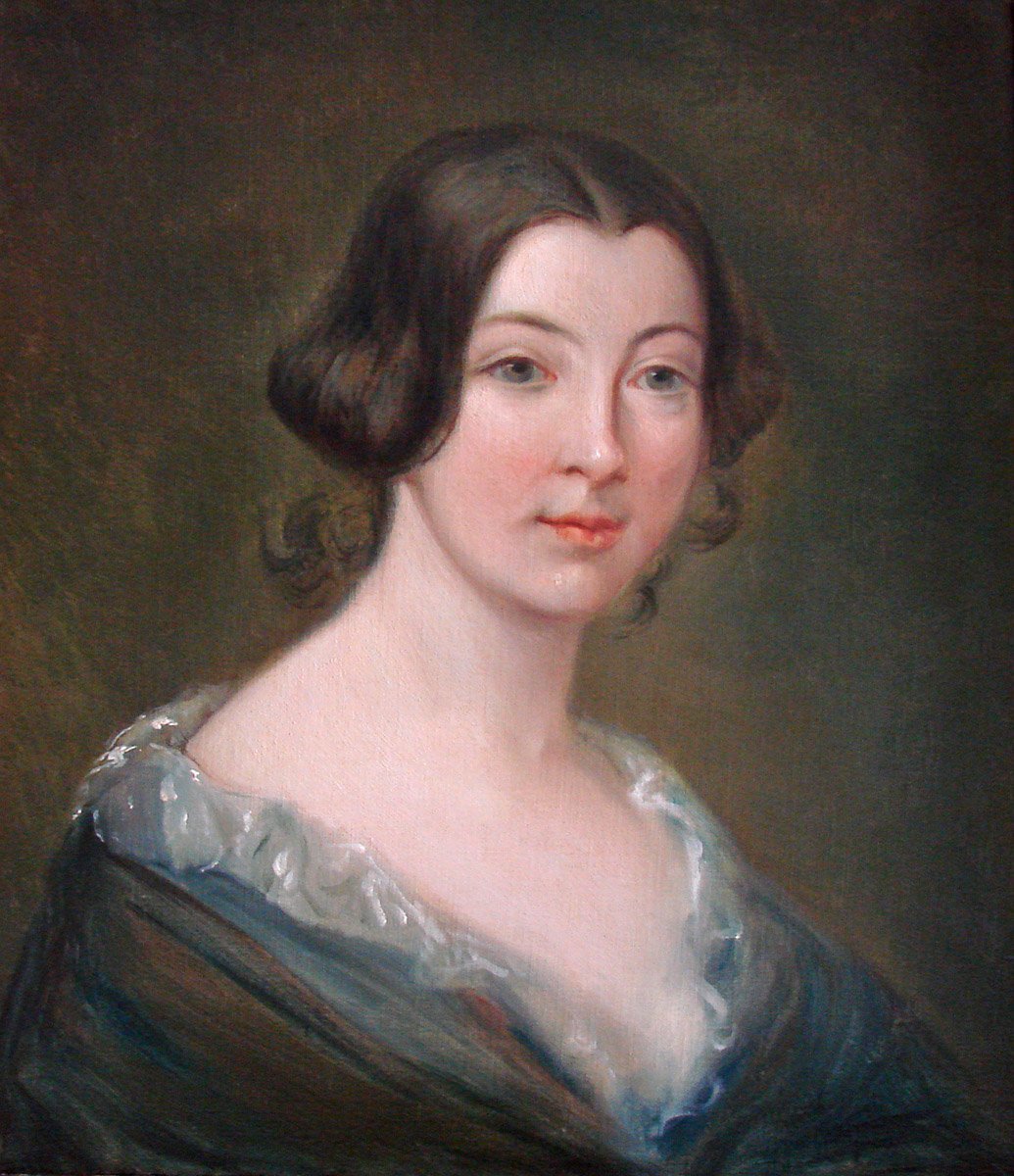
In 1844, he met Clotilde de Vaux, who influenced his philosophy until her death in 1846, when that philosophy took on a new tone. He died in 1857 in poverty and mystical solitude.
Auguste Comte divides the year into 13 months of 28 days (4 weeks) plus one blank day (two in leap years). The blank days (Bl) are inside the year but outside months and weeks. The week, and therefore the month, begins on Monday.
This idea of a 13-month calendar is said to have come to Comte in 1840, when he had the opportunity to study the Polynesian calendar brought back by travelers returning from Tahiti.
This gives the following year structure:
| Months | 1 | 2 | 3 | 4 | 5 | 6 | 7 | 8 | 9 | 10 | 11 | 12 | 13 | ||
|---|---|---|---|---|---|---|---|---|---|---|---|---|---|---|---|
| Weeks | 4 | 4 | 4 | 4 | 4 | 4 | 4 | 4 | 4 | 4 | 4 | 4 | 4 | ||
| No. days | 28 | 28 | 28 | 28 | 28 | 28 | 28 | 28 | 28 | 28 | 28 | 28 | 28 | Bi | Bl |
Bi = 365th day (blank day); Bl = blank day in leap years
We must now dispel an idea that appears here and there in writings about the positivist calendar (the name given by Auguste Comte), namely that the months were renamed instead of January, February, etc.
The positivist calendar is rooted in positivist philosophy. In Calendrier positiviste, Comte explains that the systematic cult of Humanity has two distinct sides: one essentially concrete, oriented toward the past; the other necessarily abstract, oriented directly toward the future. He adds that the purpose of this final cult would be to celebrate a “final sociability”, in which January would be dedicated to Humanity, February to Marriage, and so on, as major celebrations. Each of these main celebrations would also include a secondary breakdown into four weekly feasts (the Sundays of each week).
Comte also writes that, since the abstract cult could not be established immediately, he had to characterize it first, and then reduce the new cult to the concrete glorification of the past, the only form applicable at that moment to the intellectual and moral needs of Western society. Further on, he says that, to complete the system, he still had to define the general coordination of positivist commemoration, subordinating monthly, weekly and daily types to one another, and that practical usage would eventually name each positivist month after its chief figure, although he refrained from taking that initiative himself and preferred to leave it to the Western public.
The matter is clear: Auguste Comte does not rename the months. He merely says that usage may eventually lead people to associate each month with the “figure” commemorated in it. Otherwise, those who claim Comte renamed the months would have to go all the way and rename weeks according to the “secondary breakdown”.
To avoid overloading this page, which is mainly devoted to new ways of structuring the Gregorian calendar, I placed the details of the positivist calendar, with some explanations of the chosen names, on an appendix page.
Carlos HESSE (?) This astronomer in Iquique (Chile) appears to have taken up Auguste Comte's project.
Robert HEINICKE (?) From Roda (Germany).
- The month begins on Sunday and ends on Saturday, which is surprising for a German.
- The 365th (and 366th in leap years) days are outside the week but within the month (29 and 30 December).
- The thirteenth month (medi) is placed between June and July.
- Easter is on 8 April and Christmas on 22 December.
Moses B. Cotsworth (1914)
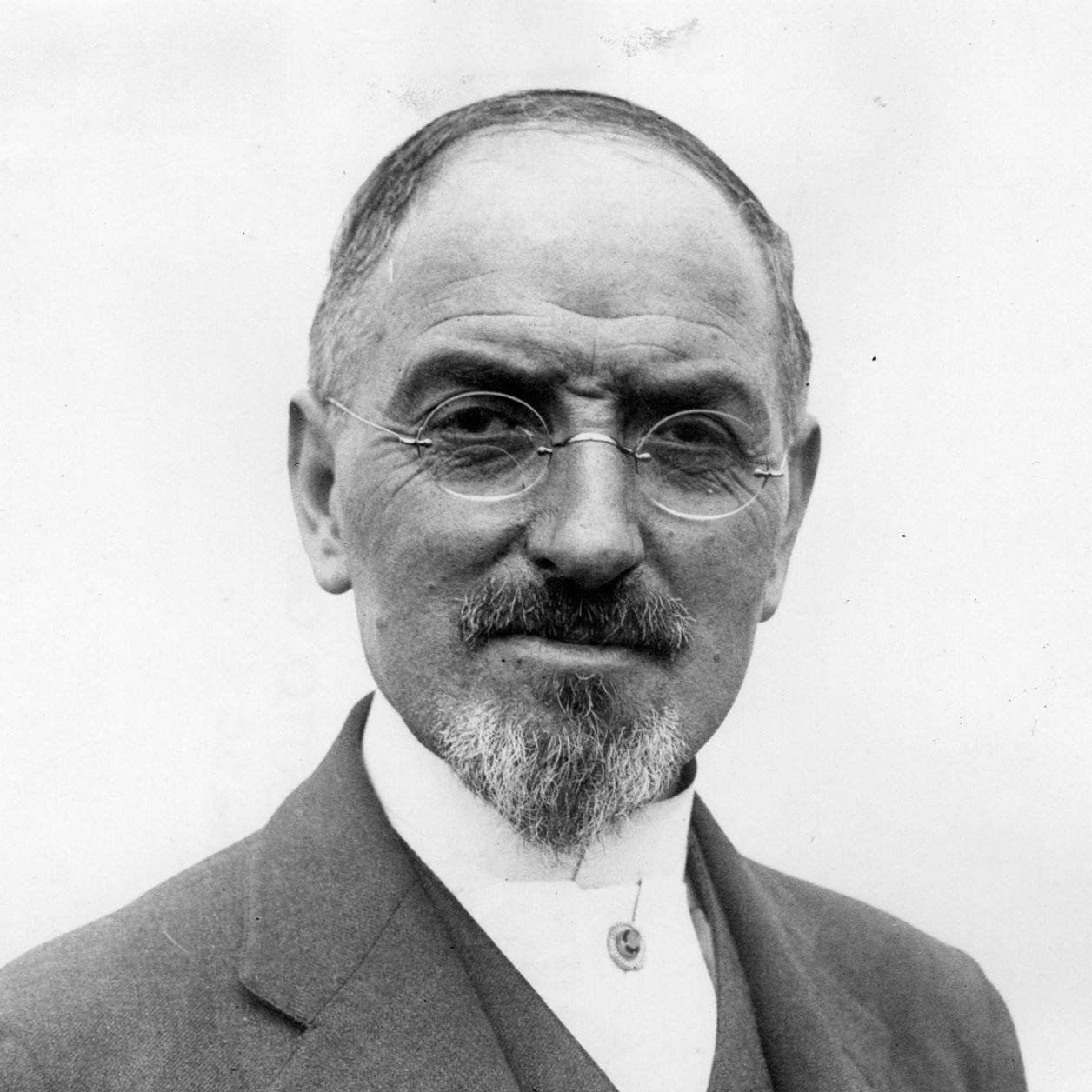
Moses B. Cotsworth was born in England in 1860. He became interested in calendars very early and worked at the “North Eastern Railway Company”. In 1905 he published The Rational Almanach, where he first presented his 13-month calendar project, followed in 1914 by The Fixed Yearly, in which he detailed the economic advantages of this type of calendar. In 1923, he founded the IFCL (International Fixed Calendar League) in the United States. He died in 1943 after spending a great deal of money trying to get his ideas adopted.
There is a Facebook page specifically dedicated to his history: MB Cotsworth Calendar Reformer.
The characteristics of his calendar are as follows:
| Months | 1 | 2 | 3 | 4 | 5 | 6 | 13 | 7 | 8 | 9 | 10 | 11 | 12 | ||
|---|---|---|---|---|---|---|---|---|---|---|---|---|---|---|---|
| Weeks | 4 | 4 | 4 | 4 | 4 | 4 | 4 | 4 | 4 | 4 | 4 | 4 | 4 | ||
| No. days | 28 | 28 | 28 | 28 | 28 | 28 | Bl | 28 | 28 | 28 | 28 | 28 | 28 | 28 | Bi |
- The month begins on Sunday and ends on Saturday.
- The “thirteenth” month (Sol, Solenoid or Tricember) is placed between June and July.
- The “365th” day (Silvester) is placed at the end of December (day 29 within the month, but outside the week): Bi in the table.
- The leap day (Olympic) is placed at the end of June (day 29 within the month, but outside the week): Bl in the table. Same intercalation principle as in the Gregorian calendar.
- 1 January corresponds to 31 December of the Gregorian calendar with rank +1 (e.g. Gregorian 31/12/2005 = Cotsworth 01/01/2006).
In the section devoted to M. B. Cotsworth, we saw that he spent heavily to have his calendar adopted, to the point that by 1914 he had already exhausted his personal fortune.
Despite these setbacks and fierce opposition to his 13-month calendar ideas from Elizabeth Achelis (whose work we discuss on the page dedicated to “perpetual calendars”), he found in George Eastman both a patron and ardent advocate. Eastman saw economic value in the 13-month calendar, did not hesitate to impose it within his company (Kodak), and used his own fortune to push what he called the Eastman Plan.
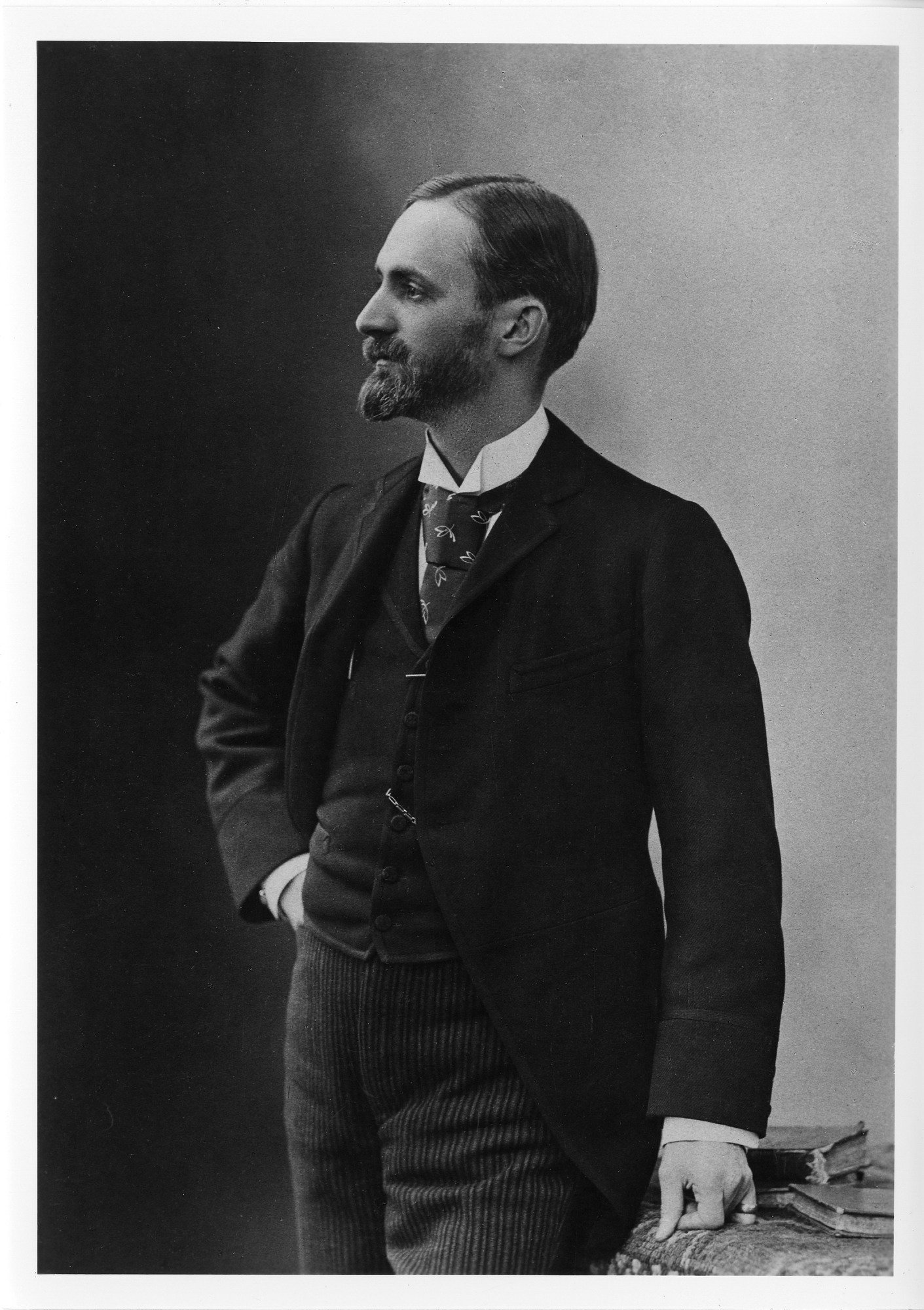
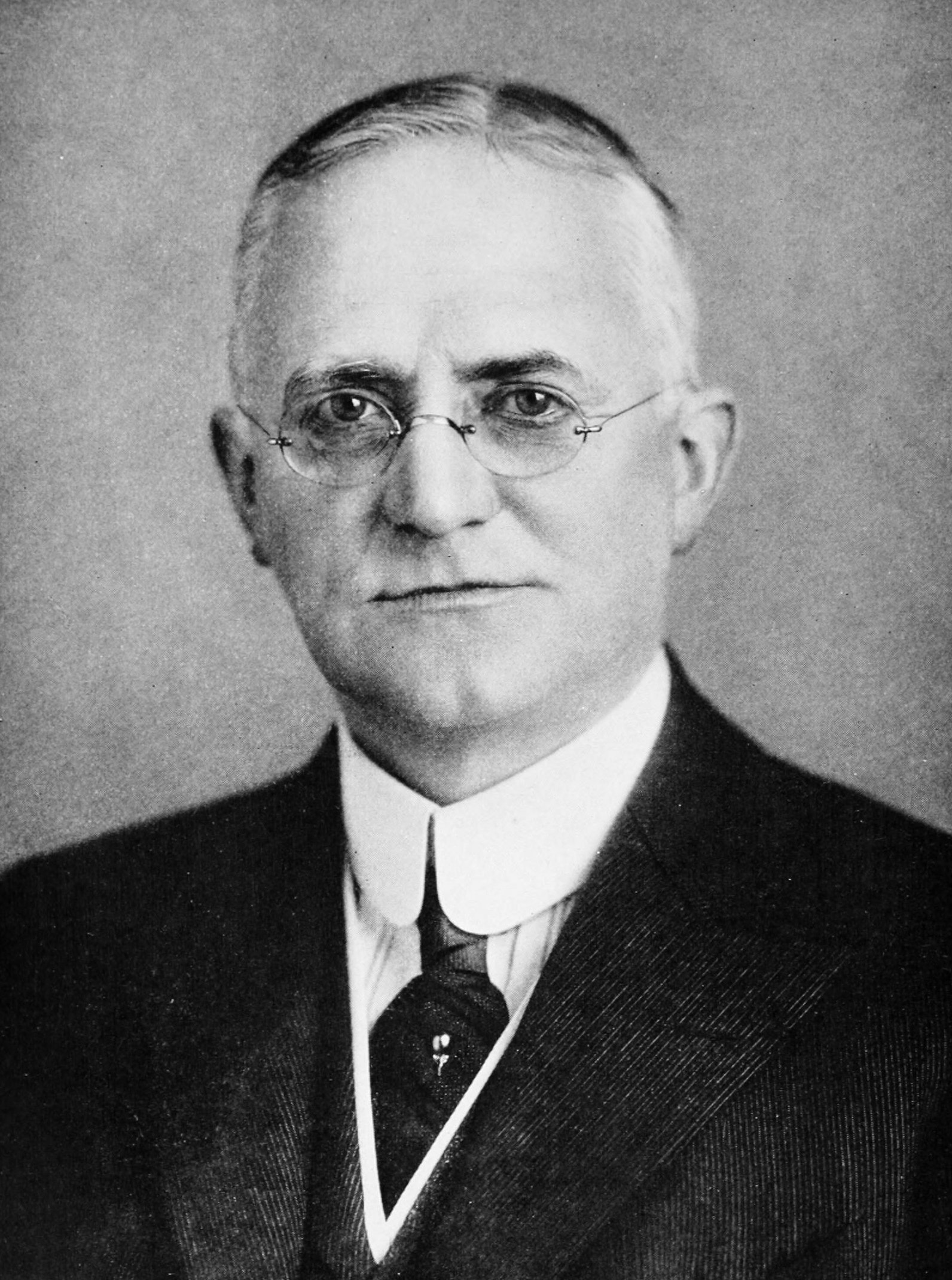
A fervent supporter of the 13-month calendar designed by Moses B. Cotsworth, George Eastman was born on 12 July 1854 in Waterville (New York State). In 1888, he founded the Kodak brand, popularized by the famous slogan “You press the button, we do the rest”. In 1889, he introduced transparent nitrocellulose film, used two years later by Thomas Edison in his Kinetoscope. Eastman committed suicide on 14 March 1932, leaving this note: “My work is done. Why wait?”
Paul Delaporte (1913)
I have not been able to obtain the slightest information on who Paul Delaporte was. If anyone has information, please let me know.
The characteristics of his calendar are as follows:
- Each month begins on Sunday and ends on Saturday.
- The “blank day” is at the end of the year.
- The leap day is in the middle of the year (where exactly??).
- The year is divided into four parts corresponding to the seasons. Each part has 13 weeks.
- The year begins at the winter solstice, on 22 December.
After many years spent studying reform, Delaporte came to think that reforming the Gregorian calendar was impossible and that it would be better simply to wait for it to impose itself universally. On this point, history proved him almost right.
Alongside the Gregorian calendar, and while waiting for it to become universal, he proposed introducing an auxiliary economic calendar for practical business needs.
Other Projects
By other projects I mean atypical calendars that cannot be attached to the two major types, namely the universal calendar and the fixed calendar.
I present them here as they come. Needless to say, I welcome any additional information on one or another.
John Robertson: Kirkcaldy (Scotland)
| Quarter | 1 er | 2e | 3e | 4e | ||||||||||
|---|---|---|---|---|---|---|---|---|---|---|---|---|---|---|
| Months | 0 | 1 | 2 | 3 | 4 | 5 | 6 | 0 | 7 | 8 | 9 | 10 | 11 | 12 |
| No. days | Bl | 28 | 28 | 35 | 28 | 28 | 35 | Bi | 28 | 28 | 35 | 28 | 28 | 35 |
- Each month begins on Sunday and ends on Saturday (weeks: 4, 4, 5).
- The 365th day (Bl) is between December and January (outside the year, in blue?).
- Leap day between June and July.
- Easter is the second Sunday in April.
Projects by Henry Dalziel and Thouvenin can be linked to this one.
Arnold Kampe: Hamburg (Germany)
| Quarter | 1er | 2e | 3e | 4e | ||||||||||
|---|---|---|---|---|---|---|---|---|---|---|---|---|---|---|
| Months | 0 | 1 | 2 | 3 | 4 | 5 | 6 | 0 | 7 | 8 | 9 | 10 | 11 | 12 |
| No. days | Bl | 35 | 28 | 28 | 35 | 28 | 28 | Bi | 35 | 28 | 28 | 35 | 28 | 28 |
Same construction as the previous one, except that the first month of each quarter has 35 days.
Fritz Reininghaus: Zurich (Switzerland)
| Months | 1 | 2 | 3 | 4 | 5 | 6 | 7 | 8 | 9 | 10 | 11 | 12 | ||
|---|---|---|---|---|---|---|---|---|---|---|---|---|---|---|
| Weeks | 4 | 4 | 4 | 4 | 4 | 4 | 2 | 4 | 4 | 4 | 4 | 4 | 4 | 2 |
| No. days | 28 | 28 | 28 | 28 | 28 | 28 | 14 | 28 | 28 | 28 | 28 | 28 | 28 | 14 |
- Two half-years of six months of 28 days.
- Two half-months (one summer, one winter), each of two weeks, at the end of each half-year.
- No precision regarding the 365th day and the leap day.
Frederic Black: Inverness (Scotland)
| Year | ordinary | |||||||||||||
|---|---|---|---|---|---|---|---|---|---|---|---|---|---|---|
| Months | 1 | 2 | 3 | 4 | 5 | 6 | 7 | 8 | 9 | 10 | 11 | 12 | 13 | |
| Weeks | 4 | 4 | 4 | 4 | 4 | 4 | 4 | 4 | 4 | 4 | 4 | 4 | 4 | 1 |
| No. days | 28 | 28 | 28 | 28 | 28 | 28 | 28 | 28 | 28 | 28 | 28 | 28 | 28 | 7 |
- The 364th and 365th days are accumulated to form a week added at the end of a year.
Projects by P. Searle (USA) and Blot (France) can be linked to this one.
Searle specifies that the 71st week must be added to years ending in 0 or 5, except those ending in 50 or 00.
Alexandre Philip: Scotland
One of his two projects appears on the page devoted to perpetual calendars. The second is as follows:
| Months | 1 | 2 | 3 | 4 | 5 | 6 | 7 | 8 | 9 | 10 | 11 | 12 |
|---|---|---|---|---|---|---|---|---|---|---|---|---|
| No. days | 31 | 30 or 31 | 30 | 31 | 30 | 30 | 31 | 30 | 30 | 31 | 30 | 31 |
- February gets one extra day in leap years.
- This calendar is variable: it does not begin each year on the same weekday.
Madler (Mussia) and Glasenapp (Russia)
Both propose modifying the leap-year system by keeping years at 365 days and deleting one day every 128 years.
Madler starts in 1900 (364 days), while Glasenapp starts at the beginning of the Christian era (364 days in 1920).
We cannot end this page without mentioning a reform that did reach completion: the Indian Saka calendar, officially introduced on 22 May 1957.
By Way of Conclusion: The 'Pataphysical Calendar
Father Ubu's Calendar
We cannot end this page without mentioning the 'Pataphysical calendar (do not forget the apostrophe before the word! Apparently it is there to avoid a pun... which everyone is still trying to find).
This word first appears under the pen of Alfred Jarry (Laval, 1873 - Paris, 1907) in the late 1880s in Rennes, in L'Écho de Paris littéraire illustré of 23 April 1893, which contains Alfred Jarry's first published work, Guignol, a fragment of Ubu cocu.
He himself gives the definition of this intellectual discipline, both deeply serious and completely absurd: "Pataphysics is the science of imaginary solutions, which symbolically attributes to lineaments the properties of objects described by their virtuality."
“Encyclopædia Universalis: Jarry gives the example of a watch we call round even though, seen in profile, it appears as a narrow rectangle, and viewed at an angle appears elliptical: “reality”, as we perceive it, is only the linear representation of one of its aspects, to which imagination alone gives wholeness. In the case of the round watch, imagination is rather limited. Those who use this elementary imaginary solution even deny that it is one. They are convinced they are grasping reality, and yet they are doing pataphysics without knowing it. For them, the imaginary solution has become common sense, based on universal agreement. Thus, for the pataphysician, common sense, conventions, and belief in objectivity are eminently pataphysical.
In Ubu Roi, in 1896, he makes his central character say: "[...] I am fully ready to become a holy man; I want to be a bishop and see my name on the calendar."
That was enough for him to publish an Illustrated Father Ubu Almanac in 1899, then a new one in 1901 accompanied by a Father Ubu calendar. It is the latter that appears in the appendix. Ubu thus enters the calendar. I will let you discover on which dates. But this is still not yet the 'Pataphysical calendar. Only the saints of the day are renamed; the calendar keeps its Gregorian structure. Still, note the appearance of two “blank days” outside the week: 29 February and 31 April. They are called Hunyadi.
Nothing prevents this calendar from becoming a fixed calendar by “activating” or not the first Hunyadi on 29 February depending on whether the year is leap. As for the Hunyadi of 31 April, I confess I personally find it hard to follow. If anyone has the answer? I will also use this to appeal to anyone who owns the 1899 version of l'Almanach du père Ubu: could you send me a copy?
The 'Pataphysical Calendar
It was on 11 May 1948 that the Collège de 'Pataphysique was founded at Adrienne Monnier's bookshop, La Librairie des Amis des Livres, on Rue de l'Odéon.
The statutes were signed on 29 December 1949 by Doctor Louis-Irénée Sandomir and co-signed by Mélanie, Le Plumet, Jean-Hugues, Sainmont (and Oktav Votka), Raymond Queneau, Boris Vian, François Caradec and Noël Arnaud, who are sometimes presented as founders of this college. On that same day, the 'Pataphysical calendar was born.
To understand its structure, the best approach is to look at a few texts. The full calendar appears in the appendix. ARTICLE 12 of the College statutes: 12.1. The pataphysical emblem is the “ombilic ubique”. 12.2. The Pataphysical Era begins on 8 September 1873, which from then on is designated as the 1st day of the month Absolu, Year 1 E.P. (Pataphysical Era), and from that point the order of the thirteen months (twelve of 28 days and one of 29) is fixed as follows: Absolu, Haha, As, Sable, Décervelage, Gueules, Pédale, Clinamen, Palotin, Merdre, Gidouille (29 days), Tatane, Phalle.
Additional explanations:
“Thanks to the institution of the 28-day month and the day outside the week (29 Gidouille and, in leap years, 29 Gueules), it became possible to obtain regular month structures (and therefore a Perpetual Calendar), since the week had to remain seven-day. It would not have been appropriate to alter such an ancient and divinely pataphysical weekly arrangement, nor (for the same reason) to alter the names of the seven days. Most Third-, Second- or First-rank Feasts could therefore be fixed on the 1st, 8th and 15th of each month, that is, on Sundays, and the 22nd, the pataphysical navel of the month, could shine with at least a Second-rank Supreme Feast.
The work seemed complete when, at the last session of the Rote, His Magnificence, to perfect such excellent pataphysics, proposed, and obtained unanimous ratification, to create imaginary days outside the week that would close each month and bring its total to 29 days, a prime number. The year (leap or not) would then contain 377 days. Thus complete symmetry was joined by a touch of irrationality bordering on extravagance. This additional monthly day was naturally Alfred Jarry's hunyadi, while the real hunyadis of Gidouille and (in leap years) Gueules took the name “fat hunyadi”...
This gives the following year structure:
| Months | 1 | 2 | 3 | 4 | 5 | 6 | 7 | 8 | 9 | 10 | 11 | 12 | 13 | ||
|---|---|---|---|---|---|---|---|---|---|---|---|---|---|---|---|
| Weeks | 4 | 4 | 4 | 4 | 4 | 4 | 4 | 4 | 4 | 4 | 4 | 4 | 4 | ||
| No. of "real" days | 28 | 28 | 28 | 28 | 28 | 28 | Bi | 28 | 28 | 28 | 28 | 28 | BL | 28 | 28 |
- The year has 377 days;
- There is one “imaginary day” per month, which is “real” in the eleventh month and, in leap years, in the sixth month;
- Blank day BL is outside the week but inside the month;
- Leap day Bi is outside the week but inside the month;
- Year 1 of the 'Pataphysical era (E.P.) begins on 8 September 1873 Gregorian;
- The 7-day week begins on Sunday, which is the first day of the year;
- Every 13th of every month is a Friday (joke).
Text concerning festivals:
“It then remained to define the hierarchy of Feasts. On the proposal of His Magnificence, the unanimous Rote decided that the year would include only wholly Supreme Feasts.
However, for various secondary practical reasons, ten were designated as First Supreme Feasts, subdivided into First Supreme Firsts (two of them) and First Supreme Seconds; twenty-two as Second Supreme Feasts; forty-one as Third Supreme Feasts; and all the rest as Fourth Supreme Feasts.
In addition to these Feasts, thirty-nine Vacuations were established, unknown up to then in all other calendars.
To conclude, note that unlike the others, which present themselves as more serious, the 'Pataphysical calendar is still used here and there on various occasions.