Structure of this study
- Introduction and Page 1: Pre-writing instruments.
- Page 2: Shadow-observation instruments.
- Page 3: Celestial-observation instruments.
- Page 4: Flow- or combustion-based instruments.
- Page 5: Clocks and modern instruments (this page).
Sorry to those brave enough to have followed this study from the start, but I will repeat myself, even more on this page than on the others. The goal is to track the evolution of measuring instruments through what they brought in terms of precision.
So you will not find here a catalog of all clocks, pendulums and watches in the world, nor detailed clockmaking explanations. At most, you will get simple explanations (oversimplified, as specialists may rightly say, and I ask their indulgence), enough to understand the evolution of instruments. I would not even be able to explain in detail what a cannon pinion with pipe or an idler wheel is, among many other parts. For that, many excellent specialist websites already exist.
From clock to watch
General points
As with clepsydras, let's ask a few general questions before following technical evolution:
What is the etymology of the word “clock”? A quick look at the French Academy dictionary: "noun (formerly masculine; in some cities one still says le gros horloge, e.g. Rouen). 12th century, oriloge/orloge, masculine. From Latin horilogium, itself from late Greek horologion, 'that which indicates the hour'."
Incidentally, the English word clock comes from French cloche (bell).
First mechanical clock: when, where, by whom? Let's be clear: we do not know who invented the first mechanical clock. It is hard to know because the term horilogium was used generically, and often we cannot tell whether it referred to a mechanical clock, a clepsydra, or even a sundial. Recall the canonical dial of the church in Merindol-les-Oliviers with the inscription OROLOGII.
Gerbert is sometimes credited with inventing the mechanical clock. That is very likely false. If it were true, one may ask why such an invention would then vanish from late 10th century to late 13th century.
Because it is indeed at the end of the 13th century that the first mechanical clocks appear in Europe, more precisely in England: 1283 at Dunstable Priory, then Exeter (1284), St Paul's in London (1286), Canterbury (1292), and many more in the 14th century.
Note also that the mechanical clock is a purely Western development. Neither Islamic nor Chinese civilization pursued this path. Technological constraints, or different choices (hydraulic technology in China)?
Is a clock a time-measuring instrument? I will not replay the clepsydra debate. A clock is obviously, like an hourglass or clepsydra, a timekeeper. One might even say a time-marker: regardless of hour length, what we ask of a clock is to tell the time.
Is the clock historically important? Absolutely. A thousand times yes. The appearance of the clock is arguably a major, foundational event of the Middle Ages, for several reasons.
Certainly not because of precision: clepsydras and sundials were better in that regard. Early mechanical clocks were erratic and had to be reset to sundials several times a day, otherwise they could lose nearly one hour daily.
Certainly not because of majestic dials and two hands high on church, cathedral or belfry towers. Early clocks were far from tower tops. They first occupied monasteries, later lower church levels, and only later high towers.
Quite simply because they had no dial at first. And who could read one anyway, in a population 95% peasant?
By the way, why is 4 on many clock dials written IIII instead of IV? Perhaps because IV and VI could be confused by marginal readers.
And when dials did arrive, inaccuracy still made a single hand sufficient.
So what do you do with a clock without dial or hands? It functions as an alarm to alert a ringer, who then rings the bells (remember? clock = bell). Later, when fully equipped (dial, hands) and installed high in towers, it is cared for by a clock governor, tasked with watching over it constantly: monitoring, maintaining, and keeping it aligned with the Sun.
Enough “certainly not”. Let's see why the clock's appearance was a major medieval event.
- First, because it marks the victory of equal hours over unequal hours.
Previous pages showed instruments such as clepsydras and astrolabes giving unequal hours, whose length changes with seasons (80 minutes in summer, 50 in winter, for example). With clocks, aside from precision issues, the hour becomes sixty minutes and the day 24 hours. No more separate day/night hour systems: one 24-hour day of 60-minute hours. Full stop.
- Next, because it opens the path toward secularization of time.
Until the 13th-14th centuries, time belonged to God, therefore to clergy and related figures. Through ringers assisted by clepsydras or sundials, they punctuated time by prayer hours and offices. Recall canonical sundials discussed earlier.
When mechanical clocks arrived, they first acted as alarms for bell ringers; over time they moved high in towers and became accessible to all. Time was finally shared. And, as noted, it was now equal time. Once clocks rang not only prayer hours but also civil hours, secularization reached its peak.
Then everyone's hour tended to become each person's hour. Roughly speaking, each century marks a step: the 17th century brought clocks into homes; the 18th made them wearable; the 20th moved them to the wrist.
From the Middle Ages onward, we move from clerical control to democratized time.
Still, this was not caused by clocks alone. Clocks were tools of a broader shift. By the Middle Ages, clergy were no longer the only group needing timekeeping. As industry and trade developed, specific time markers were required (work timing, task timing, etc.). Add royal-court needs and others, and we understand that clocks arrived... right on time.
- Finally, because clocks lead to delocalized time.
Not only did unequal hours disappear, local time would eventually disappear too. True, this took time, in France only by 1891 (see time scales). Modern transport like railways forced the issue. Clock mechanization solved it. All French clocks were synchronized to one time: Paris time.
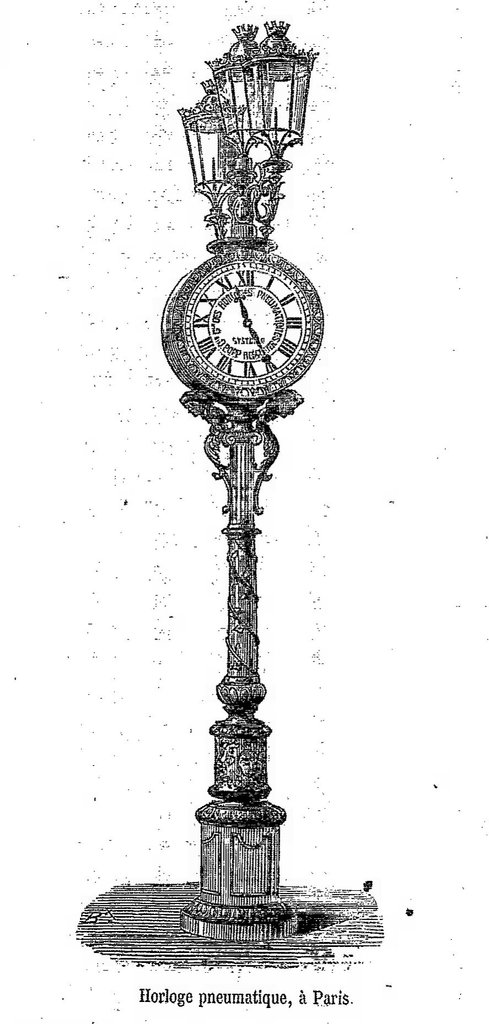
In Magasin Pittoresque (1880), one reads an article titled Unification of time by electricity and compressed air.
Regarding pneumatic clocks, it says: "...Several clocks operating by this new system, invented by Mr Popp of Vienna, have already been installed in Paris... A central clock is arranged so that whenever its pendulum strikes the sixtieth second of a minute, a trigger opens compressed-air reservoirs; air immediately rushes through network tubes and inflates a bellows at their ends. As it inflates, the bellows lifts a small lever that advances by one step a sixty-tooth wheel, each tooth corresponding to one minute. The minute hand fixed to this wheel advances one minute...
Installing the first fifteen dials required eighteen kilometers of pipe, and the system was arranged so that anyone living near the network could receive time at home. It was enough to branch a small conduit from the main pipe to bring in compressed air supplied by the administration."
Basic operating principle
Mechanical clocks have four essential components:
- Energy source (weight, spring).
- Transmission organs, which pass on energy and calibrate transmission into equal-time units.
- An escapement/distributor, periodically releasing driving force. Later, it also restores to the regulator (pendulum) energy lost by damping.
- A regulator/oscillator, transforming irregular movement into regular movement.
Optional additions:
- Display system (dial, hands).
- Winding system to renew energy source.
Clock evolution moves in two directions: miniaturization of components and improved regulator precision. We will focus mainly on the second.
Evolution
The best way to follow evolution is chronological order. Do not worry, we will not reproduce once again the same generic chronology copied across websites. In that case, one may as well link directly to the original source.
First regulators: verge-and-foliot escapement
We do not know who invented it, nor its exact appearance date, usually placed somewhere between 1270 and 1330.
On this point, I cannot resist quoting Gerhard Dohrn-van Rossum from his excellent History of the Hour: "... The emergence of escapement, now seen as a decisive innovation opening new paths, did not appear as such to contemporaries. It was at most noted as an important but puzzling phenomenon. By contrast, striking clocks were immediately seen as a sensational technical event with major social consequences."
Let's look at how this system works, also called verge escapement or crown-wheel escapement.
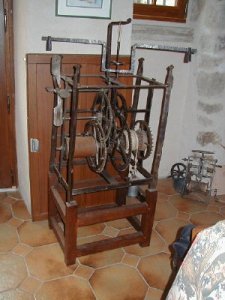
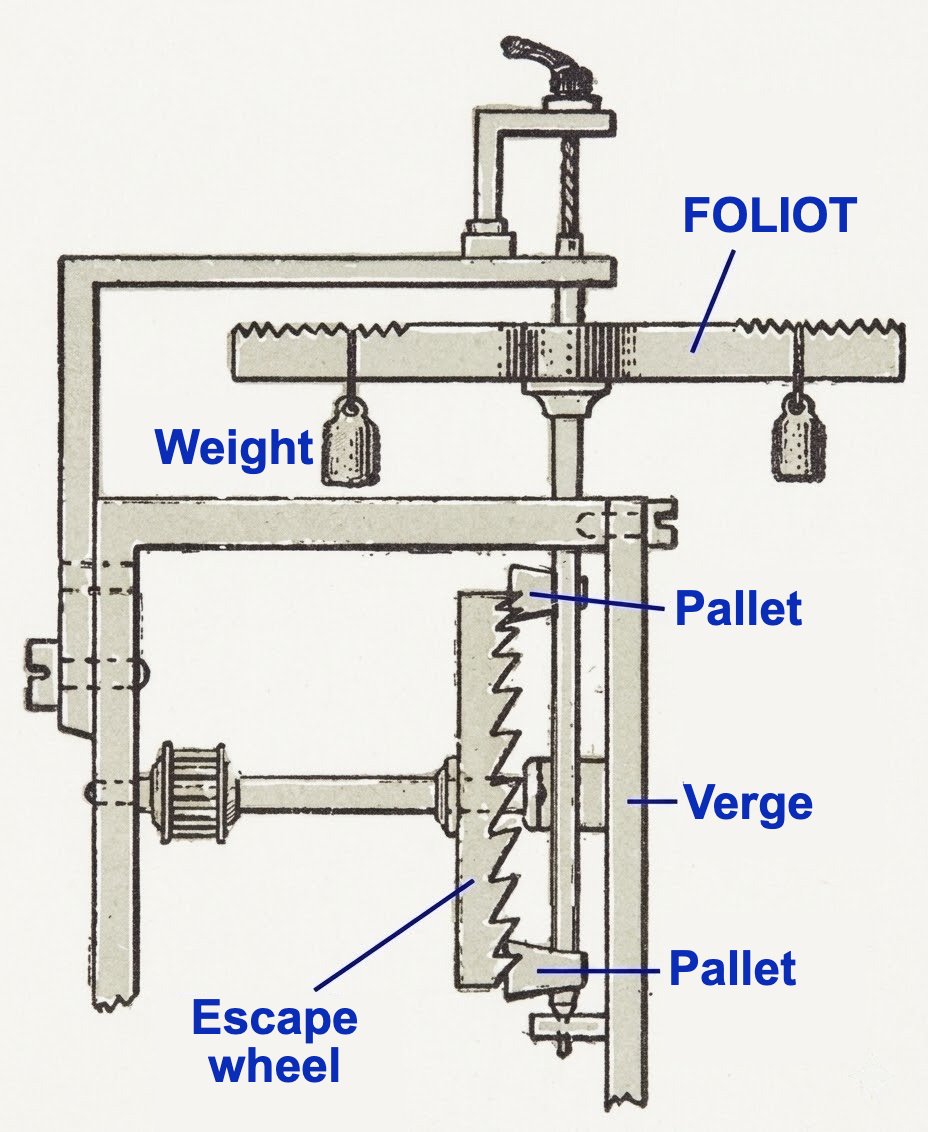
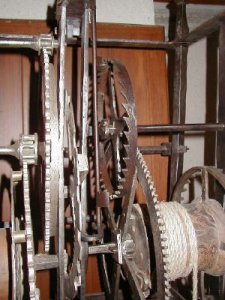
Left: overall mechanism with foliot. Right: detail of crown-wheel escapement. Photos kindly provided by Jean-Claude Sulka, whose website is worth visiting.
On the upper-left image, the right side shows the energy source: a weight hanging on a cable wound around a drum. The left side is the striking mechanism.
On the upper-right image, we see the foliot escapement. The foliot is a T-shaped part whose vertical stem (verge) carries a horizontal bar. A toothed wheel (crown wheel), linked to the driving drum, turns the verge and bar through one pallet until another pallet, set roughly 60° apart, stops motion and reverses direction. At each movement, the foliot lets one tooth escape, hence the name escapement. Oscillation period can be adjusted by moving regulation weights along the bar. This period must match a time standard (minute, hour, etc.).
The word foliot derives from the idea of folie (madness), evoking the endless back-and-forth motion of the bar. The name appears first under Jean Froissart (1337-1404), French poet and chronicler, in Li Orologe amoureus (1370).
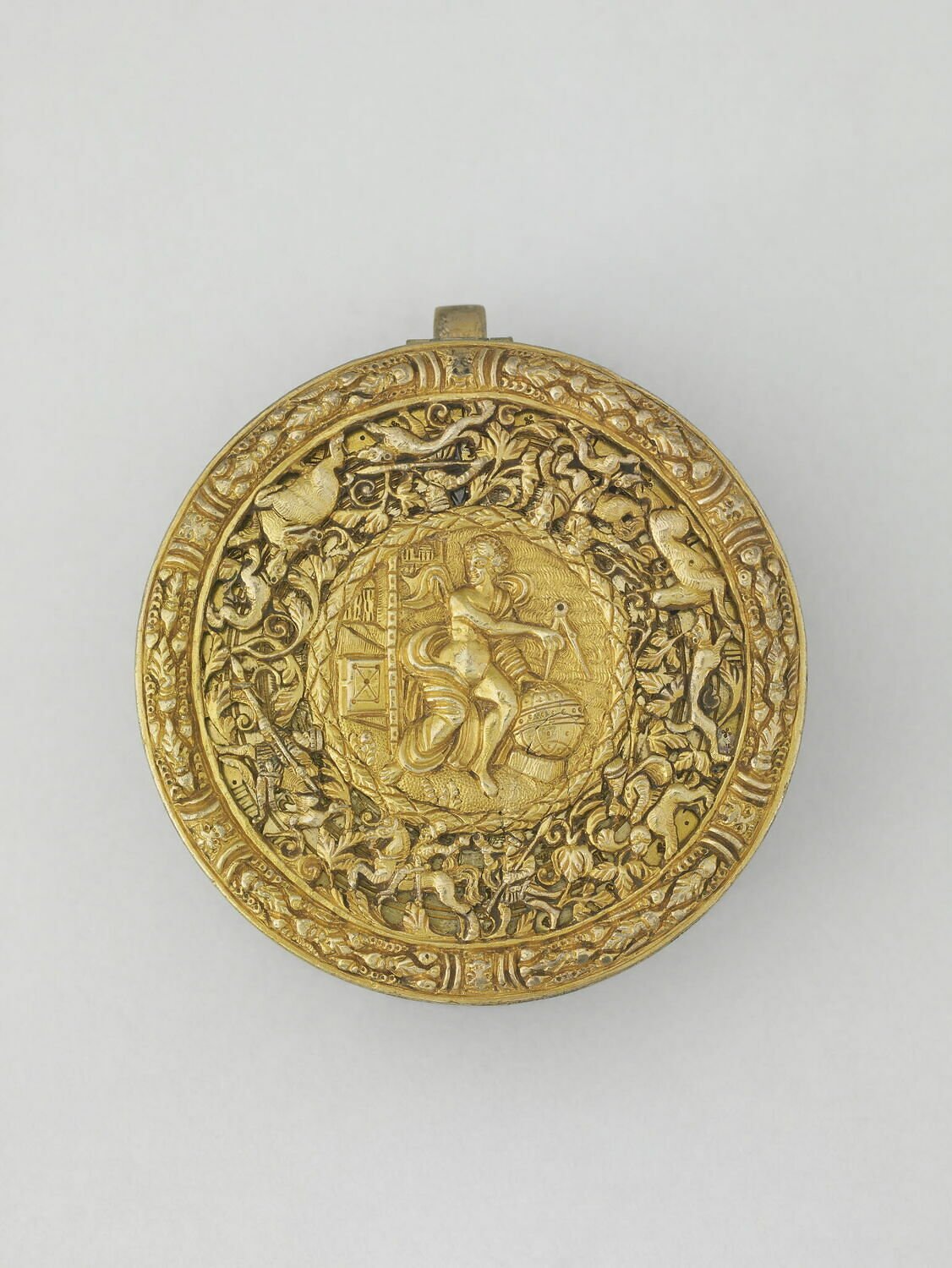
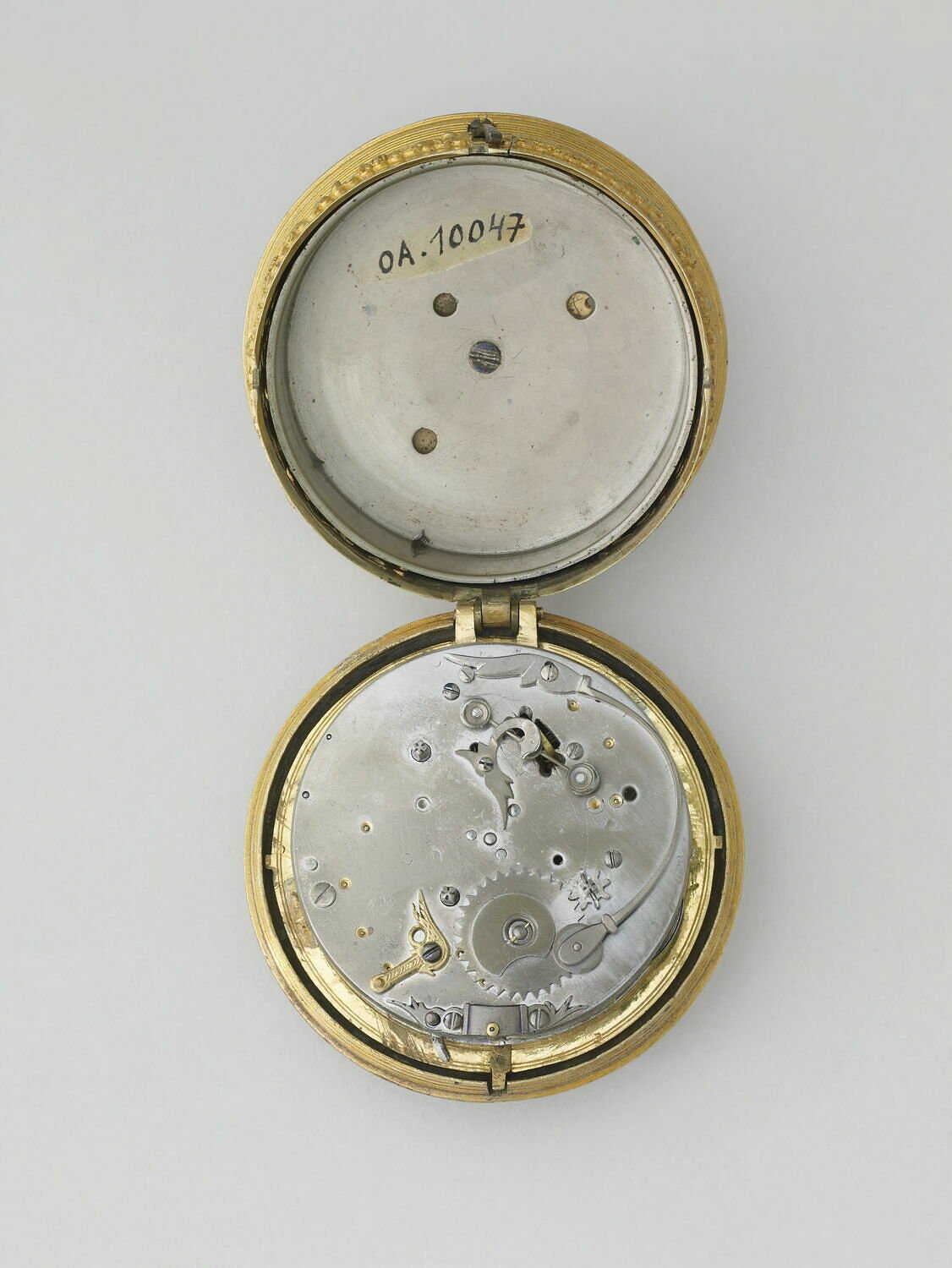
Foliot mechanisms were not limited to large clocks, as shown by this foliot drum-watch with all-steel movement (anonymous, southern Germany, around 1550).
In his book, Gerhard Dohrn-van Rossum notes that in 1931 J. Drummond Robertson first suggested clock escapement might have grown out of earlier repeated bell-strike mechanisms. Indeed, striking systems operate similarly to the escapement we just saw, except the foliot is replaced by a hammer lever striking a bell. Naturally, striking motion is faster.
Dohrn-van Rossum then explains how mechanical escapement may have emerged: in monasteries, alarm-like devices were common. In the 13th century, it was discovered that by slowing hammer oscillation, increasing mass and making it adjustable, one could obtain stable clockwork motion. Plausible, though stability and precision still needed improvement.
A foliot-escapement variant
This is the variant used by Giovanni Dondi, described in a 1365 work.
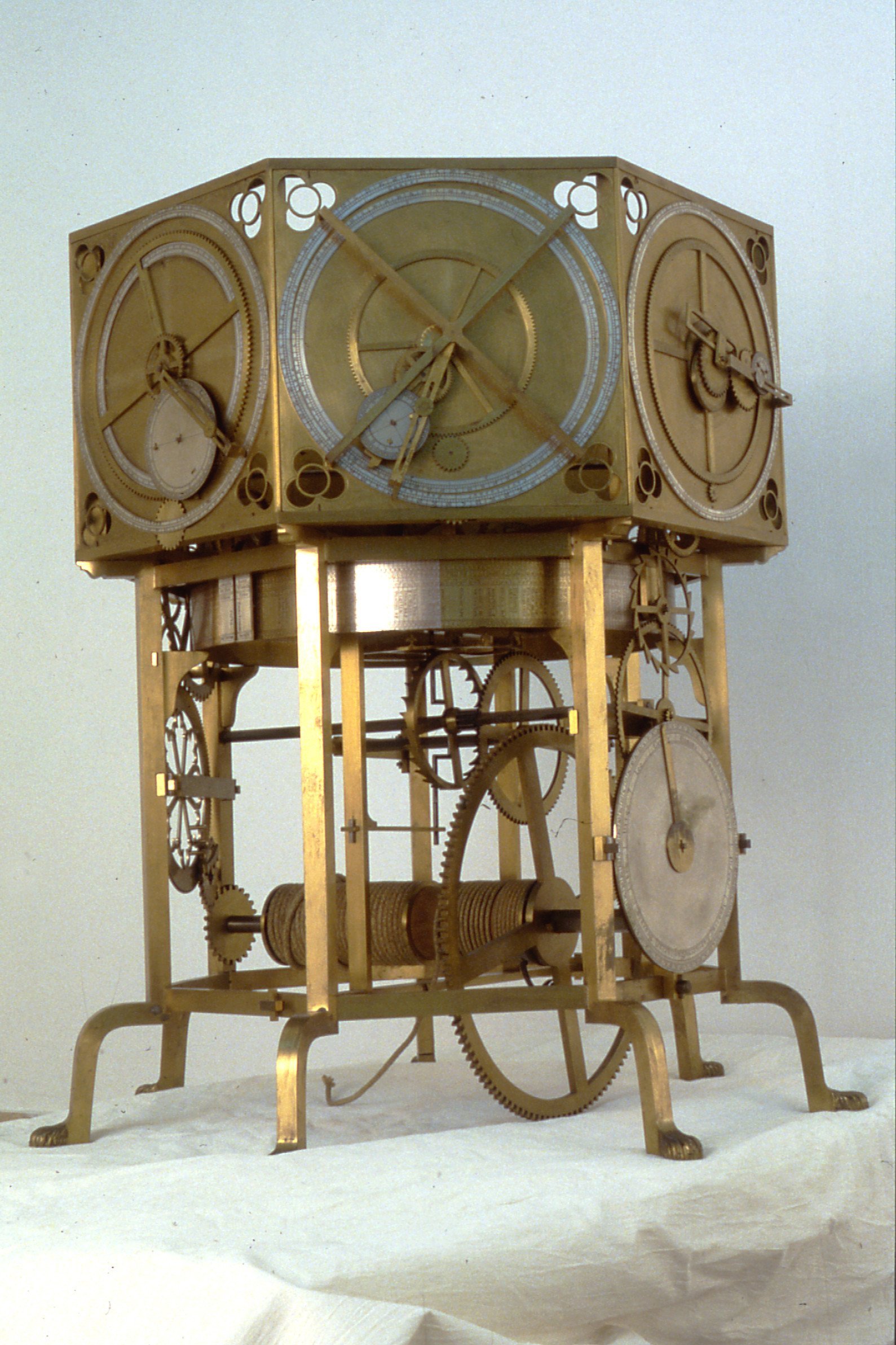
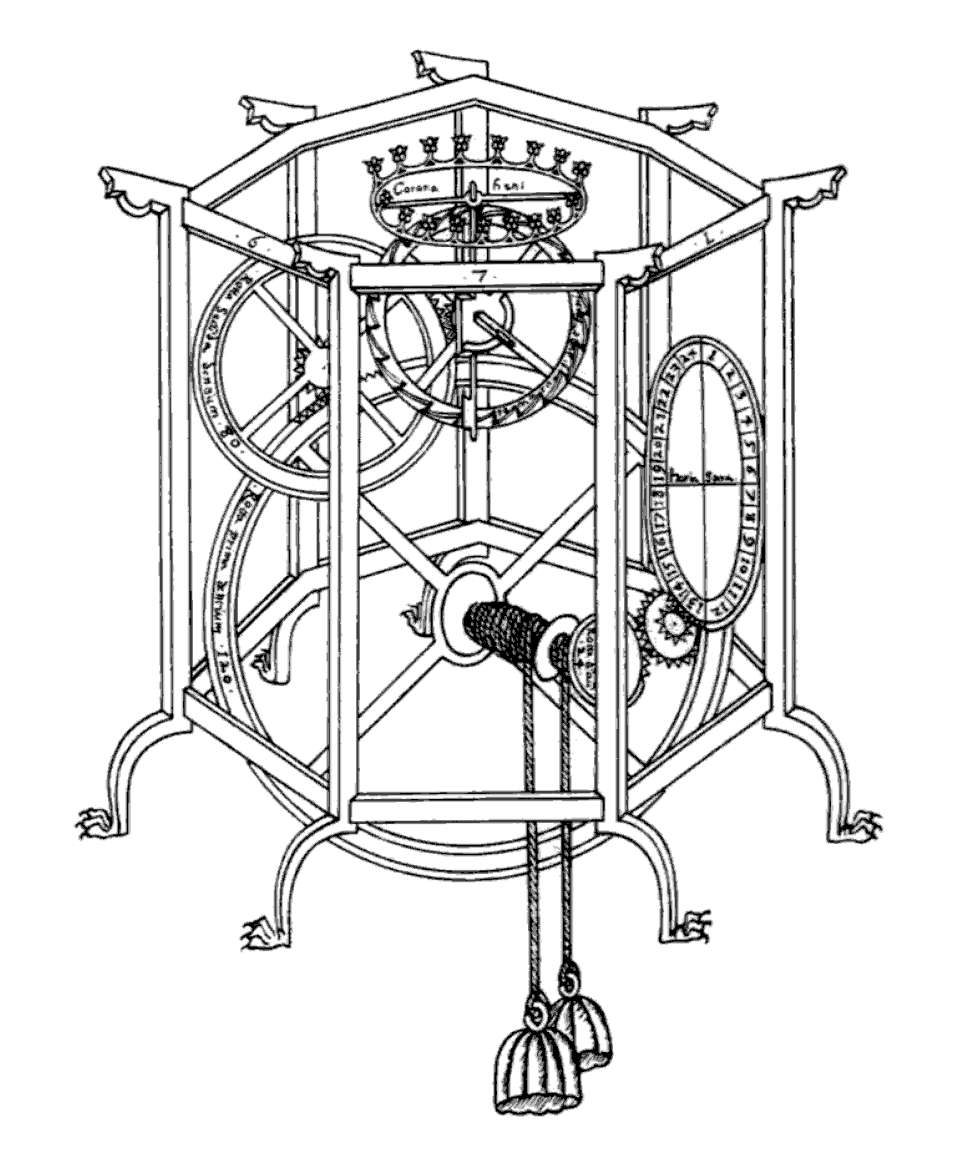
Left: faithful reconstruction of Giovanni Dondi's planetary clock (Astrarium), visible at the Leonardo da Vinci Museum in Milan. The original no longer exists. Right: sketch of the lower frame from a manuscript in Eton College Library, Windsor.
In the right sketch, upper section, the foliot is replaced by a horizontal wheel with “pins”. This raises the question of adjustment. Note also presence of a dial.
Change of power source
Around 1450, the steel mainspring appears as an energy source.
Do not confuse what I call mainspring with the later spring used in the regulating system.
The spring's advantage over weights is compactness, allowing portability and miniaturization. Clocks can become indoor clocks or watches.
Its major drawback versus weights: it delivers decreasing force as it unwinds. So first spring-driven clocks were even worse in precision than weight-driven ones.
Two systems quickly appeared to manage this uneven driving force. In Germany: stackfreed, short-lived. In France: the fusee, used much longer.
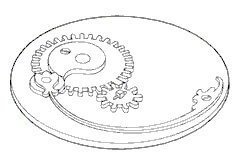
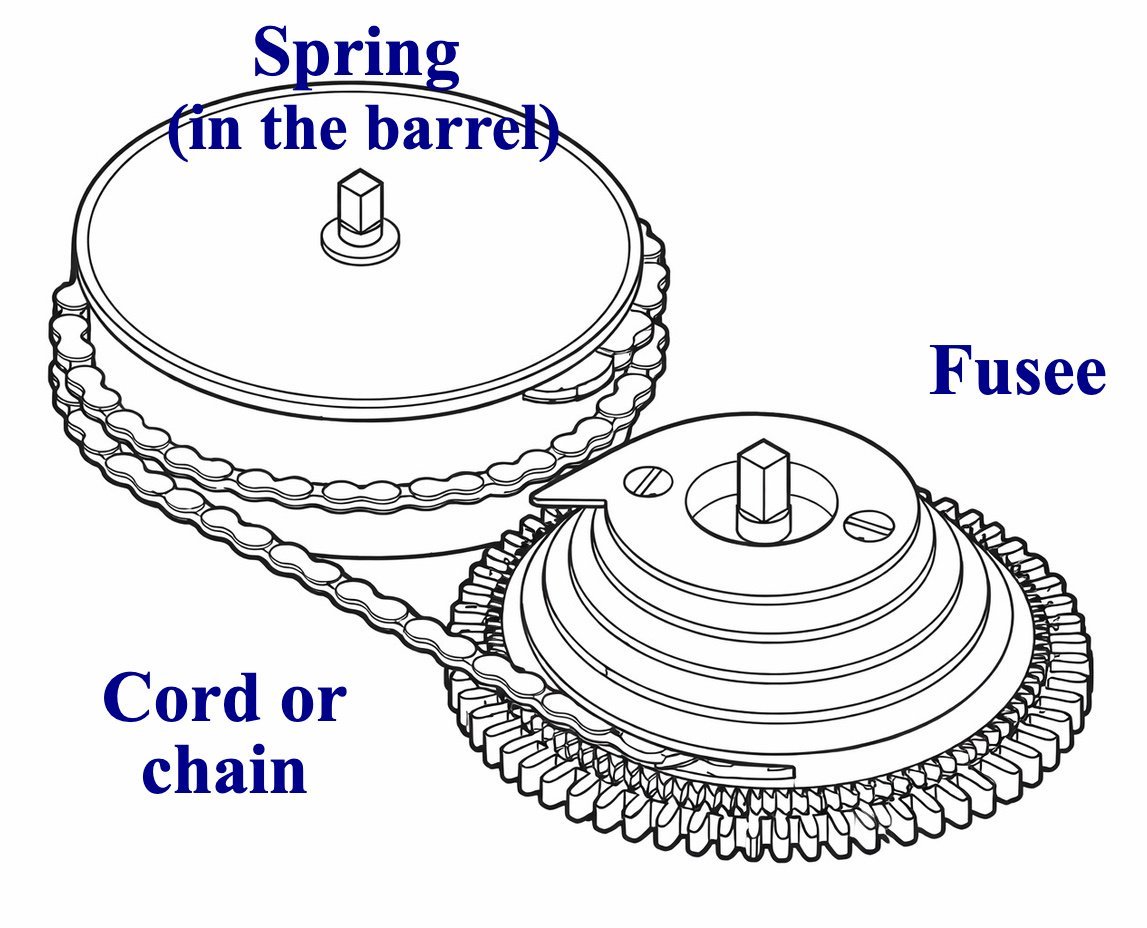
Left: stackfreed system. Right: fusee system. Replacing cord with chain, around 1650, is credited to Geneva clockmaker Gruet.
- Stackfreed uses a secondary spring pressing on a cam to keep driving force more constant.
- Fusee has the same goal. It compensates reduced chain tension (initially cord) by increasing lever arm, keeping torque more constant via fusee's hyperbolic shape. Does that not remind you of bicycle gear ratios?
Incidentally, many sketches show screws fixing parts together. In reality, early clocks (broadly speaking) used wedges/pins; screws only became common around 1550.
Oscillator revolution
In the 17th century, instrument precision improved dramatically, from drifts of around 15 minutes to only a few seconds. Precision became high enough that English clockmaker Daniel Quare (1649-1724) finally added a minute hand at century's end.
Without getting trapped in deep horological technique, our study of mechanical-clock precision evolution ends after this “oscillator revolution”.
It begins in 1583 when Galileo, according to his first biographer Vincenzo Viviani, formulated pendulum isochronism after observing a swinging chandelier in Pisa Cathedral: oscillation duration depends only on pendulum length, not amplitude.
Galileo Galilei (1564-1642)
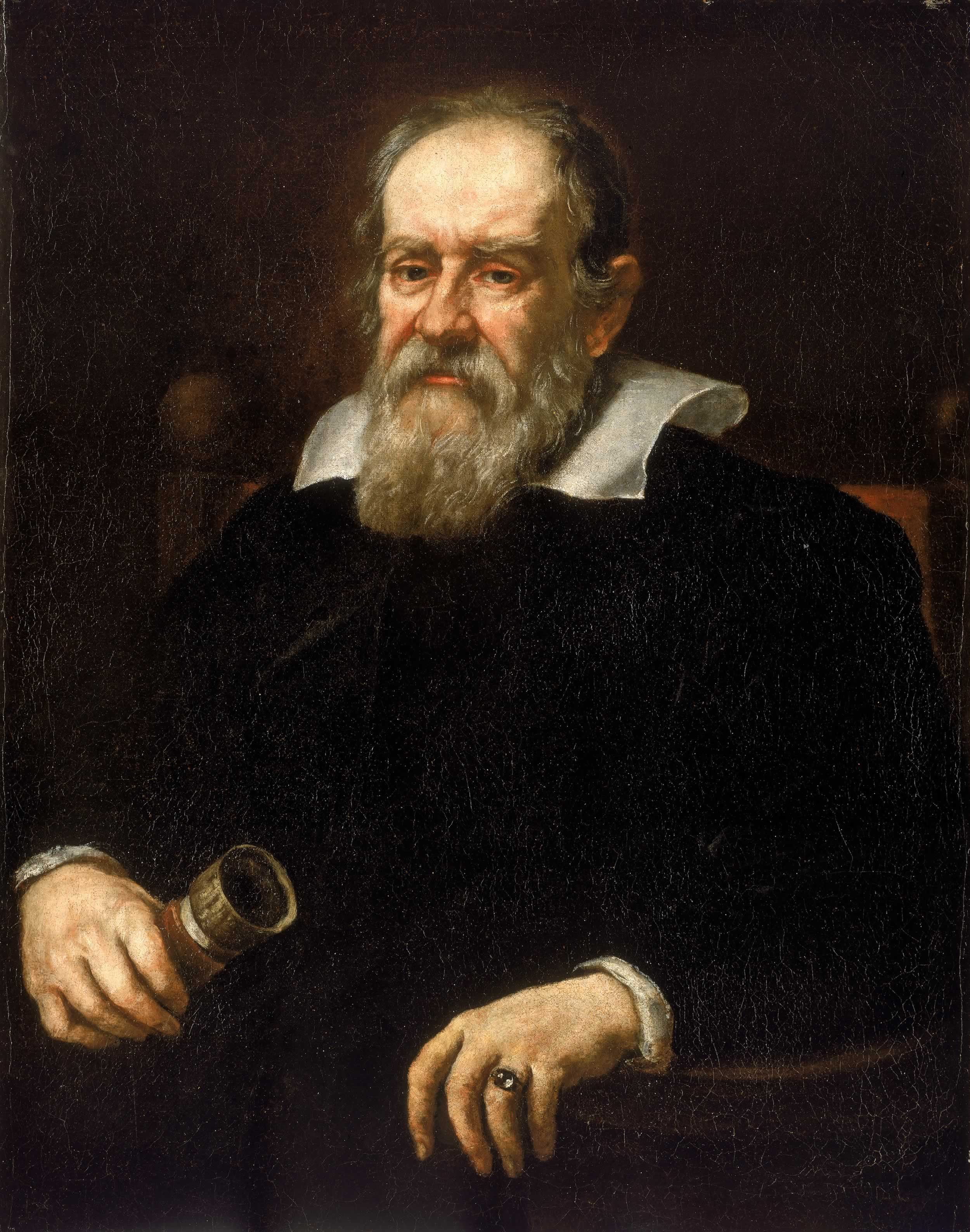
No introduction needed for Galileo. We simply avoid writing pages of biography. Born in Pisa, this major physicist and astronomer made many discoveries in mechanics and astronomy.
He greatly improved the telescope, supported Earth's motion, invented a thermometer, hydrostatic balance and proportional compass, and established laws of falling bodies. For us here, he discovered pendulum laws.
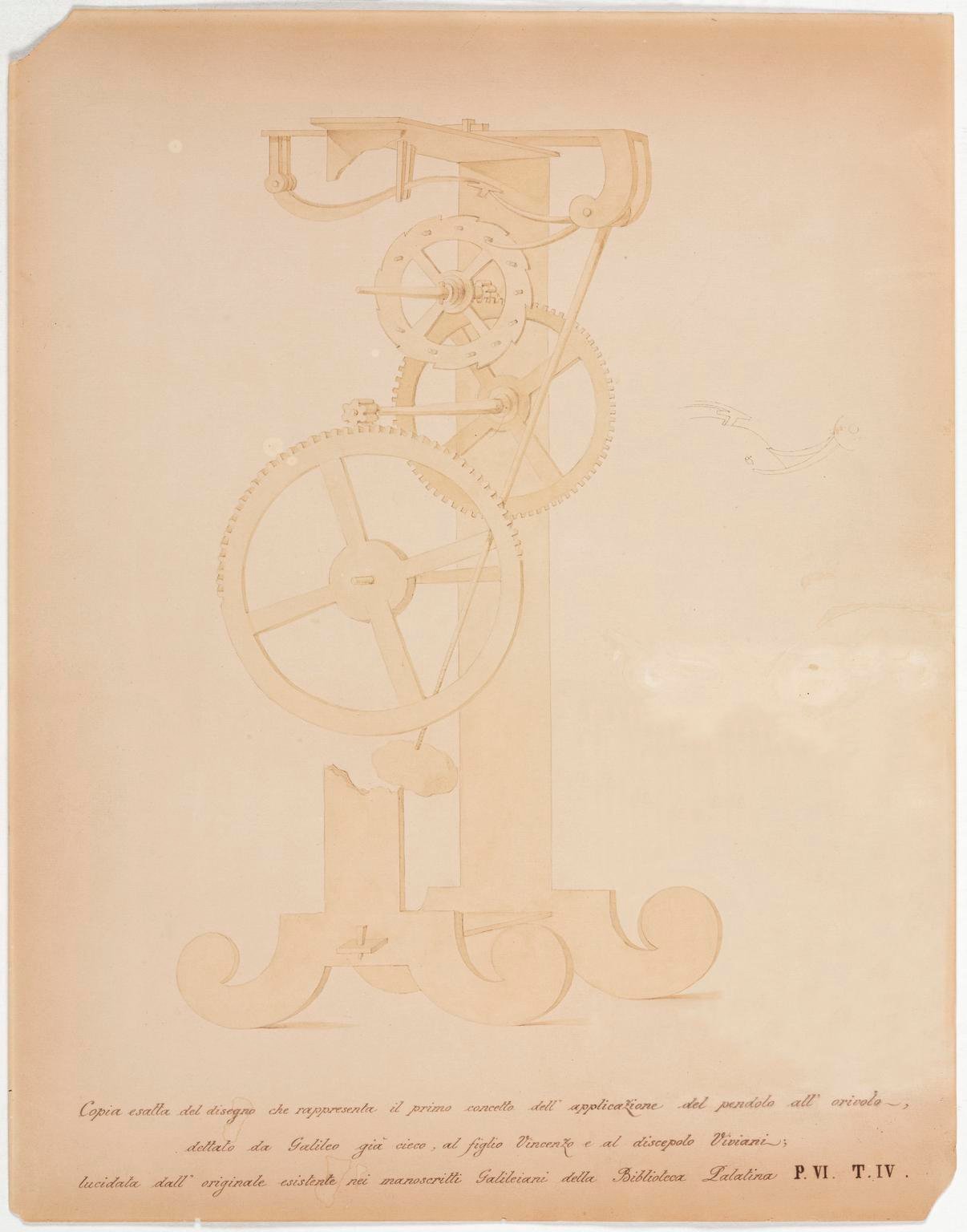
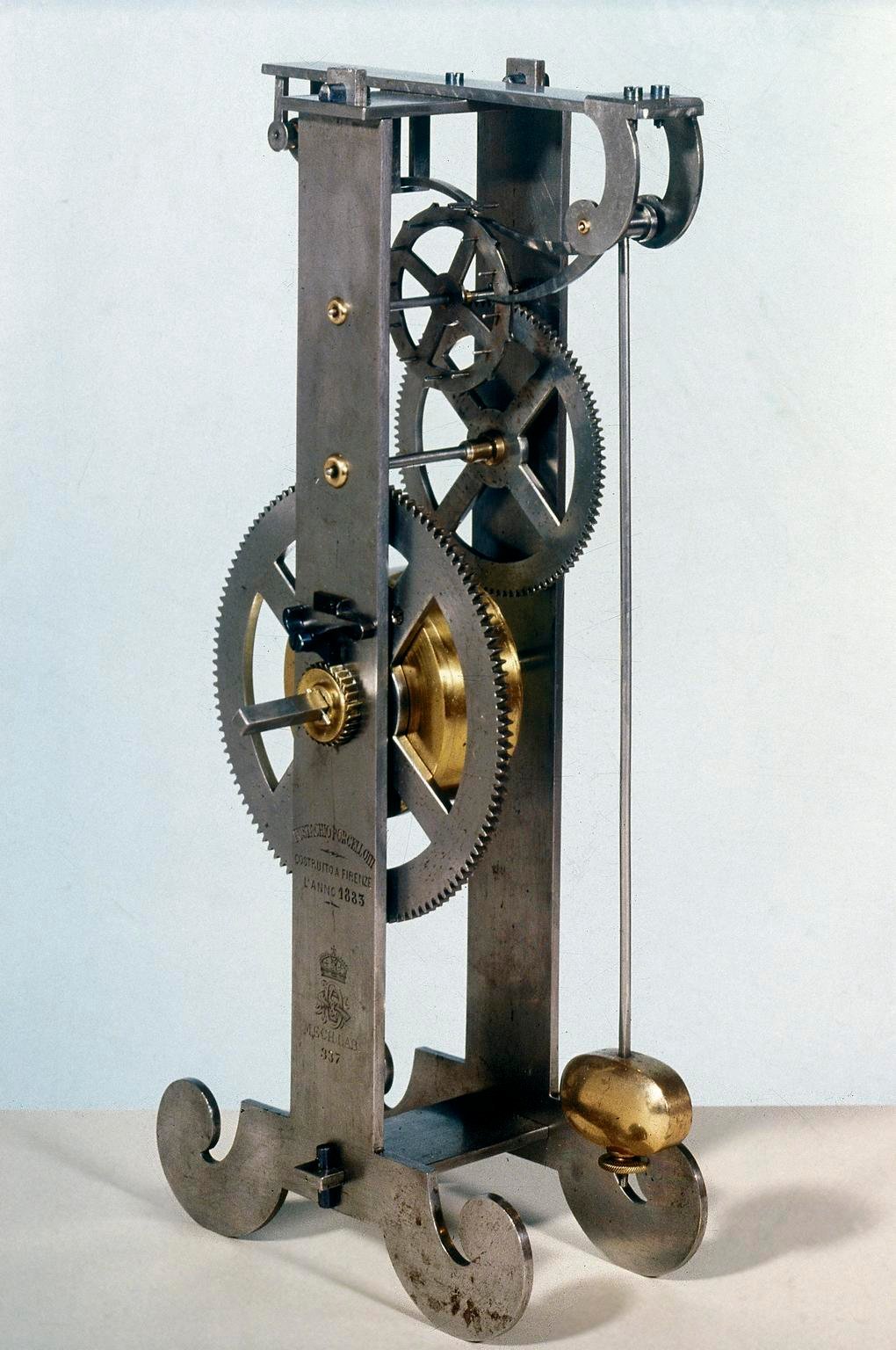
In 1638, he published pendulum theory and asked his son to build a weight-and-pendulum clock he had designed. Unfortunately, the son died the following year.
Shown here is the drawing made by Galileo's son from his father's dictation, the basis for that intended clock.
Then enters Christiaan Huygens (1629-1695).
Christiaan Huygens (1629-1695)
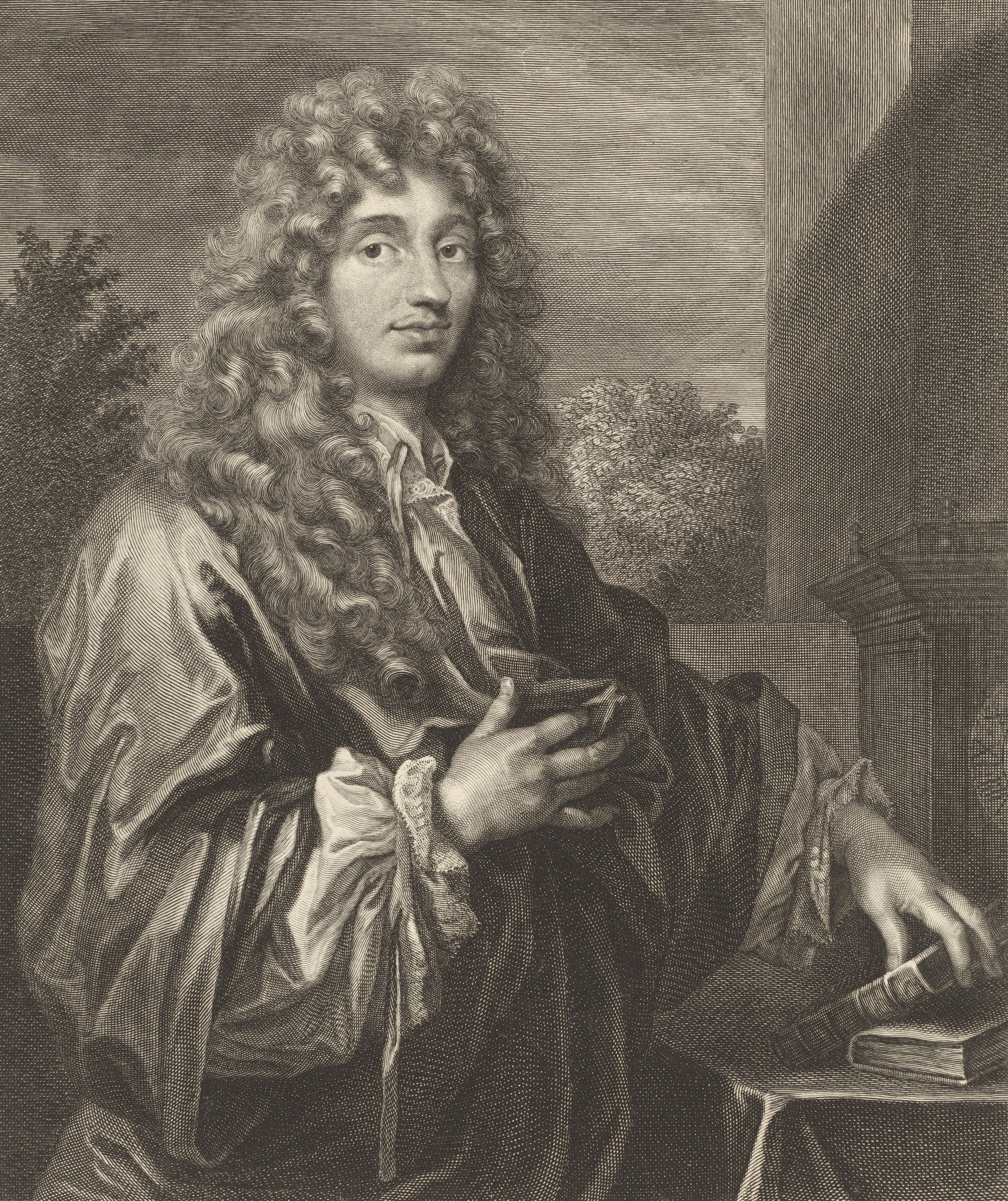
Born in The Hague, he studied science through Descartes' works, a friend of his father. He was first to observe a moon of Saturn (Titan), then Saturn's rotation and rings. He published rules of elastic collision.
He was a member of both the French Academy of Sciences and the Royal Society of London. For our topic, he invented the pendulum clock and the balance spring for watches.
Did he continue Galileo's work, or develop in parallel? In any case, in 1657 he commissioned clockmaker Salomon Coster to build a weight-and-pendulum clock soon simply called a pendulum clock.
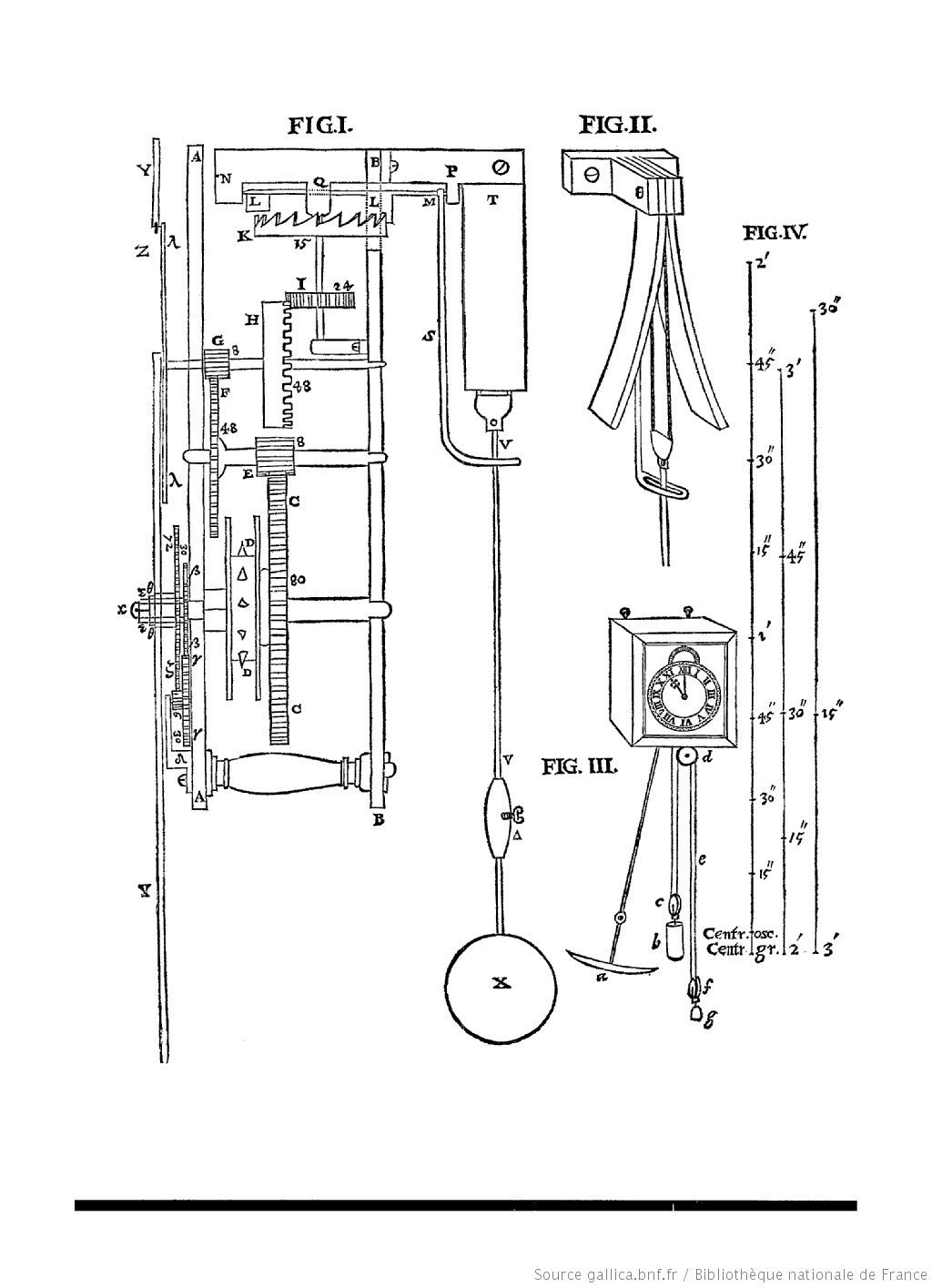
Weight-driven pendulum clock as shown in Huygens' Horologium Oscillatorium. The engraving shows the escapement is still a crown wheel, requiring large pendulum swings, harmful to isochronism.
The two blades are meant to correct pendulum-period variation; period is adjusted by a sliding weight on the rod. It took until 1671 and clockmaker William Clement, based on an idea by Robert Hooke, for the recoil anchor escapement to appear. This reduced pendulum swing from about 40° (Huygens) to 4-5°, making isochronism far more realistic.
Eighteen years later, in 1675, Huygens invented the first balance-spring watch, built by Isaac Thuret, one of Paris's best clockmakers. Its regulating organ was a balance wheel (not to be confused with clock pendulum), a small metal wheel coupled to a fine steel spiral spring acting on it like gravity on a pendulum.
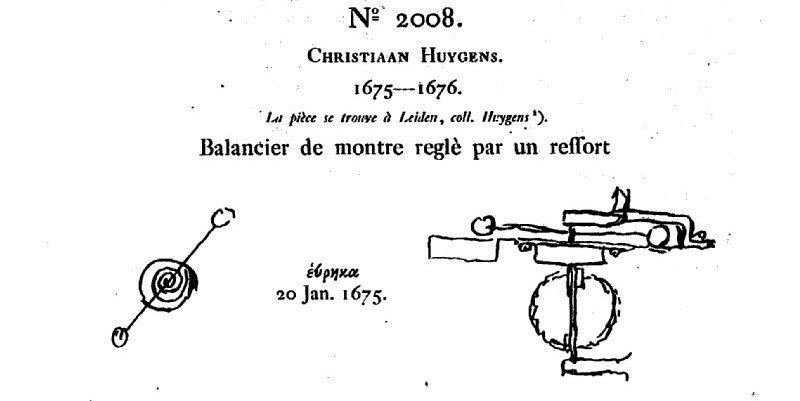
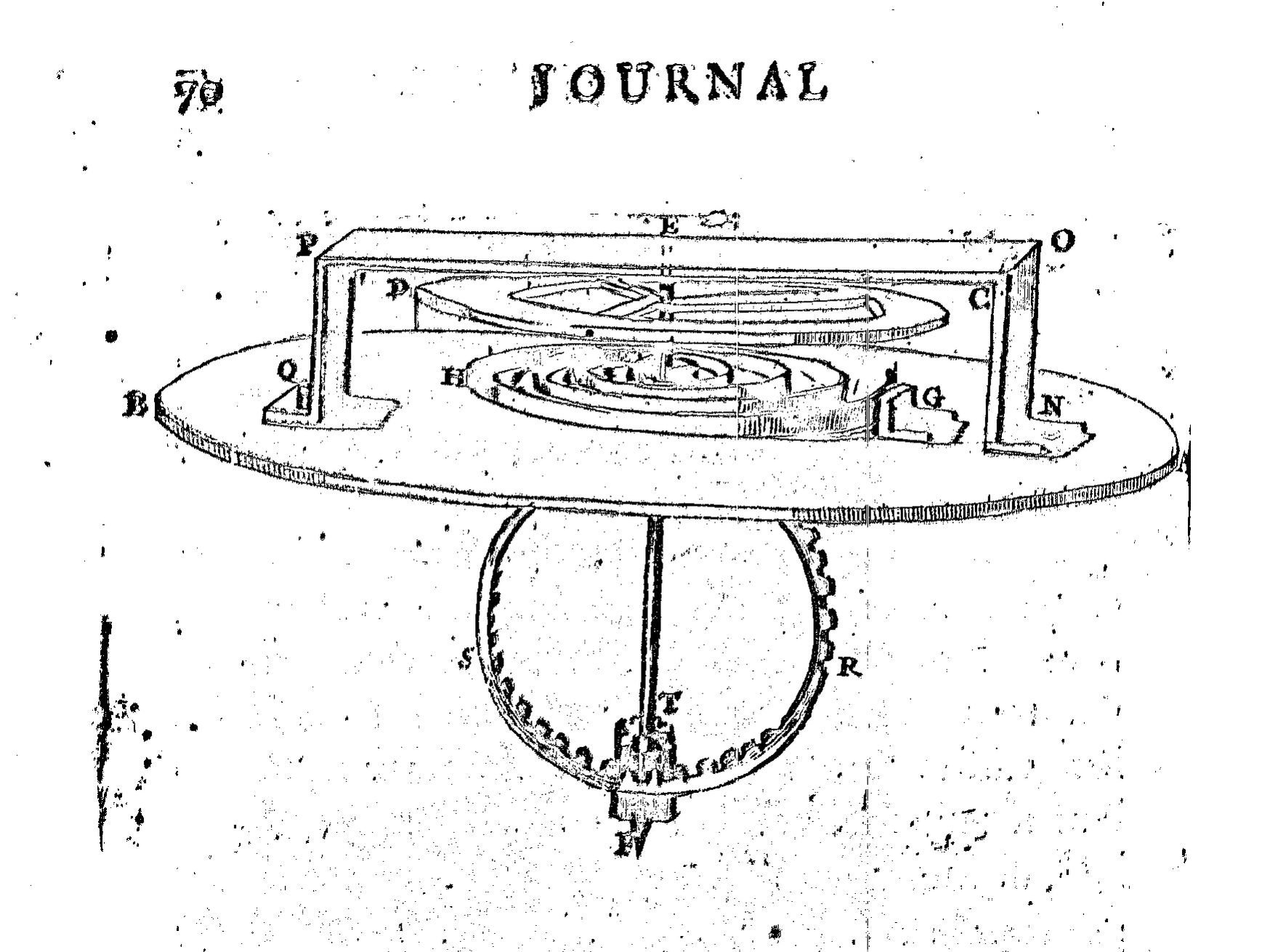
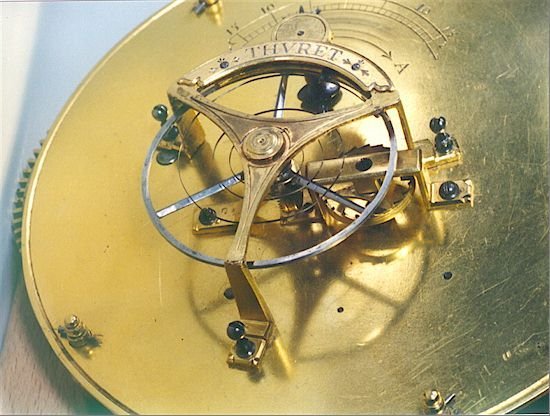
In following decades and centuries, clockmakers and inventors kept improving these and other systems: escapements, striking mechanisms, winding systems, material quality, resistance to temperature variation, and more. But this goes beyond our study's scope, and beyond my own expertise. For a full chronology, refer to specialized references.
Quartz, the modern oscillator
In 1880, Pierre and Jacques Curie discovered the piezoelectric effect: when certain crystals (including quartz) are stressed, electrical charges appear on their surface.
So we just put quartz in a case, hit it (the quartz, not the case), collect charges, and we're done... Oops, wrong device. That builds a gas lighter, not a watch. That is the direct piezoelectric effect.
We need G. Lippmann to show the inverse effect: crystals deform when subjected to an electric field. If quartz is continuously excited, it vibrates at a highly stable natural frequency depending on its dimensions. Count vibrations and convert into desired time units (seconds, for example). The quartz resonator is born.
For watches, frequency is generally 32,768 Hz. An integrated circuit divides this by 2 fifteen times, yielding one-second pulses.
Precision is around 1/1000 second over 24 hours. Clearly better than our initial foliot.
First quartz clocks appeared around 1929-1930, and their size rivalled early tower clocks. The first analogue quartz wristwatch appeared in 1967; digital watch in 1971.

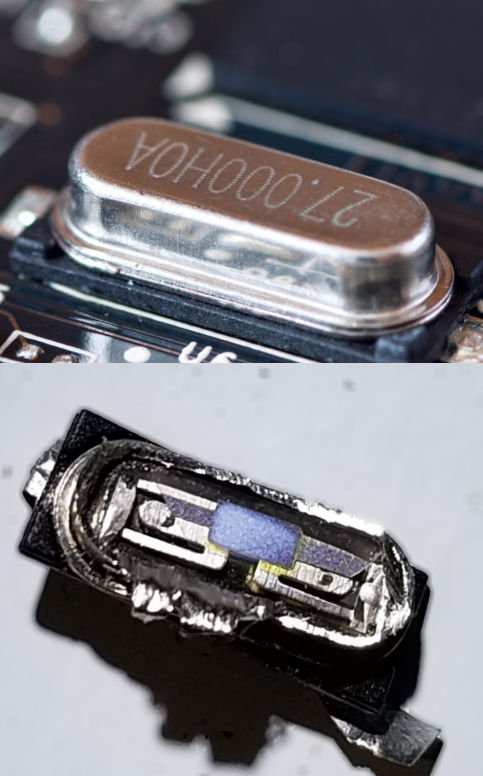
If you look for quartz in your own watch, you will not find something like the left image but something like the second. You only need to open the case to find the quartz strip. After that, I do not guarantee your watch will keep running very well...
Atomic clocks
With atomic clocks, we move to extreme precision, on the order of one second every roughly 3,000 years.
These clocks are obviously not meant for home mantelpieces. They serve very precise measurements, including the production of TAI (International Atomic Time), mentioned in our study on time scales.
We will not go into operational detail. In short, now the atom acts as oscillator, since atomic frequency (more precisely, state transitions) is even more precise than quartz. Other atoms exist, but cesium (Cs for friends) seems particularly suited to this role.
In conclusion
Do you remember the allegory of Temperance as painted by Ambrogio Lorenzetti in 1338?
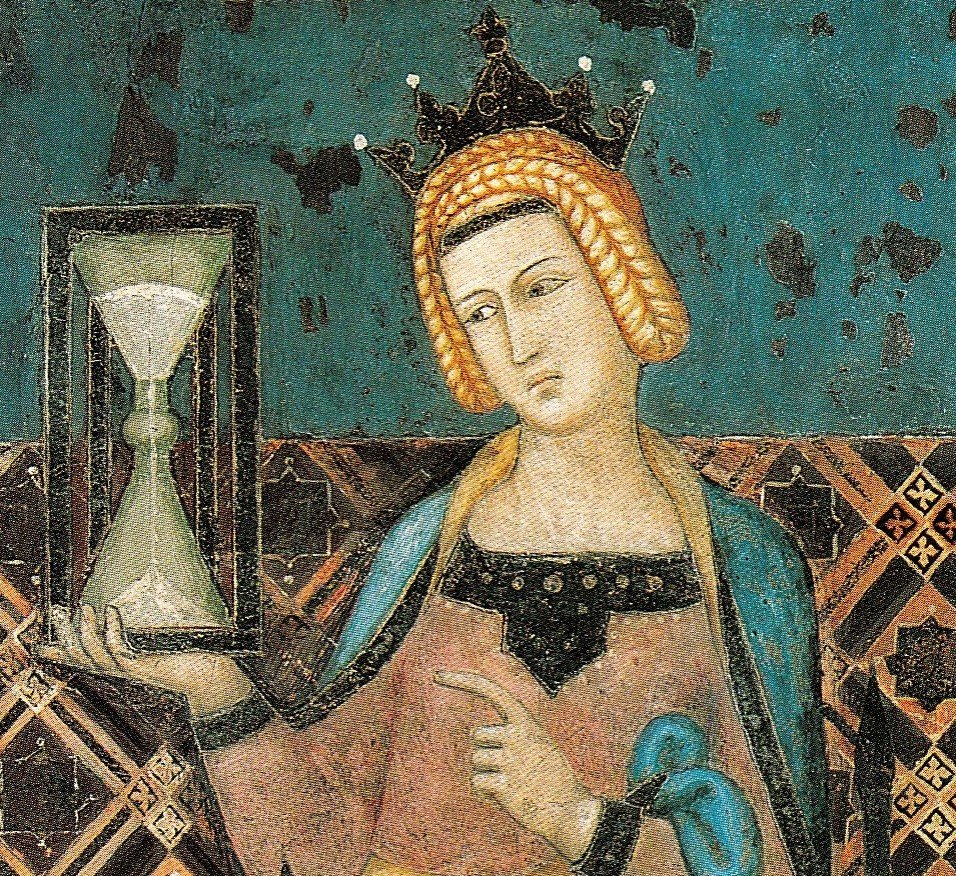
In the 15th century, it is represented like this in a manuscript kept at the Saxon State Library in Dresden.
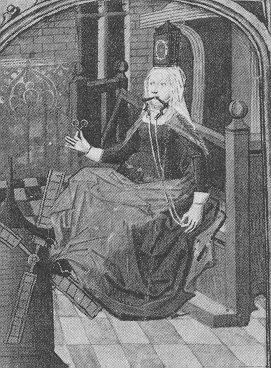
In the atomic-clock age, how should it be represented?