Throughout this study, we will look at instruments that have been or are still used to measure time. Three quick clarifications before we begin:
- We should take the word “instruments” in a very broad sense, broader than manufactured objects alone. It can mean anything from a watch to a simple stick planted in the ground.
- For once, we will not stay within the strict calendar framework (days, months, years), but also move down to hours and even seconds.
- We will not study every minor variant of an instrument unless it represents a major development. So there is no point looking here for every watch type and model.
How this study is structured
Ideally, we would present everything chronologically as each instrument appeared or evolved. The drawback is that instrument histories overlap, and after discussing one then another, we would need to return to the first because it underwent a major change.
So we will use a more practical structure: major instrument families, each covered on a dedicated page.
- Page 2: Shadow-observation instruments.
- Page 3: Celestial-observation instruments.
- Page 4: Flow- or combustion-based instruments.
- Page 5: Clocks and modern instruments.
And page 1, then? That is the exception. This page covers “instruments” from before writing, whether linked to observing the heavens or not.
Prehistoric instruments
1) The Ishango bone

In the 1950s, Belgian archaeologist Jean de Heinzelin discovered, near Ishango, a bone marked with notches. Dating studies place it at around 20,000 years old. Zoologists still do not know which animal it came from.
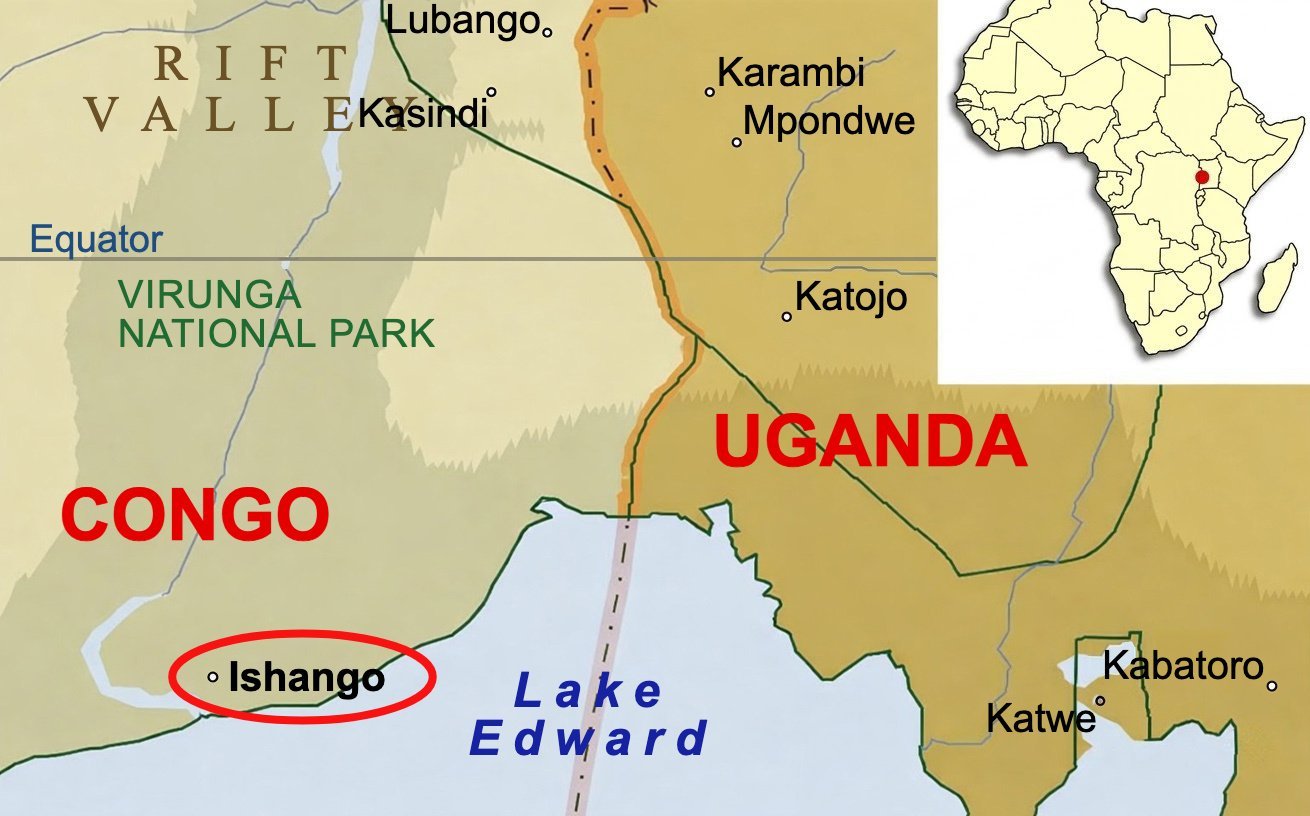
The village of Ishango lies not far from Lake Edward, on the Semliki River, which flows out of it and into Lake Albert, where the Nile begins.
This bone, under 10 cm long, has quartz at one end and three columns of incisions.
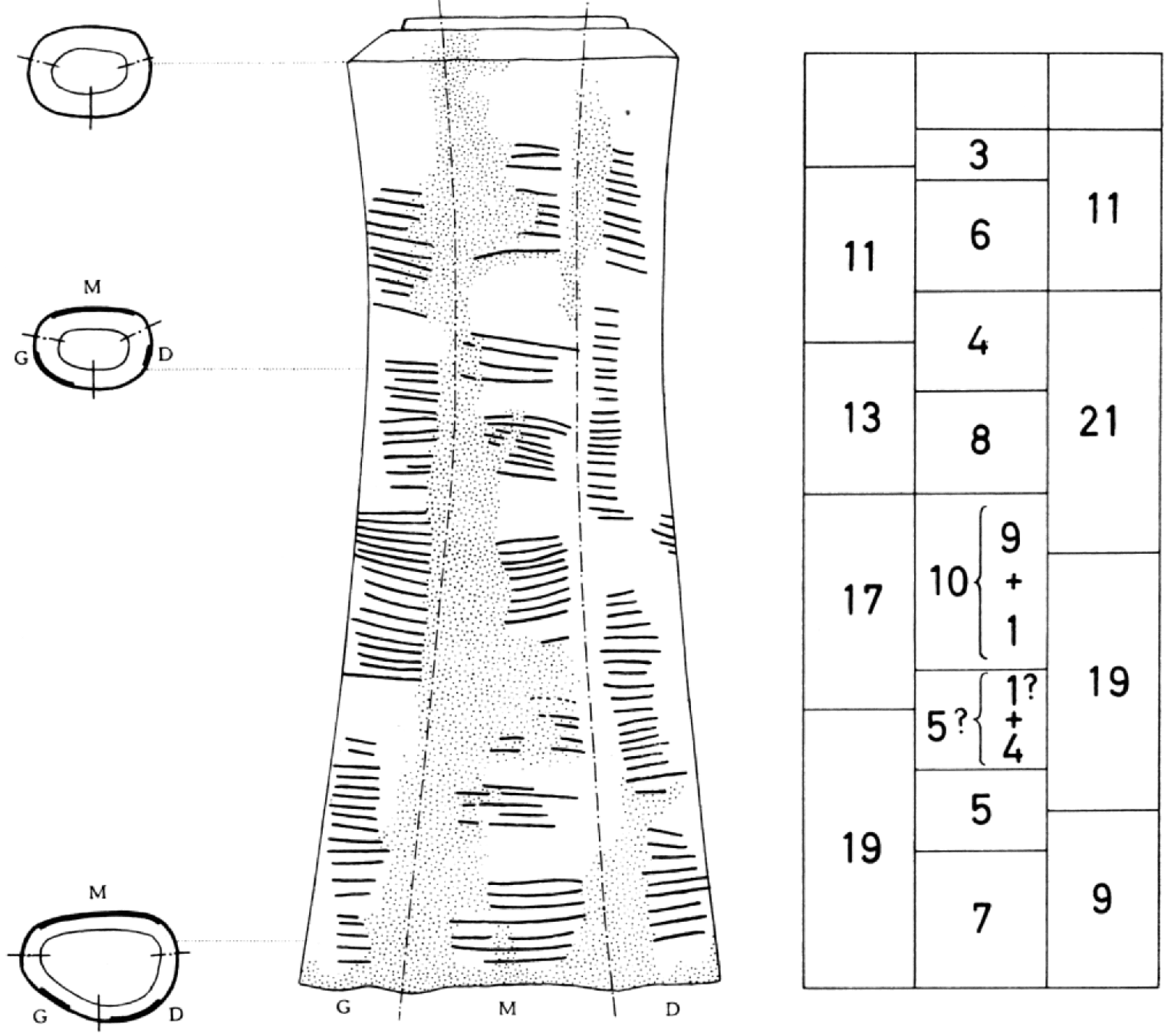
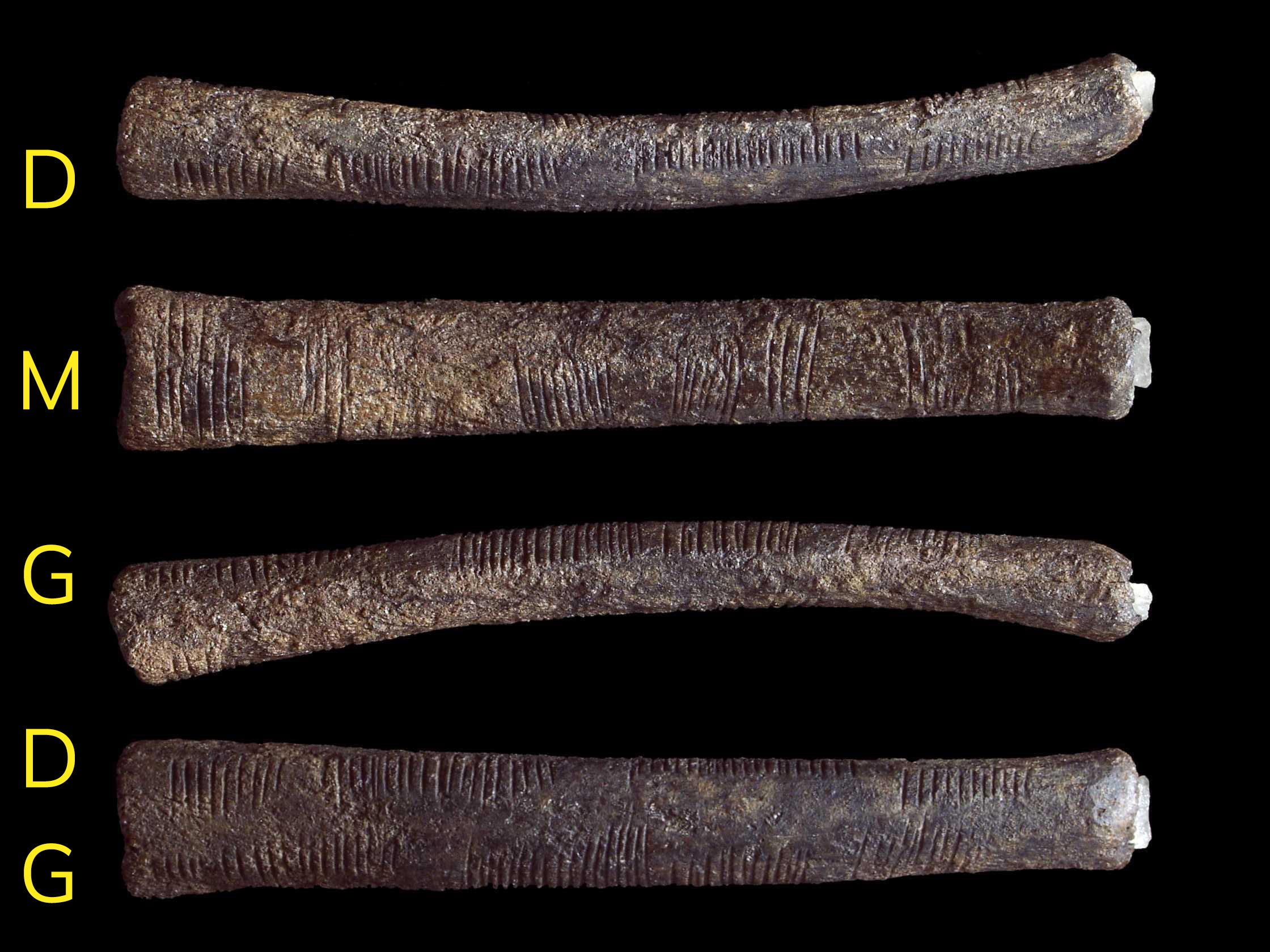
Looking closely, and even very closely, the notches can be grouped as follows:
| group 1 | group 2 | group 3 | group 4 | group 5 | |
|---|---|---|---|---|---|
| R | 9 | 19 | 21 | 11 | |
| L | 19 | 17 | 13 | 11 | |
| M | 7 | 5 and 5 | 10 | 4 and 8 | 3 and 6 |
Chronologically, there are three main interpretations of these series:
1) the first is Jean de Heinzelin's own: he saw it as a “prehistoric calculator”.
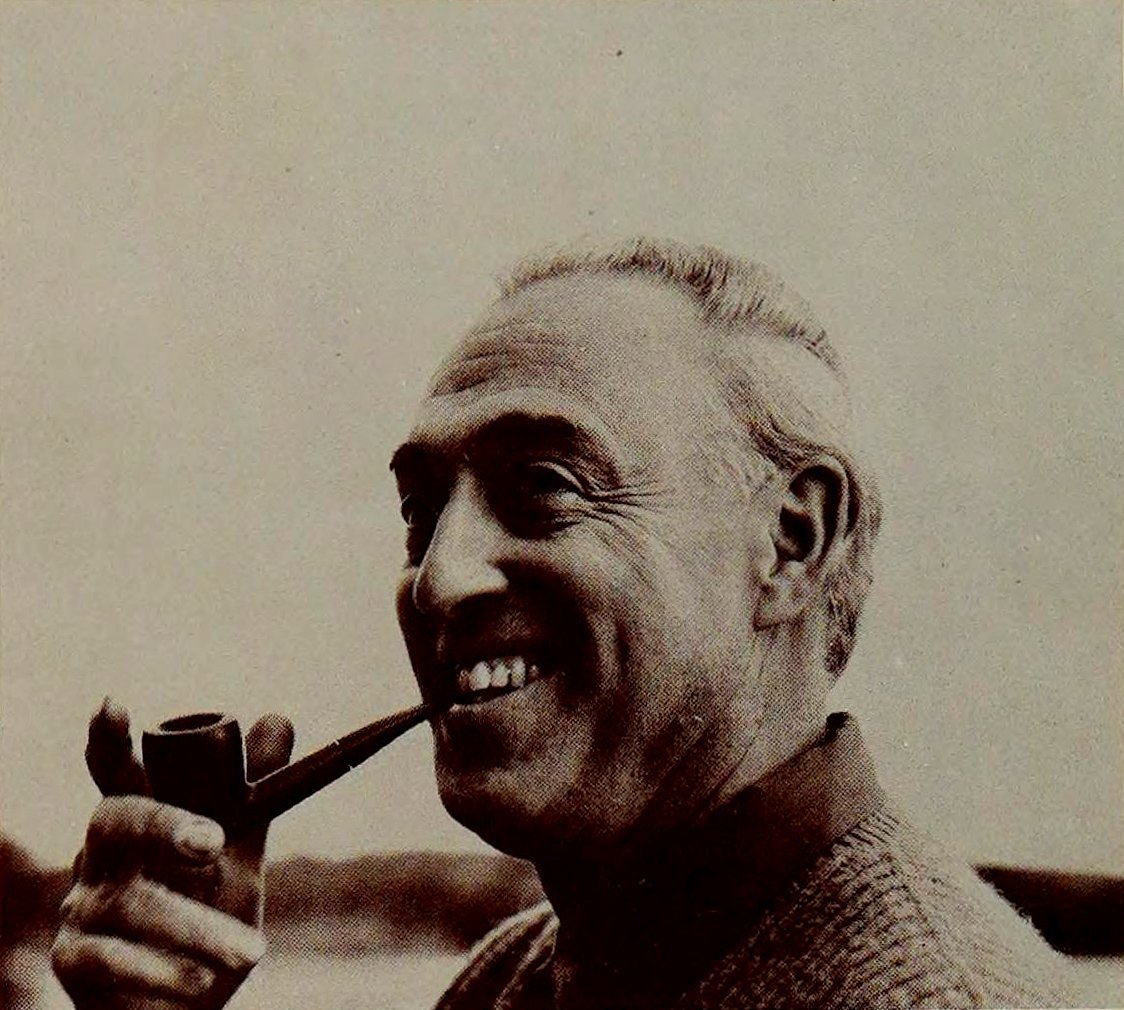
2) the second, which concerns us here, is from Alexander Marshack, research associate at the Peabody Museum of Archaeology.
According to him, the Ishango bone is a lunar calendar. He based this on microscopic analysis of the notches and on counting them. Microscope observations suggest the cuts differ in angle and depth. The smallest notches might correspond to new moon days. The count shows the D-column total equals 60. Same for the G-column. D + G gives 120, about 4 lunar months (within two days). The third column, M, totals 78 notches, about one and a half lunar months.
What should we make of this? Form your own view, but I have serious doubts. I doubt microscopes were widespread in 20,000 BCE. I also doubt this bone and its marks can be called a measuring instrument, since nothing allows a marker to be set on a notch to indicate “today” and locate oneself in time. So is it just a rough calendar? Something else?
3) The third interpretation is from V. Plester, a researcher at the European Space Agency, who sees the predominance of certain numbers (6, 12) in Africa.
In short, we still do not really know what the Ishango notches mean. But the “time-measuring instrument” theory has lost momentum. It was still worth mentioning. If you want to go further, you can read the Royal Belgian Institute of Natural Sciences PDF dossier.
2) The Abri Blanchard bone
Later (1965), we meet A. Marshack and his microscope again, this time studying another bone dated to around 32,000 BCE. This one comes from Abri Blanchard in Dordogne (France).
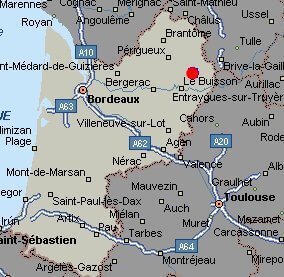
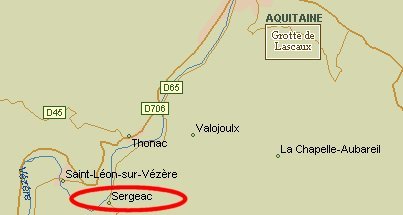
Not far from Lascaux caves, Abri Blanchard lies near the village of Sergeac along the Vezere River.
Naked-eye observation shows a series of marks carved in a kind of spiral.
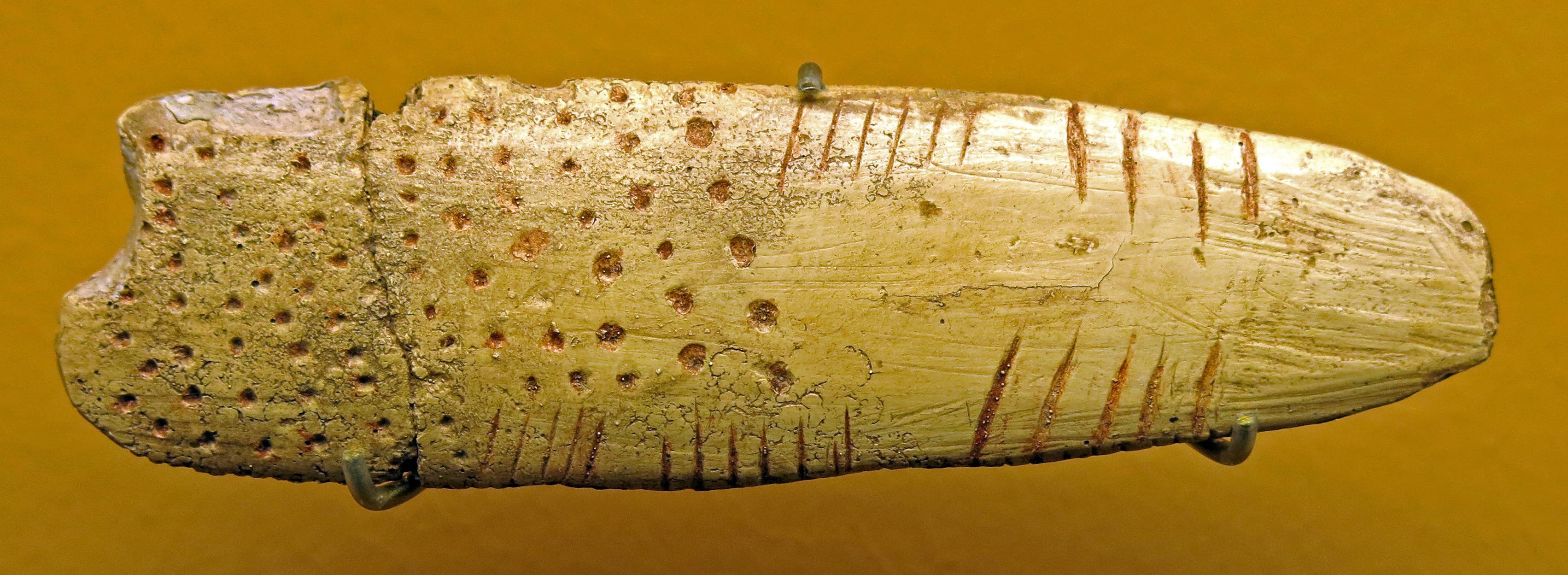
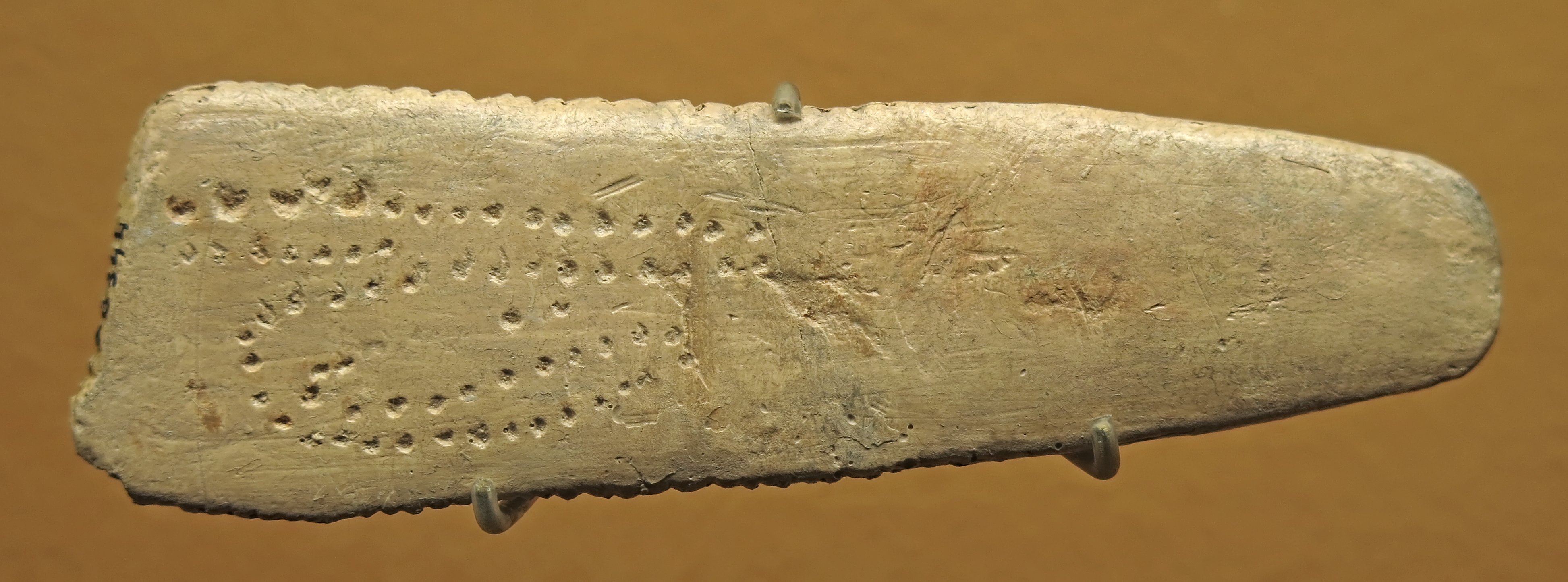
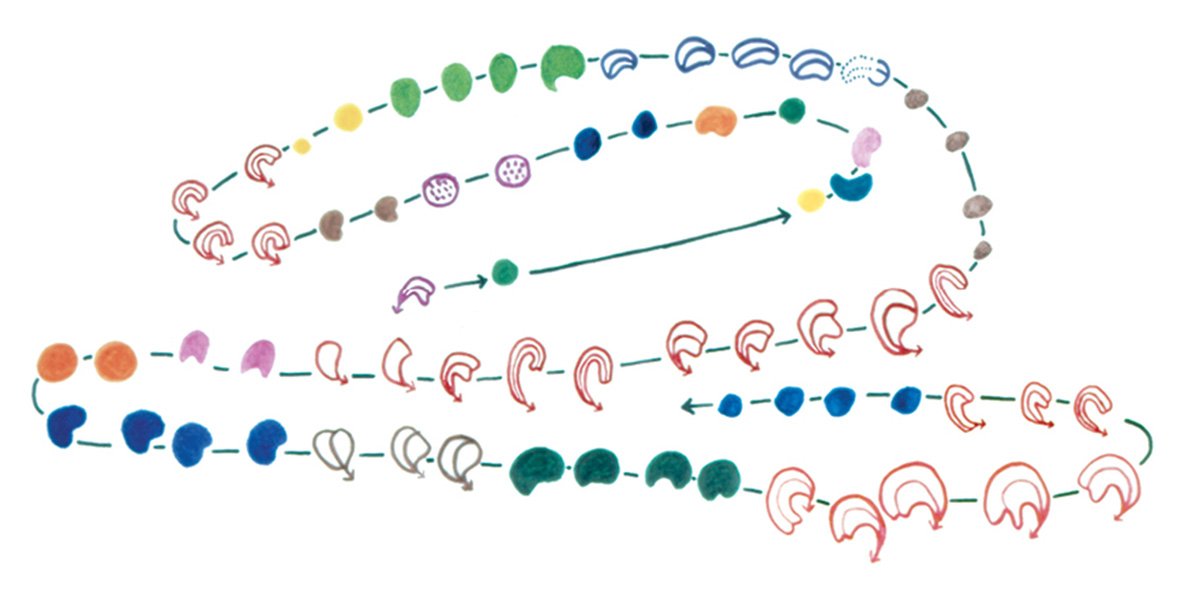
All marks on the front side would correspond to about 2.5 lunar months.
Marshack notes that "...a man producing a decorative composition of 5.2 cm would not have changed point and striking style 24 times to engrave 69 marks so close together." His microscope shows this. But how did the engraver, without that tool, achieve such supposed precision? Are we seeing what we want to see rather than what is there?
The bone also shows 63 marks on the edge and 40 on the reverse. Altogether, these would cover a period of 6 lunar months.
Is the Abri Blanchard bone a prehistoric time-measuring instrument? The issue is the same as for the Ishango bone: how do you “mark” the present moment? Everyone can form their own opinion. Here too, it was worth discussing. English-speaking readers can look at Cave Script.
3) Megaliths: Stonehenge
The megalithic site of Stonehenge lies near Amesbury, in Wiltshire, England.
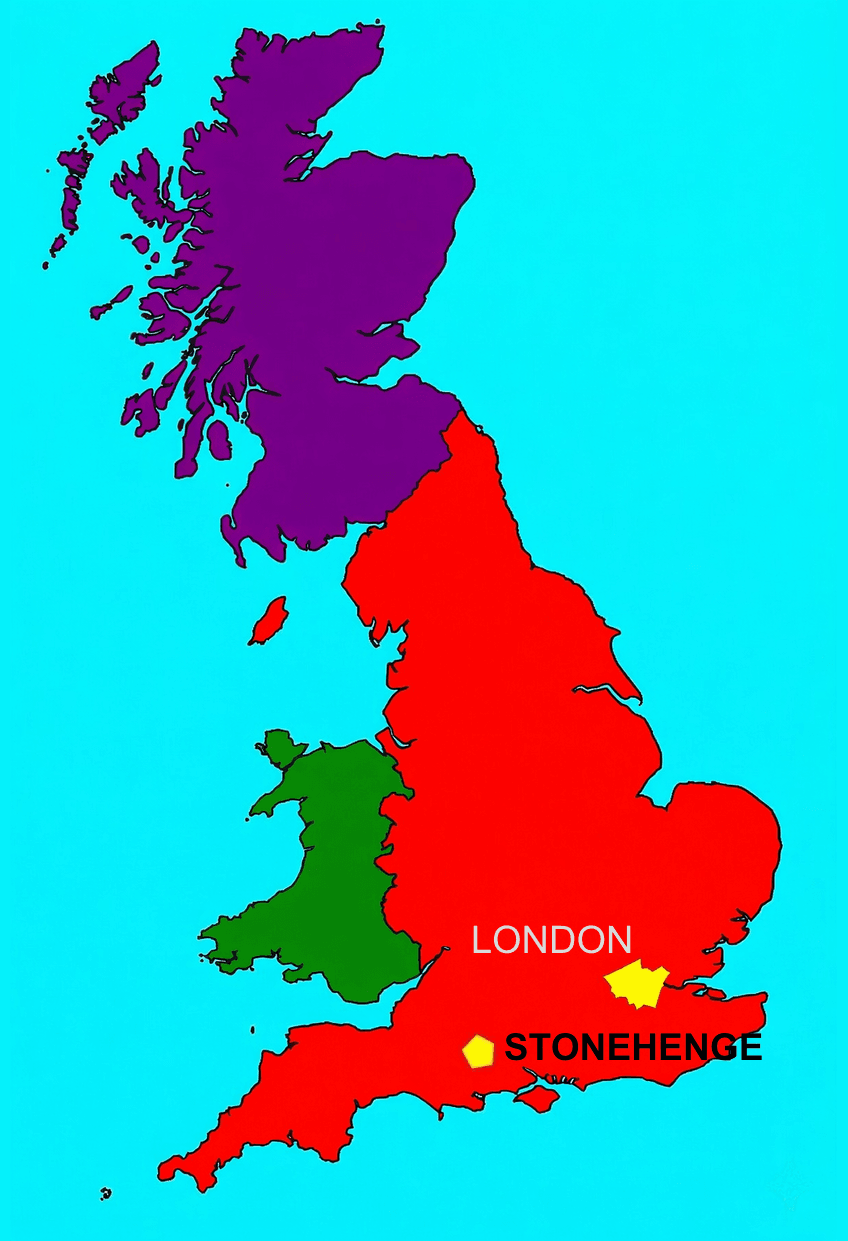
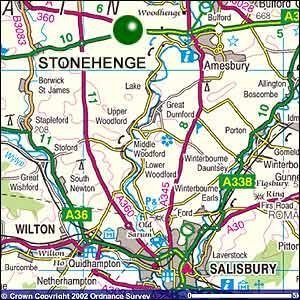
When was Stonehenge built? Hard to answer, because although it belongs to the Neolithic, construction took place in three successive phases from roughly 2900 BCE to roughly 1600 BCE.
To follow these stages, let's first look at an overall view of the site.
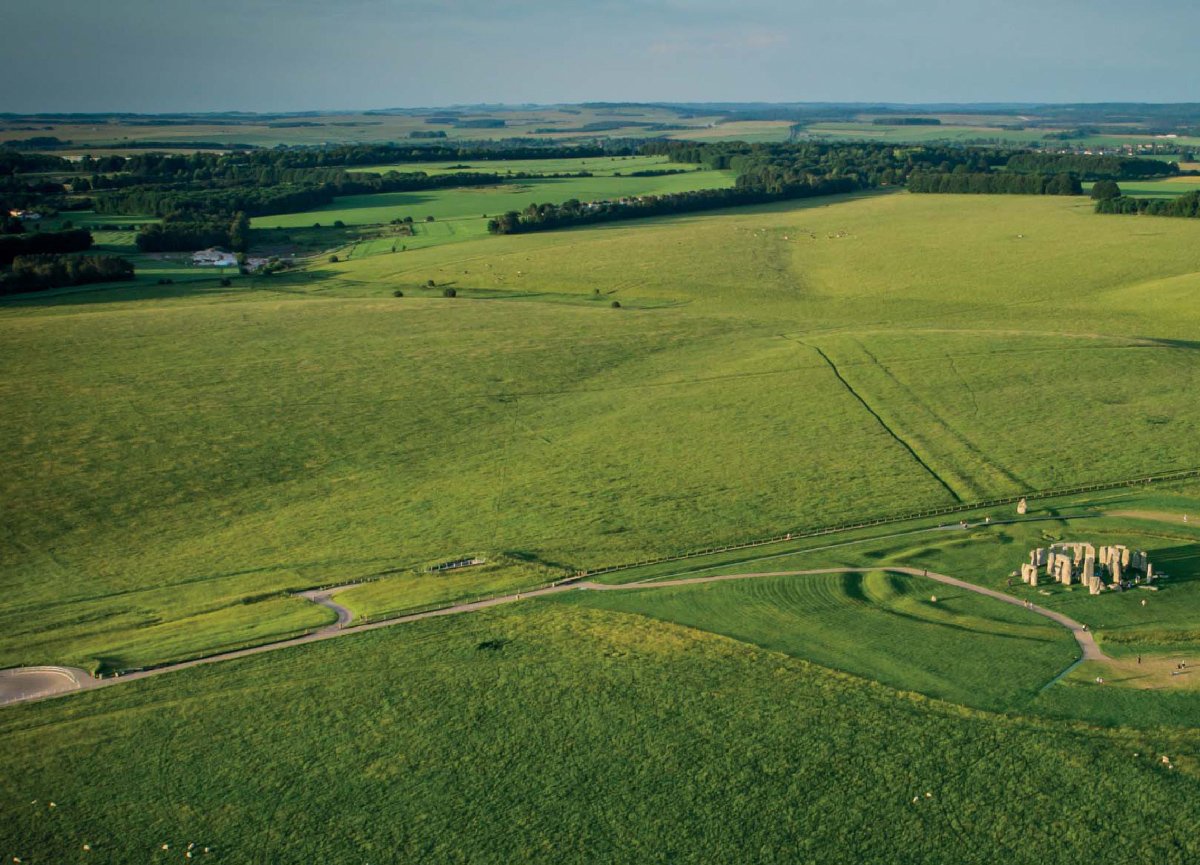
Now let's detail the three main phases (there are sub-phases), as archaeologists generally describe them.
Phase 1: around 2900 BCE
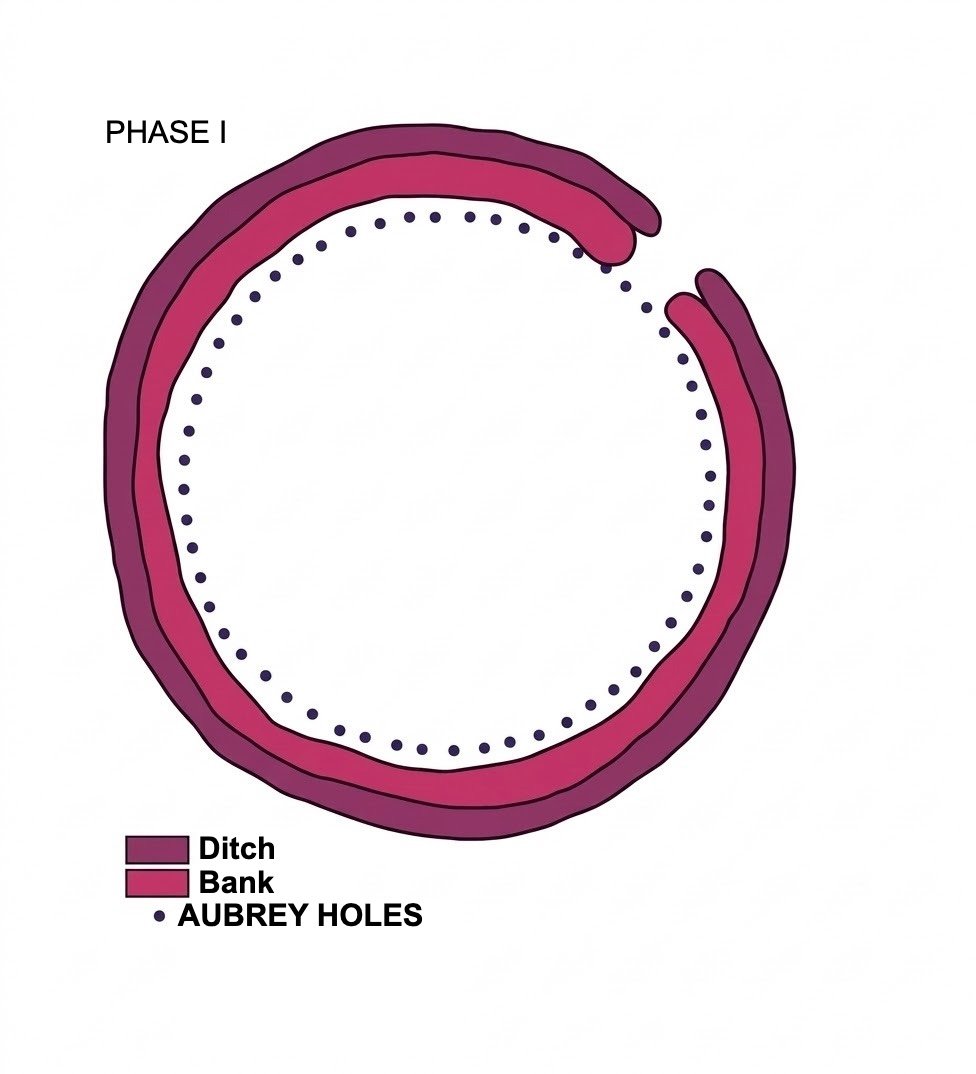
On a circle 100 meters in diameter, two embankments were built with a ditch between them.
A third, inner circle is marked by 56 holes (some are visible on the left and bottom of the main image). This is the so-called Aubrey circle, named after an archaeologist. These holes contained wooden posts.
Phase 2: around 2900 to 2400 BCE
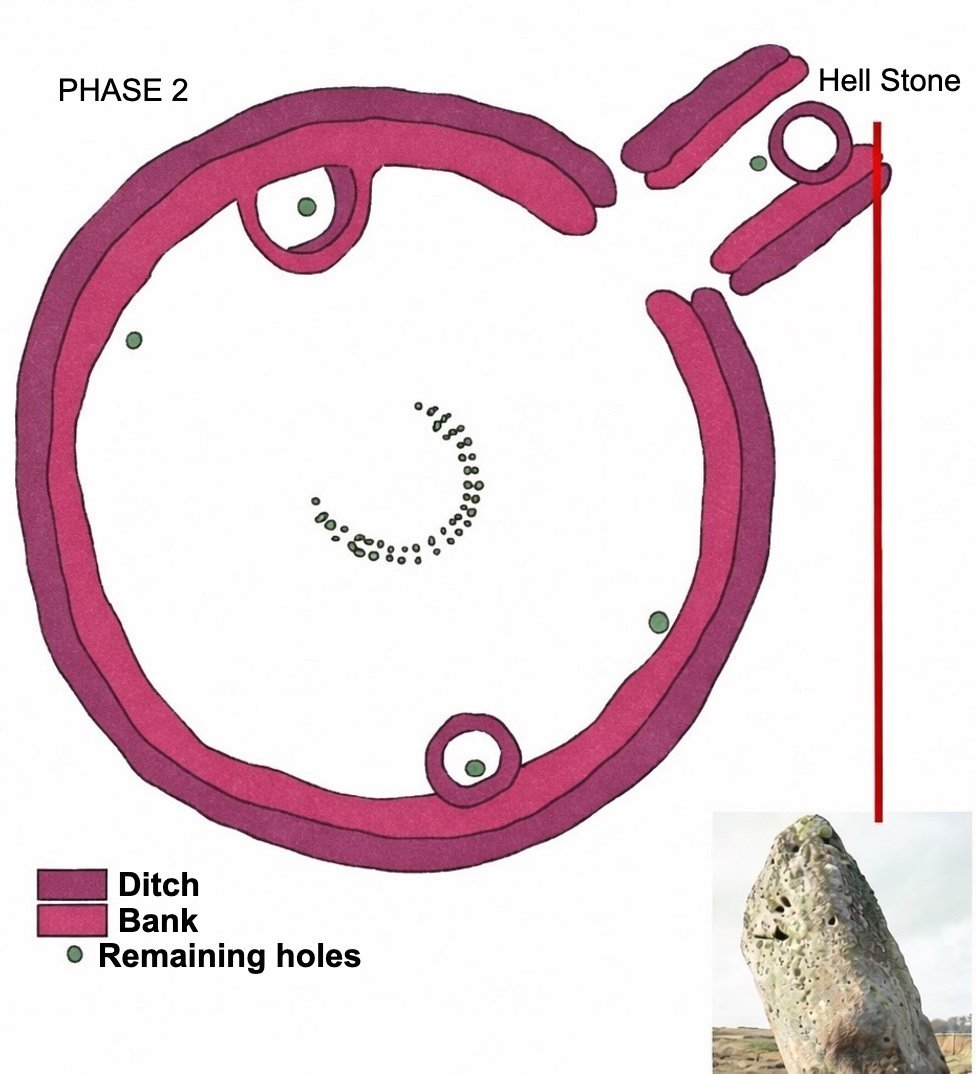
The Aubrey holes were filled with bones, cremation remains, or both.
Other holes were used for wooden structures.
A 12-meter avenue was built and included the Heel Stone, an upright stone 4.80 m high, set 1.20 m into the ground. It is surrounded by a circular ditch and likely had a twin on the other side of the avenue.
Some archaeologists place these latter developments (avenue and Heel Stone) much later, at the end of phase 3.
Phase 3: around 2400 to 1600 BCE
Stage a
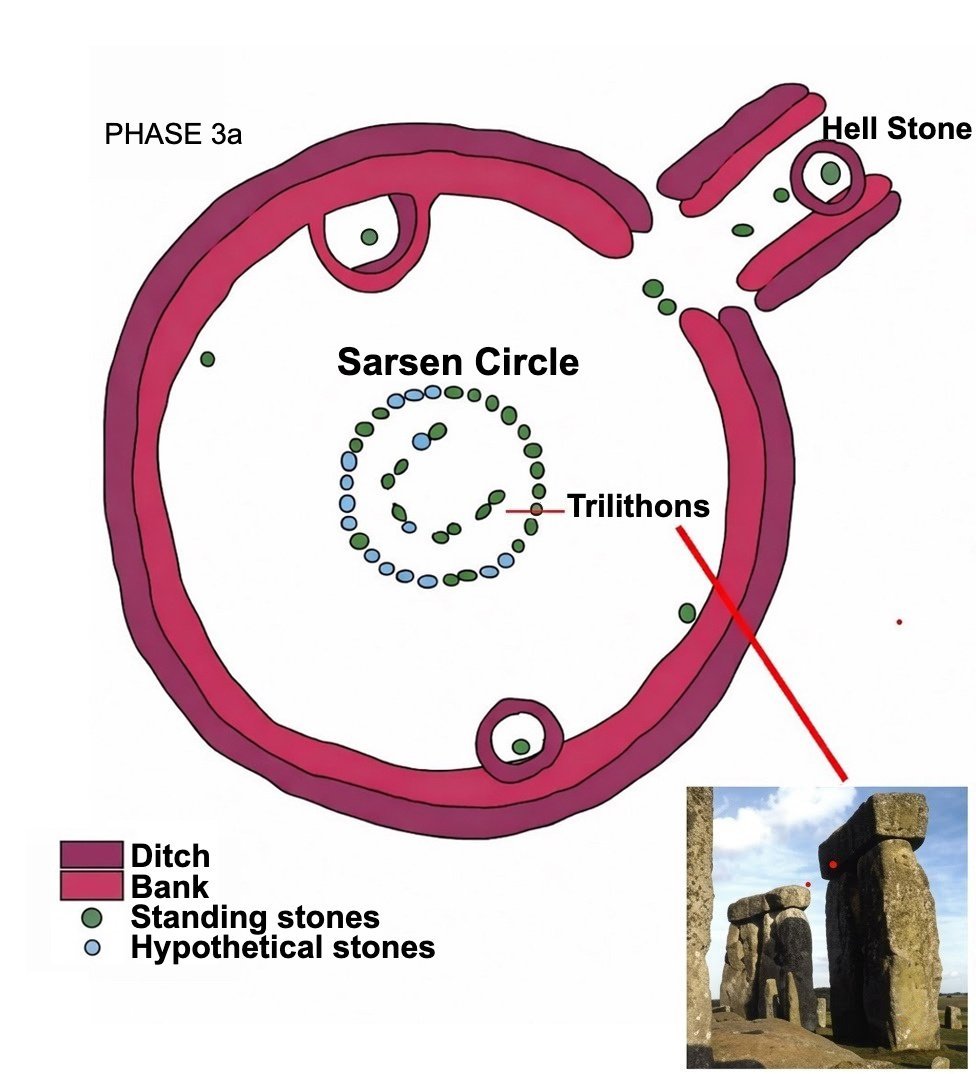
The Sarsen circle and the trilithons were erected.
As shown in the inset, trilithons consist of a lintel resting on two uprights. They were arranged in five distinct pairs.
The Sarsen circle is 33 meters in diameter and originally had 30 stones, each 4 meters high. 17 are still standing.
Stage b
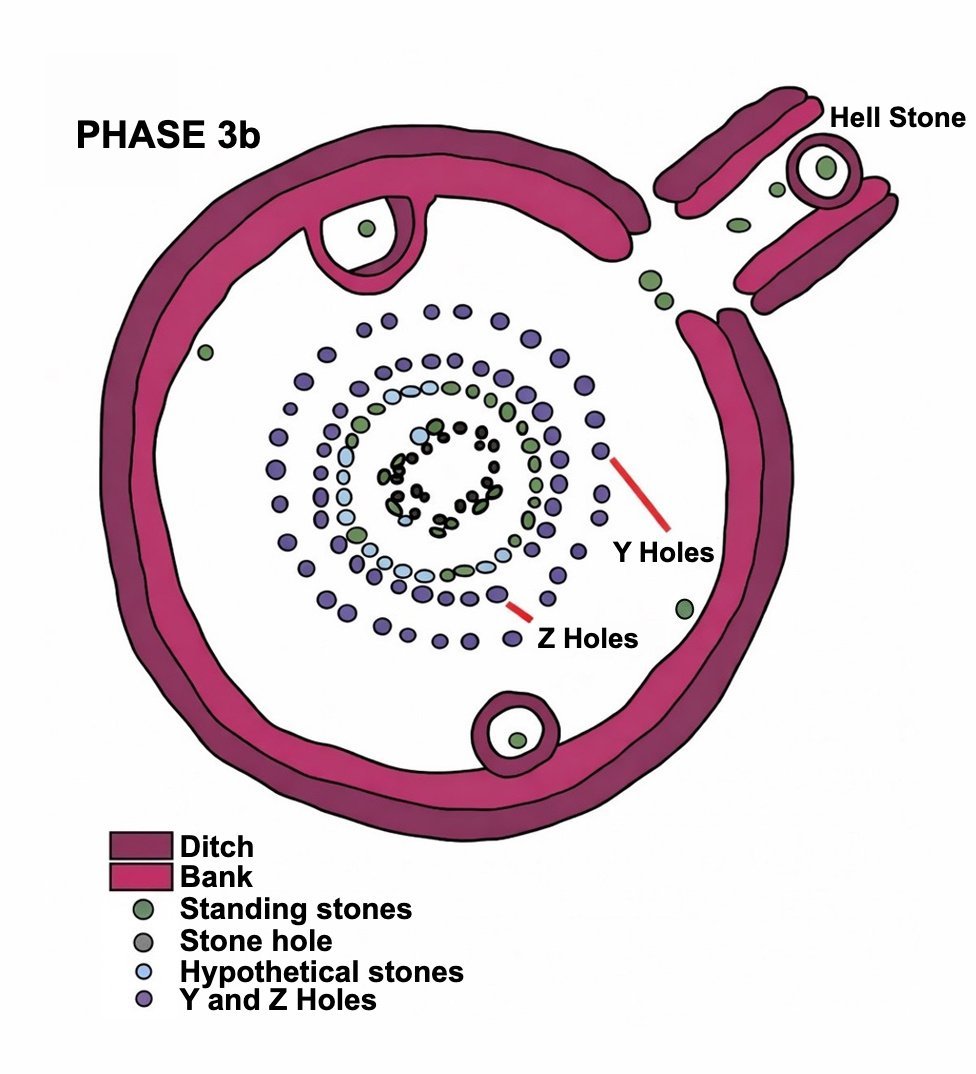
Bluestones were added. An oval of these stones closed the inner horseshoe. A bluestone circle was added between that horseshoe and the Sarsen circle.
Two final circles were added outside the Sarsen circle to receive more stones: the Y and Z holes.
Stage c
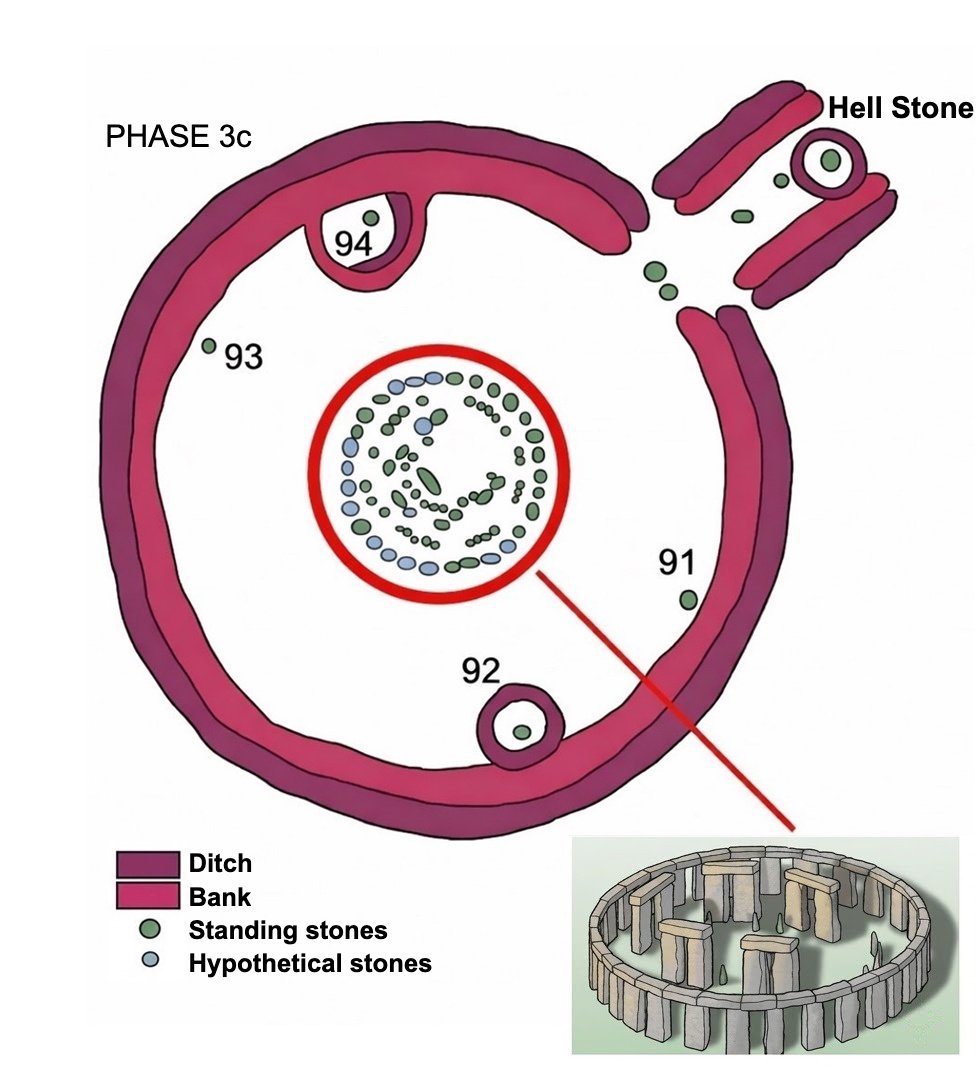
The central oval was dismantled and the central horseshoe returned to its previous form.
The Y and Z holes were never filled with the planned stones.
The inset on the right shows a reconstruction of what the site's central area likely looked like.
What does a site like this have to do with time-measuring instruments?
In the early 1970s, Scottish engineer Alexander Thom and his son Archibald examined many megalithic sites as a whole rather than as isolated structures. They found many alignments with sunrise or sunset at solstices or equinoxes and concluded there was a link between megalithic sites and astronomy, a thesis contested by other researchers such as Clive Ruggles.
Let us grant the Thoms the benefit of the doubt.
Much earlier, in the 18th century, William Stukeley had noted that the avenue, the central horseshoe, and the Heel Stone were aligned with summer-solstice sunrise. The idea of an astronomical time-measuring instrument was born.
Many others confirmed the astronomy angle. Among those most relevant to us: astronomer Gerald Hawkins and astrophysicist Fred Hoyle (1915-2001).
Skipping all identified astronomical alignments, let's come to our point.
The Aubrey holes can be used to locate position in the year: place a marker in the hole aligned with the avenue, then move it backward (counter-clockwise) by two holes every 13 days. When it returns to its starting position, the year has elapsed.
Track the lunar month? Also possible. On the day of the first full moon after the summer solstice (identified through other methods), place another marker 28 holes away from the solar marker (counter-clockwise), then move it by two holes every two days. It completes a full turn in 28 days, approximately one lunation.
You can multiply such examples almost endlessly for other astronomical observations. One for pleasure: the four “station stones” marked 91, 92, 93, 94 in the phase 3c image form a perfect rectangle. Their side directions match the most extreme sunrise/sunset and moonrise/moonset directions. Stonehenge is the only site where such directional markers form a rectangle. Surprising, isn't it?
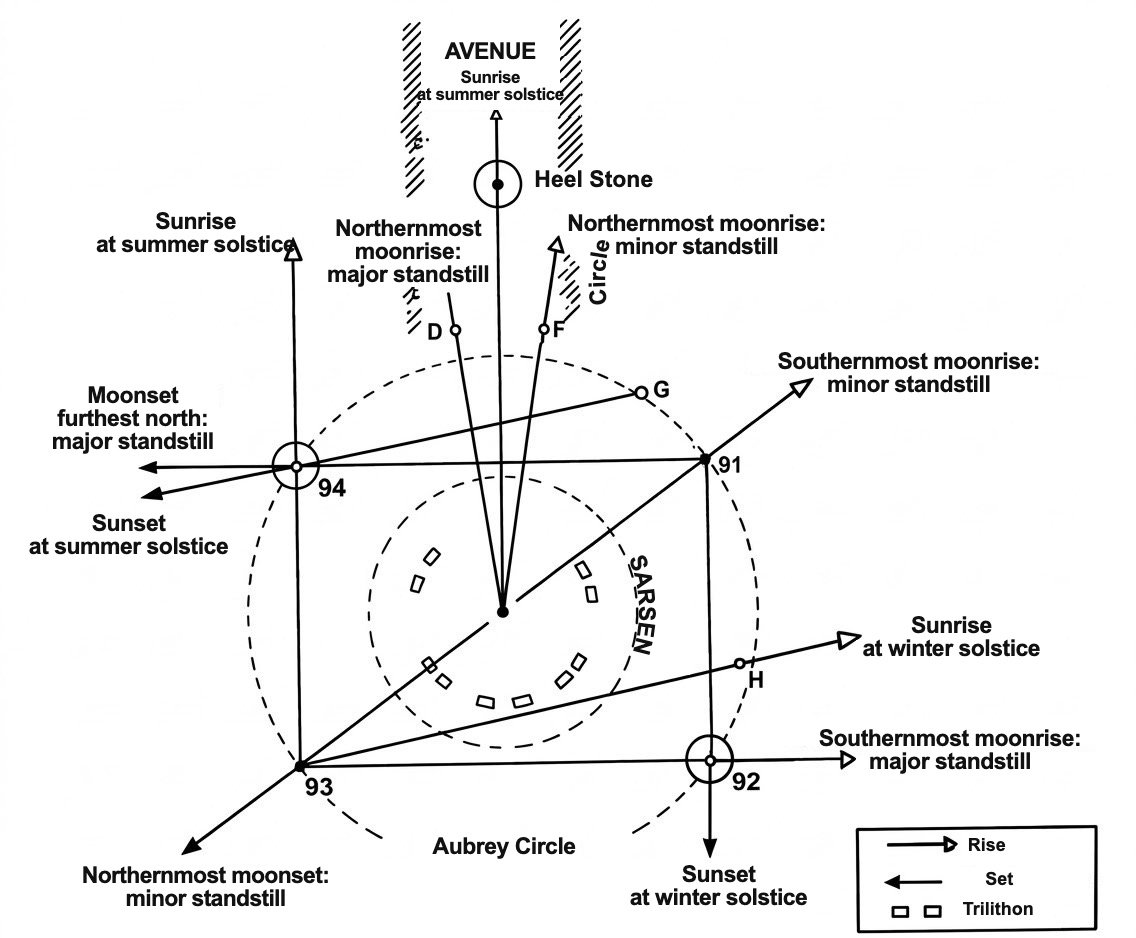
Lines drawn between holes 91, 92, 93, 94 point to notable astronomical events.
So, is Stonehenge a time-measuring instrument?
I will not answer that. First, so you can form your own view. Second, because these theories are only hypotheses advanced by some specialists and contested by others.
One fact is certain: if Stonehenge is what some say it is, it is also the only “object” on this page that has a key property of a true measuring instrument, the ability to locate oneself in time through markers.
As for the rest, my feeling is that with current astronomical knowledge, if I remove the posts from a rectangular field and draw virtual lines between the holes, by combining those holes I will eventually “point” more or less to some notable astronomical event.
But to have all cards on the table, we had to discuss it.