A Brief History
Should we say PERSIA or IRAN? I will simply quote a paragraph from Encyclopaedia Universalis on the subject: "Iranians have always called their country Iran and have always identified themselves as Iranians. The fact that a long French tradition established the use of the words 'Persia' and 'ancient Persians' changes nothing about what is regretted here. For a long time, Iranians were not even aware of this truncation. That they now find it unbearable is immediately understandable. Indeed, among all countries that became 'lands of Islam', Iran appears to be the only one that has kept the history of its past alive in its own consciousness and is fully able to value it as such."
So we will continue to say Persia, because we are going very far back in time (to a period when Iran was indeed part of Persia), and because the current Iranian calendar is also used in Afghanistan. Of course, we will say Iran whenever no ambiguity is possible.
As a side note, it was in 1934 that a decree changed the name of the country: the Kingdom of Persia was officially renamed Iran (31 December).
We already touched on Persian history in our studies of Mesopotamian and Zoroastrian calendars. So here we will simply provide a short timeline of the long history of Persia, then Iran. If you are interested in the detailed list of all Persian/Iranian rulers through the ages, click here.
| Dynasty | Period | Rulers |
|---|---|---|
| Medes | 7th century BC | Cyaxares (625 - 585) |
| Achaemenids | Cyrus I (559 - 530) Darius I (521 - 485) Xerxes I (485 - 465) Artaxerxes I (465 - 424) Artaxerxes III (361 - 338) 331: Alexander the Great invades the Achaemenid Empire | |
| Seleucids | 305 - 171 | |
| Arsacids or Parthians | late 3rd century BC - 224 AD | Mithridates I (171 - 137) Mithridates II (123 - 88) Gotarzes (38 - 51) Artabanus V (208 - 224) |
| Sassanids | 224 - 651 | Ardashir I (224 - 241 AD) Shapur I (241 - 272 AD) Bahram Gur (420 - 438 AD) Khosrow II (590 - 628 AD) 637: Arabs invade the Empire and introduce Islam into Persia |
| Umayyads | 661 - 750 | |
| Abbasids | 750 - 908 | |
| Buyids | 908 - 1037 | |
| Seljuks | 1037 - 1220 | Tughril Beg (1037 - 1063) Malik Shah (1072 - 1092) Sultan Sanjar (1117 - 1157) |
| Mongols | 1220 - 1335 | Genghis Khan (1206 - 1227) Hulagu (1256 - 1265) Ghazan Khan (1295 - 1304) Uljaitu (1304 - 1316) |
| Timurids | 1381 - 1501 | Timur (1381 - 1405) Shah Rukh (1405 - 1447) |
| Safavids | 1501 - 1722 | Shah Ismail Shah Tahmasp (1524 - 1576) Shah Abbas I (1587 - 1628) Shah Safi (1628 - 1642) Shah Abbas II (1642 - 1666) Shah Hossein (1694 - 1722) (1722 - 1736) Afghans invade Persia |
| Afshar and Zand | 1736 - 1779 | Karim Khan-e Zand (1747 - 1779) |
| Qajar | 1796 - 1925 | Agha Mohammad Khan (1796 - 1797) Fath Ali Shah (1797 - 1834) Mohammad Shah (1834 - 1848) Naser al-Din Shah (1848 - 1896) Mozaffar al-Din Shah (1896 - 1906) Constitutional charter granted in 1906 Mohammad Ali Shah (1907 - 1909) Ahmad Shah - fall of the Qajars (1909 - 1925) |
| Pahlavi | 1925 - 1978 | Reza Shah Pahlavi (1925 - 1941) 1934: A decree changes the country's name; the Kingdom of Persia is renamed Iran (31 December). Mohammad Reza Shah Pahlavi (1941 - 1979) |
| Islamic Republic of Iran | 1979 - | 1979: The Islamic Revolution brings Ayatollah Khomeini to power and establishes the Islamic Republic. 1980: Bani Sadr is elected President of the Islamic Republic of Iran (January). Saddam Hussein's Iraq attacks Iran to recover territories ceded in the 1975 treaty (September). 1988: After nine years of bitter war, a ceasefire is signed between Iraq and Iran (8 August). 1989: Imam Khomeini dies. Ali Khamenei succeeds him as Leader of the Revolution. Hojjatoleslam Ali Akbar Hashemi Rafsanjani is elected President of the Republic. 1997: Mohammad Khatami, former moderate and liberal minister, supported by Rafsanjani, is elected President of the Republic. |
Calendars
Before reading this page, I recommend first reading the page devoted to the Zoroastrian calendar.
Because of its long history, during which Persia and then Iran experienced many population movements and multiple cultural influences, many calendars followed one another, and at times coexisted.
Before studying current calendars in Iran, let us try to clarify this evolution.
Ancient calendars
A first known calendar would date back to the Pishdadi dynasty, under the reign of its fourth king, Jamshid the Great, around 4300 BC.
This calendar, which we will call the “Old Avestan” calendar, was solar and consisted of 12 months of 30 days, plus five additional days. These five days were not added every year, but grouped together to form one supplementary month every 116 years.
Alongside it existed another Babylonian-type calendar, therefore lunisolar. It was identical to the Babylonian calendar, but began the year at the autumn equinox.
Then came (from 478 BC or 441 BC, depending on sources, to around 875 AD) the influence of Zoroastrianism and its calendar, with all the changes it underwent over the centuries. In short:
- After first using the “Old Avestan” system, Zoroastrians, under the influence of direct Persian-Egyptian contacts and after the reigns of Cambyses and Darius the Great, likely adopted the Egyptian calendar, much simpler than the Old Avestan one. Priests soon found it necessary to correct the drift of the wandering calendar and to establish a fixed year for religious needs. A calendar of 12 months of 30 days was introduced, with one full intercalary month every 120 years. This month was regularly moved and added to the first month, then the second, then the third, and so on. This reform, likely around 441 BC, also moved the start of the year to the spring equinox.
- It was in 226 AD, under Ardashir I, that the five missing days were systematically added at the end of the year. We know this did not happen smoothly.
- As in the Egyptian calendar, Persians used the accession year of kings as a chronological reference. Only after the assassination of the last Sassanid (and Zoroastrian) king, Yazdegerd III, was the era made permanent and fixed at 631 AD. That was the Yazdgardi calendar.
Now that this summary of the Zoroastrian period is complete, let us move forward in time. But first, remember that in this period (7th century AD), another calendar entered Persian use: the Islamic lunar calendar. Historical events were then recorded with both solar and lunar dates.
In 1075, Sultan Malik Shah, passionate about astronomy, decided to reform the calendar. Five men worked on it, including an exceptional figure: Omar Khayyam. After four years of observation, Khayyam set the tropical year at 365.24219858156 days and devised the Jalali calendar (Jalal-ud-din being one of the names of his royal patron). He clearly fixed the start of the year (Nowruz), month lengths, and intercalation rules for leap years. This remarkably precise calendar had roots in older Avestan calendars and much later became Iran's current calendar. We will return to its structure when discussing today's Iranian (and Afghan) calendar.
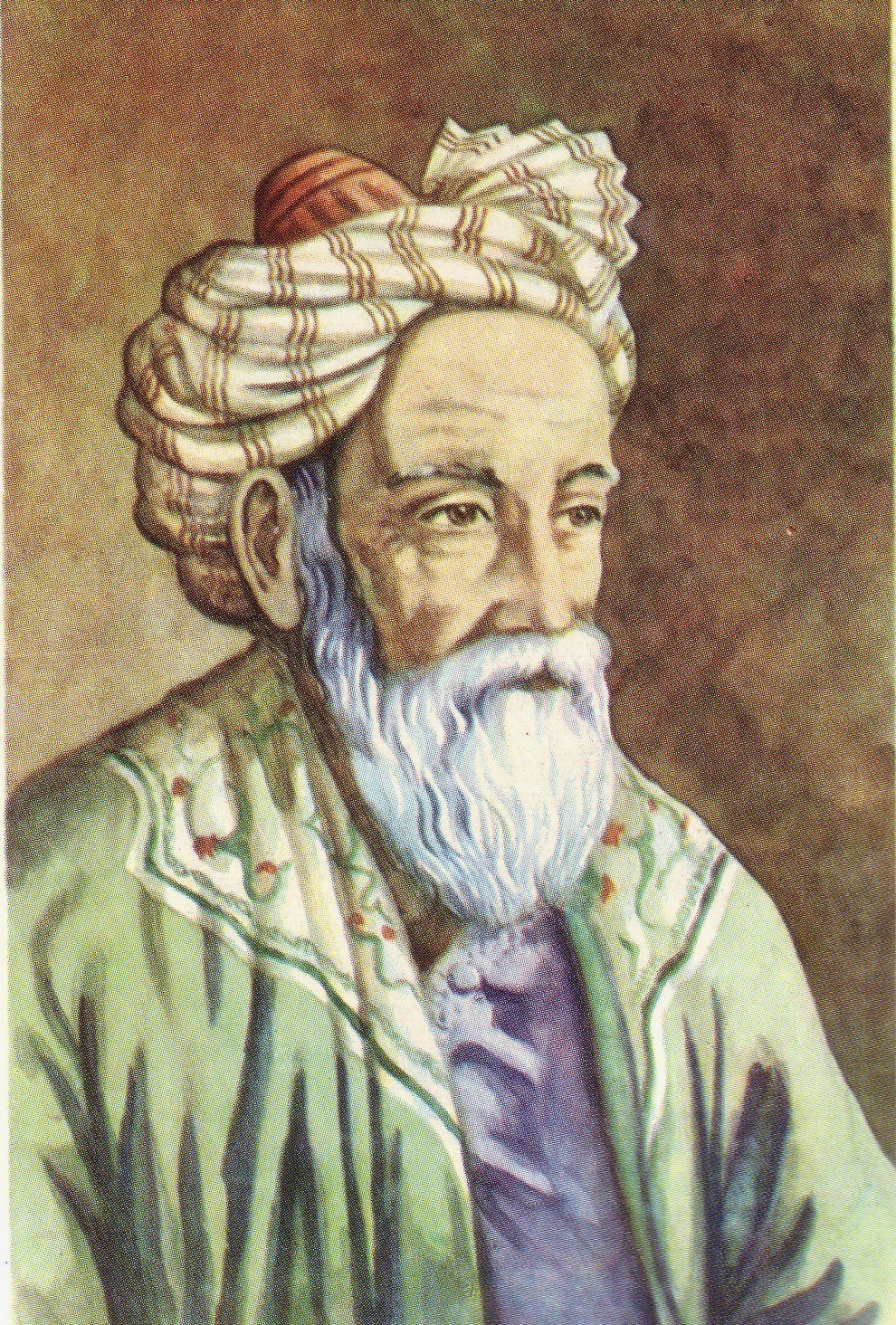
Omar Khayyam was born on 18 May 1048 and died on 4 December 1131. He was at once poet, mathematician, and astronomer. He developed geometric and algebraic methods, contributed to Persian calendar reform, and his Jalali calendar became one of the most accurate in the world, along with the Gregorian calendar.
This first phase of the Jalali calendar did not last long, because the period of Turko-Mongol invasions followed. Naturally, a Turko-Mongol calendar became established: solar years, lunar months (29 or 30 days). One innovation lasted: the use of animal names for years. This calendar was officially accepted in Iran under the Safavid dynasty (16th century).
Modern Iranian calendars
Around the middle of the 19th century, the Jalali calendar began to spread widely, and in 1911 the Persian Parliament adopted it as the official calendar, replacing the Turko-Mongol one. Its months bore zodiac names, and years inherited animal names from the Turko-Mongol calendar in a 12-year cycle. In this cycle, the animals are: rat, cow, tiger, rabbit, whale, snake, horse, sheep, monkey, hen, dog, and pig. Year 1382 in the Iranian calendar, corresponding to AD 2003-2004, was the year of the sheep.
It was on 31 March 1925 (to be precise) that the Jalali calendar became Iran's official calendar by decision of the Iranian National Consultative Assembly (Majlis) and by Article 17 of the Constitution of the Islamic Republic of Iran:
“Article 17: The country's official calendar begins at the date of the Prophet of Islam's emigration - may God's peace and blessing be upon him and his family. Both Islamic solar and Islamic lunar calendars are recognized, but government documents shall be dated according to the solar calendar. The official weekly day off is Friday.
A fine posthumous victory for the genius Omar Khayyam.
If we add the Gregorian calendar for international economic exchanges, Iran effectively uses three calendars: a “global” Gregorian calendar, a solar calendar (Jalali or Khorshidi), and a lunar calendar (Ghamari).
Let us look more closely at this Iranian solar calendar, unquestionably the most accurate in the world.
Starting point
As stated in Article 17 of the Iranian Constitution, the starting point is the Hijra, marking when Prophet Muhammad left Mecca and persecution to reach Medina: year 622 in the Gregorian calendar, and more precisely 22 March 622 in the Gregorian calendar. Note that the Iranian calendar has no year 0 and begins with year 1. For example: 21/03/2003 AD corresponds to 01/01/1382 S. S (Samsi) is the suffix indicating dates in the Iranian solar calendar.
Clarification: 22 March 622 is not Muhammad's departure date for Medina, but the start date of the Iranian era. Year 622 was chosen, and 22 March is the calculated start of the Iranian year for that year.
Year
After reading the astronomy page of this site, we can see why the Iranian calendar is so accurate.
Simply because it tracks the tropical year very closely. A solar year is the time needed for the Sun, in its apparent movement, to return to the same fixed point in the sky. In the Iranian calendar, that point is the vernal equinox (Farvardin equinox for Iranian astronomers; spring equinox for us). For astronomers, it is the instant when solar longitude equals 0 (or 360 degrees). For non-specialists, this is spring day around 21 March. For astrologers, it marks entry into Aries.
That exact moment (tahvil-e saal) when the Sun passes the vernal equinox marks the beginning of the Iranian year, whose New Year's Day is called Nowruz.
It is crucial to understand that this corresponds to an exact time in Tehran (hours, minutes, seconds). It is not determined by observation, but by astronomical computation (for those who can do it) or tables. Such tables can be found on the Bureau des Longitudes site (BDL). They provide the exact UT time of the spring equinox. Do not forget to add Tehran longitude/time correction to get local time: 3.425.
If you are following, you may ask: do we interrupt a 24-hour day to begin a new day (and a new year)? The answer is NO. One rule applies: if the exact time of the vernal equinox is before noon (Tehran time), that day is the first day of the year. Otherwise, the first day of the year is the next day. This rule is the key to the extreme precision of the Iranian calendar. Everything else follows naturally: months, seasons, complementary days.
Observation: while we in the West celebrate New Year at midnight, users of the Iranian calendar can celebrate New Year at varying hours depending on astronomical calculations.
Months
Again, very logical: we saw that the year begins when the Sun enters Aries. Since the 12 zodiac signs are evenly distributed on the celestial sphere, month lengths correspond to the interval the Sun takes to move from one sign to the next. So we get six first months of 31 days, then six of 30 days. The last month may have only 29 days in common (non-leap) years.
I cannot resist saying that Iranians were fortunate not to suffer from “calendar troublemakers” (I mean only in calendar terms) like Caesar or Augustus, who changed month lengths for personal glory.
The following table gives Iranian and Afghan month names, their old names in different periods, and their zodiac correspondence.
| Avesta | Pahlavi | Modern Iranian | Afghan | Zodiac | Days |
|---|---|---|---|---|---|
| Fravashinam | Fravardino | Farvardin | Hamal | Aries | 31 |
| Ashahe Vahistahe | Ardavahist | Ordibehesht | Sawr | Taurus | 31 |
| Haurvatato | Horvadad | Khordad | Jawza | Gemini | 31 |
| Tistryehe | Tir | Tir | Saratan | Cancer | 31 |
| Amerotato | Amerodad | Mordad | Assad | Leo | 31 |
| Khshathrahe Vairyehe | Shatvairo | Shahrevar | Sonbola | Virgo | 31 |
| Mitrahe | Mitro | Mihr | Mizan | Libra | 30 |
| Apam | Avan | Aban | Aqhrab | Scorpio | 30 |
| Athro | Ataro | Azar | Qhaws | Sagittarius | 30 |
| Dathusho | Dino | Dei | Jadei | Capricorn | 30 |
| Vanheus Mananho | Vohuman | Bahman | Salwa | Aquarius | 30 |
| Spentayao Armatoi | Spendarmad | Esfand | Hoot | Pisces | 29/30* |
(*) 29 days for common years, 30 days for leap years.
Week
There is not much to add here, except that the week begins on Saturday and, in accordance with the Constitution, Jomeh (Friday) is the weekly rest day.
| Iranian | English |
|---|---|
| Shanbeh | Saturday |
| Yekshanbeh | Sunday |
| Doshanbeh | Monday |
| Sehshanbeh | Tuesday |
| Chaharshanbeh | Wednesday |
| Panjshanbeh | Thursday |
| Jomeh | Friday |
Leap years
You sometimes read that the Iranian calendar uses complicated rules to determine 365- and 366-day years. For my part, I rather have the impression (and remain convinced until proven otherwise) that there is no independent “complicated rule”: year length follows naturally from astronomical calculation. Let us make this clearer.
We saw that, depending on the time of the vernal equinox, the year begins either on that day or on the next day. But an Iranian year still has an integer number of days.
Now, a tropical year lasts about 365 days, 5 hours, and 49 minutes. If we round to 365 days and 6 hours, we observe that the accumulated 6 hours make one full day every four years. So we get a 366-day year every four years.
But compared with 365 days, 5 hours, and 49 minutes, we have an 11-minute excess. These 11 minutes accumulate over 33 years until they form one day. At that point, the year that should have had 366 days will have only 365.
In short, if we count from a 366-day year (provided we choose the right one), we get three 365-day years, then one 366-day year, repeated seven times. Then we get four 365-day years and one 366-day year. Total length of this cycle: 33 years.
And because some residual seconds still remain before reaching the exact tropical year length to the second, those seconds accumulate until they make a full day and cause a “break” in the 33-year cycle.
Where are the “complicated rules” in this, beyond plain deduction from astronomical calculation?
I did not perform these calculations myself, but I will cite those by Kazimierz M. Borkowski, who determined which years should create a break in the 33-year cycle.
| Gregorian | Jalali | Gregorian | Jalali |
|---|---|---|---|
| 560 | - 61 | 1831 | 1210 |
| 630 | 9 | 2256 | 1635 |
| 659 | 38 | 2681 | 2060 |
| 820 | 199 | 2718 | 2097 |
| 1047 | 426 | 2813 | 2192 |
| 1307 | 686 | 2883 | 2262 |
| 1377 | 756 | 2945 | 2324 |
| 1439 | 818 | 3015 | 2394 |
| 1732 | 1111 | 3077 | 2456 |
| 1802 | 1181 | 3799 | 3178 |
According to this table, the 33-year cycle is never interrupted between Gregorian 1831 and 2256 (Jalali 1210-1635). Year 1635 becomes a 366-day year instead of 1634, then a new sequence of 33-year cycles resumes.
For those who do not want to run advanced calculations, 366-day years are those where the remainder of the Jalali year divided by 33 is 1, 5, 9, 13, 17, 22, 26, or 30.
Also note that the Gregorian divisibility rule (years divisible by 100 but not by 400) corrects Gregorian drift over 400 years, whereas the Iranian calendar reaches the same practical result over only 33 years. Omar Khayyam truly was a genius in this field.
Later modification attempts after 1925
On 14 March 1975, the Iranian National Consultative Assembly decreed a new era based on the accession of Cyrus the Great (559 BC), and 21 March 1971 became the first day of year 2535.
Seeing the confusion caused by this era change, the Iranian government returned to the original era on 24 August 1978.
The Afghan calendar
Why include Afghan month names in the Jalali month table? Quite simply because Afghanistan adopted the Jalali calendar as its official calendar in 1957, using Arabic zodiac names as month names.