The Mesopotamian calendars (Assyrian, Babylonian and Chaldean) that we are about to examine almost certainly had a major influence on Egyptian, Hebrew, Islamic and Greek calendars.
A little history
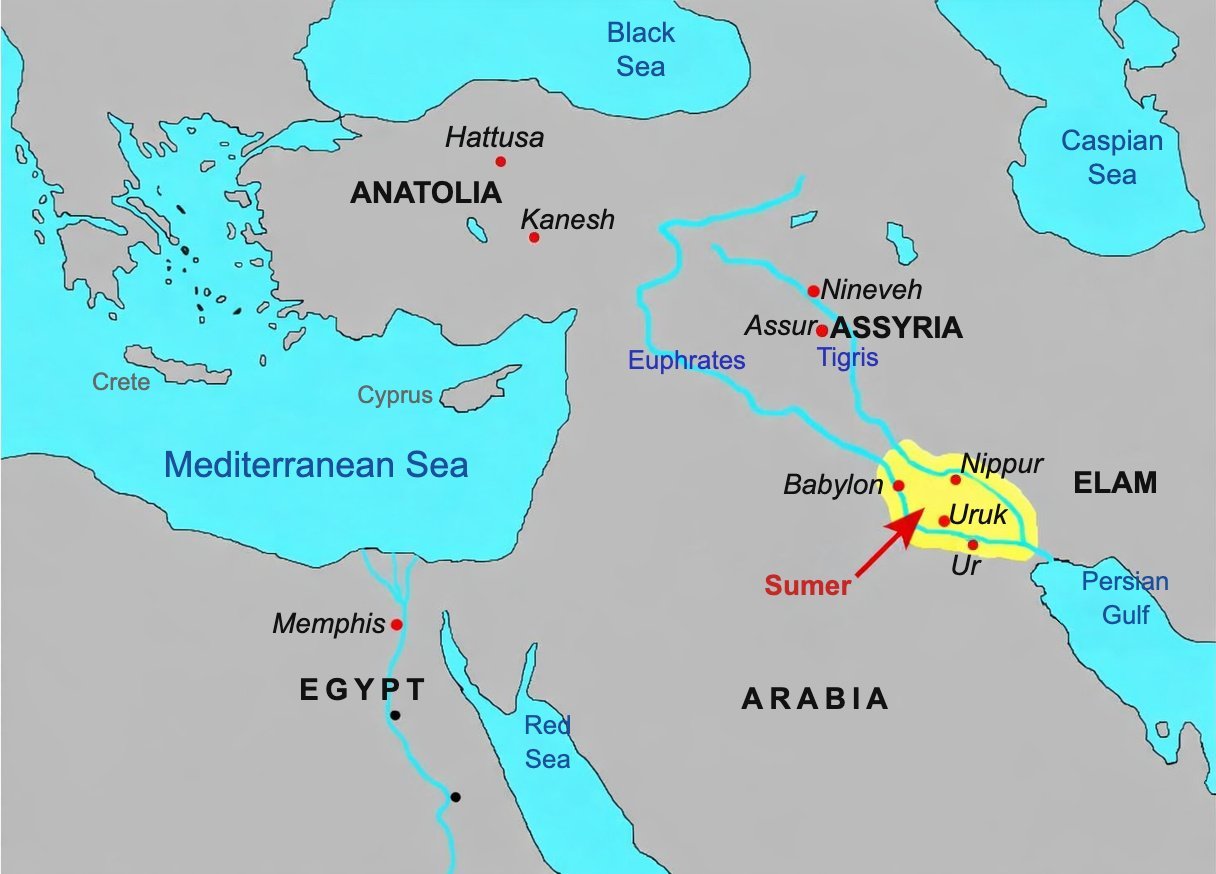
Mesopotamia, located roughly where modern Iraq and part of Syria are, was watered by the Tigris (885 km) and the Euphrates (1300 km). This region of valleys and plains was bordered to the north by the Armenian mountains, to the east by the Zagros range, and to the west by the Arabian desert and the Syrian steppe.
Ancient Mesopotamians did not enjoy a rainy climate, but irrigation canals allowed them to benefit from fertile soil. These irrigation and self-defense needs led them very early to build canals and protected sites.
In the 4th millennium BC, the Sumerians in the south established major sites such as Uruk, Nippur and Ur.
It is at this time that cuneiform writing appears on clay tablets. This script remained in use for a long period, until Assyria and Babylonia were absorbed by the Persian Empire.
At the beginning of the 3rd millennium BC, cuneiform became widespread in Lower Mesopotamia.
Around 2400 BC, the region was conquered by the Akkadians from central Mesopotamia, and their king Sargon I founded the first Mesopotamian Empire.
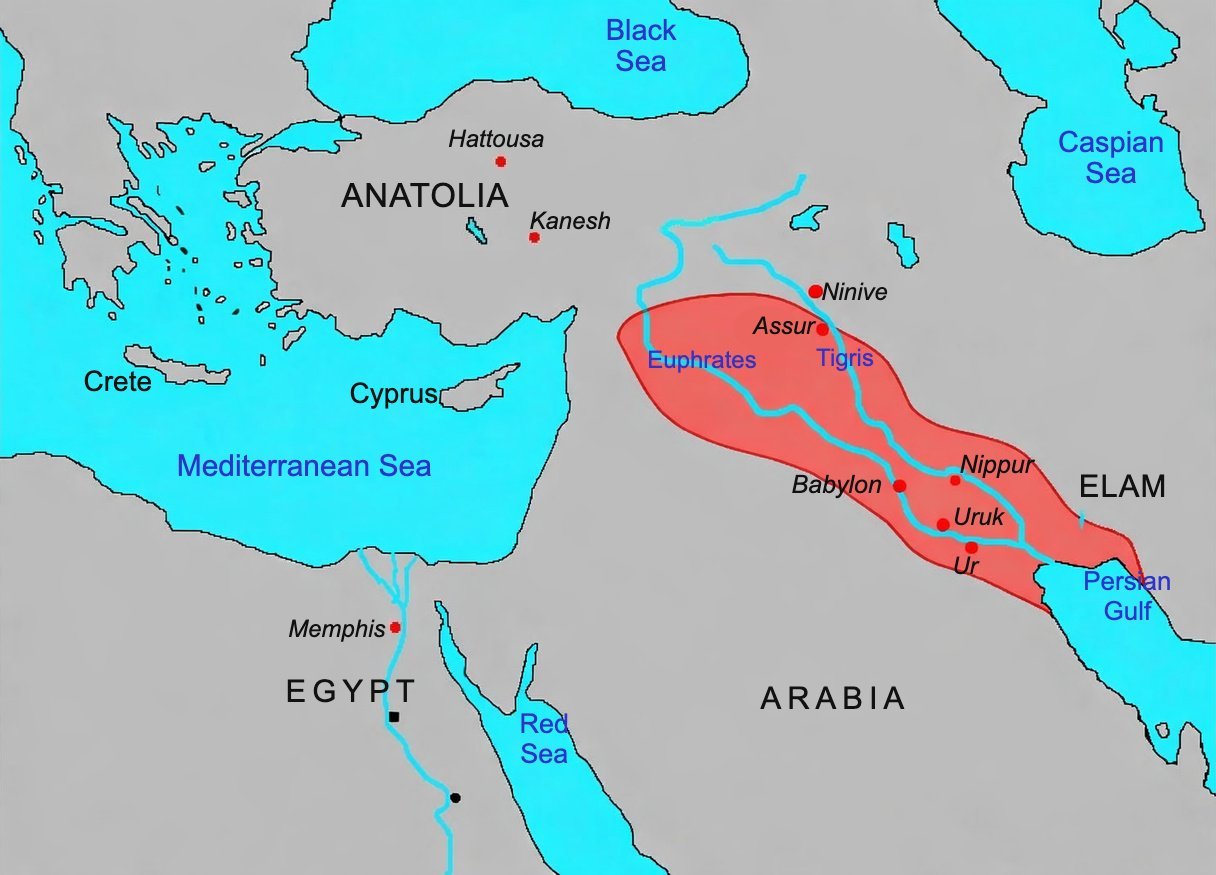
The city of Akkad was destroyed around 2160 BC, and the Gutians, a tribe from the eastern mountains, settled in Mesopotamia. After a not very well-known transitional period, Ur-Nammu founded the Third Dynasty of Ur, which lasted from 2111 BC to 2003 BC.
Under his reign, administrative language was Sumerian or Akkadian, and the oldest compilations known as “codes” appeared.
Ur was taken around 2003 BC by invaders from the kingdom of Elam. The country fragmented and different kingdoms shared the region.
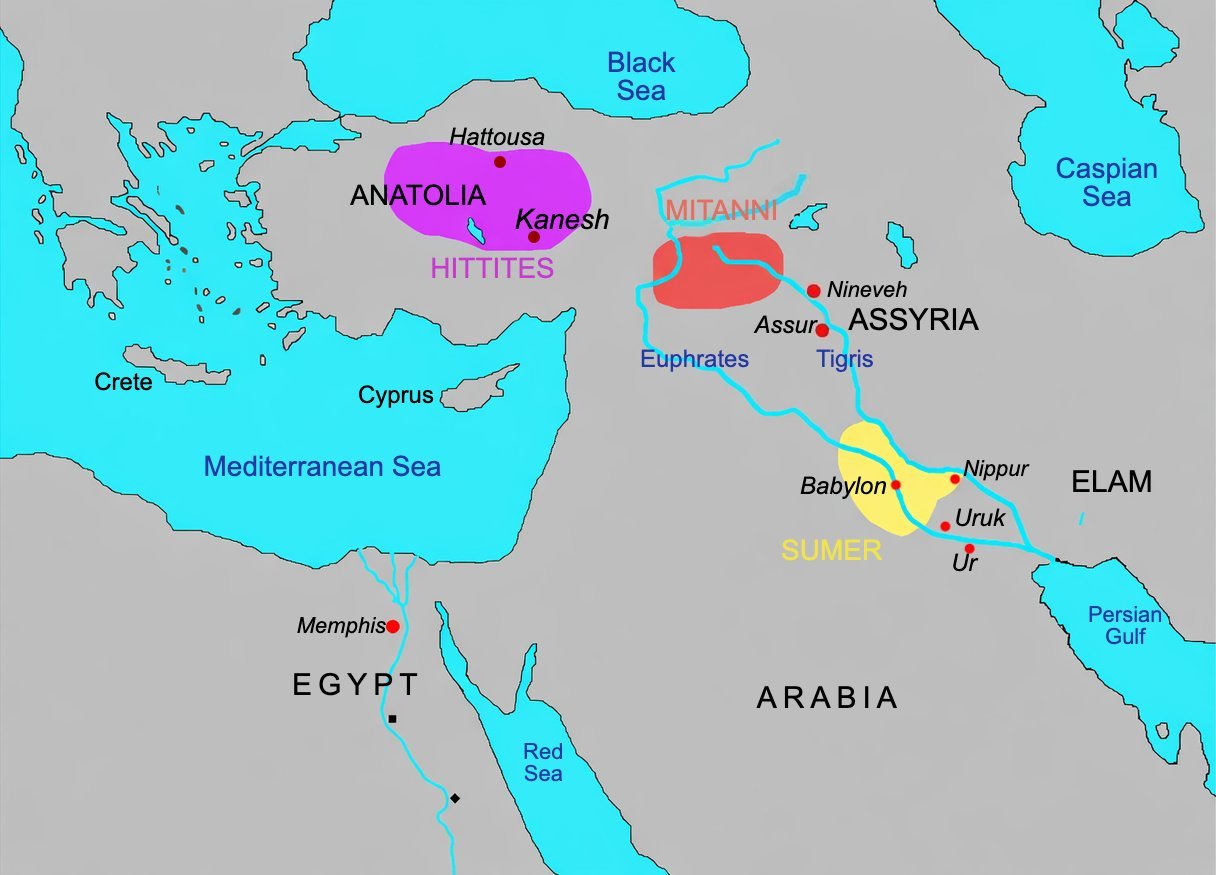
From 1900 BC onwards, a new empire emerged, marked by the reign of Hammurabi (-1792, -1750), who carried out remarkable centralising work. Time reckoning, previously left to city initiative, was regulated by an official calendar. Babylon became a cultural, religious, artistic and commercial center. Hammurabi is known for the “Code” containing legal texts.
After Hammurabi, the Babylonian Empire began to collapse. The Hittites invaded Babylon around 1594, but it then fell under Kassite control, and they dominated Mesopotamia. Babylon then enjoyed renewed prosperity for about 400 years.
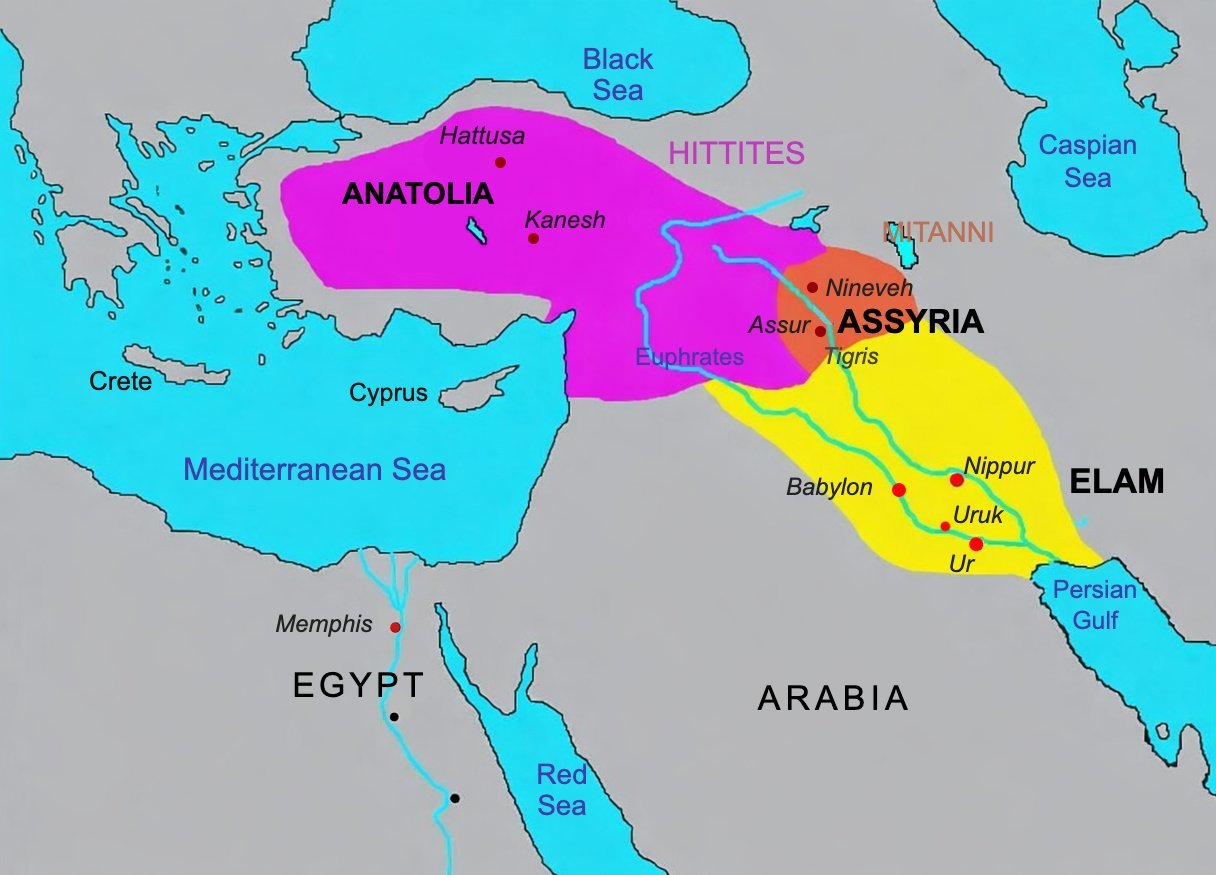
Around 1350, the Assyrian Kingdom under Assuraballit I rose in power and had to confront Babylon for regional hegemony.
These expansion ambitions were temporarily halted by Aramean tribes from Syria and Chaldean tribes that invaded Babylon.
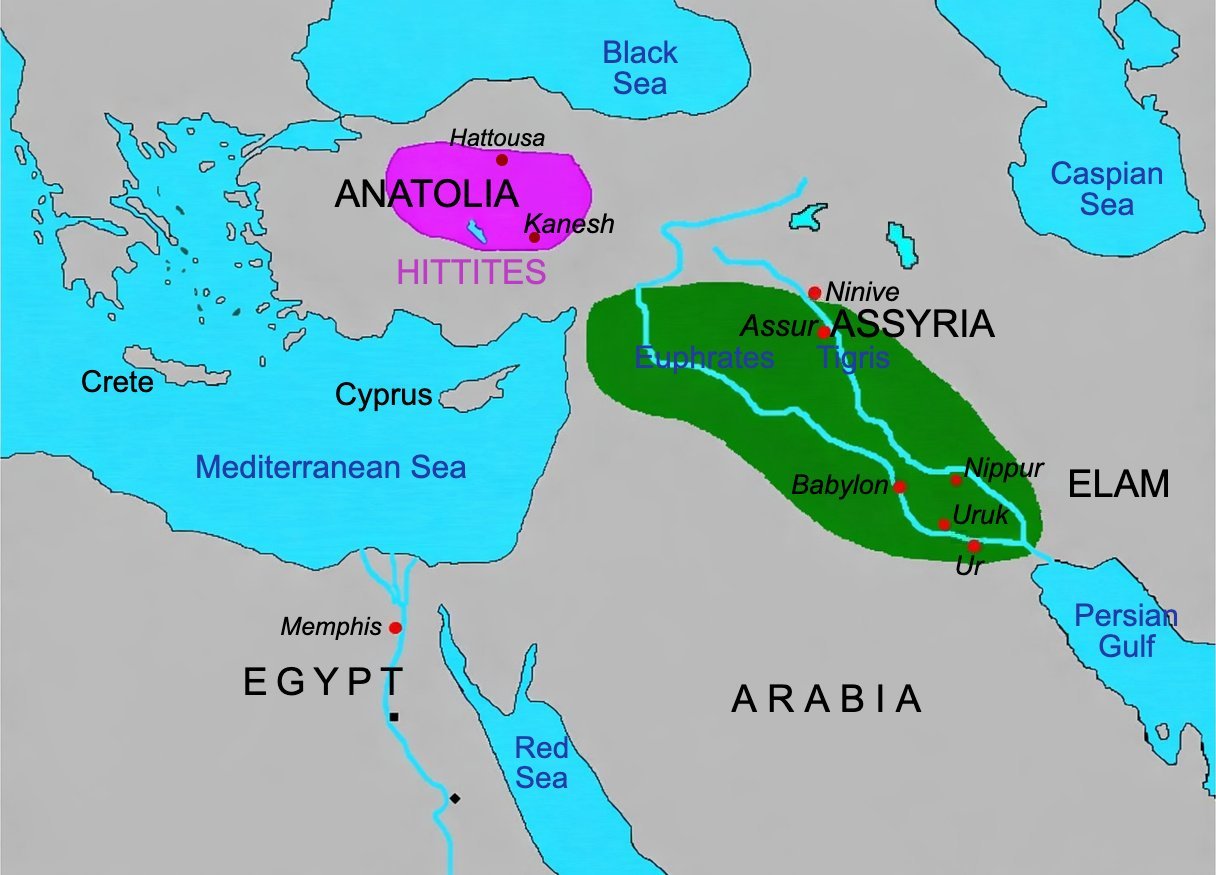
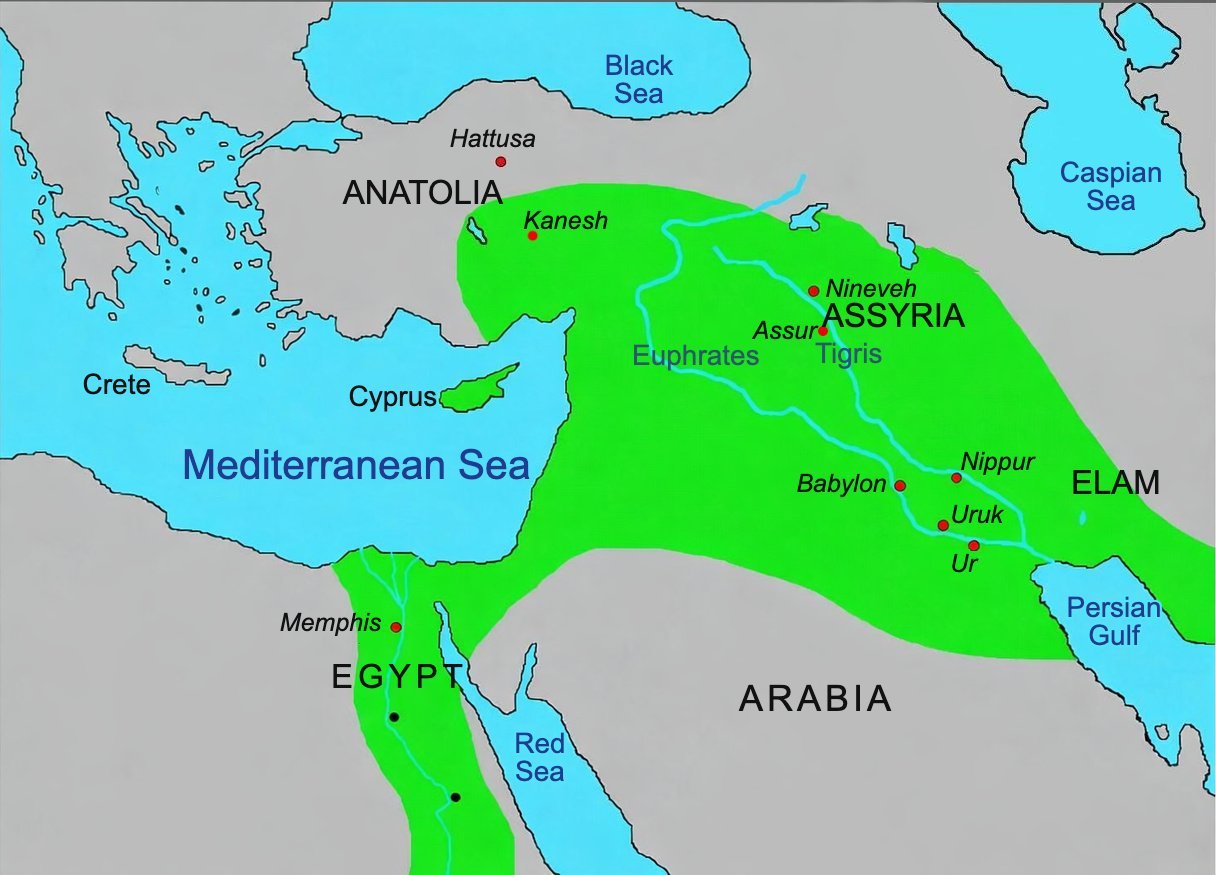
The Assyrian Empire annexed Babylonia in 728 BC, and Sargon II then ruled a vast empire spanning the whole Middle East.
This Assyrian power declined around 612 BC, when the Medes took the mountain regions and left Mesopotamia to the Chaldeans of Nebuchadnezzar II, who ruled until 539.
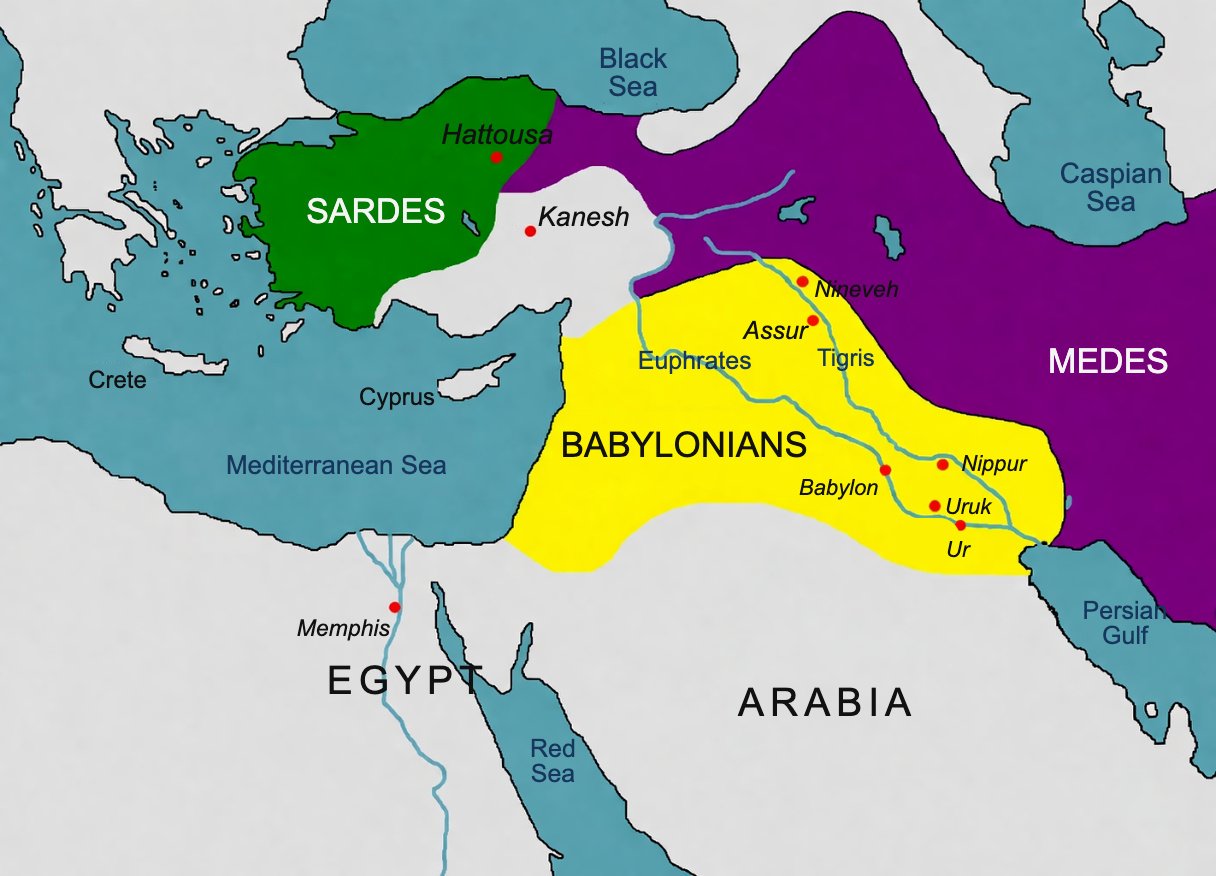
In 539 BC, Cyrus the Great captured Babylon. Cambyses, son of Cyrus, expanded the Persian Empire, and Darius founded the Achaemenid dynasty, which ruled the vast Persian Empire.
This empire was destroyed in 331 BC by Alexander the Great, who took Babylon. He left Mesopotamia to General Seleucus, who founded the Seleucid dynasty in 312 BC. Later, the region passed under Roman, Parthian, Sassanian and Arab domination.
Calendar(s)
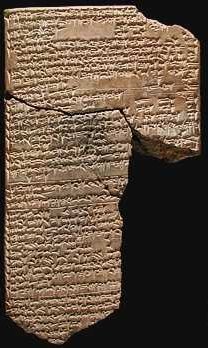
This tablet mentions the month Nisannu and contains omens related to movements of celestial bodies.
It confirms, if needed, that in Babylonia astronomy and astrology were tightly interwoven.
Warning: I hesitated a lot before choosing a title for this page. Depending on period and influence, different calendars existed. Especially since, as seen in the historical section, at some points each city had the right to create its own calendar.
So I could have written Assyrian calendar, Chaldean calendar, Sumerian calendar, Babylonian calendar... I chose the more generic term Mesopotamian calendar, which in my view covers both periods and places.
So we will try to discover THE Mesopotamian calendar, understanding that this label actually hides several calendar types. I will try, as far as possible, to point out specific features: 4,000 years was not yesterday.
In Mesopotamia, astronomy and astrology were closely linked, because information gathering was mainly driven by forecasting the future of various people, most often the king.
The strongest in these fields were probably the Chaldeans, who became masters at predicting eclipses.
It was under Nabonassar (747-734 BC) that the first regular “astronomical ephemerides” appeared. These observations, helped by a particularly favorable climate, went beyond the moon and sun, and also concerned planets and stars.
Before turning to calendars themselves, we need to look at Chaldeo-Assyrian numbering, which strongly affected those calendars.
Sexagesimal numeration
According to Georges Ifrah (Universal History of Numbers), “the Sumerians chose base 60, grouping beings and things by sixties and powers of sixty.”
This base 60, invented only by Sumerians in the whole world, coexisted among Chaldeo-Assyrians with decimal numbering of Akkadian origin.
The sexagesimal system originated from two cultures predating the Sumerians, using respectively quinary (base 5) and duodecimal (base 12) systems.
The Chaldeans thus divided the hour into sixty minutes, and the minute into sixty seconds.
They divided the day into 12 “double hours” called kaspu, but also into “sixtieths”.
These base-60 and base-12 systems are still very widely used today (division of the circle, of the hour, watch dials). It is thanks to the Chaldeans that we buy eggs, snails or oysters by the dozen.
The Chaldeans also drew a zodiac map divided into... twelve signs.
Year and months
The Assyrian calendar, not very well known, seems always to have used a year of 12 months of 30 days (360 days), with intercalary months to compensate drift against the solar year. The intercalation system is even less known. The oldest Assyrian calendar dates from the 19th century BC. It disappeared around 1100 BC in favor of the Babylonian luni-solar calendar.
Around 2700 BC, Sumerians used the same 12x30-day structure.
Only from the 21st century BC can we really speak of a luni-solar calendar where months were lunar and years solar.
Here is the list of month names in different “states”:
| Babylon | Sumer | Assyria |
|---|---|---|
| Nisanu | Bar-zag-ga | Mana |
| Ayaru | Gu-si-sa | Aiarum |
| Simanu | Sig-ga | Makranum |
| Duzu | Shu-nummun | Dumuzi |
| Abu | Ne-ne-gar | Abum |
| Ululu | Kin-Ninni | Tirum |
| Tashritu | Du | Niqmum |
| Arahsamnu | Apin-du-a | Kinunum |
| Kislimu | Gan-gan | Thamkhirum |
| Tebetu | Ziz | Nabrum |
| Shabatu | Ab-ba-e | Mamitum |
| Addaru | She-gur-ku | Adarum |
The beginning of a month (and thus the length of the previous month: 29 or 30 days) was empirical and closely tied to the moon:
A new month began when the crescent of the new moon was observed. From day 29 onward, people watched the sky from sunset. If the crescent was visible, a new month began. If not, observation resumed the next day. If the sky was covered both days, the High Priest proclaimed the new month on day 30 of the old month.
This lunar year, about 354 days, also had to be adjusted to the solar (and agricultural) year of 365 days. To do this, an intercalary month was added from time to time.
This addition was also highly empirical: when the heliacal rising of two or three observed stars occurred in a month other than the current one, it was time to add an intercalary month to that year's calendar. It was up to the king to proclaim this intercalation, as shown by an edict of King Hammurabi (18th century BC): "Hammurabi says this to his minister Sin-Idinnam: the year is out of place. Register the coming month under the name Ululu II (second month Ululu)..."
Intercalation was placed rather arbitrarily, and each city handled it in its own way. We sometimes read that only from the reign of Nabonassar (746 BC) was intercalation regularized, and that Babylonians then used a 19-year cycle in which 235 lunations correspond to 19 solar years.
Looking more closely, especially at the table in our study on Meton's cycle, we can see that Babylonians began experimenting with cycle patterns under Cambyses, and only under Artaxerxes II was the 19-year cycle standardized.
By adopting this cycle, they could insert intercalary months precisely. They were added in years 1, 3, 6, 9, 11, 14 and 17 of the cycle. Ululu II was added at the beginning of the cycle, and Addaru II in all the other intercalary years.
Note that this 19-year cycle used by Babylonians was later called the Metonic cycle.
Beginning of the year
Before the 2nd millennium, some cities had chosen the autumn equinox as the beginning of the year.
In the 2nd millennium, the year's beginning was set at the heliacal rising of the star Hounga (Alpha Arietis), i.e. at the spring equinox. The Babylonian New Year was therefore the first Nisanu.
Divisions of the month
- We have already seen that Babylonians divided the day into twelve kaspu. These double hours were themselves divided into 30 gesh. The day began at sunset.
- The 7-day week is also attributed to Chaldeo-Assyrians. Its origin is said to come from the moon's four 7-day phases. Each day of the week was designated by the name of an associated “planetary” deity: first the two most important celestial bodies in Chaldeo-Assyrian eyes - the Sun (Sunday) and the Moon (Monday). Then the planets Mars (Tuesday), Mercury (Wednesday), Jupiter (Thursday), Venus (Friday) and Saturn (Saturday).
At first, the first week began on day 1 of the month. So there were four weeks: day 1-7, 8-14, 15-21 and 22-28. That left one or two days at the end of the month “outside any week”. Later, distribution became continuous.
Discovery of the Saros
The Saros is also attributed to the Chaldeans. Saros is a period of 6585.32 days corresponding to the recurrence of lunar and solar eclipses, and containing 223 lunations.
This discovery is unsurprising when we remember, as already seen, the importance Chaldeans gave to eclipses.