This page is the second in a three-part series that takes us from early Roman calendars to the present Gregorian calendar, via the Julian calendar.
A Brief History
NOTE: There are many books, and no shortage of websites, explaining Roman history from its beginnings to its fall.
So our “bit of history” will look more like a chronology than a detailed narrative. Its main purpose is to place us in time so we can follow the evolution of our calendars.
The chronology on each page follows the calendars discussed there. It therefore continues across the three parts mentioned in the preamble.
Let us continue this condensed Roman chronology and move to the end of the Republic.
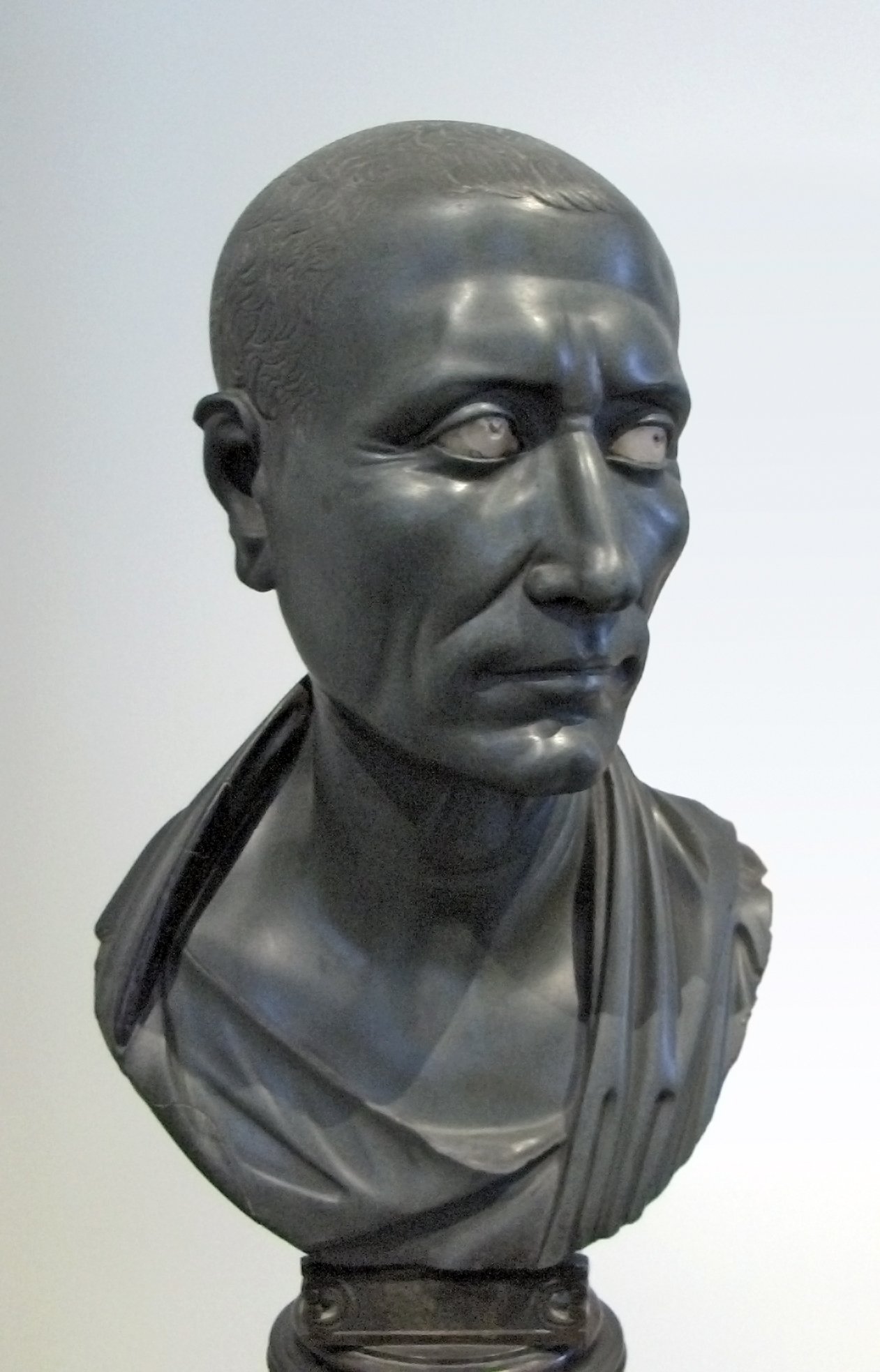
This work is known among Germans as the "Grüner Caesar" (Green Caesar) and is kept in the Altes Museum in Berlin. Antikensammlung Berlin / Public domain, via Wikimedia Commons
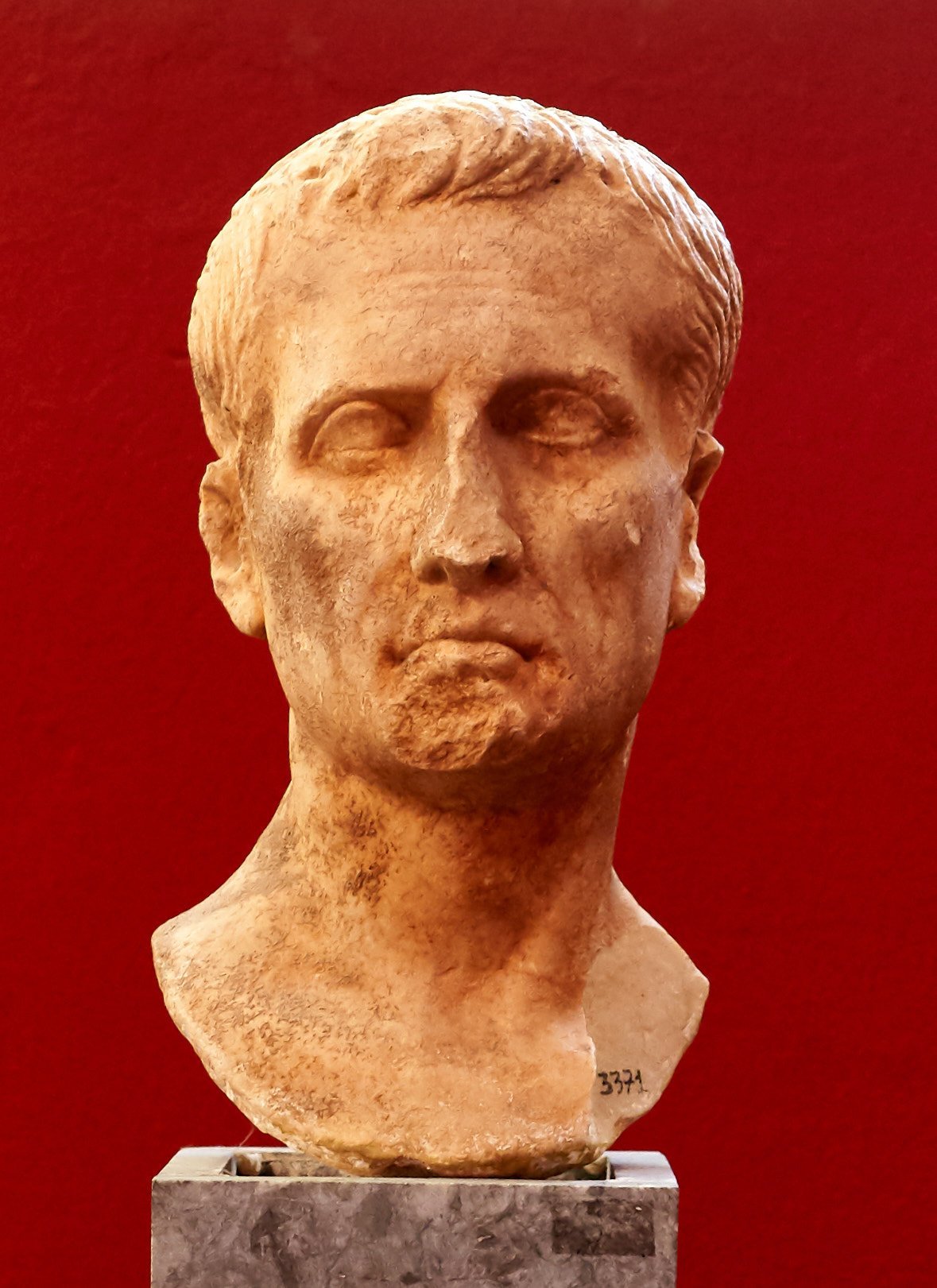
Gaius Julius Caesar was born in Rome in 100 or 102 BC and died in Rome in 44 BC.
- After conflicts with the dictator Sulla, he was forced to leave for Asia, but returned to Rome when Sulla died.
- He became Pontifex Maximus in 63 BC.
- In 60 BC, he allied himself with Crassus and Pompey to form the First Triumvirate.
- He became Consul in 59 BC and Proconsul of Cisalpine and Transalpine Gaul in 58 BC.
- In 53 BC, Crassus died fighting the Parthians and his legions were annihilated.
- Only one man still stood in Caesar's way for supreme power: Pompey.
- In 49 BC, Caesar crossed the Rubicon and marched on Rome; this marked the start of civil war. In 48 BC, Pompey fled to Egypt, pursued by Caesar. He was assassinated there in 48 BC, and Caesar gave the throne to Cleopatra.
- Caesar had himself appointed Dictator in 45 BC, then obtained perpetual dictatorship in 44 BC. He could then legislate freely, reform institutions and... the calendar, advised by an Alexandrian astronomer named Sosigenes.
- Caesar was assassinated on 14 March 44 BC by his adopted son Marcus Junius Brutus. His death plunged Rome into a third civil war.
- On 20 March 44 BC, the reading of Caesar's will made Octavian his heir, which he accepted.
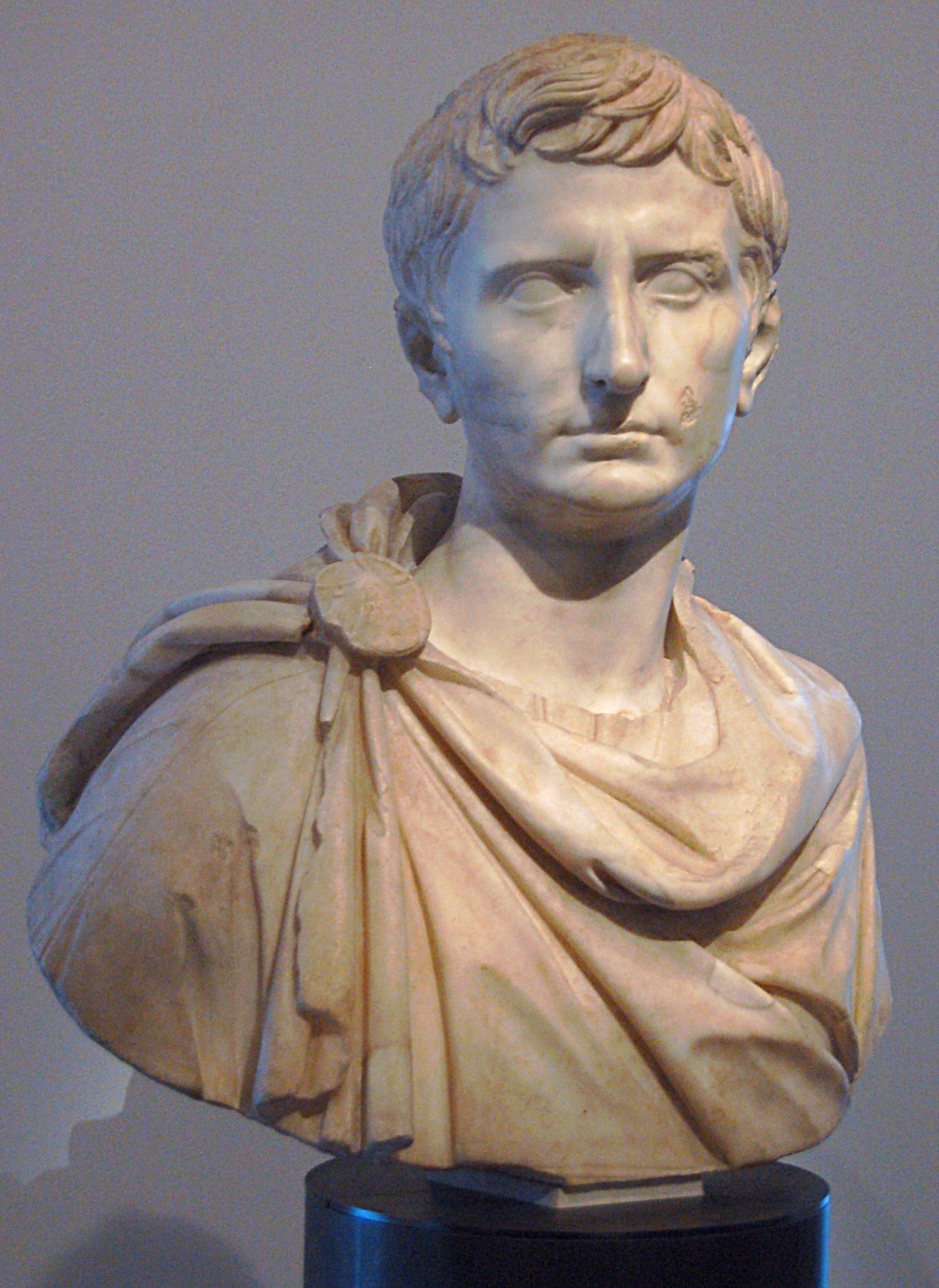
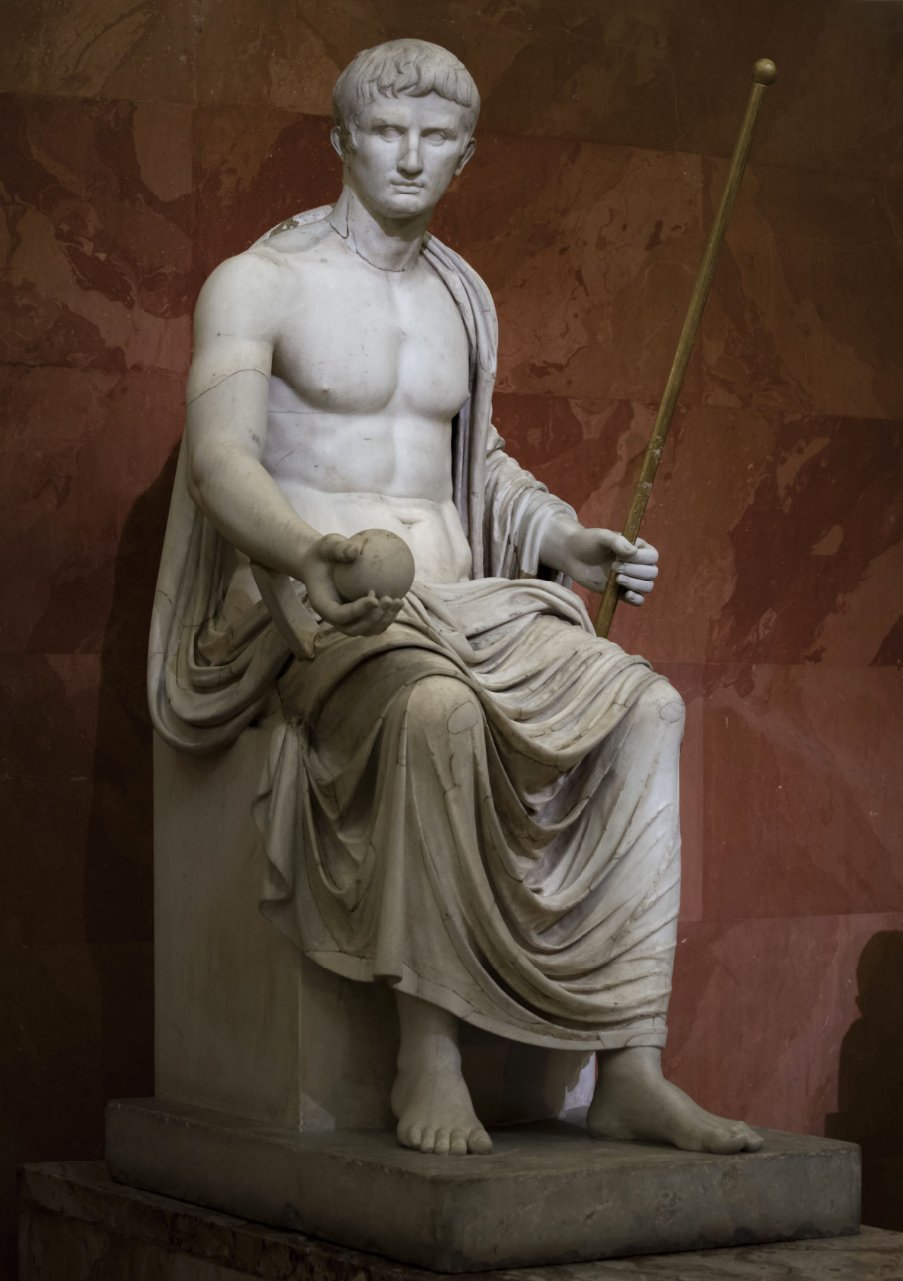
Octavian Augustus was born in Rome (Velletri) in 63 BC and died in Nola in AD 14.
- Octavian became emperor under the name Augustus, from 27 BC to AD 14.
- And that was the beginning of a long line of emperors, including:
- Tiberius, who succeeded Augustus and reigned from 14 to 37
- The second relevant one here is Domitian, who ruled the empire from 81 to 96
- And the last one relevant to the calendar is Constantine, whose reign lasted from 324 to 337.
- The Western Roman Empire ended in 476.
A brief word about Sosigenes and his context. For several reasons, including Cleopatra, Caesar had developed a strong interest in Egypt.
Thanks to Ptolemy, one of Alexander the Great's generals, who proclaimed himself King of Egypt in -305 under the name Ptolemy I Soter, Alexandria welcomed scholars from every horizon. He founded the Great Library.
A long succession of renowned astronomers followed in Alexandria:
- Aristarchus (around -270), who designed a sundial, observed the Sun, and dared to suggest that Earth moves relative to the Sun.
- Eratosthenes (-276 to -194), who measured the tilt of Earth's axis.
- Hipparchus, around -130, discovered the precession of the equinoxes and calculated the length of the solar year within six minutes (365 days, 5 hours and 55 minutes).
- Later, Claudius Ptolemy (100-170), a Greek and Roman citizen, wrote a vast astronomical and geographical encyclopedia that remained authoritative for more than ten centuries. He adopted Hipparchus's estimate of the solar year.
Perhaps Caesar met Sosigenes at a celebration hosted by Cleopatra, where he shared his ideas on the calendar. Since the year length produced by the reform was inaccurate, one may wonder why, because it is hard to imagine Sosigenes did not know Hipparchus's work.
Calendar(s)
Caesar's reform of the Roman calendar produced a purely solar calendar.
Plutarch says that “Caesar called upon the best philosophers and mathematicians of his time” to establish this calendar. Naturally, Sosigenes was among them.
We saw in the previous part that the year before the reform was structured as follows:
| 1-JANUARIUS: 29 j | 4-APRILIS: 29 j | 7-QUINTILIS: 31 j | 10-OCTOBER: 31 j |
| 2-FEBRUARIUS: 28 j | 5-MAIUS: 31 j | 8-SEXTILIS: 29 j | 11-NOVEMBER: 29 j |
| 3-MARTIUS: 31 j | 6-JUNIUS: 29 j | 9-SEPTEMBER: 29 j | 12-DECEMBER: 29 j |
We also saw that in 46 BC the Roman calendar lagged the solar cycle by several months because intercalary months had been inserted chaotically. Caesar himself was not blameless: although Pontifex Maximus since -63, he seems to have decreed an intercalary month only once.
The reform had two problems to solve:
- Recover the lost time.
- Implement the new calendar.
1) The solution to the first problem was radical: Caesar ordered two intercalary months of 33 and 34 days to be added to the year 46 BC between November and December. These came in addition to the standard intercalary month in Februarius. Ninety days were thus added to that one year, which reached 445 days. For more details, see the page on confusions of the Julian calendar.
Macrobius, a Latin writer (4th-5th century), called that year ultimus annus confusionis (the last year of confusion).
2) Once calendar lag had been corrected, the new calendar took effect in 45 BC.
It can be defined as follows:
- Confirmation that the year starts on 1 Januarius. We may consider this a simple confirmation; we return to it later when discussing the delicate issue of New Year in Roman history.
- Respect of the spring equinox, fixed at 25 March.
According to Pliny (Natural History XVIII), Caesar placed equinoxes and solstices eight days before the Kalends of April, June, October and January, i.e. on 25 March, 24 June, 24 September and 25 December.
- A 365-day year with a 366th day every four years.
- The extra day every four years was placed before 24 Februarius (or after it, depending on interpretation, which is effectively equivalent). 24 February was called sextilis ante calendas martias, and the added day bis sextilis ante calendas martias, hence the terms for leap year.
- The number of days in the months is interpreted in two ways by modern authors. I present both.
A) First Interpretation (unknown historical sources)
Initially, there may have been a strict alternation of 31- and 30-day months, except for Februarius, which had 29 days (30 in leap years). In 44 BC, on Antony's proposal, Quintilis became Julius in honor of Julius Caesar.
At that stage, the year would have looked like this:
| 1-JANUARIUS: 31j | 4-APRILIS: 30 j | 7-JULIUS: 31 j | 10-OCTOBER: 30 j |
| 2-FEBRUARIUS: 29 j (30 j) | 5-MAIUS: 31 j | 8-SEXTILIS: 30 j | 11-NOVEMBER: 31 j |
| 3-MARTIUS: 31 j | 6-JUNIUS: 30 j | 9-SEPTEMBER: 31 j | 12-DECEMBER: 30 j |
Note: we keep Januarius, Junius and Julius with J. But was the letter J already in use? If not, one should write Ianuarius, Iunius and Iulius.
Under Augustus, the Senate wanted to honor the emperor (for a reason discussed later) and gave his name to Sextilis, which became Augustus (August). Naturally, August could not have fewer days than Julius, so it became 31 days long. This additional day was offset by removing one from Februarius, which became 28 days (29 in leap years). In addition, to avoid three consecutive 31-day months, month lengths in September, October, November and December were reversed, giving the following structure:
| 1-JANUARIUS: 31j | 4-APRILIS: 30 j | 7-JULIUS: 31 j | 10-OCTOBER: 31 j |
| 2-FEBRUARIUS: 28 j (29 j) | 5-MAIUS: 31 j | 8-AUGUSTUS: 31 j | 11-NOVEMBER: 30 j |
| 3-MARTIUS: 31 j | 6-JUNIUS: 30 j | 9-SEPTEMBER: 30 j | 12-DECEMBER: 31 j |
B) Second Interpretation
For this version, sources do exist, and here is one:
“Censorinus, De Die Natali, Ch. XX: To the three hundred and fifty-five days that made up the year, he (Caesar) added ten, distributed among the seven months that had twenty-nine days, so that January, August and December received two each, and the others one. These additional days were placed only at the end of each month, so that each month's religious festivals kept their date. This is why, even today, although we have seven months of thirty-one days, four of them differ from the others in that their Nones fall on the 7th, while in the others they fall on the 5th.
In 44 BC, on Antony's proposal, Quintilis became Julius in honor of Julius Caesar and, later, Sextilis became Augustus.
At that stage, the year would have looked like this:
| 1-JANUARIUS: 31 j (+2) | 4-APRILIS: 30 j (+1) | 7-JULIUS: 31 j | 10-OCTOBER: 31 j |
| 2-FEBRUARIUS: 28 j (29 j) | 5-MAIUS: 31 j | 8-AUGUSTUS: 31 j (+2) | 11-NOVEMBER: 30 j (+1) |
| 3-MARTIUS: 31 j | 6-JUNIUS: 30 j (+1) | 9-SEPTEMBER: 30 j (+1) | 12-DECEMBER: 31 j (+2) |
Comments on the two interpretations: both lead to the same final result, but the second does not require a reorganization of month lengths under Augustus, because under Caesar the year already had its definitive form.
A papyrus fragment (pOxy 61.4175), analyzed in 1999, provides more information. It is a star ephemeris in both the Egyptian and Roman calendars. It likely dates from 730 A.U.C. (24 BC). The correspondence between the two calendars shows that Kal. Sex. = 8 Mesorê and Kal. Sept. = 4 Thot.
So, long before Augustus, the month Sextilis already had 31 days, which supports the second interpretation.
As for the change from Sextilis to Augustus, it likely occurred during Augustus's reform in 746 A.U.C. (8 BC).
Whatever the exact method, the Julian calendar had been born.
An error appeared soon afterward: in 44 BC (shortly after Caesar's death), the College of Pontiffs, once again, inserted a leap year every three years instead of every four. This likely resulted from the Roman habit of counting the beginning of a sequence as 1 (as seen earlier): they probably counted 1,2,3,4 instead of 0,1,2,3,4, and of course zero did not yet exist.
The mistake lasted a long time and was detected only in 8 BC. Over 36 years, 12 extra days were inserted instead of 9.
Augustus corrected it by decreeing that three leap years would be suppressed (thus over 12 years). This contribution to calendar reform may have been what earned him a month bearing his name.
For more on the erratic start of the Julian calendar and Augustus's corrections, see the page on confusions of the Julian calendar.
Successors of Augustus (or eager supporters of those successors) tried in vain to place their names in the calendar (Neronius for April, Claudius for May, Germanius for June, Tiberius for September). In the last case, Tiberius himself opposed it.
This Julian calendar, with this month structure, could repeat year after year without modification. Its structure was as follows:
Structure of a Month
Let us take, for example, the month of January (Januarius or Ianuarius).
| 1 | Kalendis Januariis | Brief reminder about Kalends, Ides and Nones: Three marker days structured the month and divided it into unequal periods: - The Kalends: this was the first day of the month. The name likely comes from calare (to proclaim), because important dates were announced on that day. - The Ides: from the Etruscan word iduare, meaning to divide. They mark the middle of the month: the 15th for Martius, Maius, Julius and October; the 13th for the others. Let us not forget the Roman aversion to even numbers. - The Nones: the ninth day before the Ides. Since the first day was included in the count, they fell on either the 5th or 7th depending on whether the Ides were on the 13th or 15th. Romans designated each day relative to the next marker: for example "three days before the Kalends of March" or "six days before the Ides of August". The day before a marker was called Pridie. For example, Pridie Nonas for the day before the Nones. Of course, the day before Pridie was not the second day before the marker, because the marker day itself was included in the count. Thus, the day before the Nones is Pridie Nonas, and the day before that is... the third day before the Nones. We do something similar when we say "in eight days" for what is actually a seven-day week. The day after the Kalends, Nones and Ides was called postridie kalendas, postridie nonas and postridie idus. |
| 2 | ante diem quartum Nonas Januarias or postridie kalendas Januarias | |
| 3 | Ante diem tertium Nonas Januarias | |
| 4 | Pridie Nonas Januarias | |
| 5 | Nonis januariis | |
| 6 | Ante diemoctavum Idus Januarias or postridie Nonas Januarias | |
| 7 | Ante diem septimum Idus Januarias | |
| 8 | Ante diem sextum Idus Januarias | |
| 9 | Ante diem quintum Idus Januarias | |
| 10 | Ante diem quartum Idus Januarias | |
| 11 | Ante diem tertium Idus Januarias | |
| 12 | Pridie idus Januarias | |
| 13 | Idibus Januariis | |
| 14 | ante diem undevicesimum Kalendas Februarias or postridie idus Januarias | |
| 15 | ante diem duodevicesimum Kalendas Februarias | |
| 16 | ante diem septimum decimum Kalendas Februarias | |
| 17 | ante diem sextum decimum Kalendas Februarias | |
| 18 | ante diem quintum decimum Kalendas Februarias | |
| 19 | ante diem quartum decimum Kalendas Februarias | |
| 20 | ante diem tertium decimum Kalendas Februarias | |
| 21 | ante diem duodecimum Kalendas Februarias | |
| 22 | ante diem undecimum Kalendas Februarias | |
| 23 | ante diem decimum Kalendas Februarias | |
| 24 | ante diem nonum Kalendas Februarias | |
| 25 | ante diem octavum Kalendas Februarias | |
| 26 | ante diem septimum Kalendas Februarias | |
| 27 | ante diem sextum Kalendas Februarias | |
| 28 | ante diem quintum Kalendas Februarias | |
| 29 | ante diem quartum Kalendas Februarias | |
| 30 | ante diem tertium Kalendas Februarias | |
| 31 | Pridie Kalendas Februarias |
For the other months, we say:
| Month | Month name | Day of the Kalends, Nones or Ides | Other days |
|---|---|---|---|
| January | Ianuarius or Januarius | Kalendis Februariis Nonis Februariis Idibus Februariis | ante diem ... (or pridie) Nonas Ianuarias ante diem ... (or pridie) Idus Ianuarias ante diem ... (or pridie) Kalendas Februarias |
| February | Februarius | Kalendis Ianuariis Nonis Ianuariis Idibus Ianuariis | ante diem ... (or pridie) Nonas Februarias ante diem ... (or pridie) Idus Februarias ante diem ... (or pridie) Kalendas Martias |
| March | Martius | Kalendis Martiis Nonis Martiis Idibus Martiis | ante diem ... (or pridie) Nonas Martias ante diem ... (or pridie) Idus Martias ante diem ... (or pridie) Kalendas Apriles |
| April | Aprilis | Kalendis Aprilibus Nonis Aprilibus Idibus Aprilibus | ante diem ... (or pridie) Nonas Apriles ante diem ... (or pridie) Idus Apriles ante diem ... (or pridie) Kalendas Maias |
| May | Maius | Kalendis Maiis Nonis Maiis Idibus Maiis | ante diem ... (or pridie) Nonas Maias ante diem ... (or pridie) Idus Maias ante diem ... (or pridie) Kalendas Iunias |
| June | Iunius or Junius | Kalendis Iuniis Nonis Iuniis Idibus Iuniis | ante diem ... (or pridie) Nonas Iunias ante diem ... (or pridie) Idus Iunias ante diem ... (or pridie) Kalendas Iulias |
| July | Iulius or Julius | Kalendis Iuliis Nonis Iuliis Idibus Iuliis | ante diem ... (or pridie) Nonas Iulias ante diem ... (or pridie) Idus Iulias ante diem ... (or pridie) Kalendas Augustas |
| August | Augustus | Kalendis Augustis Nonis Augustis Idibus Augustis | ante diem ... (or pridie) Nonas Augustas ante diem ... (or pridie) Idus Augustas ante diem ... (or pridie) Kalendas Septembres |
| September | September | Kalendis Septembribus Nonis Septembribus Idibus Septembribus | ante diem ... (or pridie) Nonas Septembres ante diem ... (or pridie) Idus Septembres ante diem ... (or pridie) Kalendas Octobres |
| October | October | Kalendis Octobribus Nonis Octobribus Idibus Octobribus | ante diem ... (or pridie) Nonas Octobres ante diem ... (or pridie) Idus Octobres ante diem ... (or pridie) Kalendas Novembres |
| November | November | Kalendis Novembribus Nonis Novembribus Idibus Novembribus | ante diem ... (or pridie) Nonas Novembres ante diem ... (or pridie) Idus Novembres ante diem ... (or pridie) Kalendas Decembres |
| December | December | Kalendis Decembribus Nonis Decembribus Idibus Decembribus | ante diem ... (or pridie) Nonas Decembres ante diem ... (or pridie) Idus Decembres ante diem ... (or pridie) Kalendas Ianuarias |
Structure of the Year
Let us simplify and focus only on the overall structure.
| Januarius Augustus December | Aprilis Junius September November | Martius Maius Julius October | Februarius (common year) | Februarius (leap year) | |
|---|---|---|---|---|---|
| 1 | Kalendis | Kalendis | Kalendis | Kalendis | Kalendis |
| 2 | IV | IV | VI | IV | IV |
| 3 | III | III | V | III | III |
| 4 | Pridie Nonas | Pridie Nonas | IV | Pridie Nonas | Pridie Nonas |
| 5 | Nonis | Nonis | III | Nonis | Nonis |
| 6 | VIII | VIII | Pridie Nonas | VIII | VIII |
| 7 | VII | VII | Nonae | VII | VII |
| 8 | VI | VI | VIII | VI | VI |
| 9 | V | V | VII | V | V |
| 10 | IV | IV | VI | IV | IV |
| 11 | III | III | V | III | III |
| 12 | Pridie Idus | Pridie Idus | IV | Pridie Idus | Pridie Idus |
| 13 | Idibus | Idibus | III | Idibus | Idibus |
| 14 | XIX | XVIII | Pridie Idus | XVI | XVI |
| 15 | XVIII | XVII | Idibus | XV | XV |
| 16 | XVII | XVI | XVII | XIV | XIV |
| 17 | XVI | XV | XVI | XIII | XIII |
| 18 | XV | XIV | XV | XII | XII |
| 19 | XIV | XIII | XIV | XI | XI |
| 20 | XIII | XII | XIII | X | X |
| 21 | XII | XI | XII | IX | IX |
| 22 | XI | X | XI | VIII | VIII |
| 23 | X | IX | X | VII | VII |
| 24 | IX | VIII | IX | VI | VI * |
| 25 | VIII | VII | VIII | V | bis VI * |
| 26 | VII | VI | VII | IV | V |
| 27 | VI | V | VI | III | IV |
| 28 | V | IV | V | Pridie Kalendas | III |
| 29 | IV | III | IV | 31 | Pridie Kalendas |
| 30 | III | Pridie Kalendas | III | 31 | Every 4 years |
| 31 | Pridie Kalendas | 31 | Pridie Kalendas | 31 |
* One also sometimes finds a. d. VI. Kal. Mart. posteriorem for the 24th and a. d. VI. Kal. Mart. priorem for the 25th.
What was still missing for this calendar to become the one we know today?
- A slight duration correction, which we will see in the final part.
- The introduction of weeks.
We are about to look at the second of these modifications, but first, let us pause and try to interpret a calendar of the period.
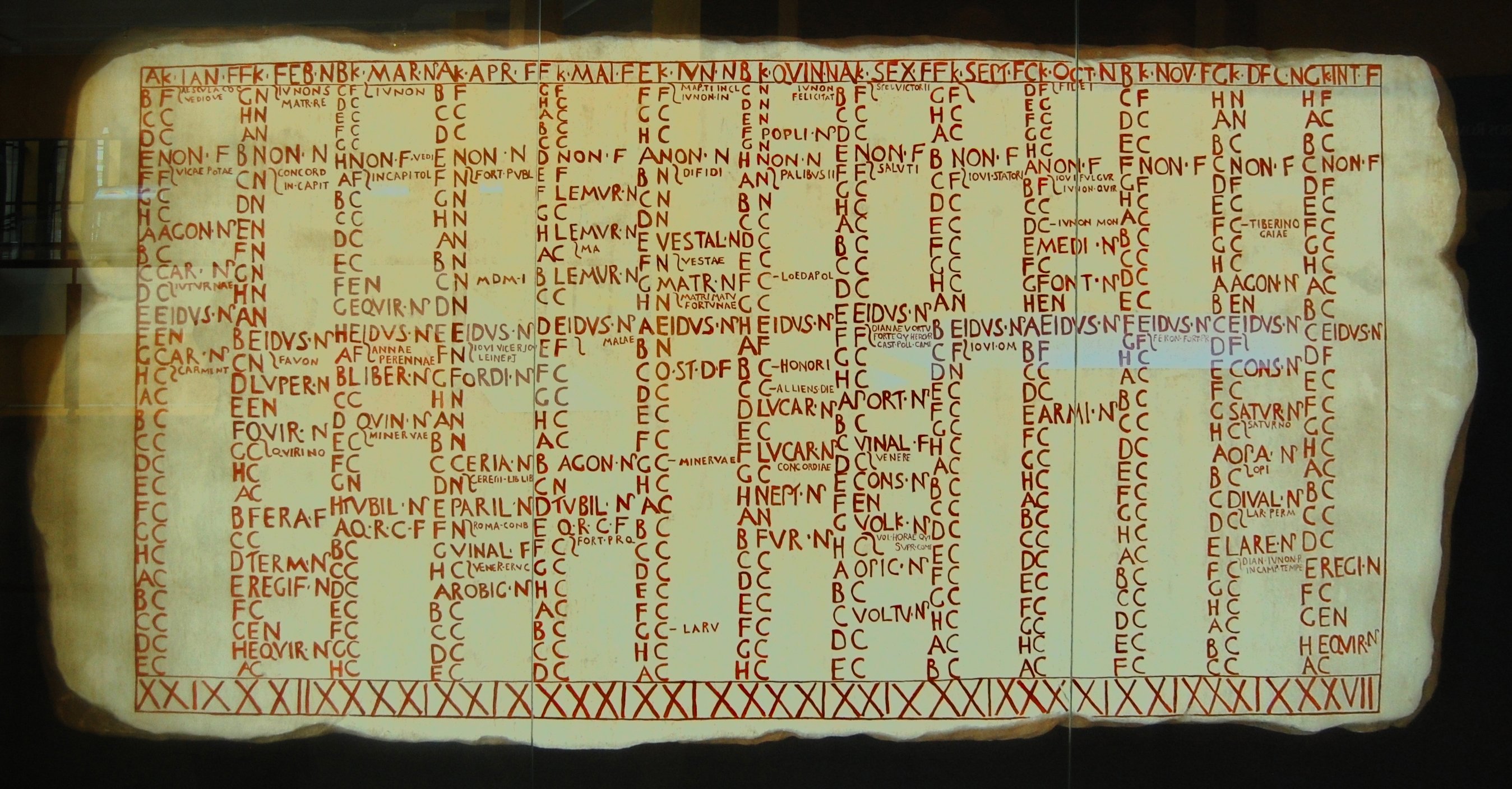
The original fragments are kept in the Museum of the Baths of Diocletian in Rome. Bauglir / CC BY-SA 4.0 via Wikimedia Commons
This is a pre-Julian calendar, but presentation remained the same after the reform.
At the top, one sees month names (JAN, FEB, MAR...) preceded by k for Kalendae. In the margin appears an uninterrupted cycle of 8 letters from month to month (A,B,C,D,E,F,G,H), corresponding to the 8-day nundinal cycle. Ides and Nones appear in the main month column (NON, EIDVS).
Still in the month column, one can see F for a favorable day (dies fastus), N for an unfavorable day (dies nefastus), and C for a comitial day (a day when voting in the comitia is possible).
After this brief exercise, let us return to what was still missing in the Julian calendar: the week.
It already existed in Chaldean and Hebrew calendars. Christians drew inspiration from this model.
In the first century AD, Christians still observed the Jewish Sabbath. Gradually, they dedicated instead to the Lord the day of the Resurrection, the day after Sabbath, and by the 2nd century this had become common.
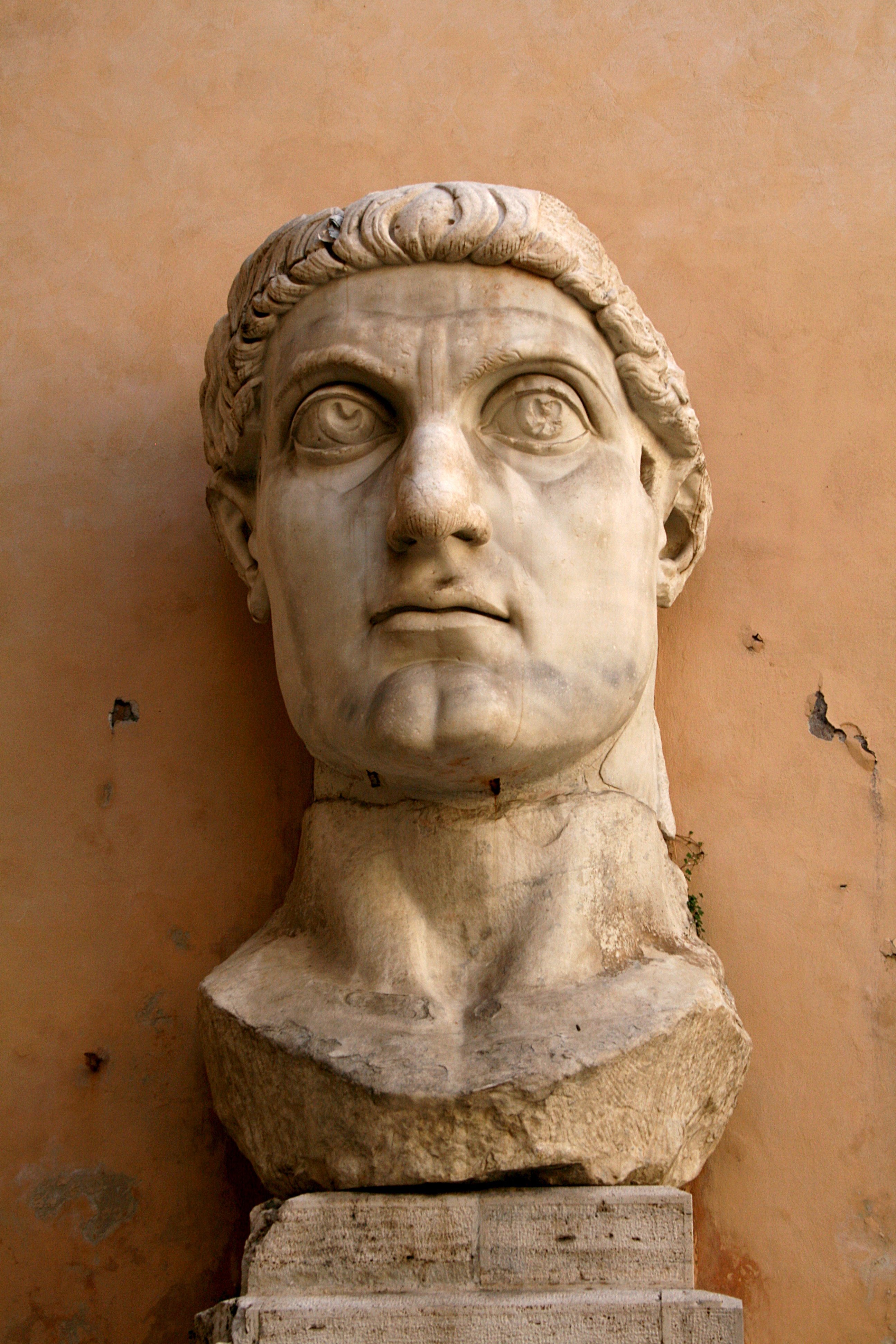
Marble, Roman work, AD 312-315. Jean-Pol GRANDMONT, Capitoline Museums / CC BY-SA 3.0, via Wikimedia Commons
Constantine, emperor from 324 to 337.
By the Edict of Milan, he granted full freedom of worship to the Church. In 330 he transferred the seat of the Empire to Byzantium. In 337 came Constantine's baptism and death.
In 312, Emperor Constantine, now Christian, decreed the end of persecutions against Christians. On that point, it seems Constantine was prepared to “adopt” whatever religion served his political interests. Be that as it may, he did introduce religion into the Julian calendar.
Without changing the calendar itself (year length and 12-month structure), he made three major modifications:
- Introduction of Sunday as a holiday in the 7-day week, by edict in 321.
- Official recognition of fixed-date Christian feasts.
- Official recognition of Easter as a movable feast at the Council of Nicaea in 325. Easter was to be “celebrated on the same day everywhere”. Yes, agreed, but... when? The Council of Nicaea did not say.
Only one issue remained for the Julian calendar to become the calendar used today: adjusting year length over time to the tropical year.
That is what we will examine in our final part.
The Start of the Year in Roman Calendars
When did the year begin in the various Roman calendars? The question would be simple if there had been only one type of year.
But Romans had a religious year, a magistrates' year, a civil year, perhaps an agricultural year...
Joannes Laurentius Lydus, known as John the Lydian (first half of the 6th century), writes in De Mensibus 3.22 that Romans distinguished between the “religious” year beginning in January and the “traditional” year beginning in March.
This distinction should not surprise us. Do we not ourselves have civil years, school years, parliamentary years...?
Annette Flobert, in her translation of Livy's Roman History, writes in note to Book III.36:
The civil year began in September (Ides or Kalends) until 479 BC [275 A.U.C.], then was moved forward by one month (Ides or Kalends of August). Fixed to the Ides of December from 449 [305 A.U.C.] to 401 [353 A.U.C.], it then shifted between March and October until 153 [600 A.U.C.] (1 January).
Let us look more closely at year 600. In his Roman History, Book IV, Chapter 1, Mommsen writes that in year 600:
“Led by a chief named Punicus, the Lusitanians threw themselves against the Roman province, defeated the two praetors combined, and killed many of their men. The Vettones (between the Tagus and Upper Douro) immediately seized the opportunity to join them; strengthened by these new allies, the barbarians pushed their raids as far as the Mediterranean. They even ravaged the land of the Bastulo-Phoenicians, not far from the Roman capital of New Carthage (Cartagena). Their attacks seemed serious enough in Rome that a consul was sent there, which had not happened since 559 [195 BC]. Because there was urgency in dispatching support, the two consuls entered office two and a half months early. This is why the investiture of the supreme annual officials was henceforth placed on 1 January instead of 15 March. As a result, the start of the year was fixed to that same date, used ever since down to our own day.
So it was indeed from year 600 A.U.C. onward that the start of the year was fixed on 1 January.
Mommsen writes later that "until 600, the official year of high magistrates - consuls, praetors, curule aediles, and later plebeian aediles - ran from 15 March to 14 March; that of the tribunes of the people from 10 December to 9 December, without affecting the civil year from 1 March to end-February. But from 601 onward, the new official year of curule magistrates, from 1 January to end-December, also became the customary civil year. Precise indications show this already in Rome's 7th century; therefore this change cannot be dated later, for example to Caesar's calendar reform."
But traditions die hard, and ceremonies tied to the old March New Year continued: renewal of fire and laurels in the Temple of Vesta, removal of sacred shields hung on the walls of the former royal palace...
And, as noted above, Caesar did have to confirm the abolition of the old-calendar New Year on 1 March, replacing it definitively with 1 January.