Advice: before reading the rest of this page, it is recommended that you first review how the Greek, Babylonian, and Egyptian calendars are constructed.
A little history
This brief historical overview, through timeline tables and maps, takes us from the age of Alexander the Great to the beginning of the Roman conquest.
The timeline tables are borrowed, with kind permission from Gilles Mathieu, from the Grectel website (by Francois J. Bayard), which I recommend if you are interested in Greece, its history, and many related topics.
The maps are not meant to be chronologically precise and cover broad periods.
| Year BCE | Event |
|---|---|
| Alexander the Great (335-322) | |
| 336 | Philip of Macedon (359/336) is assassinated under mysterious circumstances. His son Alexander III comes to the throne at the age of twenty. |
| 335 | Alexander crushes any hint of revolt in Greece by razing Thebes. Athens yields. |
| 334 | Pursuing a universal monarchy, Alexander sets out to conquer Asia with the Macedonian army and contingents provided by the League of Corinth (with the aim of uniting the Greeks by making them fight together against the "barbarians"). First victory against Persia on the banks of the Granicus. Within months, he conquers all Asia Minor. |
| 333 | Battle of Issus: Alexander defeats the Persian king Darius III, who is forced to flee. |
| 332 | After a long siege, Alexander takes Tyre and levels it, destroying Persian naval power. He then enters Egypt, where he is welcomed as a liberator (the priests of Memphis crown him pharaoh...). |
| 331 | He founds Alexandria in Egypt, while Antipater, one of his generals left in Greece, suppresses the revolt of Agis III, king of Sparta. Alexander then marches east again: he defeats Persian forces at Gaugamela, occupies Babylon and Susa, and conquers Persepolis. He thus becomes master of Persia. |
| 330 | Bessus, satrap of Bactria, has Darius assassinated. Alexander, eager to show goodwill toward conquered peoples, gives Darius solemn funerary honors and has Bessus tortured to death at Ecbatana the following year (329). In Macedon, nobles angered by Alexander's adoption of eastern customs and by his acceptance of divine honors plot a conspiracy that is harshly repressed. |
| 329/327 | Conquest of the eastern satrapies. Alexander marries Roxane, daughter of Oxyartes, satrap of Bactria. |
| 326 | Alexander enters India: he defeats the Indian king Porus on the banks of the Hydaspes and founds the cities of Nicaea and Bucephala. But his exhausted soldiers refuse to follow him any farther. He must turn back. |
| 324 | Return to Susa. He organizes his empire on a military basis: the institutions of each state are maintained; seeking to merge Greek and non-Greek worlds, he encourages "collaboration" and leads by example by marrying, after Roxane, Statira (daughter of Darius III) and Parysatis (youngest daughter of Artaxerxes III). Yet he remains faithful to Hellenism and, to spread it in the East, founds new cities (34 Alexandrias), builds roads, canals, and ports, and imposes a single currency. In Athens, Demosthenes, implicated in the Harpalus affair (Alexander's fugitive treasurer, from whom he allegedly took bribes), is condemned but escapes. |
| 323 | Alexander establishes his court in Babylon, where he falls ill. He dies on 11 June. |
| 322 | At once, Demosthenes and Hyperides call for war against Macedon. The Greek cities rise under Athenian leadership: the Lamian War. Antipater crushes them: Athens is defeated at Crannon (Hyperides is assassinated, Demosthenes takes poison). The Greek cities are now tied to the Macedonian kingdom. |
| Alexander's empire | 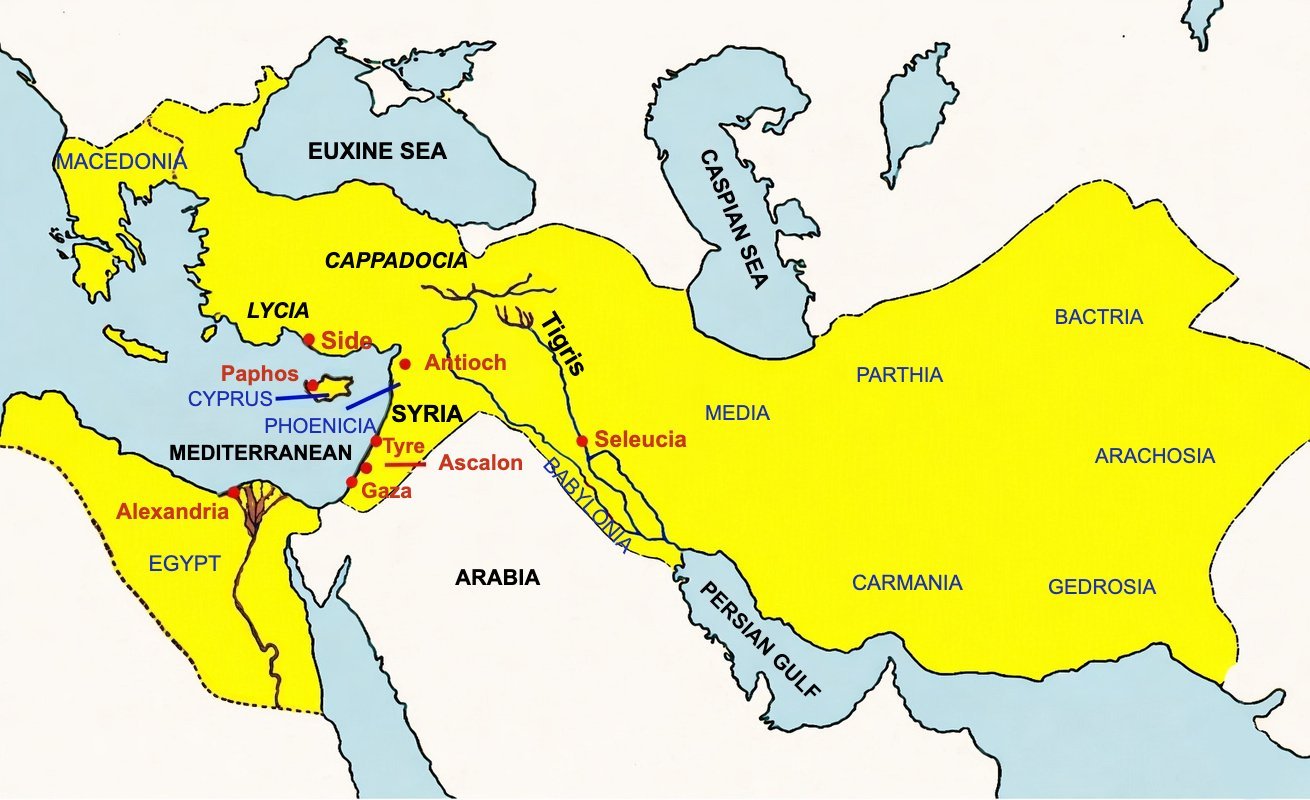 |
| The kingdoms of the 3rd century (322-200) | |
| 321/280 | Alexander's generals divide the empire among themselves (the "Diadochi," i.e. the successors). Bloody struggles oppose them until 280: the Wars of the Diadochi. The situation is then stabilized by the formation of three major kingdoms: - Macedon (Antigonid dynasty) - Asia (Seleucid dynasty) - Egypt (Lagid/Ptolemaic dynasty). |
| The kingdoms after Alexander | 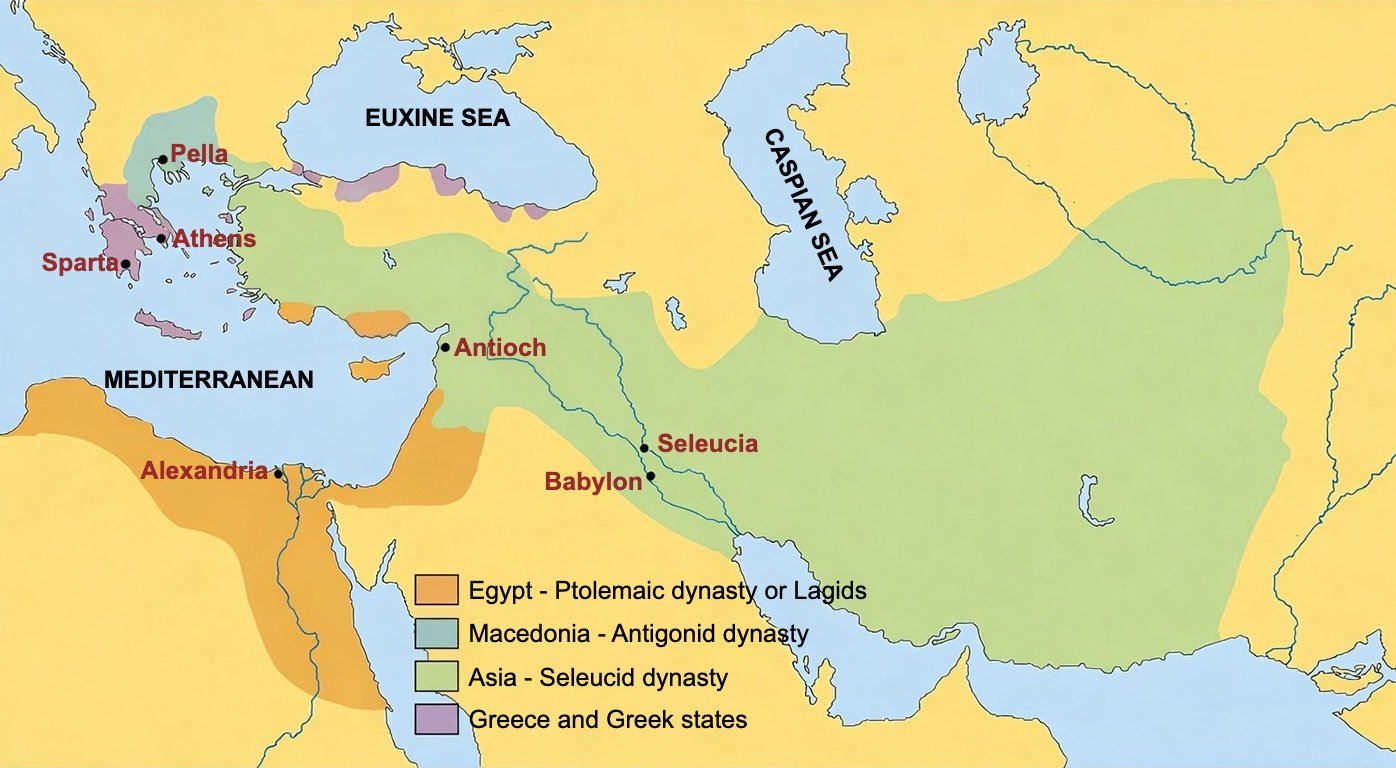 |
| 280 | Accession of Antiochus I in the Asiatic kingdom. His father Seleucus, a Greek, wanted a Mediterranean state and chose to center his vast kingdom on Syria (capital: Antioch). However, lacking strong central power, the Seleucid kingdom quickly fragmented. A multitude of independent kingdoms emerged, ruled by local monarchs (Bithynia, Cappadocia, Bactria, etc.). |
| 272 | Capitulation of Tarentum: the Greek cities of southern Italy fall under Roman domination. |
| 263 | Foundation of the kingdom of Pergamon by Eumenes I, who quite simply betrays Antiochus I. |
| 261 | After new revolts in Greece (the Chremonidean War), Athens is freed but permanently abandons any political role. |
| 249 | The Parthians, a people from the north, invade the regions south of the Caspian Sea and create a new state, Parthia. |
| 222 | On mainland Greece, a severe socio-economic crisis unfolds (growth of large estates, falling exports to eastern kingdoms now organizing their own production, while import needs remain high): depopulation spreads in Greece. Poverty sometimes triggers revolt, hence revolutionary measures in Sparta (debt cancellation, land redistribution, new citizens recruited from among the helots), under king Cleomenes. After this popular success, he tries to extend Spartan influence but is defeated at Sellasia by Macedon. It is the Macedonians' last triumph. |
| 212 | The Romans seize Syracuse and Sicily. |
To this chronology, let us add a reminder of the list of Egyptian rulers (full list here) of the Ptolemaic dynasty (or Lagids), founded by one of Alexander's generals, Ptolemy Lagos. Appointed satrap (governor) of Egypt by Alexander, he proclaimed himself ruler in 305 BCE.
| Ruler of Egypt | Period |
|---|---|
| Ptolemaic dynasty (Lagids) | |
| Ptolemy I Soter (the savior gods) | 305-285 BCE |
| Ptolemy II Philadelphus (who loves the gods) | 285-246 BCE |
| Ptolemy III Euergetes (Benefactor) | 246-222 BCE |
| Ptolemy IV Philopator (who loves his father) | 222-205 BCE |
| Ptolemy V Epiphanes (the illustrious) | 205-180 BCE |
| Ptolemy VI Philometor (who loves his mother) | 180-145 BCE |
| Ptolemy VII Neos Philopator (who loves his father) | 145-144 BCE |
| Ptolemy VIII Euergetes II (Benefactor) | 144-116 BCE |
| Ptolemy IX Soter II (Savior) | 116-107 BCE |
| Ptolemy X Alexander I | 107-88 BCE |
| Ptolemy IX Soter II - second reign | 88-80 BCE |
| Ptolemy XI Alexander II | 80 BCE |
| Ptolemy XII Neos Dionysos (New Dionysos), or Auletes (the Flute Player) | 80-58 BCE |
| Berenice IV | 58-55 BCE |
| Ptolemy XII Neos Dionysos - second reign | 55-51 BCE |
| Cleopatra VII Philopator & Ptolemy XIII Dionysos | 51-47 BCE |
| Cleopatra VII Philopator & Ptolemy XIV Philopator II | 47-44 BCE |
| Cleopatra VII Philopator & Ptolemy XV Caesarion | 44-30 BCE |
For completeness, let us also add the list of rulers of the Seleucid dynasty, founded by Seleucus I Nicator (c. 358-281 BCE), one of Alexander the Great's generals. In 321 he obtained the satrapy of Babylonia at the Partition of Triparadeisos in Syria and became king of Babylonia in 312 BCE. In 301, after the defeat and death of Antigonus Monophthalmus, king of Macedon, he gained Syria and a large part of Asia Minor.
| Ruler | Period | Ruler | Period |
|---|---|---|---|
| Seleucid dynasty | |||
| Seleucus I Nicator | 301-280 BCE | Alexander II Zabinas | 128-123 BCE |
| Antiochus I Soter | 280-261 BCE | Antiochus VIII Gryphus | 125-96 BCE |
| Antiochus II Theos | 261-246 BCE | Cleopatra Thea | 125-120 BCE |
| Seleucus II Callinicus | 247-226 BCE | Seleucus V | 125-115 BCE |
| Seleucus III Ceraunus | 226-223 BCE | Antiochus IX Cyzicenus | 113-95 BCE |
| Antiochus III the Great | 223-187 BCE | Seleucus VI Nicator | 96-95 BCE |
| Seleucus IV Philopator | 187-175 BCE | Antiochus XI Philadelphus | 95-95 BCE |
| Antiochus IV Epiphanes | 175-163 BCE | Antiochus X Philopator | 95-83 BCE |
| Antiochus V Eupator | 163-162 BCE | Philip I Philadelphus | 95-83 BCE |
| Demetrius I Soter | 162-150 BCE | Demetrius III Soter | 95-88 BCE |
| Alexander I Balas | 150-145 BCE | Antiochus XII Dionysos | 87-84 BCE |
| Demetrius II Nicator | 145-139 BCE | Tigranes II the Great (King of Armenia) | 83-69 BCE |
| Antiochus VI Epiphanes | 145-142 BCE | Antiochus XIII | 69-64 BCE |
| Antiochus VII Sidetes | 139-129 BCE | Philip | 69-64 BCE |
| Demetrius II Nicator | 129-125 BCE | ||
Acknowledgements
Thanks go to Dr G.R. Farhad Assar (currently finishing a book on the history of Parthia) for his clarifications on the Macedonian calendar in Babylon and Seleucia on the Tigris.
Thanks also go to Chris Bennett for his advice and clarifications on the Macedonian calendar in Egypt.
My sincere thanks to both for their kindness and availability, and congratulations on their immense work. To appreciate it, just visit Chris Bennett's site here and see, at its true value, his work on Egyptian, Babylonian, and Roman chronologies, among others.
Fortunately, on Calendar Saga, we only discuss the history and structure of calendars. Otherwise, if we were discussing chronology in full, there would be little left to do but link directly to Chris's site.
By the way... if you go there, do not forget to come back and finish reading this page.
The calendar
Without Alexander the Great, the Macedonian calendar would probably have remained just one calendar among others in the neighboring Greek city-states. Through his conquests and after the division of the empire, it spread across Asia Minor and Egypt.
That does not mean the Macedonian Empire (before and after division) then used a single calendar. Quite the opposite: it changed, sometimes colliding with other calendars far more developed and precise than itself, to the point where little remained beyond month names.
Here, we will try to follow these developments in the Macedonian calendar, often parallel but not identical.
We start with the initial calendar and Alexander's relationship to it. Then we examine its developments and changes in two places where the local calendar was far more sophisticated than the Macedonian one: Babylon and Egypt.
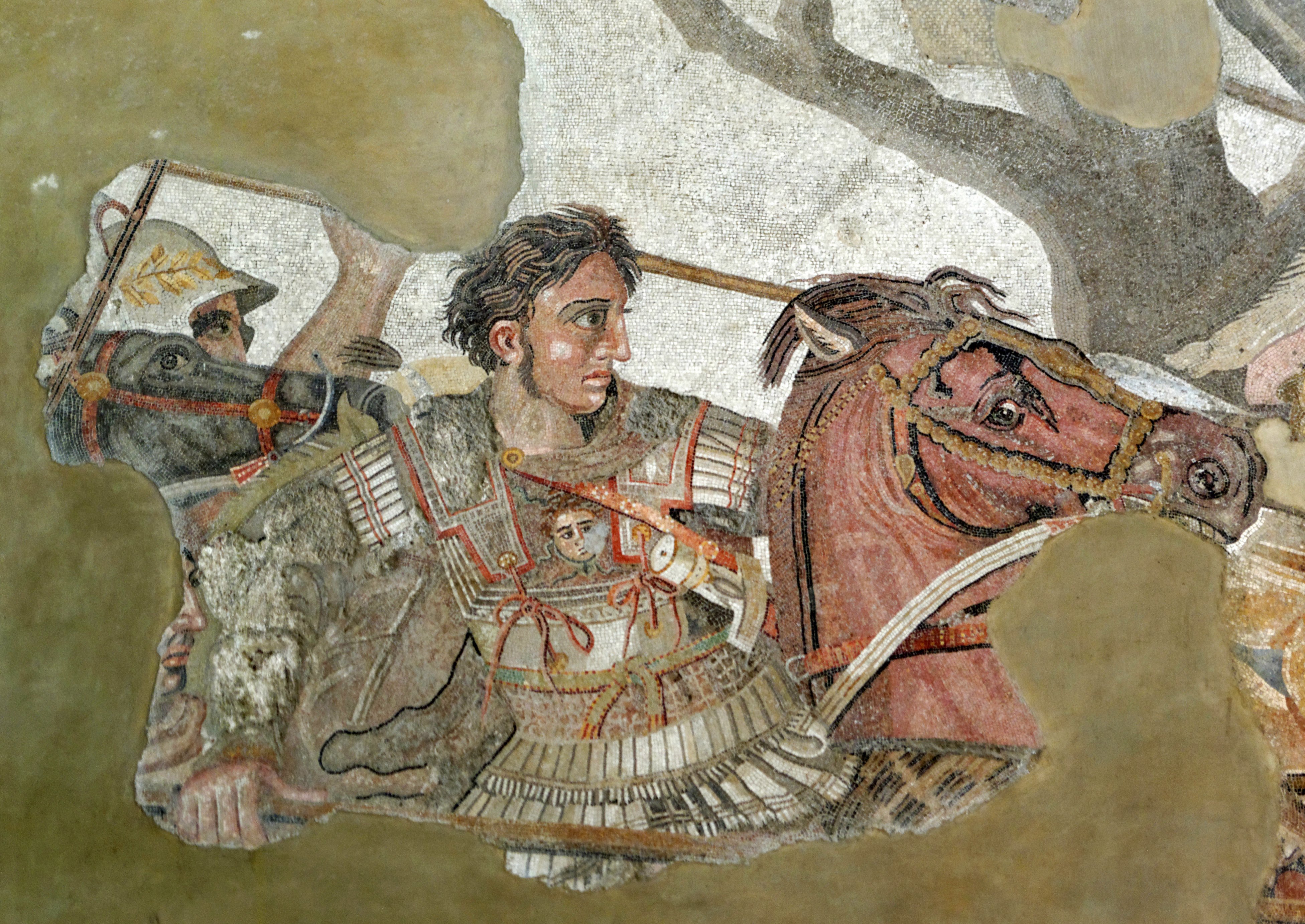
The archaic Macedonian calendar in the time of Philip of Macedon and Alexander the Great
We are still far from knowing everything about the Macedonian calendar of that period.
And although some documents give useful clues, we should be careful not to generalize them too far backward or forward from the period in which they were written.
A lunisolar calendar
In the time of Philip and Alexander, the Macedonian calendar was almost certainly lunisolar, like those of the Greek cities. But its year began in autumn, likely after the new moon following the autumn equinox.
Since we know the names and order of the months, we can draw up a table of the Macedonian year with approximate correspondences to our months.
| Month | Position | Possible Attic correspondence (Bickerman) | Position | Approximate Julian correspondence | |
|---|---|---|---|---|---|
 | Dios | 1 | Pyanepsion | 4 | September-October |
 | Apellaios | 2 | Maimakterion | 5 | October-November |
 | Audynaios | 3 | Poseideon | 6 | November-December |
 | Peritios | 4 | Gamelion | 7 | December-January |
 | Dystros | 5 | Anthesterion | 8 | January-February |
 | Xanthikos or Xandikos | 6 | Elaphebolion | 9 | February-March |
 | Artemisios | 7 | Munychion | 10 | March-April |
| | Daisios | 8 | Thargelion | 11 | April-May |
 | Panemos | 9 | Scirophorion | 12 | May-June |
 | Loos | 10 | Hecatombaeon | 1 | June-July |
 | Gorpiaios | 11 | Metageitnion | 2 | July-August |
 | Hyperberetaios | 12 | Boedromion | 3 | August-September |
Like any lunisolar calendar, the Macedonian calendar must then have alternated 29- and 30-day months. An Egyptian papyrus (from Zenon*) dating to the 3rd century BCE states that Gorpiaios and Hyperberetaios together had 59 days, Apellaios had 30 days, and Audynaios 29 days. Was it the same in Macedon, and in the period that concerns us here? Unknown.
And as with any lunisolar calendar, an intercalary month was inserted from time to time to reconcile lunar and solar cycles. For the period we are dealing with, “from time to time” is about all we can safely say.
After which month was this intercalary month inserted?
Here again, a papyrus (Poxy* 2082) gives us clues: "...Cassander, king of the Macedonians, fell ill and died on the [21st] day of the intercalary month Artemisios. Philip, his eldest son, succeeded him..."
Cassander and Philip IV place us around 319-305 BCE. So at least at that time, the intercalary month came after Artemisios.
Was it already the same in the time of Philip of Macedon and Alexander? Would it remain the same later? We will return to the “later” point below. For now, let us use the first question to look at Alexander's relationship with the calendar.
Alexander the Great and the Macedonian calendar
Speaking of the Battle of Granicus (334 BCE) against the Persian satraps, Plutarch writes in his Life of Alexander: "XXI...Others wanted the ancient monthly customs to be observed religiously, customs that did not allow the kings of Macedon to lead their armies in the month Daesius. To reform this superstitious custom, Alexander declared that from then on this month would be called second Artemisios."
The phrase “from then on” is worth noting: it suggests the complementary month was shifted in favor of a second Artemisios, at the expense of some other month??? Unknown.
Another passage from Plutarch's Life of Alexander reads: "XXXIV. At the siege of Tyre, Alexander's troops were so exhausted by frequent fighting that he let most of them rest and sent only a small number to the assault, so as not to give the enemy time to recover. One day, as the seer Aristander was making sacrifices, and after examining the signs from the victims, he declared confidently to those present that the city would certainly be taken in that month. Everyone burst out laughing and mocked Aristander, for it was the last day of the month. The king, who always favored seers' predictions, seeing his embarrassment, ordered that that day should no longer be counted as the thirtieth of the month, but as the twenty-eighth."
Alexander was deeply superstitious and entirely under the influence of the haruspex Aristander. Plutarch confirms this too: "Since Alexander had given himself over to superstition, his mind had become so disturbed and full of fear that the most indifferent things, if they appeared unusual or strange, were seen as signs and portents. His palace was filled with people performing sacrifices, expiations, and prophecies."
How could such superstition be reconciled with his expansion plans? Quite simply by “adjusting” the calendar to suit his needs. We have just seen two examples.
*Papyrus of Oxyrhynchus. Oxyrhynchus (modern al-Bahnasa), on a branch of the Nile (Bahr Yusuf), 300 km from Alexandria and 160 km from Cairo, was an important city in the Ptolemaic period.
* Zenon: Greek citizen of Caunus, resident in Alexandria, in the service of Apollonius, finance minister to Ptolemy II Philadelphus. Zenon's archives cover two periods: his public life from 261 BCE to 248 BCE, then from 248 BCE to 229 BCE.
Synchronizing the Macedonian and Attic calendars
Apart from the start of the year (autumn for the Macedonian calendar, summer for the Attic calendar), can Macedonian and Attic months be matched?
According to E.J. Bickerman, in Chronology of the Ancient World (1969), the answer seems to be yes, since he establishes the correspondence Hecatombaeon (Attic) = Loios (Macedonian), as shown in the table above.
Is this correspondence stable over time? One may doubt it, given the irregular insertion of embolismic months in the Macedonian calendar.
For Macedon itself, let us look at several texts.
- A speech by Demosthenes, On the Crown, mentions a letter from Philip of Macedon to his Peloponnesian allies saying, among other things: "Be in arms with provisions for 40 days in Phocis in the current month, which we call Loios, which the Athenians call Boedromion and the Corinthians Panemus."
This text refers to the war against the Locrians of Phocis in 338 BCE. E.J. Bickerman's correspondence would then not apply, since Hecatombaeon would correspond to Daisios. Still, this text is often considered spurious because it matches no other data. But there may be other reasons for this mismatch. - In his Life of Alexander (IV), Plutarch writes: "Alexander was born on the 6th day of Hecatombaeon, which the Macedonians call Loios, the very day the temple of Artemis was burned at Ephesus." That is 356 BCE. This is the correspondence adopted by E.J. Bickerman. Yet one may ask whether Loios = Hecatombaeon was true at the time of the event or only in Plutarch's own period.
- We have seen that at the Battle of Granicus (334 BCE), the month was Daesius (renamed second Artemisios). In his Life of Camillus, Plutarch says this battle took place in the Attic month Thargelion. That still gives Hecatombaeon = Loios.
- Finally, in his Life of Aratus, Plutarch writes: "...they buried him there as founder and savior of their city. This place is still called the Arateion, and sacrifices are offered there to Aratus, first on the day he freed Sicyon from tyranny, the 5th of Daisios, which the Athenians call Anthesterion."
He is referring to the liberation in 251 BCE of Sicyon, a Greek city in the Peloponnese, by Aratus of Sicyon (271-213 BCE). That would make Hecatombaeon correspond to Dios.
This comparison shows how difficult it is to establish with certainty that a given Macedonian month corresponded to a given Attic month. Only fuller knowledge of intercalation systems might clarify the issue.
The Macedonian calendar in the Seleucid kingdom and in Parthia
Let us first remember that Babylon was for a time the capital of this kingdom before being abandoned in favor of Seleucia on the Tigris in Mesopotamia and Antioch in Syria. In the 2nd century BCE, Mesopotamia fell into Parthian hands, while Seleucia remained a major trade hub.
First contact and synchronization
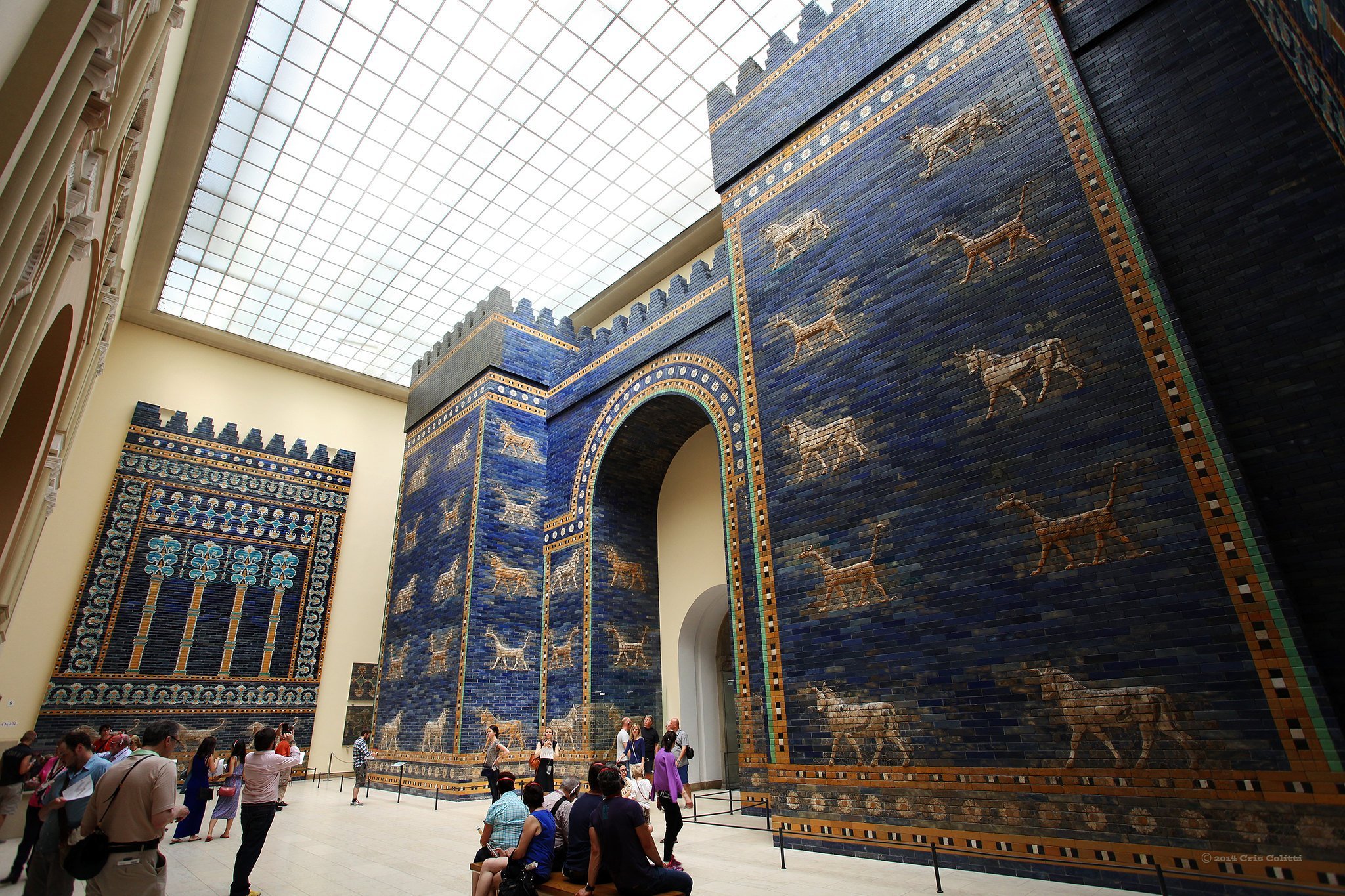
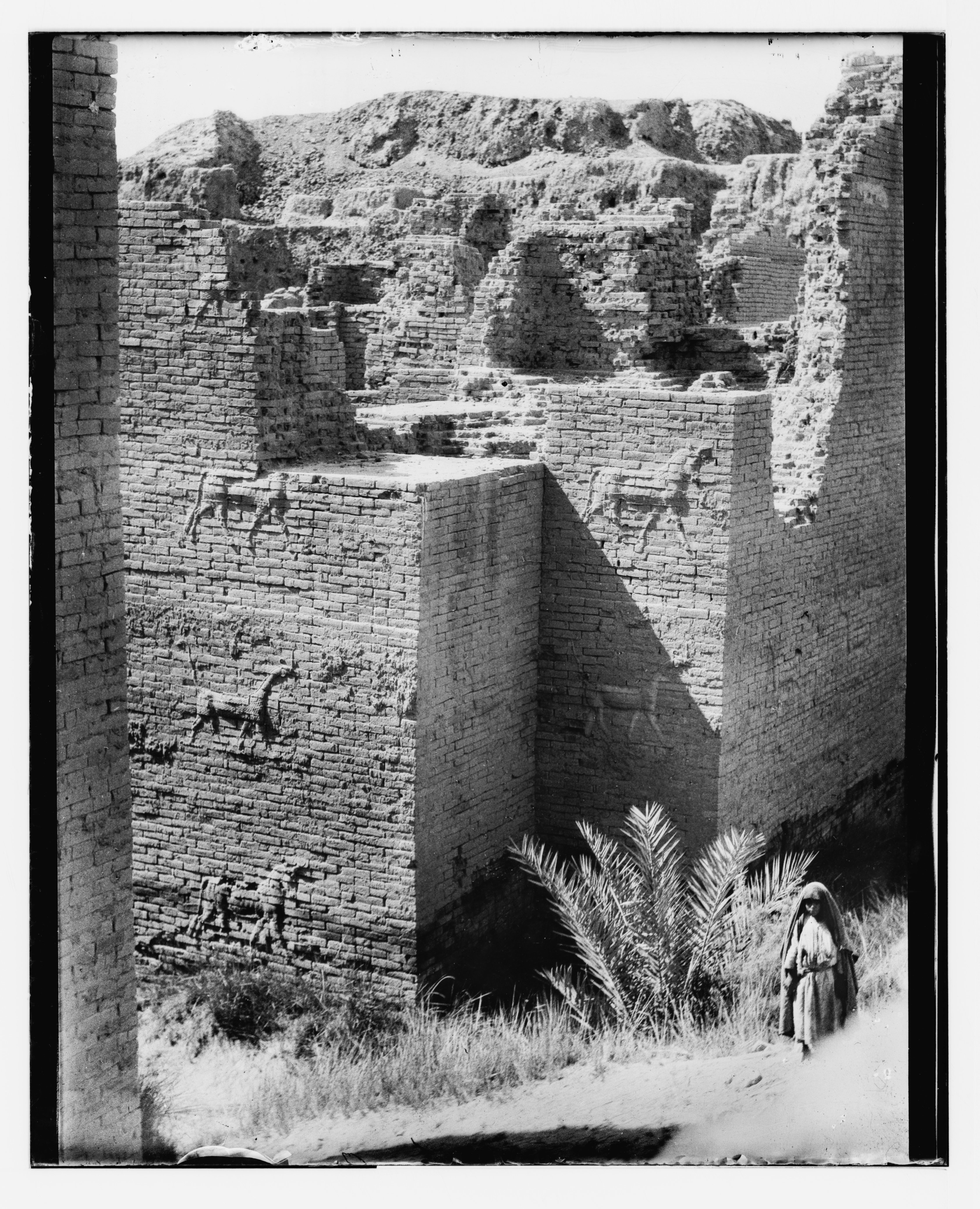
When Alexander the Great first entered Babylon in late October 331 BCE, the Macedonian calendar came into contact with the Babylonian calendar, which was far more developed, especially regarding intercalary months placed in years 1, 3, 6, 9, 11, 14, and 17 of a 19-year cycle. For more detail, see here.
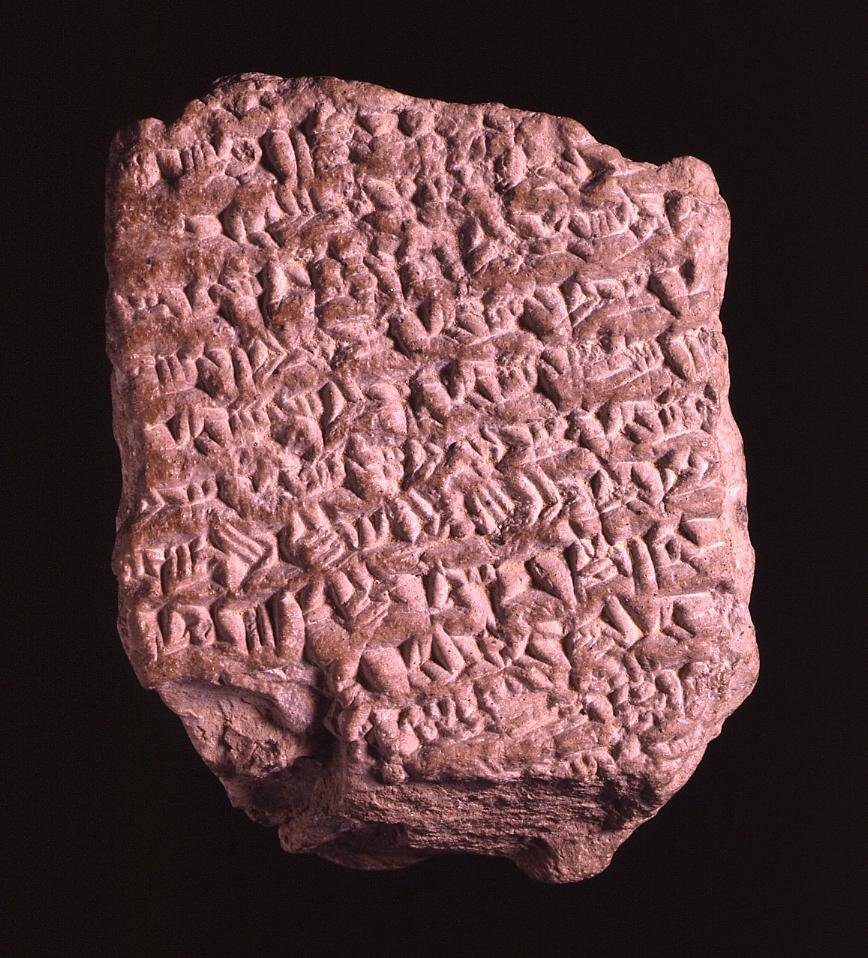
Several texts show that the Macedonian calendar was synchronized with the Babylonian calendar:
An astronomical diary dated to the second month (Ayaru) of 323 BCE says: "[on the] 29th [day], the king dies. Clouds [in the sky]."
Plutarch, in his Life of Alexander, says on one hand: "The journal of his life gives the following details about his illness: 'On the eighteenth day of Daesius, he was seized with fever and slept in the bath chamber. [...] On the twenty-eighth, he died in the evening.'" And on the other: "Aristobulus simply reports that, seized by fever and violent thirst, he drank wine, immediately fell into delirium, and died on the thirtieth day of Daesius." This gives us... 29 Daisios. It is simply a matter of day-start convention and end-of-month naming when months have 30 days.
At Alexander's death, the two calendars were therefore synchronized to the day: 29 Daisios = 29 Ayaru.
There is also other evidence, confirmed by specialists such as Samuel (Greek and Roman Chronology), Parker and Dubberstein (Babylonian Chronology), and Alexander Jones (in various articles), attesting to the durability of this correspondence.
In Ptolemy, we find:
- 27 Thot (Egyptian) = 5 Apellaios (Macedonian) = 5 Arahsamnu (Mesopotamian) = 29/10/237 BCE (Julian)
- 9 Thot (Egyptian) = 14 Dios (Macedonian) = 14 Tashritu (Mesopotamian) = 29/10/237 BCE (Julian)
- 14 Tybi (Egyptian) = 5 Xandikos (Macedonian) = 5 Addru (Mesopotamian) = 01/10/229 BCE (Julian)
Regarding intercalary months, G.R.F. Assar mentions a “Saros Canon” confirming that in Alexander's 13th year the intercalary month Xandikos (Macedonian) corresponded to the intercalary month Addaru II (Babylonian), which had been inserted two months earlier. This corresponds to 15-16/03/323 BCE.
These date correspondences lead G.R.F. Assar, correctly, to conclude that the Macedonians adopted the Babylonian intercalation system before 323 BCE, that is, before Alexander the Great's death.
So one may consider plausible the claim that Alexander III, upon entering Babylon in 331 BCE, ordered the Astronomical Diaries to be translated into Greek, and drew the necessary conclusions.
That said, the Macedonians did not adopt the Babylonian calendar as-is. Babylonians always began the year on 1 Nisanu (spring), whereas Macedonians began six months earlier on 1 Dios (autumn).
We can therefore set out the correspondence table for this period.
| Babylonian | Macedonian | ||||
|---|---|---|---|---|---|
| Rank | Name | Years | Rank | Name | Years |
| I | Nisanu | 1st half of year X | VII | Artemisios | 1st half: year X - 1 in the Babylonian calendar |
| II | Ayaru | VIII | Daisios | ||
| III | Simanu | IX | Panemos | ||
| IV | Duzu | X | Loos | ||
| V | Abu | XI | Gorpiaios | ||
| VI | Ululu * | XII | Hyperberetaios * | ||
| VII | Tashritu | 2nd half of year X | I | Dios | 2nd half: year X in the Babylonian calendar |
| VIII | Arahsamnu | II | Apellaios | ||
| IX | Kislimu | III | Audynaios | ||
| X | Tebetu | IV | Peritios | ||
| XI | Shabatu | V | Dystros | ||
| XII | Addaru ** | VI | Xandikos ** | ||
| * plus Ululu II in the first year of the 19-year cycle ** plus Addaru II in years 3, 6, 9, 11, 14, 17 of the cycle | * plus Hyperberetaios II in the first year of the 19-year cycle ** plus Xandikos II in years 4, 7, 10, 12, 15, 18 of the cycle | ||||
Note also that, according to John Malalas (Byzantine chronicler, monk of Antioch, 6th century), Seleucus I Nicator imposed Macedonian month names on Babylonian months.
This correspondence between the two calendars lasted until 48/47 BCE, when a change occurred in the Parthian Empire during the reign of Orodes II (57/38 BCE).
Through detailed numismatic analysis of drachms (silver coins) and tetradrachms (4 drachms) of the period, G.R.F. Assar arrived at this 48/47 BCE date. Others proposed 15/16 CE (McDowell) or 17/31 CE (Bickerman), but the numismatic evidence is difficult to dismiss.
What happened?
Simply a one-month shift affecting both the start of the year and the intercalary months. The table below shows the consequences.
| Babylonian | Parthian Empire | ||
|---|---|---|---|
| Rank | Name | Rank | Name |
| I | Nisanu | VII | Xandikos |
| II | Ayaru | VIII | Artemisios |
| III | Simanu | IX | Daisios |
| IV | Duzu | X | Panemos |
| V | Abu | XI | Loos |
| VI | Ululu * | XII | Gorpiaios * |
| VII | Tashritu | I | Hyperberetaios |
| VIII | Arahsamnu | II | Dios |
| IX | Kislimu | III | Apellaios |
| X | Tebetu | IV | Audynaios |
| XI | Shabatu | V | Peritios |
| XII | Addaru ** | VI | Dystros ** |
| * plus Ululu II in the first year of the 19-year cycle ** plus Addaru II in years 3, 6, 9, 11, 14, 17 of the cycle | * plus Gorpiaios II in the first year of the 19-year cycle ** plus Dystros II in years 4, 7, 10, 12, 15, 18 of the cycle | ||
Why this shift? We do not really know. But we should avoid assuming it necessarily came from an extra intercalation. It could also be a simple month-name shift, perhaps to synchronize with another calendar. G.R.F. Assar hypothesises a correlation with the Antioch calendar, where Hyperberetaios had been the first month of the year (1 October 49 BCE) since the Battle of Pharsalus in August 49 BCE, won by Caesar against Pompey.
This “new year” system at Seleucia on the Tigris did not last forever. From 79 CE onward, evidence points to a return to the old system (year starts in Dios; embolismic months are Xandikos and Hyperberetaios). G.R.F. Assar suggests this return may have occurred under Vologases I (Arsacid king, 51-78 CE), author of many reforms.
The Macedonian calendar in Egypt
Understanding how the Macedonian calendar evolved in Egypt is no small task. And Chris Bennett, whom I thank again for his guidance and whose dates I have often used, would not disagree.
Still, it is interesting to see how the Macedonian lunar calendar behaved when confronted with a highly sophisticated solar calendar, the Egyptian civil calendar (12 months of 30 days + 5 epagomenal days), and to ask how both could be synchronized.
Do not touch the Egyptian calendar
We should not forget one simple but categorical rule: do not touch the Egyptian calendar. Roman philosopher and scholar Nigidius Figulus (Publius) (98-45 BCE) recalls this rule in a text: "...before being invested with royal insignia, the king [of Egypt] was led by the priest of Isis into the inner sanctuary of the temple of Apis at Memphis, where he had to swear solemnly that he would not intercalate months or days, and that he would keep the year at 365 days..." As we saw on the page dedicated to the Egyptian calendar, Ptolemy III's attempt to break this near-sacred rule through the Canopus Decree was broadly unsuccessful, even though, according to Chris Bennett, the "Canopic reform" may have been applied by some local Egyptian administrations until mid-reign of Ptolemy IV, that is, between year 9 of Ptolemy III and year 9 of Ptolemy IV (last known date).
The many avatars of the Macedonian calendar in Egypt
Before entering a very summary study that raises more questions than it answers, it helps to set the scene and ask whether the play ahead is grand theater or small neighbourhood stage.
Let us read two texts:
“F. Robiou, Recherches sur le calendrier macédonien en Égypte (1877): In Egypt, the Macedonian year was, strictly speaking, only the municipal year of Alexandria; this variation could not produce a general upheaval in the habits of the country; in Egypt, I know of not a single purely Macedonian date.
“C. Orrieux, Les papyrus de Zénon (1983): Foreign influence creates convergences in every field, but cultures do not fuse.
In short, the Egyptian calendar did not change one bit in response to the Macedonian calendar, which mostly concerned only the “royal house”.
Now that the scene is set, let us play the piece, keeping in mind that several scripts are possible.
Act I: a central character (the calendar) as mysterious as it is strange
C. Bennett rightly wonders why Ptolemy II adopted an obsolete biennial intercalation system for the Macedonian calendar while having the best scholars of the time at hand. One hypothesis is that Ptolemy II wanted to annoy the Seleucids by showing he was “more Macedonian” than they were. I admit I rather like that idea.
It assumes Macedonians had practiced intercalation every two years since Alexander. That is Grybek's view in Du calendrier macédonien au calendrier ptolémaïque (a book I could not obtain because it is out of print), where he argues this was the system of Alexander and Ptolemy I.
A papyrus (P. Hibeh 1.77), dated to year 40 of Ptolemy I in the month Dios, mentions that the following month Panemos would fall at the time of wheat winnowing. This tends to show the Macedonian calendar was still aligned with the tropical year.
What seems certain is that until the reign of Ptolemy V, the Lagid Macedonian calendar went through all kinds of states.
Take intercalary months as an example, since they are a good indicator of control over a lunisolar calendar.
From a distance, one might think that up to Ptolemy V the complementary month was Peritios II.
But in year 4 of Ptolemy III, one finds a Hyperberetaios embolismos (P. Cair. Zen. 4.59571). In year 16 of the same Ptolemy III (or Ptolemy IV, uncertainty remains), one finds a Panemos embolismos (P. Cair. Zen. 3.59374).
And it gets worse. C. Bennett notes that archaeologist Willy Clarysse (Archiv fur Papyrusforschung 48 (2002), p.99) identifies a Hyperberetaios embolismos in year 22 of Ptolemy III's reign, and there is also a Peritios embolismos in year 20 of the same reign. For those months to line up in double-dated texts, there must necessarily be yet another intercalary month between them. That gives three intercalary months in less than two years.
Ptolemy III... does that ring a bell? The Canopus Decree perhaps? Did we stumble on an obsession with intercalary months and days? Joking aside, either dates are misread or the Lagids had reasons. And on the Egyptian side, Ptolemy III had found a way to stop calendar drift.
In any case, under these conditions, finding synchronization between the Egyptian civil calendar and the Macedonian calendar is very difficult.
Act II: false assimilation of the Macedonian calendar to the Egyptian calendar?
Under Ptolemy V and Ptolemy VI, we find the following double dates (provided by C. Bennett):
| King | Regnal year | Egyptian date | Macedonian date | Julian year BCE | References |
|---|---|---|---|---|---|
| Ptolemy V | 4 | 15 Epiph | Audynaios | 202-201 | pTeb 820 |
| Ptolemy V | 8 | 25 Athyr | 4 Daisios | 198-197 | SB 20.146659 |
| Ptolemy V | 9 | 18 Phaophi * | 4 Xandikos | 197-196 | OGIS 90 |
| Ptolemy V | 22 | 22 Khoiak | 26 Daisios | 184-183 | SB 5675 |
| Ptolemy V | 23 | 28 Tybi | 28 Panemos | 183-182 | pMich 3.182 |
| Ptolemy V | 23 | 24 Phamenoth | 24 Gorpiaios | 183-182 | CG 5576 |
| Ptolemy V | 24 | 18 Thot | 18 Dystros | 182-181 | pTeb 817 |
| Ptolemy VI | 1 | 29 Pakhon | 29 Dios | 180-179 | pAmh 42 |
| Ptolemy VI | 8 | 13 Mekhir | 13 Loos | 174-173 | pAmh 43 |
| Ptolemy VI | 8 | Mesorê | 1? Peritios | 174-173 | pFreib 34 |
| Ptolemy VI | 9 | 5 Payni | 5 Apellaios | 173-172 | pMich 3.190 |
| Ptolemy VI | 10 | 25 Payni | 25 Apellaios | 172-171 | pTeb 819 |
| Ptolemy VI | 18 ** | 25 Mesorê | 4 Peritios | 164-163 | UPZ 1.111 |
| Ptolemy VIII | 1 *** | 9 Phaophi | 9 Xandikos | 170-169 | pRyl 583 |
| Ptolemy VI | 22 | 27 Thot | Dystros | 160-159 | pHamb 57 |
| Ptolemy VI | 23 | Mekhir | Loos | 159-158 | SB 7632 |
| Ptolemy VI | 24 | 1 Mesorê | [1] Peritios | 159-158 | LD 4.27b |
| Ptolemy VI | 26 | 25 Thot | 1 Xandikos | 156-155 | UPZ 1.113 |
| * This is the Rosetta Stone, whose month Lecheir was "corrected" to Phaophi ** This papyrus is generally dated to year 18 of Ptolemy VI's reign, though he is not named *** 12th year of Ptolemy VI's reign | |||||
If the red dates in this table did not exist, one might say that in year 4 of Ptolemy V the Egyptian “solar” calendar had defeated the Macedonian lunar calendar. But those dates do exist, suggesting that the Macedonian calendar survived as a lunar calendar until Ptolemy VI's death.
Still, synchronization between the two calendars increasingly occurred at the expense of the Macedonian one, whose only distinguishing feature gradually became the beginning of the year: Thot in the Egyptian calendar versus Dystros in the Lagid one.
Act III: perfect synchronization
The previous stage continues under Ptolemy VIII, up to his 53rd year (118-117 BCE), when we first find the date 17 Xandikos = 17 Mekhir (pTebt 25), showing perfect concordance between the two calendars as follows:
| Egyptian | Macedonian | Julian dates |
|---|---|---|
| Thot | Dios | 29/08-27/09 |
| Phaophi | Apellaios | 28/09-27/10 |
| Athyr | Audynaios | 28/10-26/11 |
| Khoiak | Peritios | 27/11-26/12 |
| Tybi | Dystros | 27/12-25/01 |
| Mekhir | Xandikos | 26/01-24/02 |
| Phamenoth | Artemisios | 25/02-26/03 |
| Pharmouthi | Daisios | 27/03-25/04 |
| Pakhon | Panemos | 26/04-25/05 |
| Payni | Loos | 26/05-24/06 |
| Epiph | Gorpiaios | 25/06-24/07 |
| Mesorê | Hyperberetaios | 25/07-23/08 |
| Epagomenal days | 24/08-28/08 | |
The Lagid Macedonian lunar calendar was effectively swallowed by the Egyptian calendar. Only month names remained, and this system lasted even after Roman takeover in 30 BCE.
In conclusion
Let us read another passage from Claude Orrieux:
“The Antigonids had their capital at Pella in Macedon, cradle of Alexander's empire; the Seleucids had theirs at Antioch near the Syrian coast; and the Lagids radiated from Alexandria. [...] In reality, Hellenistic monarchies are simply the outcome of military force. [...] Where we see clear cultural unity, which led J.G. Froysen to forge the concept of a “Hellenistic world,” contemporaries saw only a prodigious succession of exploits by individuals enjoying divine favor. [...] Kings held their thrones through an inheritance quarrel transformed into a contest of chiefs.
Applied to the Macedonian calendar, these lines are strikingly accurate. We inherit month names, then a struggle among ruling powers over structure, to the point that instead of speaking of “the” Macedonian calendar, it would be more accurate to speak of Antigonid, Seleucid, and Lagid calendars, so different are their trajectories.
The heteroclite character of the Macedonian calendar becomes even clearer when we note that the correspondence Thot = Dystros continued in Cyrene (in 323, Ptolemy I attached Cyrenaica to Egypt) after the Thot = Dios correspondence practiced in Egypt under Ptolemy VIII. One more branch added to the Macedonian calendar.