By way of introduction
We will spend most of this study in the Middle Ages, and even a little before.
First, we will look at how our current era came into being, whether one specific event triggered it, why this day rather than another, and along the way we will meet a few figures well worth a closer look.
Second, we will see that what seems natural to us today, namely that the year begins on 1 January, is not nearly as obvious as we might think, and that chronologists have every reason to tear their hair out trying to work out who or what came before whom or what.
Let me be clear: there is no point looking in this page for polemical stances or fuel for debates that are still smouldering. We will simply stick to the facts.
Birth of the Christian era
The year is 525. John I, through the heads of the chancery Boniface and Bonus, asks a certain Dionysius Exiguus to revisit the Easter computus and set Easter dates for the coming years.
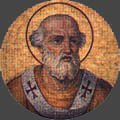
It was John I, pope from 523 to 526, who asked Dionysius Exiguus (Denys the Little) to update the Easter computus.
Some say this happened not in 525 but in 523. Well, if we start quibbling over two years about events that took place almost 2,000 years ago, we are not going to get very far. Let us say Dionysius Exiguus handed in his work in 525 and leave it at that.
Before going any further, we do need to spend a few minutes understanding what this famous Easter computus actually was, and who this illustrious Dionysius Exiguus was.
The Easter computus
We may as well accept it right away: sources sometimes disagree and the matter is fairly complex. Since determining Easter is not the main purpose of this study, we will try to stay brief while being as precise as possible.
We need to go back a few more centuries, keeping one important point in mind: at the time, Christianity had three main “capitals”: Antioch, Alexandria, and Rome. We say Christians and Christianity for convenience, but in the first centuries these were simply communities of believers in Jesus.
- In the 2nd and 3rd centuries, Christians first celebrated Easter (the Resurrection of Christ) at the same time as Jewish Passover, i.e. on 14 Nisan. Then the very young Christian Church decided to distinguish itself from the Jews and no longer leave the date of its own feast to them. We should remember that the Jewish calendar is a lunar calendar based on observation of the new moon.
And this whole world differentiated itself so much that communities within Christendom also diverged from one another, each celebrating Easter in its own way. Not to mention the Quartodecimans (from the Latin quartodecimus: fourteenth), who remained faithful to the date of the Jewish Passover.
- Was it in 325 that the 318 Fathers of the Christian Church, gathered at the first ecumenical Council of Nicaea (today Iznik in Turkey), convened by Emperor Constantine, established the rule for determining Easter? Opinions differ, but in any case, even if they fixed the rule, they did not set out the practical calculation methods in precise terms.
Nicaea or not, the rule did exist. It can be worded in several ways; we will break it down to show its components clearly:
- The spring equinox falls on the 12th of the Calends of April, i.e. 21 March in the Julian calendar. Some, however, placed it on the 8th of the Calends of April, i.e. 25 March.
- Easter is celebrated on the Sunday between the 14th and 21st day of the new moon following 21 March.
At Nicaea, and this point is certain, everyone solemnly agreed that Eastern Christians who celebrated Easter at the same time as the Jews would abandon that practice and celebrate on the day determined jointly by the Churches of Rome and Alexandria. This was recorded in a synodal letter to the Christians of Alexandria: “We bring you the good news of the agreement reached on the holy Pascha...” (Rodolphe Audette translation).
Constantine, for his part, sent a circular letter to all Christian bishops. The issue, supposedly settled, gave way to other matters.
Because the Council of Nicaea had bigger concerns than fixing Easter dates. One of them was Arianism, i.e. the denial by some (Arius of Alexandria and others) of one God who is also triune. The Council defined the Son as homoousios (Latin consubstantialis) with the Father, that is, of the same substance as the Father. We will leave it there, but it matters for what follows.
So, was the Easter-date problem settled? Not at all.
One crucial point explains everything that follows: Easter dates are determined by calculations based not on the true astronomical moon, but on a fictive moon, known as the ecclesiastical or calendar moon.
The advantage of that option is obvious: Easter can be computed in advance without observing the sky for the neomenia (new moon). But this very choice turned against the computists of the time: which calculations should be used? Answers differed in the East (Alexandria and Antioch) and in the West (Rome).
A) In the East, they followed Nicaea and set the spring equinox on 21 March. They also calculated neomenia using the Metonic cycle, according to which the new moon returns to the same date every 19 years.
Theophilus of Alexandria (370-444) compiled tables (the Alexandrian Tables) of Easter dates based on those principles. Then Cyril of Alexandria continued them up to AD 531 (247 in the era of Diocletian). Given variables such as golden numbers, indictions, dominical letters, and solar cycles (see liturgical calendar), these tables were clearly work for highly skilled mathematicians.
B) In the West, by contrast, they used 25 March as the spring equinox and, on top of that, relied on an old 84-year cycle instead of the Metonic cycle.
Leo I (pope 440-460), after the Council of Chalcedon in 451, tried to challenge the Alexandrian computus of Theophilus and Cyril. In 457, at the request of Hilary, Victorius of Aquitaine took up the issue.
Working from Alexandrian computi, he proposed a 532-year cycle beginning with Christ's crucifixion and based on the Metonic cycle (28 cycles). It seems Victorius may have taken the idea from someone named Prosper, though this remains uncertain. In any case, Victorius's work was never officially adopted. We will come back to that.
In short: it was a mess, and that is where matters stood when Dionysius Exiguus attempted to reconcile everyone.
Dionysius Exiguus
We know very little about Dionysius Exiguus (Denys the Little), except that he lived in the 6th century (died in Rome around 540), and that his nickname “the Little” referred not to his stature but to his humility.
He was of Scythian origin (Scythia, north of the Black Sea, between the Carpathians and the Don, an area now split between Moldova, Ukraine, and eastern Russia), but lived in Rome where he became a monk (or abbot). Fluent in Greek and Latin, he translated conciliar canons, including those of Nicaea, from Greek into Latin. He must also have been a respected mathematician for John I to entrust him with the task mentioned at the start.
Whether through fabrication or through access to texts now lost to us, he presented the Alexandrian tables and the Metonic cycle as validated by the Council of Nicaea. Starting from there, and with those tables ending in 531, he added five more cycles, i.e. 95 years, up to 626.
Although this Easter-table work was central for him, what matters here is the renumbering of years that he introduced.
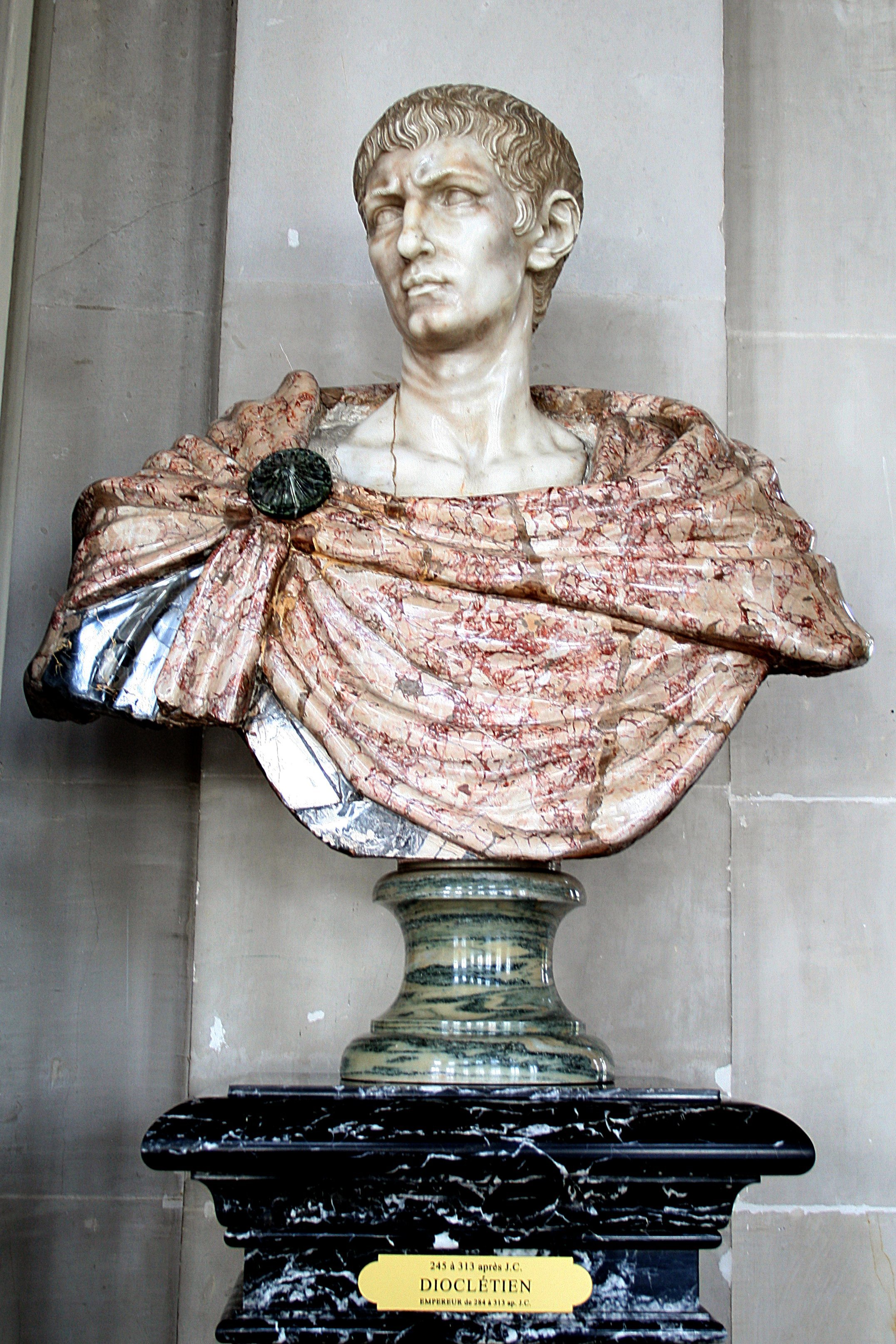
Clearly having no sympathy for Diocletian, whom he rightly saw as a persecutor of Christians, he crossed out both the name and the era used to number years in Easter tables. Out went Diocletian. The tables would now refer to a year numbering he called Anni Domini nostri Jesu Christi.
Caius Aurelius Valerianus Diocletianus, better known as Diocletian (285-305), issued a number of general laws that gradually became more repressive toward Christians.
They unleashed what became known as the “Great Persecution”: destruction of churches, bans on gatherings, arrests of clergy, death penalty, and confiscation of property for those refusing sacrifice to Roman gods. These measures were applied across almost the entire Empire and were accompanied by severe abuse and all kinds of atrocities.
Source: Encyclopaedia Universalis.
The Christian era
Without really knowing it, and without entirely intending it, Denys the Little had just invented our current era, known by various names: Christian era, Dionysian era, era of the Incarnation, or Common era. Historical chronology stood to gain in simplicity.
What was the starting point of this new era and, as a follow-up question, why that point rather than another?
First, note that since zero was unknown at the time, the starting point was year 1, not year 0.
Second, when establishing a new era, one often references an existing one. Since referring to Diocletian was out of the question, Denys the Little chose the era known as Ab Urbe Condita (AUC), tied to Rome's supposed foundation date as calculated by historian Varro. His year 1 corresponded to year 753 from Rome's foundation. Later, this became 1 January 754 AUC.
Why 753? Because, according to Denys the Little, that year corresponded to the Incarnation of Jesus Christ.
Some books try to explain how he arrived at that date. The truth is: we simply do not know.
Another truth is that we do not know when Jesus was born. What we do know is that it was not in 753 AUC. Chronologists generally agree that based on texts and related events (eclipses, the Star of Bethlehem, etc.), Christ was born several years (4 to 6) before Denys's date. Without going through all hypotheses, one points out that according to Saint Matthew, Jesus was born under Herod's reign, and Herod died in 4 BCE.
In short, Jesus Christ would have been born a few years... before Jesus Christ. Another miracle?? Personally, I refuse to believe that Denys the Little and Pope John I did not know the texts, so the mystery of Denys's calculations remains intact.
We also talk about birth, but here too there is a snag. Denys speaks of incarnation. For him, does incarnation mean conception or birth? Since he states that Jesus was conceived on 25 March (quite precise, as if he had been there) and born the following 25 December (exactly nine months later), we sometimes read that his era started on 25 March 753 AUC, and at other times on 25 December 753 AUC. A matter of interpretation. It would still help if people said so.
If we had to sum up the lines above, we could say that the beginning of our era corresponds strictly to nothing.
So why do we still speak of BC and AD, as I do throughout this website? Probably force of habit. That said, BCE (before Common Era) and CE (Common Era) look more realistic and are... easier to type.
Denys the Little was not the first to tie Easter-year numbering to Christ's life. We saw that before him Victorius of Aquitaine and perhaps Prosper of Aquitaine had taken the same route. They, however, started from the Crucifixion. So similar, in fact, that one may wonder whether Denys simply borrowed from Victorius and shifted the era's start from Crucifixion to Incarnation.
Indeed, Victorius estimated Christ's lifespan at 28 years (the length of a solar cycle). The first year of his Easter cycle started in AD 28. It is striking that both were supposedly off by exactly the same number of years... unless Denys merely subtracted 28 from Victorius's year 1 to set his own “era start”, which would explain his silence about his calculations. That is only a personal reflection.
Even earlier (2nd century), bishops Alexander, Clement, and Eusebius are said to have proposed anchoring chronology to Christ's life.
Was creating a new chronology truly their goal? I would answer no, at least as far as Denys the Little is concerned. Nothing suggests he was really a chronologist and, beyond his tables, he does not seem to have defended his era concept tooth and nail.
Year numbering and the start of centuries and millennia
Year numbering
Since we are talking about before or after Christ, note that there is only one numbering for years after Christ: 1, 2, 3... 2,000, 2,001...
For years before Christ, there are two numberings:
- The historians' system, which still ignores zero and therefore uses 1 BC, 2 BC... 150 BC...
- The astronomers' system, which since 1740 has treated 1 BC as year zero. This introduction of zero and negative year numbering before Christ is due to the French astronomer Jacques Cassini.
Admittedly, introducing year zero has two clear advantages: first, leap-year rules can be maintained for years before our era; second, year calculations become easier. For instance, using historians' numbering, how many years separate the start of 46 BC and the start of AD 2004? If we do 2004 + 46 = 2050, we are off by one year. In astronomers' numbering, 46 BC becomes -45 and 2004 - (-45) = 2049, which is correct.
The trouble is that when one writes -45, it is not always clear which numbering is meant. One option is simply to write 45 BC, making clear there is no year zero. Another option is to follow a notation convention using a tilde (~) for numbering without zero. Thus -45 = ~46.
| Years | Before Christ | After Christ | ||||||
|---|---|---|---|---|---|---|---|---|
| Historical 1 | 4 BC | 3 BC | 2 BC | 1 BC | AD 1 | AD 2 | AD 3 | AD 4 |
| Historical 2 | ~4 | ~3 | ~2 | ~1 | 1 | 2 | 3 | 4 |
| Astronomical | -3 | -2 | -1 | 0 | 1 | 2 | 3 | 4 |
Start of centuries and millennia
By definition, a century lasts 100 years. Since there is no year zero, the first century runs from 1 January 1 to 31 December 100, and the 20th century ran from 1 January 1901 to 31 December 2000.
Same for millennia: by definition, a millennium lasts 1,000 years and therefore...
There is no need to spend all day on this or launch a controversy.
Counting years in the Middle Ages
As we have seen, Denys the Little was a poor defender of his own era, since he himself dated his texts in the old indiction system (we will come back to this term). His chronological system would likely have faded away, except among users of his tables, which, incidentally, were as inaccurate as the Metonic cycle on which they were built.
If that did not happen, it is largely thanks to Bede, who built his Historia ecclesiastica gentis Anglorum using the Dionysian era. Since we have already devoted many lines to him, we will not revisit Bede as a figure, the man who without leaving his “hole” became the greatest of English chronologists. Bede's providential support and fame gradually helped establish the Christian era.
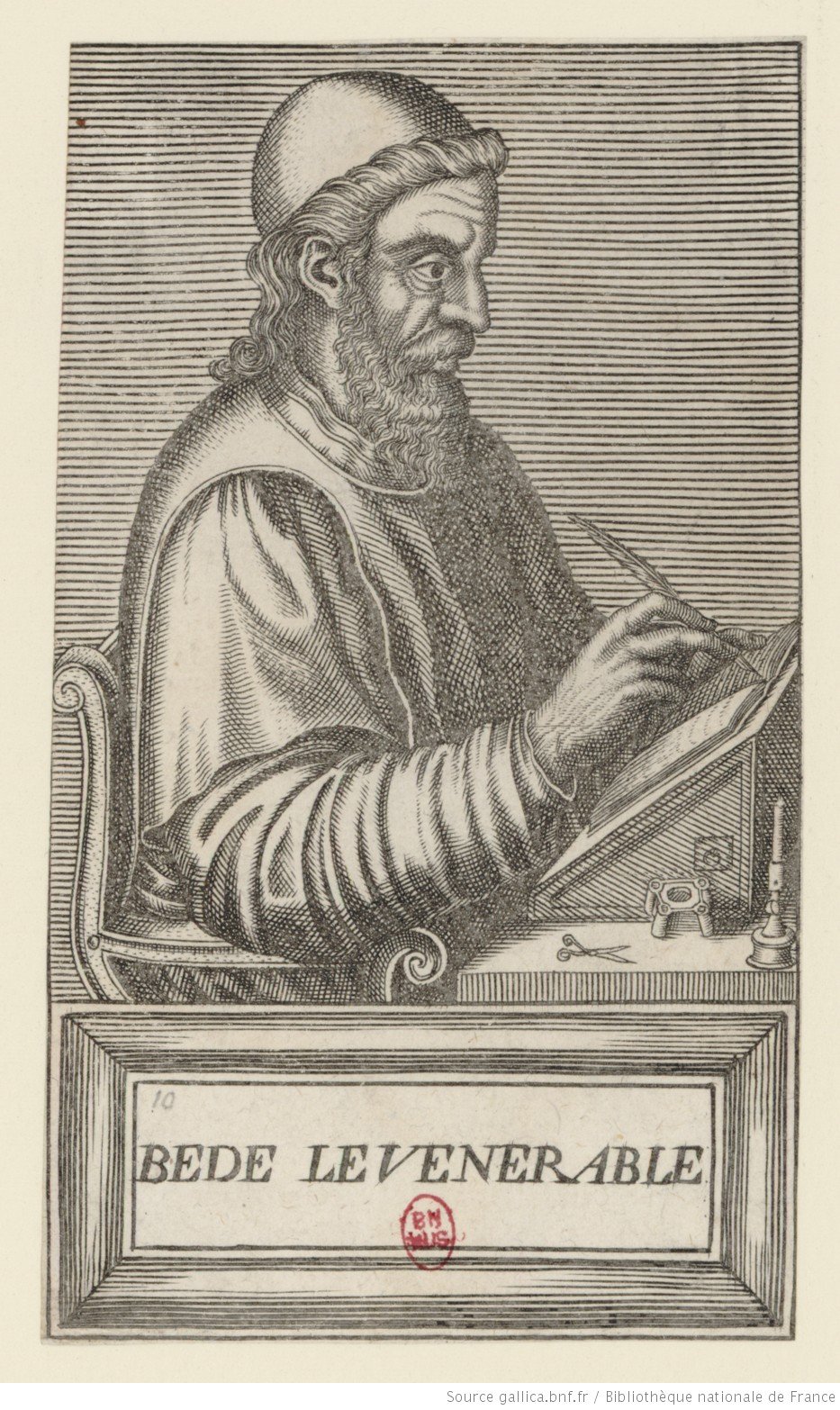
He is now considered the first historian of England, yet for the centuries that immediately followed him, Bede the Venerable was above all the author of technical works that shaped the literary, historical and even scientific culture of the early Middle Ages, as well as a major Bible commentator, gathering, summarizing and transmitting the interpretations developed by the Church Fathers. Encyclopaedia Universalis.
Dates for adoption of the Christian era vary by source. All we can say is that it took several centuries before it became common in society.
It spread rapidly through Easter tables, of course, but only under Pope John XIII (965-972) would it have officially replaced the indiction in chancery practice. England appears to have moved faster, adopting the Christian era at the Synod of Whitby in 664 and then, with Bede's boost, in a charter dated 676. Europe waited until the 12th century, Spain until the 14th, and the Greek world until the 15th.
So how were years counted in the Middle Ages?
Quite anarchically. Instead of being linear and continuous as today, dating was segmented. For example, numbering restarted at 1 when a king or emperor came to the throne. That was the case with the famous era of Diocletian, so disliked by Denys the Little. Why did that era persist longer than others among computists? Perhaps because the lunar epact (epact = number of days elapsed since the new moon preceding the start of the year) was zero.
The year of Rome's foundation (AUC: ab urbe condita) was also very popular. This was precisely the reference Denys used to “position” the Dionysian era.
But one numbering system became especially successful: the indiction. Used either on its own or alongside another numbering (e.g. from a ruler's accession), it flourished in ecclesiastical computus and beyond, as we will see from a few examples. It was a 15-year period originally used for taxation. In Caesar's time it began in October. Its epoch was moved to 1 January by Gregory VIII in 313. So one would say “4th indiction” to indicate the fourth year of the cycle. The indiction starting point is 312.
To make things clearer, here are a few examples from dated documents you can view here with the original manuscripts. For copyright reasons, I will show only one manuscript here.
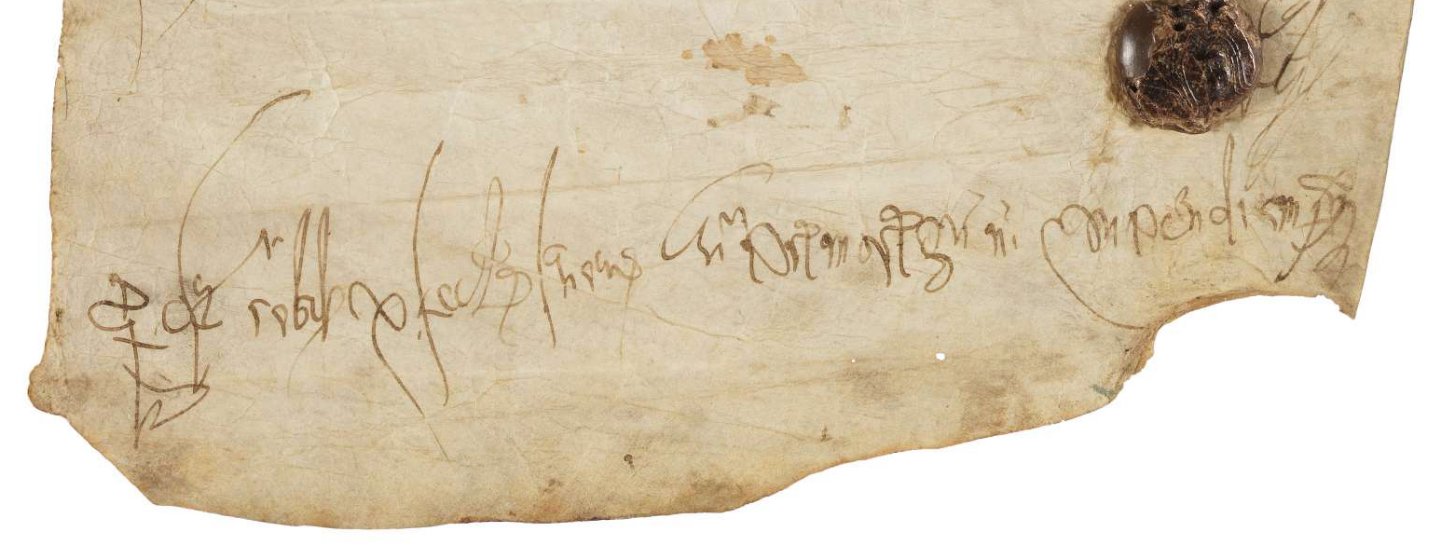
- This manuscript is a document of Childebert III (born c. 683 - Compiègne, 14 April 711), king of Soissons (Neustria), Metz (Austrasia), Paris, Orléans, Burgundy and all Frankish lands (695-711), dated Dat(um) sub d(ies) X kal(endas) Ianuari(i), an(no) primo rign(i) n(ostr)i, which can be translated as 10th of the Calends of January, in the first year of our reign, corresponding to 23 December 695.
- A document of Charles “the Great”, known as “Charlemagne” (Ingelheim, 2 April 742 - Aachen, 28 January 814), king in 754, king of Neustria, Austrasia and western Aquitaine (768-814), king of Lombardy and patrician of Rome (774), emperor of the Romans (Christmas Day 800), is dated data in mens(e) Decem(ri) anno quartodecimo et octavo regni n(ost)ri, translated as December of the 14th and 8th years of our reign, corresponding to December 781. Here we clearly see a double reference to key events in Charlemagne's life.
- And to finish in style, a document concerning Louis III, king of Germany (822-882), is dated Data XVI k(a)l(endas) Febr(uarii) anno dominicae incar(ationis) dccclxxxi, indict(ione) xiii, anno vi to regni hludouuici serenissimi regis, translated as 16th Calends of February, year 881 of the Incarnation, 13th indiction, 6th year of the reign of Louis.
Here we have the full package: Christian era, indiction, and regnal reference. So precise that it leads to contradiction between the 6th regnal year (882) and the 15th indiction (811). So is it 17 January 882 or 17 January 881?
From these long date formulas, one can clearly see how hard it is to navigate chronology when it is not continuous.
Start of the year
Today it feels perfectly natural for the year to begin on 1 January. Though if you look at a school diary, you might wonder whether the year begins on 1 September. If on 31 August we shifted from 2004 to 2005, for example, we would get a sense of what happened in a certain period.
That period is, once again, the Middle Ages. Except that, of course, it was not the school year that dictated the year change. Many different dates were used, known as styles. Most were tied to religious events.
We will stay in France and review the main styles in use, some with fixed dates, one with a variable date.
- The 1 March style was used in the 6th and 7th centuries.
- The Nativity style (25 December) was in force among the Carolingians. For example, Charlemagne was crowned on 25 December 800, first day of the year.
- The Annunciation style (25 March) actually has two forms: the Florentine style (used in southern France and Dauphiné), which runs three months behind ours, and the Pisan style, one year ahead of the former, and thus nine months ahead of ours.
- The Resurrection style or Easter style was adopted from the 12th century and became widespread in the 12th and 13th centuries. Unfortunately for historians, who must hunt down Easter dates to know when the year changed. It is also remarkable because it made year length vary from about 330 to 400 days.
And what about the 1 January style?
The problem was that January was dedicated to Janus, a pagan deity if ever there was one, and people were not very keen on starting the year on 1 January. Until one particular 9 August 1564.
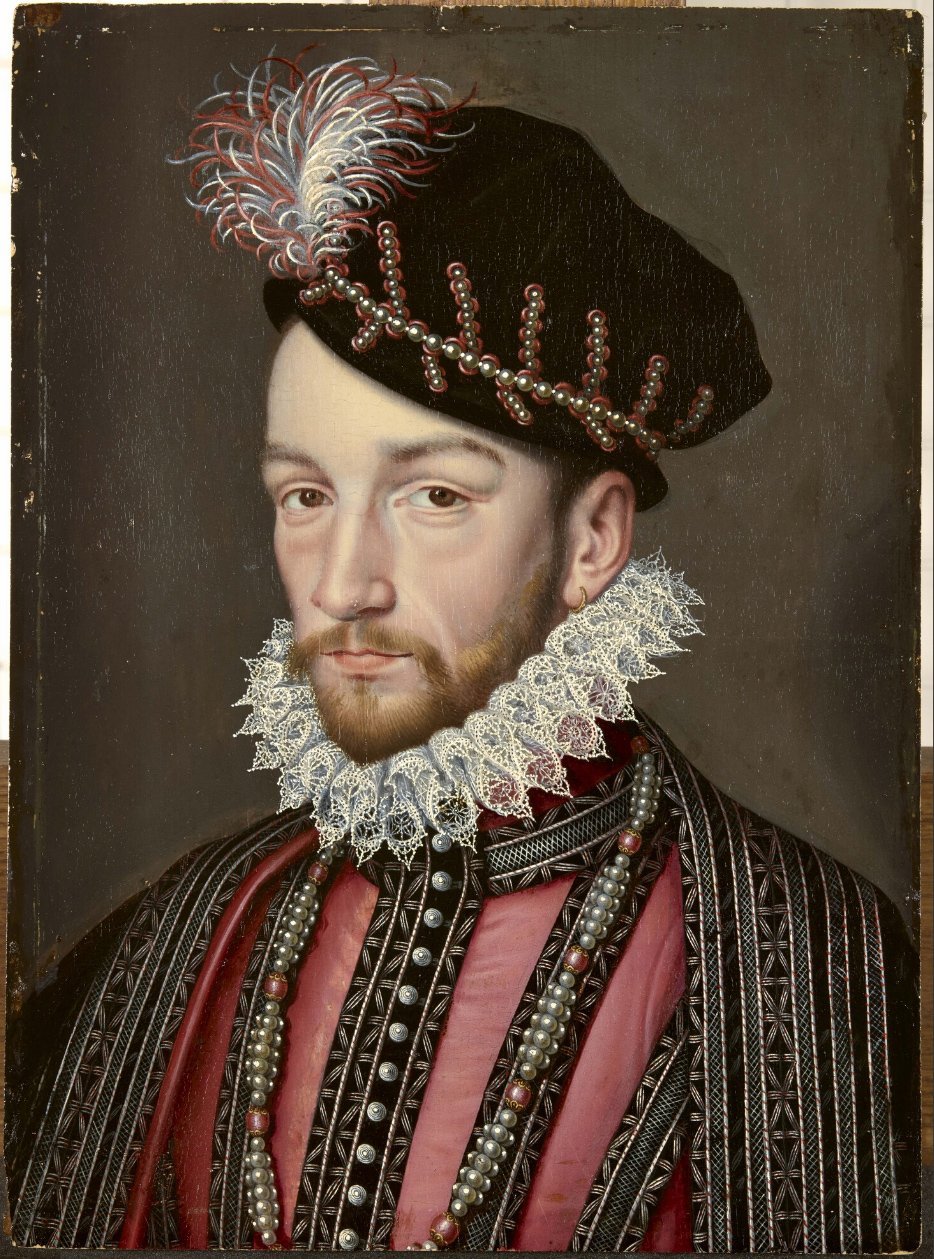

Charles IX (1550-1574), king of France from 1560 to 1574, is better known for the St Bartholomew's Day massacre of 24 August 1572 than for his Edict of Roussillon, issued at the Château de Roussillon shown above.
To strengthen the authority of her son Charles IX, Catherine de' Medici undertook with him a long journey across the kingdom (1564-1566). The new king was then only 13. After a plague outbreak, the entire court and entourage took refuge in Roussillon, not far from Lyon. There, Charles IX and his ministers (or perhaps the other way round), Michel de l'Hospital and Sébastien de l'Aubespine, revised a law related to justice. For reasons unknown, they added Article 39, stipulating that the year would henceforth begin on 1 January. This became the Edict of Roussillon, of which here is part of the text:
"We wish and ordain that in all acts, registers, instruments, contracts, ordinances, edicts, whether patent or missive letters, and all private writings, the year shall henceforth begin and be counted from the first day of this month of January. Given at Roussillon, the ninth day of August, in the year of grace one thousand five hundred and sixty-four. And in the fourth year of our reign. Signed by the King in his Council." Sebastien de l'Aubespine.
Because implementation was slow, Paris only applied the Edict in 1567, and the rest of the kingdom even later. Shortly after, in 1582, came the great Gregorian reform.
The chronology as we know it had been born.