A bit of history
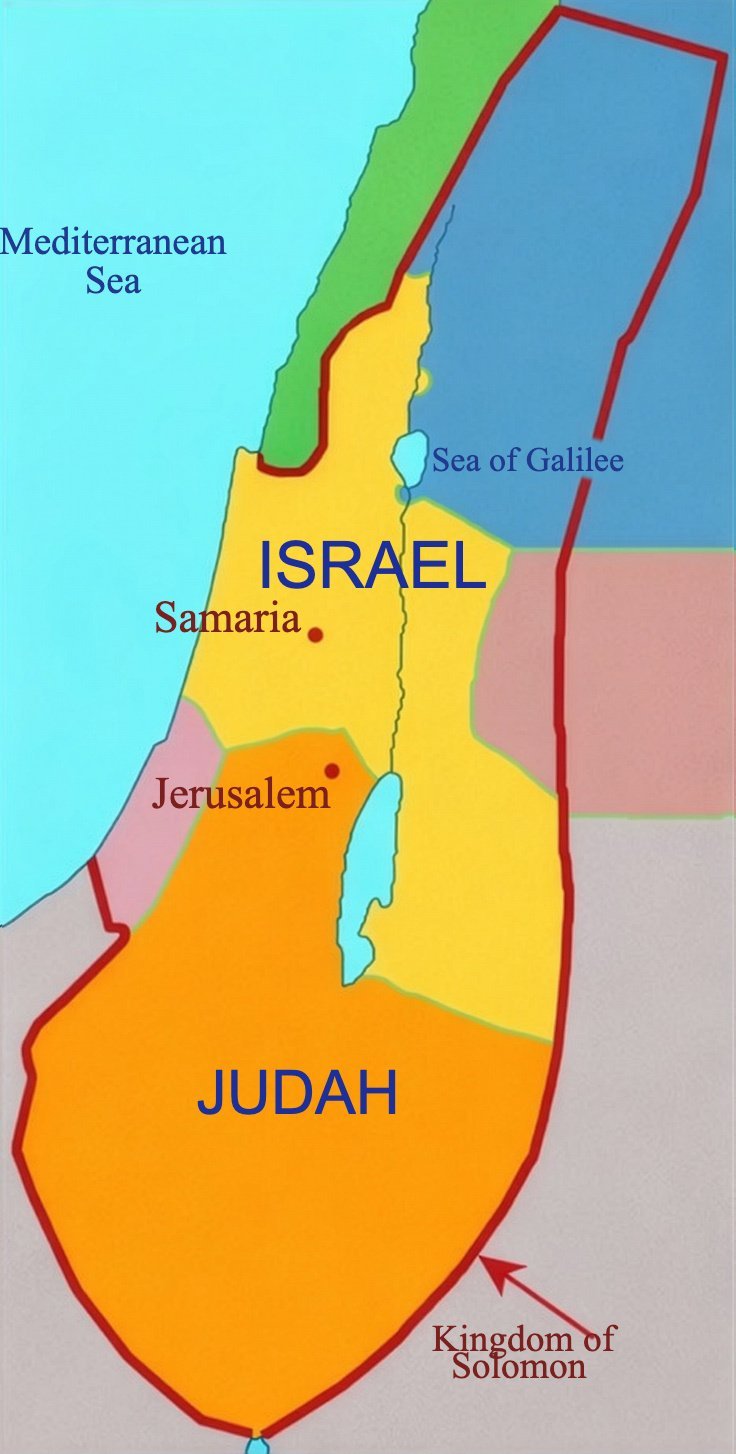
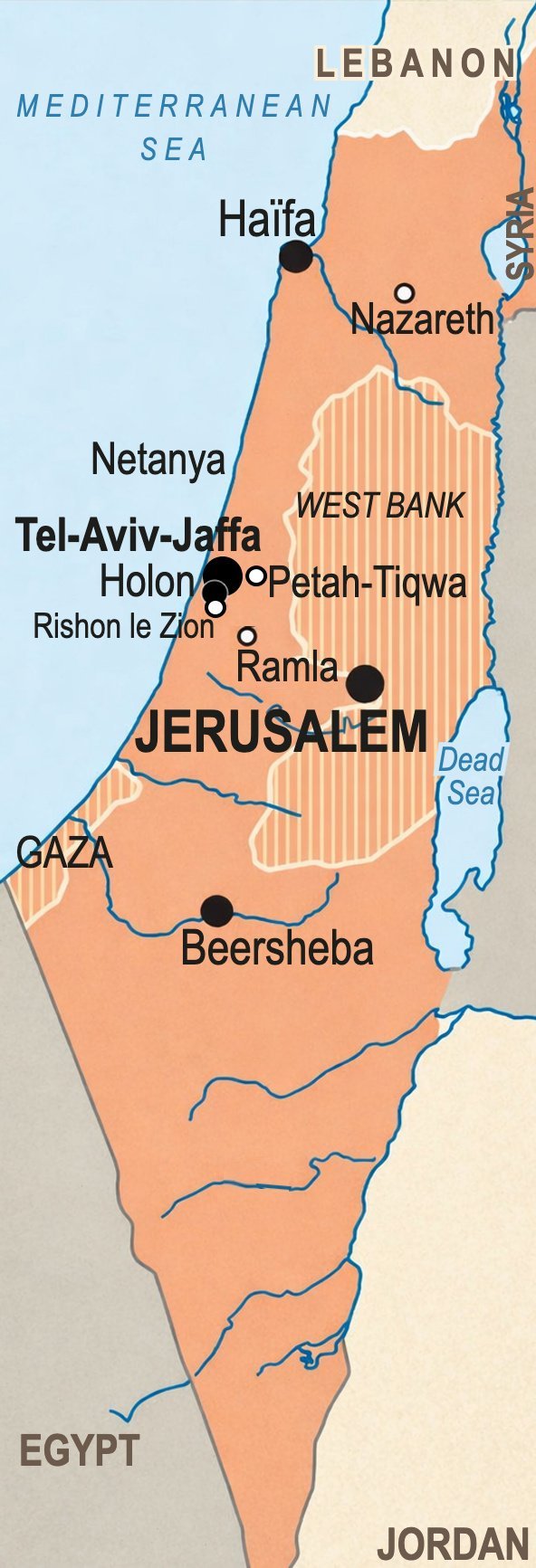
To begin with, and to help place the major milestones linked to calendar development, here is a brief chronological overview of key events in the history of the Jewish people for the period that concerns us.
| Gregorian | Jewish | Event |
|---|---|---|
| -3761 | 1 | According to the Hebrews, God creates the world and mankind |
-2000 -1750 | 1760 2010 | Semi-nomadic tribes enter the land of Canaan. The biblical patriarchs, ancestors of this people, are Abraham, Isaac and Jacob. Abraham, originally from Mesopotamia, settles in the Hebron region; his son Isaac in southern Palestine; and Jacob, Isaac's son, in central Palestine. |
| -1785 -1580 | 1975 2180 | Under pressure from Hyksos invaders, Jacob's people settle in Egypt in the Nile Delta |
| -XIIIe | IIIe | Enslaved by the Egyptians (during the time of Ramses II), the Hebrews leave the country guided by God and Moses. This event is the Jewish Passover. On this occasion, they receive the Torah revealed to Moses at Sinai. |
| -1003 | 2757 | Reconquest of Canaan by King David, who rules over the whole state of Israel. He subdues Jerusalem, installs the Tabernacle there and makes it his capital. |
| -964 | 2796 | King Solomon builds the First Temple in Jerusalem. After his death, two kingdoms appear: Judah (Judea) in the south and Israel in the north. |
| -587 | 3173 | After an eighteen-month siege, the Babylonian Nebuchadnezzar takes Jerusalem and burns the Temple. The kingdom of Judah is definitively subdued. The Jews are deported to Babylon. |
| -539 | 3221 | Cyrus the Great of Persia conquers Babylon, officially orders the reconstruction of the Temple of Jerusalem at Persian state expense and as compensation for the damage caused by Nebuchadnezzar. He also grants the Jews the right to return to their land (Edict of Ecbatana). |
| -515 | 3245 | Completion of the Second Temple. |
| -332 | 3428 | Palestine is conquered by Alexander and comes under Greek rule. |
| -63 | 3697 | Pompey enters Jerusalem and subjugates the Jews. |
| -15 | 3745 | Construction of the Third Temple by Herod the Great (or, more precisely, reconstruction of the Second Temple). Works last eight years. |
| 68 | 3828 | After several months of siege, Titus takes Jerusalem. Its Temple is burned; Jews are sold en masse as slaves. |
| 135 | 3895 | Emperor Hadrian, who came to Jerusalem in 130, decides to create a pagan city on the site. The Jews revolt and the repression is even worse than in 68: new deportations of Jews, reduced to slavery, are added to the massacres. This is the start of the Second Exile. |
| 200+ | 3960+ | Jews are dispersed throughout the world. After the destruction of the Temple, the Sanhedrin, Israel's religious institution, sits in Jabneh, then in Galilee, in Usha, Shefaram, Bet Shearim, Sepphoris and Tiberias. The Romans recognize its authority over Jewish internal affairs until 425. Patriarch Hillel II presided over it around 358. |
| 1948 | 5708 | Declaration of independence of the State of Israel. |
The calendar
The Jewish calendar, whose successive versions we will try to follow, is, in its final form, the official calendar of the State of Israel.
Many indications about the Jewish calendar and its evolution are given in the Torah. A quick reminder, if I may: the “Written Torah” - the one that concerns us - corresponds for the most part to the Old Testament of the Christian Bible. At the end of this study, you will find a table listing biblical references for some characteristics of the Jewish calendar.
Once again, the origin of this calendar must be sought in the Babylonian calendar. I say “once again” because the Jewish calendar would not be the first to have roots in Mesopotamia. I should add that some biblical texts themselves originate from Babylonian texts (the Epic of Atrahasis the Wise and the Epic of Gilgamesh).
A general observation: the Jewish calendar is a lunisolar calendar or, more precisely, a lunar calendar that tries to follow the cycle of the seasons.
Before the Hebrews' captivity in Babylon
There is little in the Old Testament about this period.
The year had twelve lunar months. Months were numbered, and only four month names are reported in the Bible: Abib (first month), Ziv (second month), Ethanim (seventh month) and Bul (eighth month).
It seems Moses gave the Jews a religious calendar. The year began with Passover (Pesach), commemorating the Exodus from Egypt. Other festivals were linked to sowing and harvests, and this agricultural rooting of the Jewish calendar suggests that the lunar year was adjusted to the solar year by periodically adding extra months. But the Bible does not mention it explicitly.
The civil calendar, however, began the year in the seventh month of the religious calendar. We will see later that this does not mean there were two calendars, but one.
During and after the Hebrews' captivity in Babylon
Not being great astronomers themselves, the Hebrews adopted the Babylonian calendar during exile and took over Babylonian month names, adapting them to their own language. They then began the religious year around the spring equinox.
Here is the correspondence between Babylonian and Hebrew month names:
| Babylonian month | Hebrew month | Order in the religious year | Order in the civil year |
|---|---|---|---|
| nissanu | nisan | 1 | 7 |
| Ayaru | iyyar | 2 | 8 |
| Sivanu | sivan | 3 | 9 |
| dû-zu | tammuz | 4 | 10 |
| abu | ab | 5 | 11 |
| ululu | ellul | 6 | 12 |
| tasritu | tishri | 7 | 1 |
| arah-samna | heshvan | 8 | 2 |
| kislou | kislev | 9 | 3 |
| tebitu | tebeth | 10 | 4 |
| sebatu | shebat | 11 | 5 |
| addaru | adar | 12 | 6 |
Since the Babylonian calendar already added an intercalary month to align the lunar year with the solar year, the Jewish calendar of the time adopted the same principle. All the more so because, as we have seen, Hebrew life was tied to agricultural cycles.
This extra month was inserted at the end of the religious year, therefore after Adar, the last month of that year. The additional month was called We-adar (Veadar).
Still lacking astronomical culture, the Hebrews used an empirical method to decide whether to add a month:
I quote Chauve-Bertrand in La question du calendrier: "A tribunal of several members decided whether a thirteenth month had to be added. The Jerusalem Talmud preserved three signs observed by shepherds and accepted by sages: 1- In the month of Adar, temperatures must be advanced enough for cereals to begin ripening and for trees to blossom 2- In this month, the cold must have diminished enough that even with a strong east wind, breath warms it 3- At this time, the ox shivers from cold in the morning, while at noon it goes into the shade of the fig tree to loosen its skin. When Adar did not show these signs, a thirteenth month had to be intercalated."
The final decision to intercalate a thirteenth month was taken by the Sanhedrin, the supreme political, religious and judicial institution of the people of Israel, an assembly of seventy-one members. This Sanhedrin would later play an essential role in setting the rules of the present Jewish calendar.
But we are not there yet; let us return to the post-Babylonian Jewish calendar.
With the start of the year set, the start of the months must now be determined, and this is, as we remember, closely tied to the Moon.
One of the Sanhedrin's functions was also to proclaim the new month. The method was as empirical as determining the start of the year and very close to the Babylonian one: near the end of the month, travelers arriving in Jerusalem were questioned in detail. If two of them declared they had seen the new crescent (neomenia or molad), and if their testimonies matched, the new month was proclaimed and thus had 29 days. If no witness came forward, the current month was declared to have 30 days. The announcement was relayed from place to place from a fire lit on the summit of the Mount of Olives.
The day began at sunset.
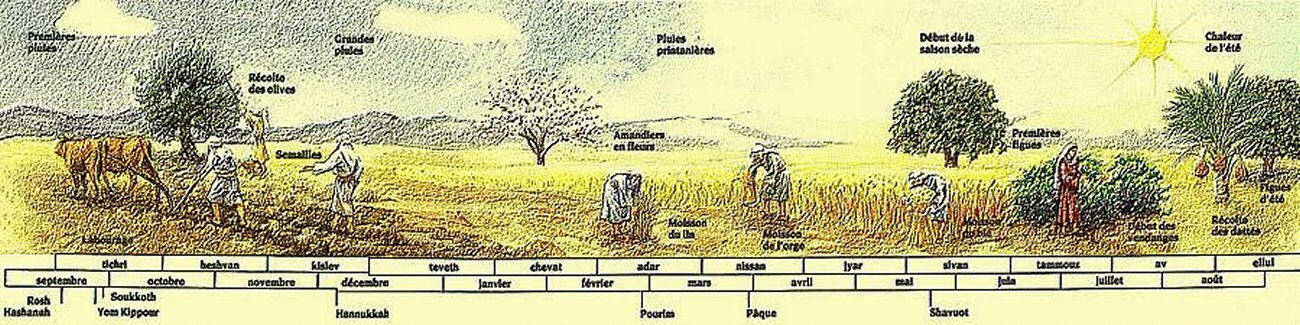
Hillel's calendar
As we have seen so far, the Hebrew calendar was based on observations (harvests, new moon, sunset) that could not last. How, for example, could the beginning of the month be communicated to all Jews when Samaritans sent false signals, when Romans banned sending envoys or receiving witnesses, and above all when the Jewish people were scattered across the ancient world after Titus's repression?
The solution came from the Sanhedrin in 359 (or 358) CE under Hillel II, who presided over it at the time. He established a kind of “perpetual calendar” still in use today in Israel.
Let us look more closely at the components of this calendar and the difficulties in constructing it, largely due to religious festivals.
But first, a short parenthesis on the notion of religious vs civil calendar: there are not two Jewish calendars, but one, whose New Year differs depending on context. A simple example: it is equivalent to our Gregorian calendar beginning in January and our school calendar beginning in September. Otherwise, nothing changes, and 14 July is still 14 July in both.
For the rest of this study, we will stick to the Jewish civil calendar, which, as we will see, following Hillel II's reform, now uses a “theoretical moon”.
The day starts at 6 p.m. (western time) at the Jerusalem meridian.
It has 24 hours, and each hour is divided into 1080 parts or scruples called halakim or chalakim, numbered from 0 to 1079. Each scruple contains 76 moments or instants called regakim.
People often say the Hebrews invented the seven-day week, but on closer look one can already see early forms of such a week among... the Babylonians. However, the Hebrews did not adopt day names linked to planets: they simply numbered the days, except the last day, the day of rest (sabbat or shabbat), corresponding to our Saturday (from Friday evening to Saturday evening). The sixth day is called parasceve (preparation for sabbath). Sunday is the first day of the week. The civil day, for its part, starts at midnight.
| Day name | Meaning | English |
|---|---|---|
| Yom rishon | Day 1 | Sunday |
| Yom sheni | Day 2 | Monday |
| Yom shlishi | Day 3 | Tuesday |
| Yom Revi'i | Day 4 | Wednesday |
| Yom chamishi | Day 5 | Thursday |
| Yom shishi | Day 6 | Friday |
| shabbat | Sabbath day | Saturday |
Seasons: A Tekufah (plural: Tekufot) corresponds to a solar quarter of 91 days and 7.5 hours. There are four tekufot, named after the months they are associated with: Tekufah of tishri, Tekufah of tebeth, Tekufah of Nissan, Tekufah of tammuz.
As in any lunar calendar, if one wishes to remain aligned with the solar year, as the Jews did, one must add a month roughly every three years. Patriarch Hillel II relied on Meton's 19-year cycle (unless, once again, on the Babylonians who already knew it) and placed embolismic years (13-month years) in years 3, 6, 8, 11, 14, 17 and 19 of the cycle. The extra month, when inserted, is placed after Adar as we have already seen, and has 29 days. The addition is therefore no longer linked to observing crops.
As for the other months, they have 29 or 30 days so that an “average year” contains the calculated solar-year length. This would be easy to settle once and for all if month lengths could be fixed permanently.
But unfortunately, religion interfered in the design of this “new” calendar, and one of its rules (we will see all of them below) requires feasts to be sabbaths (like Saturday), and forbids two consecutive sabbaths. Because of these rules, the New Year (1 tishri) cannot begin on Sunday, Wednesday or Friday. So one is periodically forced to lengthen a year by one day (even two when all rules are considered) and shorten the previous year by the same number of days. This imperative, added to common years (12 months) and embolismic years (13 months), means the Jewish calendar has six year types.
Knowing that if a day is added it is done at the end of heshvan, and if one is removed it is done in kislev, the naming rule is as follows: if heshvan and kislev both have 30 days, the year is abundant (shelema); if heshvan has 29 and kislev 30, the year is regular (sedura); if both have 29, the year is deficient (hasera). Adar has 29 days in common years and 30 in embolismic years. Quite a system.
We can now set out the six types of years in the Jewish calendar and their month lengths:
| Blue = variable length | Years | ||||||
|---|---|---|---|---|---|---|---|
| Common | Embolismic | ||||||
| Month | Gregorian | deficient | regular | abundant | deficient | regular | abundant |
| tishri | sep-oct | 30 | 30 | 30 | 30 | 30 | 30 |
| heshvan | oct-nov | 29 | 29 | 30 | 29 | 29 | 30 |
| kislev | nov-dec | 29 | 30 | 30 | 29 | 30 | 30 |
| tebeth | dec-jan | 29 | 29 | 29 | 29 | 29 | 29 |
| shebat | jan-feb | 30 | 30 | 30 | 30 | 30 | 30 |
| adar | feb-mar | 29 | 29 | 29 | 30 | 30 | 30 |
| veadar | 0 | 0 | 0 | 29 | 29 | 29 | |
| nisan | mar-apr | 30 | 30 | 30 | 30 | 30 | 30 |
| iyyar | apr-may | 29 | 29 | 29 | 29 | 29 | 29 |
| sivan | may-jun | 30 | 30 | 30 | 30 | 30 | 30 |
| tammuz | jun-jul | 29 | 29 | 29 | 29 | 29 | 29 |
| ab | jul-aug | 30 | 30 | 30 | 30 | 30 | 30 |
| ellul | aug-sep | 29 | 29 | 29 | 29 | 29 | 29 |
| Total days | 353 | 354 | 355 | 383 | 384 | 385 | |
After this heavy effort to absorb the six year types, we deserve a brief interlude: Jewish calendars follow a convention that describes a year by its “character” (qevi'a), made of three Hebrew letters. The first gives the weekday on which the year begins, the second indicates the year length (H for Haser: deficient; K for Kesidra: regular; S for Shalem: abundant), the third gives the weekday of Passover. Example: 2H5 means New Year starts on day two (2), the year is deficient (H=hasera), and Passover is on day five (5). There are seven possibilities for common years (2H3,2S5,3K5,5K7,5S1,7H1,7S3) and seven for embolismic years (2S7,2H5,3K7,5H1,5S3,7H3,7S5).
Because of New Year postponements, the molad (new moon closest to the autumn equinox), corresponding to the start of the first theoretical lunation, does not necessarily coincide with the beginning of the year. The nature of this molad, after applying Hillel's rules, determines the year type and actual start date.
Patriarch Hillel II anchored the Jewish calendar to a theoretical moon with a mean lunation of 29 days 12 hours 793 halakim (29.530 594 136 days), i.e. an average year (taking embolismic years into account) of 365.246 822 205 977 907 days, against 365.2425 days for the Gregorian (or tropical) year. The difference is about one day every 230 years.
To establish his “perpetual calendar”, Hillel II had to fix two things:
1) The date of the first fictive moon and therefore the start of the era: the rabbinic era of the creation of the world, or Jewish era (symbolized by A.M. for Anno Mundi, or lizira). This era begins on Sunday, 6 October -3760 (Julian date).
2) The first molad (Molad-Tohu), fixed at 2-5-204. In other words: the first number is weekday (1=Sunday); the second is hour; the third is halakim. The molad tohu of the era of creation is thus Monday, 5 hours and 204 scruples (halakim).
From there, one can compute the molad of any year, apply Hillel's rules (dehiyyot), and determine the true start date of any year (Rosh Hashanah).
Before applying all this in an example, let us review Hillel II's famous rules. There are four for the calendar.
Small writing convention (not from Hillel): p = scruple or halakim (1/1080 hour).
Rule 1: if the molad falls on Sunday, Wednesday or Friday, New Year is postponed by one day. This prevents Hoshana Rabbah (21 tishri) from falling on sabbath and Yom Kippur (10 tishri) from falling immediately before or after sabbath.
Rule 2: if the molad of tishri occurs at or after 18h 0p, postpone by one day. Then apply rule 1 if needed. This prevents 31-day months.
Rule 3: in common years, if the molad falls on Tuesday at or after 9h 204p, postpone to Thursday. This prevents a common year from exceeding 355 days.
Rule 4: in a year following an embolismic year, if the molad falls on Monday at or after 15h 589p, postpone by one day. This prevents an embolismic year from being shorter than 383 days.
Now a small example to determine first tishri and the number of days in a year without converting to another calendar.
Let us take year 5764 (which corresponds to 2003 in the Gregorian system).
Let us recall a few values that will help in the calculations:
- One lunation is 29d 12h 793p (already seen above)
- Twelve lunar months are 354d 8h 876p
- Thirteen lunar months are 383d 21h 589p
- One Metonic cycle is 6939d 16h 595p
First determine Rosh Hashanah (start of year) for 5764
At the start of 5764, 303 full 19-year cycles have elapsed, plus 6 years of the 304th cycle.
Among these 6 years, 4 are common and 2 embolismic (3 and 6).
Since origin, the elapsed time is therefore:
303 * (3939d 16h 595p) + 4 * (354d 8h 876p) + 2 * (383d 21h 589p), i.e. 2104699d 4922h 184967p
To this interval we add the date of the first new moon to get the date of the first new moon of 5764:
2104699d 4922h 184967p + 2d 5h 204p = 2104701d 4927h 185171p, which gives 2104913d 10h 491p
Since 2104913 modulo 7 is 6, the year should start on weekday six, i.e. Friday.
Now apply Hillel II's rules:
- Rule 1: applies. Start of year moves to Saturday.
- Rule 2: does not apply. New moon is at 10h.
- Rule 3: does not apply. New moon is not on Tuesday.
- Rule 4: does not apply. Year 5764 does follow an embolismic year, but the new moon is not on Monday.
The first day of year 5794 is therefore Saturday, i.e. day 2104913 + 1 = 2104914.
Now determine the number of days in year 5764
We simply determine the start of year 5765 and count days between 5765 and 5764.
Skipping intermediate calculations, the date of the first new moon is 2105267d 19h 287p.
Since 2105267 modulo 7 is 3, the year should start on weekday three, i.e. Tuesday.
Rule 2 also applies: new moon is at 19h, so after 18h.
The year should therefore start on Wednesday.
But rule 1 must then be applied, pushing it one more day.
The first day of year 5795 is therefore Thursday, i.e. day 2105267 + 2 = 2105269.
Between the beginning of 5795 and the beginning of 5794, there are therefore 2105269 - 2104914 = 355 days.
Year 5794 is therefore a common abundant year.
Simple, right?
Be careful with one trap: it is not application of rule 3 for year 5795 that moves Tuesday to Thursday (rule 3 does not apply because the year is embolismic), but the successive application of rules 2 then 1.
Before ending this study of the Jewish calendar, we will briefly look at its festivals, biblical references to its components, and finish with a few words on the Essene calendar.
Festivals of the Israelite calendar
These festivals are fixed because they are tied to the same day number in the month. Note that in embolismic years, Adar religious festivals (13, 14, 15) are observed on the same dates in Veadar. More precisely, the added month comes before the usual Adar month, which then becomes Adar II or Veadar.
Also note that some festivals are moved if they fall on sabbath (Saturday).
| Date | Name | Comments |
|---|---|---|
| 1 - 2 Tishri | Rosh-Haschana | New Year. Celebrated over 1 or 2 days (depending on whether the previous month has 29 or 30 days), with work interruption. |
| 3 Tishri | Guedaliah | Fast in memory of a holy man. Moved to the 4th if the month starts on Thursday. |
| 10 Tishri | Yom Kippour | Day of Atonement. The most solemn day of the Jewish year. Begins on the 9th at 6 p.m. |
| 15-21 Tishri | Soukoth | Feast of Tabernacles |
| 21 Tishri | Hoschana Rabba | Day of the decree of judgment |
| 22 Tishri | Schemini Atsereth | Festival of Jewish intimacy with God |
| 23 Tishri | Simha Torah | Festival of the Law |
| 25 Kislev | Hanouka | Victory of the Maccabees over Greek persecutions |
| 10 Tebeth | Assara be Tebeth | Fast. Beginning of Nebuchadnezzar's siege of Jerusalem |
| 13 Adar | Ta'anit Esther | Fast of Esther. If 13 Adar is sabbath, the feast is moved to the 11th. |
| 14 Adar | Purim | Festival of victory over oppressors |
| 15 Adar | Sûsan Purim | Purim is celebrated on the 15th rather than the 14th in walled cities |
| 15-22 Nissan | Pessah | Exodus from Egypt |
| 16 Nissan 5 Sivan | Omer | Interval between the Exodus from Egypt and the giving of the Torah |
| 18 Iyyar | Lag baomer | 33rd day of Omer |
| 6 Sivan | Schebouoth | Giving of the Torah |
| 17 Tammuz | Tsom Tammuz | Fast for the fall of Jerusalem's walls in 70 |
| 9 Ab | Tisha be Ab | Fast of the double anniversary of destruction of the first two temples. Observed on the 10th if the 9th is sabbath. |
Biblical references for the calendar
A few concise references. They concern components of the calendar, not festivals. I include only the most significant reference for each component.
Signs to mark days, seasons and years
“Genesis 1:
16. And God made two great lights; the greater light to rule the day, and the lesser light to rule the night; He made the stars also.
14. And God said, Let there be lights in the expanse of the heavens to divide the day from the night, and let them be for signs and for seasons and for days and years;
15. and let them be for lights in the expanse of the heavens to give light upon the earth. And it was so.
The biblical day begins at nightfall
“Genesis 1:5:
And God called the light Day, and the darkness He called Night. And there was evening, and there was morning - the first day.
The seven-day week ends with sabbath
“Genesis 2:
3. And God blessed the seventh day and sanctified it, because in it He rested from all His work which God created and made.
1. Thus the heavens and the earth were finished, and all their host.
2. And on the seventh day God ended His work which He had made; and He rested on the seventh day from all His work which He had made.
“Leviticus 23:
3. Six days shall work be done: but the seventh day is a sabbath of rest, a holy convocation; you shall do no work in it: it is a sabbath to the Lord in all your dwellings.
Month names before Babylonian captivity
First month:
“Exodus 13:4: This day you come out in the month of Abib.
“1 Kings 6: And it came to pass in the four hundred and eightieth year after the children of Israel came out of the land of Egypt, in the fourth year of Solomon's reign over Israel, in the month Ziv, which is the second month, that he began to build the house of the Lord.
“1 Kings 8:2: And all the men of Israel assembled themselves unto king Solomon at the feast in the month Ethanim, which is the seventh month.
“1 Kings 6:38: And in the eleventh year, in the month Bul, which is the eighth month, was the house finished throughout all the parts thereof and according to all its fashion. So he was seven years in building it.
Twelve months in a year
“1 Kings 4:7: Solomon had twelve officers over all Israel, who provided food for the king and his household: each man had to make provision for one month in the year.
“Esther 3:7: In the first month, that is, the month Nisan, in the twelfth year of king Ahasuerus, they cast Pur, that is, the lot, before Haman day by day and month by month, to the twelfth month, that is, the month Adar.
Chronology before the era of creation
“Esther 3:7: In the first month, that is, the month Nisan, in the twelfth year of king Ahasuerus, they cast Pur, that is, the lot, before Haman day by day and month by month, to the twelfth month, that is, the month Adar.
The Essene calendar
My initial idea was to discuss here the Essene calendar as described in the manuscripts found at Qumran near the Dead Sea.
After studying the documents, I found they deserved a full page. So I added the Essene calendar to the list of calendars studied, and you can read that study here.
The Gezer calendar
We cannot end this study of the Hebrew calendar without mentioning the oldest one discovered to date, known as the Gezer calendar.
It takes its name from where it was found in 1908 by Irish archaeologist R.A.S. Macalister: the Gezer archaeological site, known in Arabic as Tell el-Jazari.
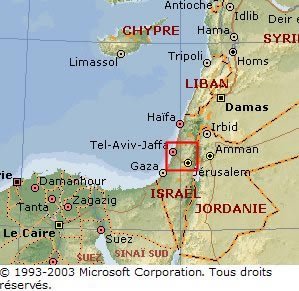
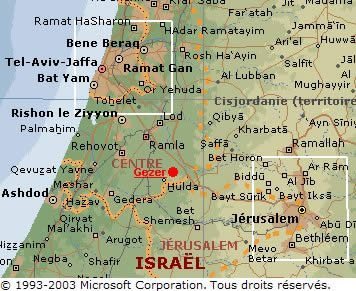
It was in Gezer, midway between Tel Aviv and Jerusalem, that the calendar was discovered in 1908.
This “calendar” is engraved on a limestone stone measuring 11.1 centimeters long and 7.2 centimeters wide.
Engraved in Biblical Hebrew, it is dated to around 950 BCE, and therefore to the time of King Solomon.
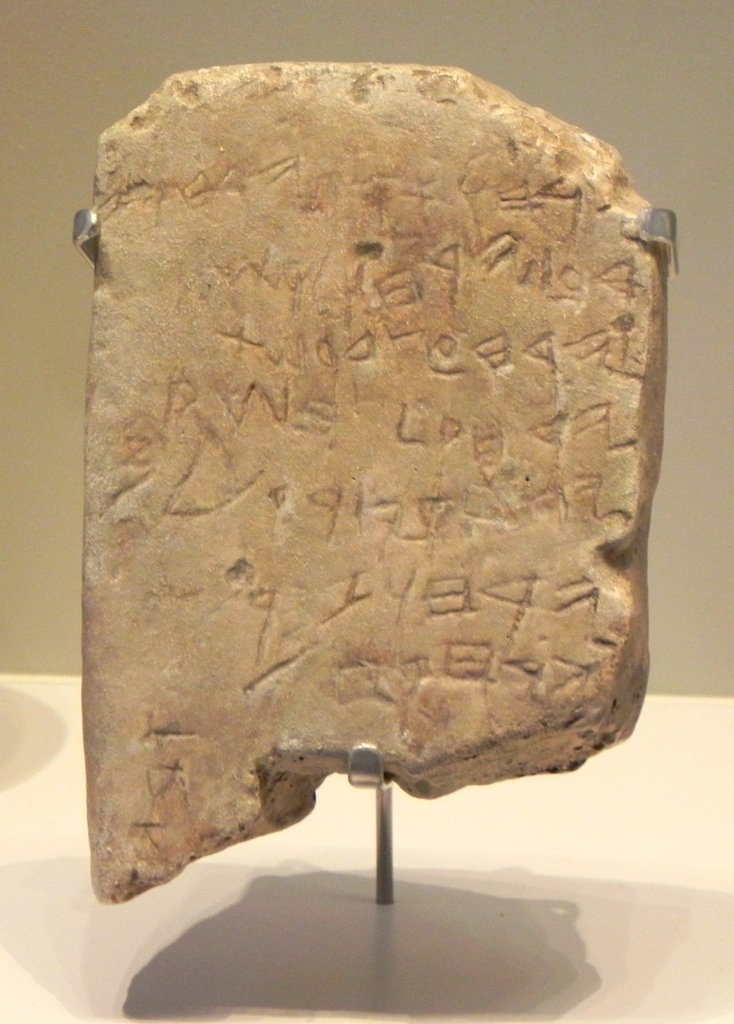
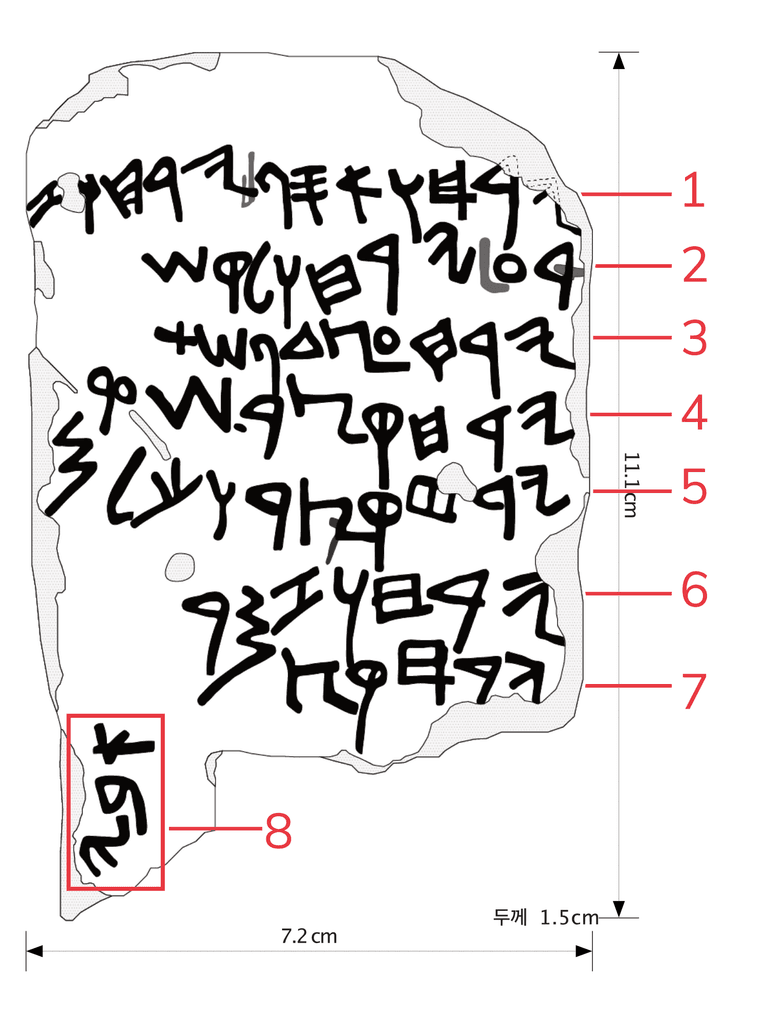
Engraved on limestone, this calendar has 8 lines of Biblical Hebrew characters. It is currently held at the Archaeological Museum of Istanbul (Turkey).
As seen on the images above, this calendar has 8 lines describing agricultural tasks through the months of the year.
The translation of the lines is as follows:
| Line | Translation (according to W.F. Albright) | Corresponding months |
|---|---|---|
| 1 | 2 months of harvest (olives?) | August - September |
| 2 | 2 months of planting | October - November |
| 3 | 2 months of late planting | December - January |
| 4 | 1 month of hoeing flax | February |
| 5 | 1 month of barley harvest | March |
| 6 | 1 month of harvest and festival | April |
| 7 | 2 months of vine pruning | May - June |
| 8 | 1 month of summer fruits + signature | July |
This stone still keeps part of its mystery, as hypotheses abound about its author and purpose.
Some think it was a school exercise, based on the rough character strokes. Others see it as a tax-collection record. Still others suggest it was lyrics from a popular song.
In short, everyone can choose the version they prefer... or propose another.