Introduction
Once implemented, the precision of the Gregorian calendar and its system of intercalating “catch-up” days were hardly challenged. Its internal structure, however, was another matter.
Criticism first targeted, naturally, its deliberately Christian character through its feasts and references to saints and martyrs.
Those who read the page on the Republican calendar will remember Maréchal and his Almanach des Honnêtes Gens (Almanac of Honest People, 1788). Others had come before him, such as Clency with his calendrier des héros (Calendar of Heroes, 1772), or Vasselin with his Almanach nouveau de l’an passé (New Almanac of Last Year).
Other criticisms focused on how the Gregorian calendar itself was built. They were (and still are) numerous:
- variation in the number of days from one month to another (28 to 31), causing variations in working days and economic consequences.
- change of weekday from one year to another. Let us remember (see eras and cycles) that it takes 28 years for the same weekdays to return to the same dates.
- shifting feast days and public holidays, starting with Easter.
Over the last three centuries, studies and proposals multiplied, trying to reform the structure of the Gregorian calendar. The aim was simple: build a “perpetual” calendar with the shortest possible cycle (compared with 28 years for the Gregorian calendar).
But what to do, and how?
- The year has 365 days and, from time to time, 366 days.
- 365 is divisible by 5 (= 73).
- 366 is divisible by 2 (=183), by 3 (=122), by 6 (=61).
Conclusion: no common divisor to split the year neatly. And what can one do with 5, the divisor of 365? Five seasons is a bit too many, five months a bit too short.
Ah, if only the year had 364 days. Then we could use several interesting divisors: 2 (=182), 4 (=91), 7 (=52), 13 (=28), 14 (=26). 4, 13 and 14 are especially attractive: 4 quarters, or 13 months, or even 14 months.
But the year has 365 days, and dreaming is pointless... unless... unless we treat the 365th day (and the 366th) as “outside the calendar”. After all, epagomenal days (day(s) counted separately outside the months) already exist in other calendars.
From these observations emerged two major calendar types: a “universal calendar”, the subject of this page, and a “fixed calendar”, covered on another page of this site. Each type was developed in several variants.
If by unit we mean the smallest reproducible element, the unit of fixed-type calendars is the month, whereas for universal (or perpetual) calendars it is the quarter.
The “blank day”
Whether one type or the other, the calendars we are about to examine have at least one common feature: one extra day (or two in leap years) outside the unit. These days may be numbered or not, named or not. This is again the epagomenal concept found in calendars such as the Republican calendar or the Egyptian calendar.
In July 1745, in the London journal The Gentleman’s Magazine, an article signed by one Hirossa Ap-Iccim (a pseudonym whose owner remains uncertain) introduced the idea of a day “outside time”, which we will call the “blank day”.
In 1837, Italian priest Marco Mastrofini (born 25 April 1763 in Rome, died 4 March 1845 in Rome), in a work titled Amplissimi Frutti da Raccogliersi sul Calandario Gregoriano Perpetuo (conclusions from research on a perpetual Gregorian calendar), again used the blank day.
Perpetual calendars
These calendars are characterized by quarters with the same number of days. Variants are obviously numerous: month lengths in each quarter, adding or not adding a blank day, etc. We will study a few and list others whose authors or exact structures are less well documented.
If you have details about the listed calendars, please contact me.
Marco Mastrofini (1837)
Honor where honor is due. Even though Mastrofini did not go as far as making identical quarters, he was the first to fix weeks within the year. Later perpetual-type calendars were built in his wake.
His calendar has the following characteristics:
| Month | 1 | 2 | 3 | 4 | 5 | 6 | 7 | 8 | 9 | 10 | 11 | 12 | ||
|---|---|---|---|---|---|---|---|---|---|---|---|---|---|---|
| No. of days | 31 | 28 | 31 | 30 | 31 | 30 | 31 | 31 | 30 | 31 | 30 | 30 | BL | Bi |
BL = 365th day (blank day); Bi = blank day in leap years.
- The year starts on a Sunday.
- The 365th day (feria octava) belongs to December but has no weekday name.
- The 366th day (intercalary) in leap years is placed after the 365th, outside month and week.
- Easter can only fall on 26 March, or 2, 9, 16, or 23 April.
This plan was later taken up by a certain Father Castelli and by Monsignor Nicora.
In 1884, Abbé Croze, chaplain at La Roquette prison, offered a prize of 5,000 francs to whoever made the best proposal for a “reformed” calendar. This initiative was supported by the Société Astronomique de France, notably by astronomer Camille Flammarion. The specification had two requirements: first, the year had to start on a Sunday; second, the year had to have 12 months.
Gustave Armelin: French (1887)
First prize in the Croze competition.
His calendar has the following characteristics:
| Quarter | 1 (91 days) | 2 (91 days) | 3 (91 days) | 4 (91 days) | ||||||||||
|---|---|---|---|---|---|---|---|---|---|---|---|---|---|---|
| Month | 1 | 2 | 3 | 4 | 5 | 6 | 7 | 8 | 9 | 10 | 11 | 12 | ||
| No. of days | BL | 31 | 30 | 30 | 31 | 30 | 30 | 31 | 30 | 30 | 31 | 30 | 30 | Bi |
BL = 365th day (blank day); Bi = blank day in leap years.
- Quarters start on a Monday. And the competition requirements, then?
- The 365th day (New Year’s Day) is at the start of January, with no month date and no weekday name.
- The 366th day comes after December, with no month date and no weekday name.
Emile Hanin: France (1887)
Second prize in the Croze competition.
The features of his calendar, very close to Armelin’s, are as follows:
| Quarter | 1 (91 days) | 2 (91 days) | 3 (91 days) | 4 (91 days) +1 or 2 | ||||||||||
|---|---|---|---|---|---|---|---|---|---|---|---|---|---|---|
| Month | 1 | 2 | 3 | 4 | 5 | 6 | 7 | 8 | 9 | 10 | 11 | 12 | ||
| No. of days | 31 | 30 | 30 | 31 | 30 | 30 | 31 | 30 | 30 | 31 | 30 | 30 | BL | Bi |
BL = 365th day (blank day); Bi = blank day in leap years.
- The quarter, and therefore the year, starts on a Sunday.
- The 365th day (completudi or compledi) is 31 December, with no weekday name.
- The 366th day (bissextudi or bissexdi) is 32 December, with no weekday name.
Note that, while in Armelin’s calendar the number of working days (Monday to Friday) varies (27, 26, 25), it is always 26 in Hanin’s calendar. Well then... We won’t reassign prizes, but still...
This project was taken up by Von Hesse Wartegg (Switzerland), Emile Rosenkrang (Germany), W.-E. Büsching (Germany) and W. Köppen (Germany).
Grosclaude: Swiss (1900)
His calendar has the following characteristics:
| Quarter | 1 (91 days) | 2 (91 days) | 3 (91 days) | 4 (91 days) | ||||||||||
|---|---|---|---|---|---|---|---|---|---|---|---|---|---|---|
| Month | 1 | 2 | 3 | 4 | 5 | 6 | 7 | 8 | 9 | 10 | 11 | 12 | ||
| No. of days | BL | 30 | 30 | 31 | 30 | 30 | 31 | Bi | 30 | 30 | 31 | 30 | 30 | 31 |
- The third month has 31 days.
- The quarter starts on a Monday.
- The 365th day (New Year’s Day) sits between 31 December and 1 January, with no month date and no weekday name.
- The 366th day is placed between June and July, with no month date and no weekday name.
Alexander Philip: Scotland (1918)
One of his two proposals:
| Month | Bi | 1 | 2 | 3 | 4 | 5 | 6 | BL | 7 | 8 | 9 | 10 | 11 | 12 |
|---|---|---|---|---|---|---|---|---|---|---|---|---|---|---|
| No. of days | 1 | 30 | 30 | 31 | 30 | 30 | 31 | 1 | 30 | 30 | 31 | 30 | 30 | 31 |
- The year starts with New Year’s Day outside the months.
- Leap day is placed outside the months, between June and July.
- The year (its second day) always starts on a Monday.
The second proposal is more conventional and appears in the OTHER PROJECTS section of the page devoted to fixed calendars.
Other proposals appeared at the beginning of the 20th century. Based on the 30,30,31 distribution of months within the quarter, they differ in the start of the year and the position of the two “blank days”:
Camille Flammarion: France (1901)
- Quarters start on a Monday.
- The “blank days” are between December and January.
- The year begins on 20 March of the Gregorian calendar.
Carlos de la Plaza: Spain (1911)
- Quarters start on a Sunday.
- The 365th day is between 31 December and 1 January.
- The 366th day is between June and July.
Armand Baar: Belgium (1912)
- The 365th day is 31 April.
- The 366th day is between 14 and 15 August.
Father GABRIEL NAHAPETIAN: Italy (1913)
- Quarters start on a Sunday.
- The 365th day is 31 January.
- The 366th day is 31 August.
Other projects
In the Other projects section of the page dedicated to fixed calendars, you will find projects that cannot be classified as either perpetual or fixed type.
Projects in history
Reading these different projects (fixed, perpetual or other), one may wonder how private individuals could influence calendar reform.
In fact, nearly all these projects had support of various kinds (national, international, political, economic, associations...) and were part of a strong international reform movement, especially in the USA. In this section, we will try to clarify how reform evolved over time and across the world.
We already saw that in 1884 a competition sponsored by the Société Astronomique de France triggered a wave of proposals for new calendar structures. It can be said that, from 1887 onwards, by rewarding a 12-month proposal, France had chosen its side.
From 1911, the Grosclaude project was considered by the Federal Council in Bern.
Strong reform advocates obtained a resolution in favor of reform from the International Congress of Chambers of Commerce. In 1912, the Congress approved the Grosclaude project.
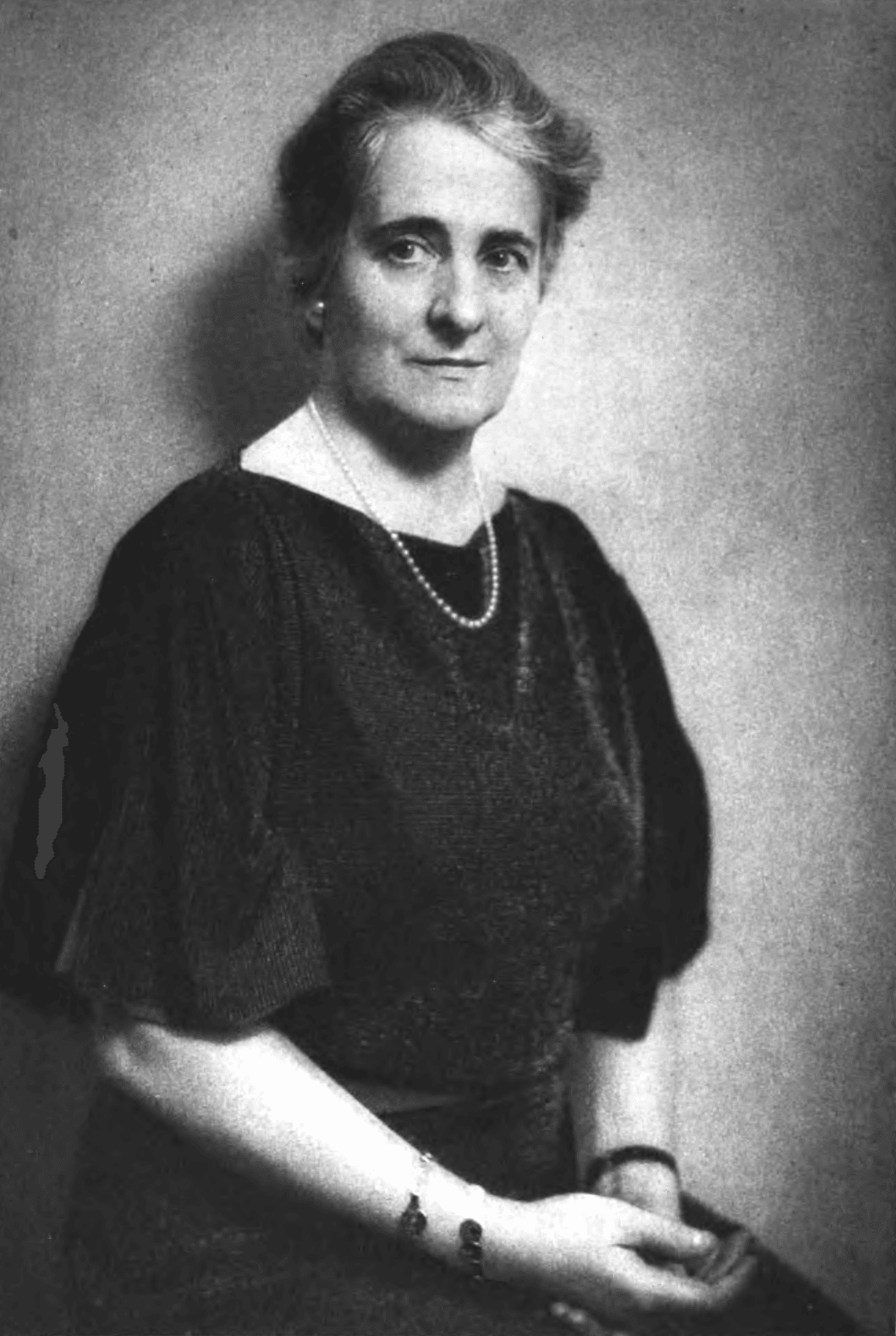
That same year, the project excited Elisabeth Achelis, who named it the World Calendar and fought for it all her life.
The American Elisabeth Achelis (1880-1973) actively campaigned for the reformed 12-month calendar she called The World Calendar. In 1930, using her personal fortune and donations, she created the World Calendar Association and published, from 1931 to 1955, the Journal of Calendar Reform.
In 1923, the League of Nations (future UN), in Geneva, created the International Calendar Reform Committee.
In 1927, the League asked all countries to examine calendar reform. The Commission received numerous projects from all horizons, from private individuals to official committees.
In 1928, Eastman founded the American Commission for Promotion of the 13-Month Calendar. The battle between him and E. Achelis began.
In 1930, Eastman made an anonymous donation of $10,000 to the League for a future reform conference. Reaction came quickly: by late 1930, Achelis offered the same amount.
In June 1931, in Geneva, a preparatory commission met, and Eastman and Achelis each defended their calendar type.
Skipping years of studies and hesitation, we reach 1936. That year, Dr Alfredo De Castro, vice-president of the League’s Commission, announced that two projects remained in contention: the 13-month fixed calendar (Eastman) and the world calendar (Achelis). The 12-month project was adopted by 70 countries.
This project was never implemented because of the war and strong opposition from the Church.
In 1947, the UN Secretary-General (the League became the UN in 1945) revived the League’s calendar reform work, which received fresh momentum in 1953 at the initiative of an Indian delegation.
In 1954, a new 12-month calendar project was adopted by the 18th session of the UN Economic and Social Council: four quarters of 91 days + a 365th day before 1 January (named outside calendar) + a 366th day between June and July.
For officially religious reasons (introduction of a blank day breaking the 7-day sabbath cycle), the USA, Great Britain, the Netherlands, Indonesia and other countries rejected this project, which was never adopted.
The Gregorian calendar still has bright days ahead.
Structure of the universal calendar (perpetual or world) as it might have been adopted
| S | M | T | W | T | F | S | S | M | T | W | T | F | S | S | M | T | W | T | F | S | ||
|---|---|---|---|---|---|---|---|---|---|---|---|---|---|---|---|---|---|---|---|---|---|---|
| 1 | 2 | 3 | 4 | 5 | 6 | 7 | 1 | 2 | 3 | 4 | 1 | 2 | ||||||||||
| 8 | 9 | 10 | 11 | 12 | 13 | 14 | 5 | 6 | 7 | 8 | 9 | 10 | 11 | 3 | 4 | 5 | 6 | 7 | 8 | 9 | ||
| 15 | 16 | 17 | 18 | 19 | 20 | 21 | 12 | 13 | 14 | 15 | 16 | 17 | 18 | 10 | 11 | 12 | 13 | 14 | 15 | 16 | ||
| 22 | 23 | 24 | 25 | 26 | 27 | 28 | 19 | 20 | 21 | 22 | 23 | 24 | 25 | 17 | 18 | 19 | 20 | 21 | 22 | 23 | ||
| 29 | 30 | 31 | 26 | 27 | 28 | 29 | 30 | 24 | 25 | 26 | 27 | 28 | 29 | 30 | ||||||||
| JANUARY APRIL JULY OCTOBER | FEBRUARY MAY AUGUST NOVEMBER | MARCH JUNE SEPTEMBER DECEMBER | ||||||||||||||||||||
| Leap day: after 30 June every 4 years | ||||||||||||||||||||||
| New Year’s Day: every year after 30 December | ||||||||||||||||||||||