A Little History
We are not going to go through the chronology of Palestine again here, since we have already covered it on the page dedicated to the Jewish calendar.
Our exploration of the Essene calendar does, however, lead us to three types of documents: the Book of Jubilees, the Book of Enoch, and the Dead Sea Scrolls. So let us first take a closer look at the history of these texts.
The Book of Jubilees
It is a biblical work classified among the pseudepigrapha (Jewish writings that belong neither to the Jewish canon nor to the Christian canon). In the Pléiade edition, these texts are grouped as “intertestamental” writings because they stand between the Old Testament and the New Testament.
The Book of Jubilees divides the sequence of events from Genesis to chapter XII of Exodus into “jubilees” (periods of forty-nine years). Each jubilee is in turn divided into seven sets of seven years.
It is known by several names: Book of Jubilees, Little Genesis (because it repeats or paraphrases a large part of Genesis and passages from Exodus), Apocalypse of Moses, and Testament of Moses.
It was probably written, in its final form, around 100 BCE. Several fragments of its original Hebrew version were found in the “library” discovered at Qumran in 1947.
The Book of Enoch
The Ethiopian Book of Enoch (or First Book of Enoch) is the longest work among the Pseudepigrapha. It is called “Ethiopian Enoch” because the Ethiopian version is the only one that has reached us in full. It includes several sections written by different authors between the 2nd and 1st centuries BCE. The original work may have been written in either Hebrew or Aramaic. It was soon translated into Greek. The Ethiopic translation appears to have been made from Greek around 500 CE. Passages from that Ethiopic version survive in Greek, Latin, and Aramaic, the latter having been discovered at Qumran.
The book has seven parts. In our study of the Essene calendar, the fourth part (71-82), which contains revelations about celestial bodies, is the one that interests us most.
It is worth noting that there are French translations of the Book of Enoch available online (here, for example). They sometimes differ quite a bit from the English translation by Richard Laurence. Whenever those differences matter, I will provide both the French and the English versions.
Qumran and the Dead Sea Scrolls
In the two previous sections, we mentioned Qumran, where several texts from the Book of Enoch and the Book of Jubilees were found.
We are not going to review the full history of Qumran and the Dead Sea Scrolls in detail; the literature on the topic is vast. Our aim here is simply to place the manuscripts we are about to study within both their historical timeline and the intellectual context of their time.
Regarding Qumran, Encarta states:
“Qumran, also called Khirbet Qumran (“stone ruin”), was a Jewish settlement in ancient Palestine near which the Dead Sea Scrolls were discovered in 1947. The site lies on the north-western shore of the Dead Sea, 13 km south of Jericho. At the time of Christ, Qumran was the center of a large religious community belonging to the Essene sect. The Essenes split from other Jewish religious currents in the 2nd century BCE. Persecuted by the Maccabees, they withdrew into the desert, which suited their ascetic way of life. The site of Qumran, where many of them lived in nearby cliff caves, was probably occupied around 135 BCE. It was temporarily abandoned after an earthquake in 31 BCE and destroyed by the Romans in 68 CE. It was inhabited one last time in 132-135 CE by insurgents in the Bar Kokhba revolt.
© 1993-2003 Microsoft Corporation. All rights reserved.
Let us summarize this in images, with a few details:
1947
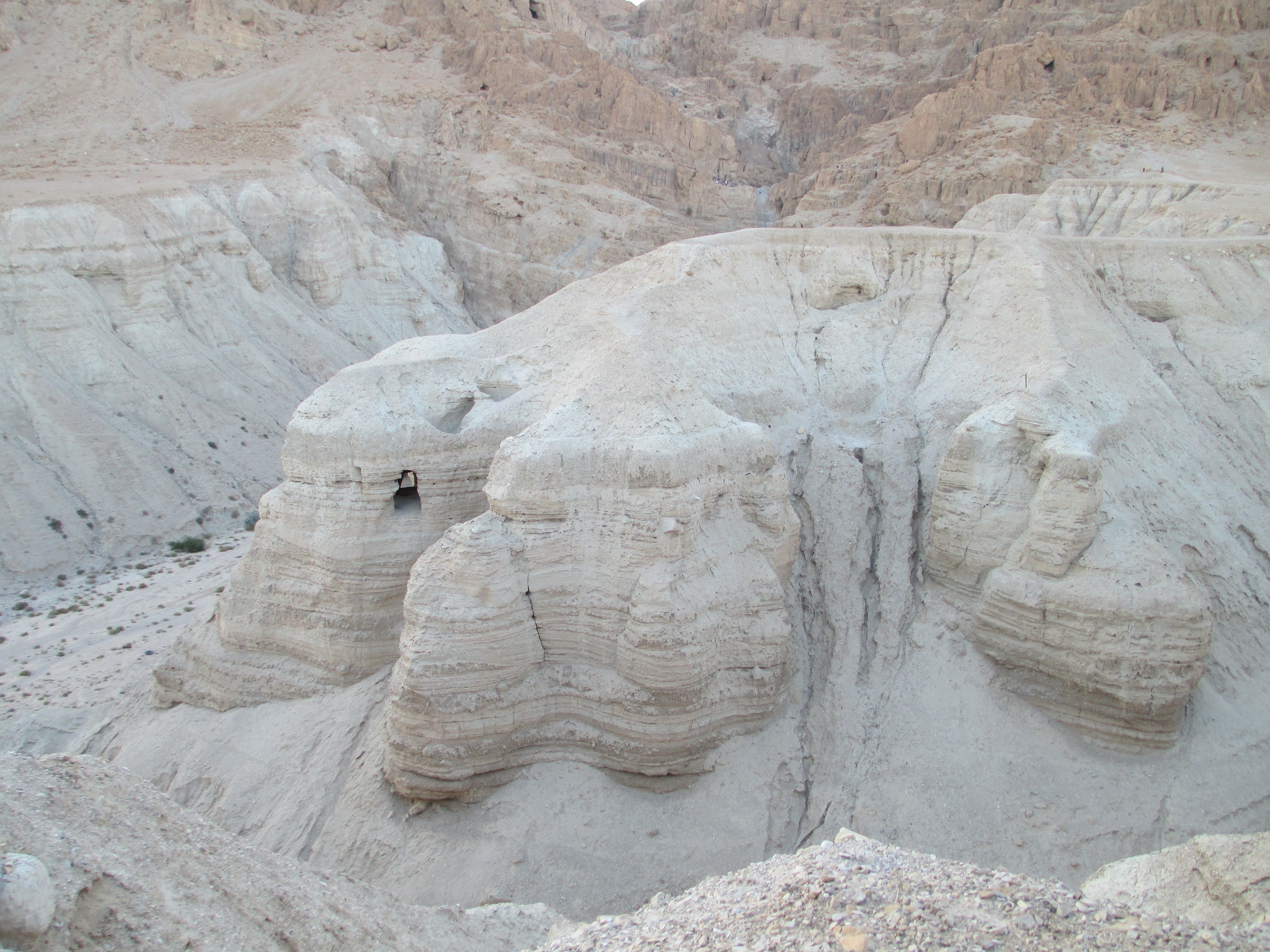
In March 1947, a young Bedouin (Muhammad ed-Dib) from the Ta'amirech tribe discovered manuscripts sealed in jars. They were stored in the cave of Ain-Feshka. Naturally, that cave became Cave A, or Cave 1.
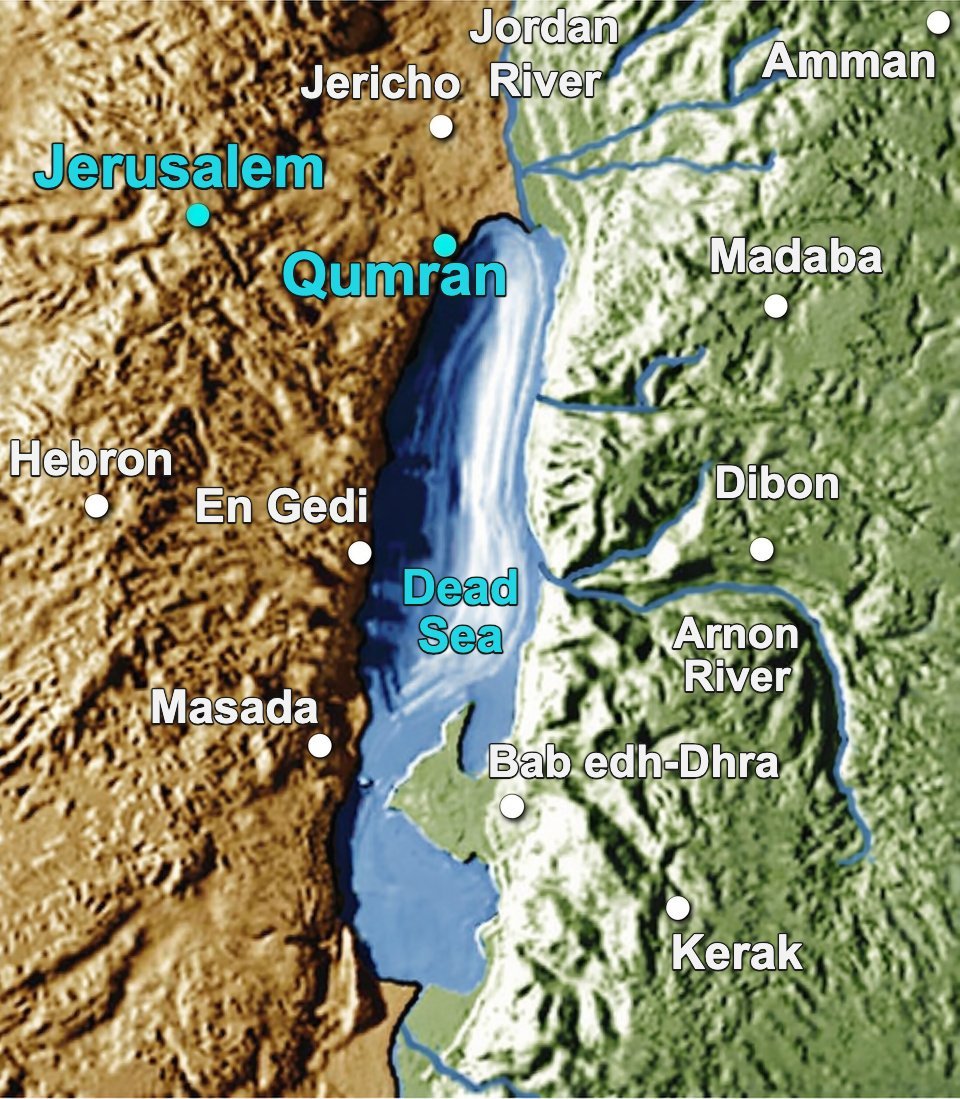
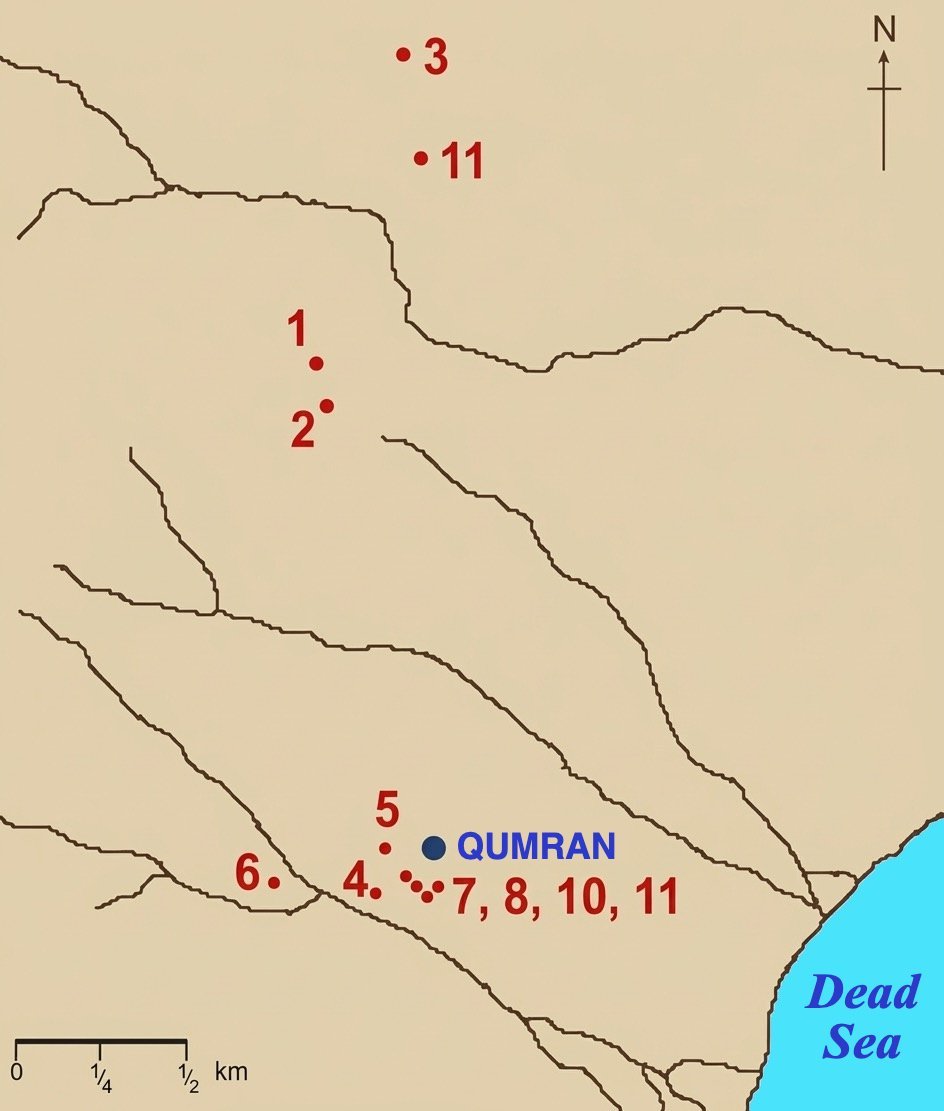
Above is the location of the caves that contained manuscripts. These manuscripts were given references indicating the cave where they were found and their sequence number. So 4Q317 is the 317th manuscript discovered in Cave A.
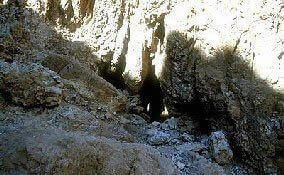
Since the first discovery, 180 caves have been explored. About fifteen of them contained manuscripts. The fourth cave, which is of particular interest to us because it contained calendar manuscripts, was discovered in 1952.
Across all the caves, many literary fragments were discovered, along with hundreds of texts related to most books connected with the Old Testament, both biblical and non-biblical (such as the Book of Jubilees and 1 Enoch).
These manuscripts were written on animal skin or papyrus. To read them, written from right to left, they had to be unrolled. Several languages were used (Hebrew, Aramaic, Greek) in half a dozen different scripts. Some manuscripts were in very poor condition, and it took a great deal of time and patience to reconstruct nearly 870 manuscripts from more than 15,000 fragments.
After the full publication of the scrolls in 1991, it became clear that hundreds of scribes had contributed to the texts. Barely half a dozen of those scribes were responsible for multiple texts.
Some of these scrolls date from the 2nd century BCE, the great majority from the 1st century BCE, and a small number from the 1st century CE. So we can reasonably place their authors between 200 BCE and 100 CE.
1951
That year, 3 kilometers from the Ain Feshka cave, Khirbet Qumran was discovered and excavations began (Khirbet means ruins in Arabic). The aim of these excavations was to identify who stood behind the production of the texts.
The excavations lasted from 1951 to 1956 and uncovered a true community complex: a sophisticated water supply system, a large room regarded as the scriptorium (where manuscripts were copied), a meeting room, laundry facilities, living quarters, and more. A cemetery was also found nearby.
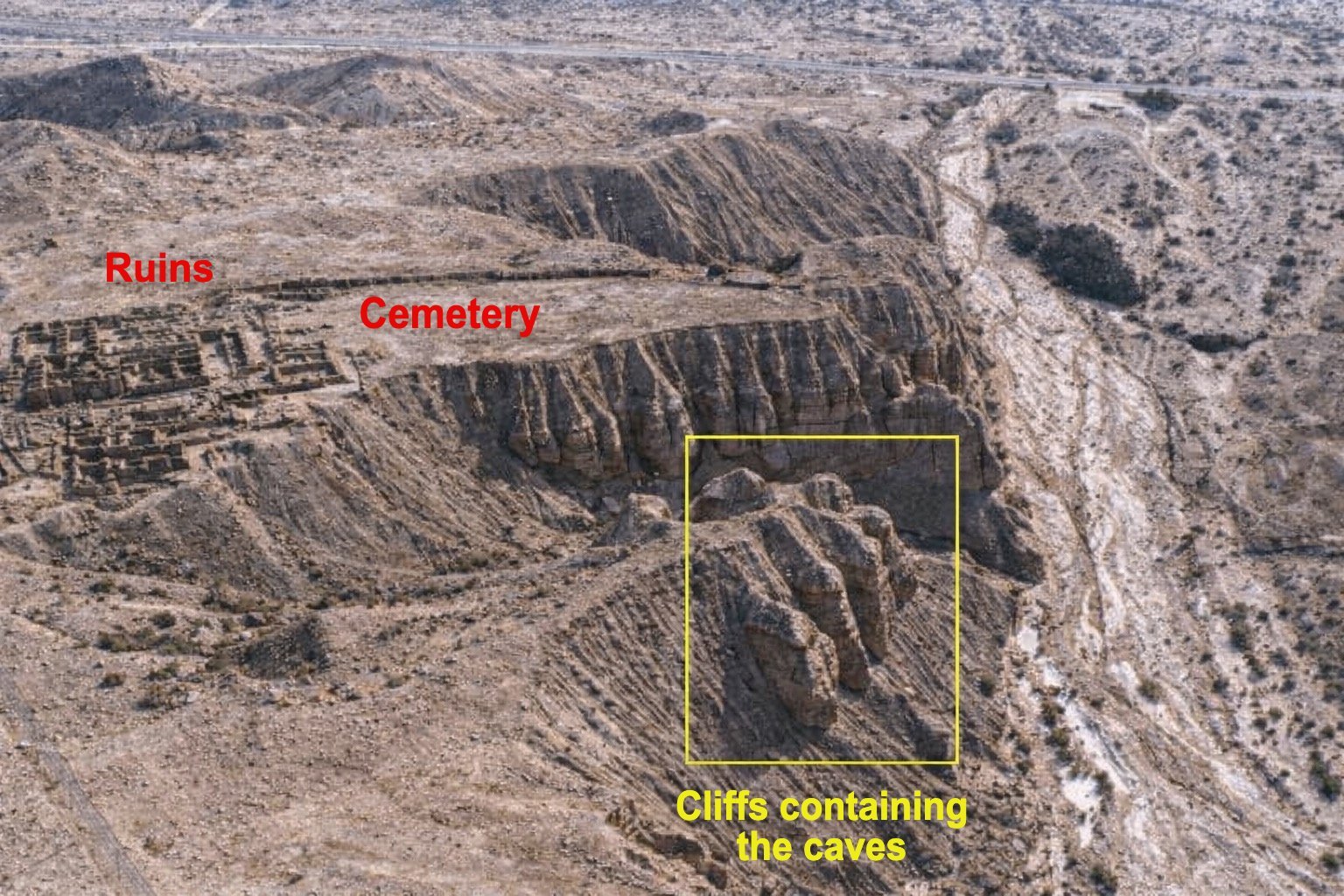
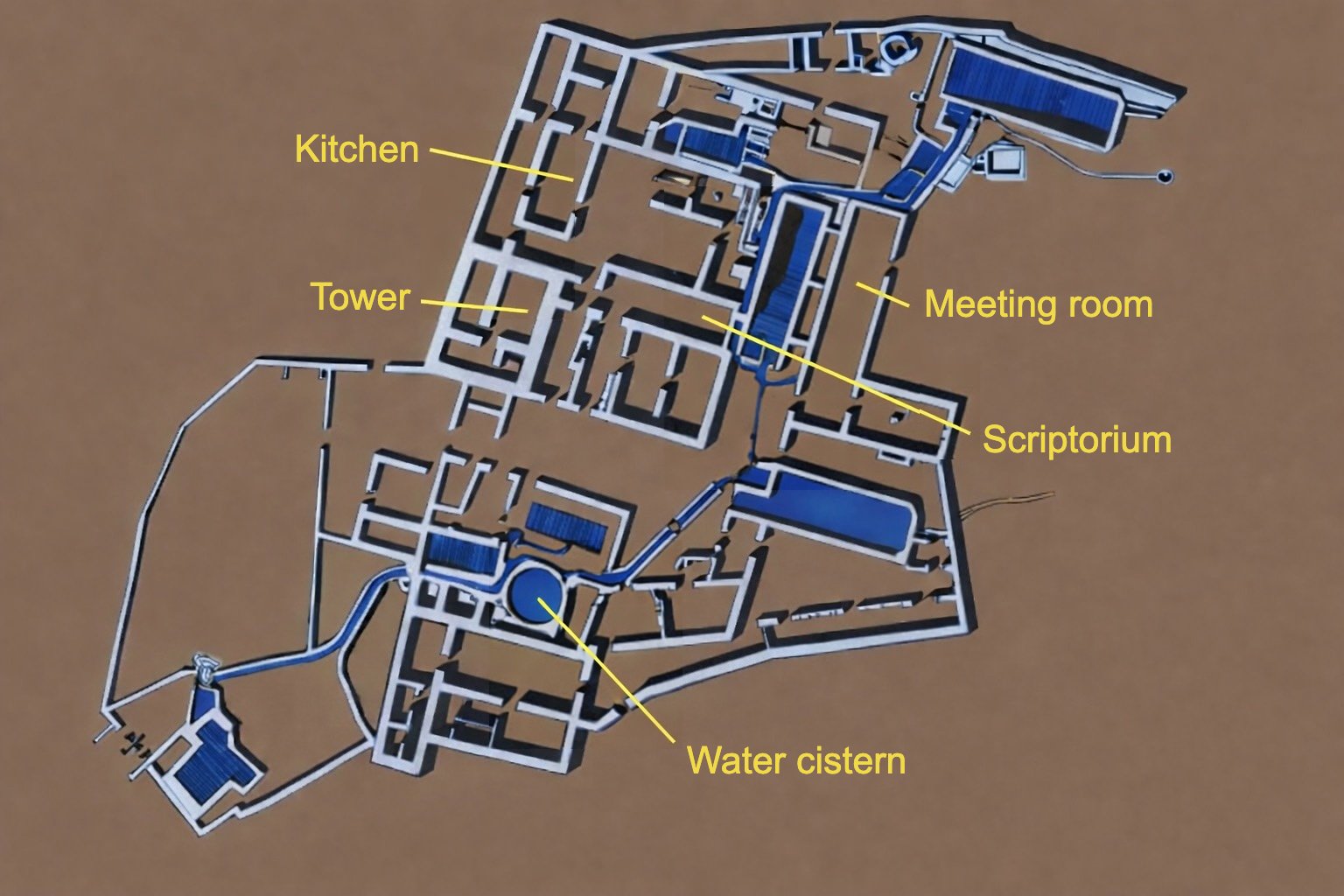
Archaeologists, including Father Roland Guérin de Vaux, who directed the excavations, concluded that the site was an Essene settlement.
The Essenes were one of the three schools of Jewish thought described by Flavius Josephus (c. 37 - c. 100) in The Jewish War and Antiquities of the Jews. The other two were the Pharisees and the Sadducees. Pliny the Elder (23 - 79) also mentions them in his Natural History, as does Hippolytus of Rome in Refutation of All Heresies.
We could stop there, but it is worth noting that this Essene hypothesis, still dominant today, has begun to be questioned.
So two questions remain open:
- Is there really a link between the Qumran site and the Dead Sea Scrolls?
- Was this site truly occupied by Essenes?
The Calendar
Warning: The texts we are about to study are too long to include entirely here, so I placed them on another page. Only the parts we comment on are reproduced here.
The label “Essene calendar” was proposed by André Dupont-Sommer (1900-1983, French orientalist and perpetual secretary of the Académie des Inscriptions et Belles-Lettres), based on descriptions by Pliny the Elder and Flavius Josephus. Considering what we have just read, this calendar could just as well be called the Enoch calendar or the Qumran calendar. But since usage is now established, we will keep “Essene calendar.”
We will examine, in order:
- The solar calendar.
- The lunar cycles.
- The cycle of priestly service rotations.
- The jubilee cycle and the 294-year cycle.
The Solar Calendar, or Essene Calendar
If we had to summarize the texts we will use, we could say:
- The Book of Enoch gives us the theory.
- The Book of Jubilees gives us a concise summary of that theory.
- The Dead Sea Scrolls show us the practical application.
If we read chapter 71 of the Book of Enoch carefully, we learn that the solar cycle has the Sun “begin its course” through six eastern gates and end it through six western gates.
It “begins its course in the first month” by passing through the fourth gate.
It then passes twice, in succession, through each gate. Each time, thirty days pass before the Sun changes gate. Paragraph 43 specifies that the Sun's own path determines the length or shortness of days and nights. And indeed, each time it exits through a western gate, the respective lengths of day and night are counted. The order of passage through the gates is: 4, 5, 6, 6, 5, 4, 3, 2, 1, 1, 2, 3.
Incidentally, the division of a full day (daylight + night) is not 24 but 18. Did the Essene day therefore have 18 “hours”?
In summary, the Essene calendar year is solar and has 12 months of 30 days.
But 30 x 12 = 360 days is still far from the approximately 365.25 days of the tropical year. If we return to chapter 71, we find that some months actually have 31 days, because of their “sign.”
What is this “sign”? According to 81-6, it is an additional day that must be added at the end of the month to bring it to 31 days. Well... for some months. And 81-6 also tells us there is "one at the first gate, a second at the third gate, a third at the fourth, and a last at the sixth gate."
So we arrive at a 364-day year. When does it begin?
To help answer that, let us draw up a summary table of what we have just seen, adding day and night length at the end of each month.
| Month | Gate | Number of days | At month end | |
|---|---|---|---|---|
| day length | night length | |||
| 1 | 4 | 30 | 10 | 8 |
| 2 | 5 | 30 | 11 | 7 |
| 3 | 6 | 31 | 12 | 6 |
| 4 | 6 | 30 | 11 | 7 |
| 5 | 5 | 30 | 10 | 8 |
| 6 | 4 | 31 | 9 | 9 |
| 7 | 3 | 30 | 8 | 10 |
| 8 | 2 | 30 | 7 | 11 |
| 9 | 1 | 31 | 8 | 12 |
| 10 | 1 | 30 | 7 | 11 |
| 11 | 2 | 30 | 8 | 10 |
| 12 | 3 | 31 | 9 | 9 |
We can see that at the end of the 12th month, that is, on the “sign” day (the extra day) just before the first month of the following year, day length equals night length. So we are at an equinox. Since days become longer in the following months, we can conclude that the year begins at the vernal equinox (spring equinox).
We can add that the year begins specifically on a Wednesday, the fourth day of the week (in Hebrew tradition, the week starts on Sunday). It is indeed on the fourth day, according to the Old Testament, that God created the Sun, Moon, and stars.
So these famous “signs” correspond to the equinoxes and solstices.
Looking more closely, we can also see that the year can be divided into four periods of 91 days. From there, it is only a short step to imagining four seasons separated by these “signs.” And we can take that step by reading chapter 81:10-25, where a detailed description of the seasons is given.
This same yearly structure appears in Dead Sea manuscript 4Q328, which indicates priestly watch weeks (we will return to this) for each quarter across six years: "... These are the chiefs by year: For the first year, Gamul, Elyash, Maaziahou, and Houppa..."
Schematically, the Essene calendar looks like this:
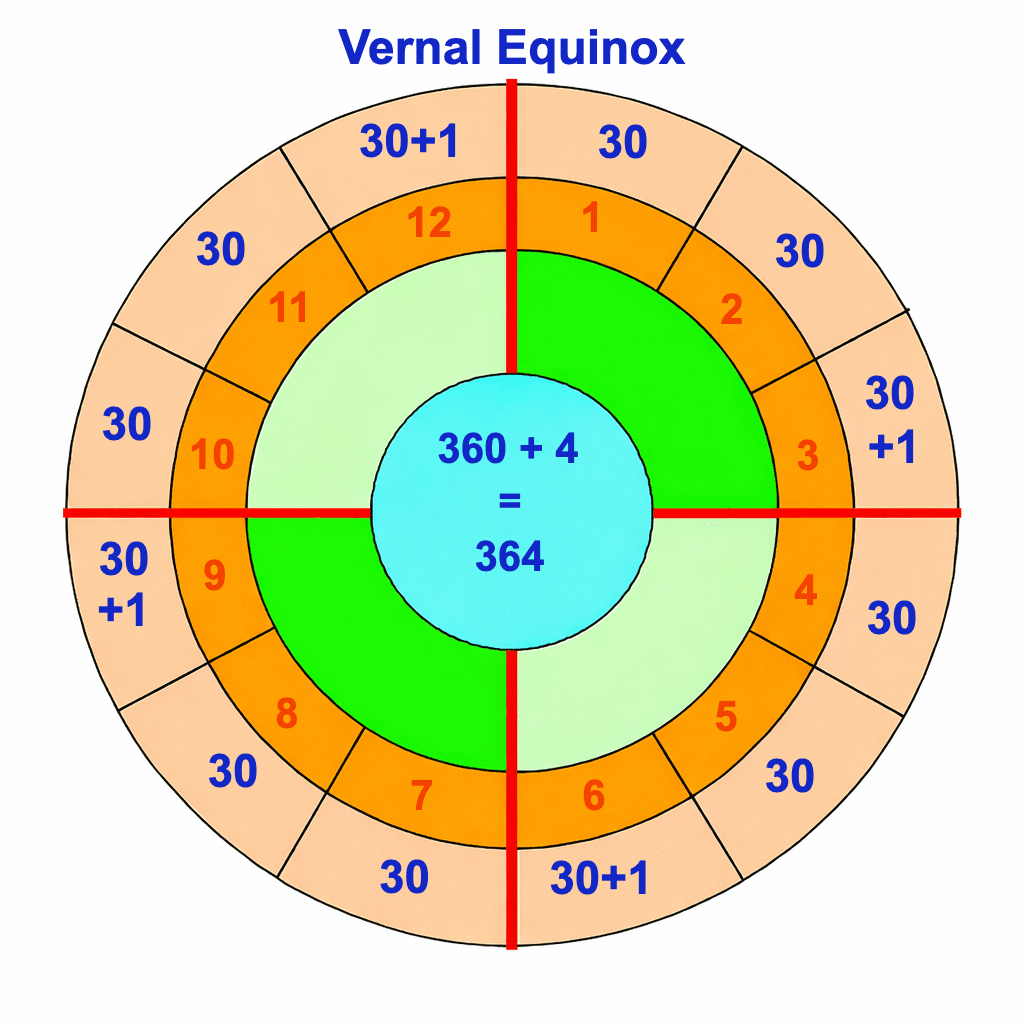
It includes the months (red numbers), the number of days in each month (blue numbers), the seasons (green background), and the four additional days of the year at the solstices and equinoxes. Altogether, this gives a year of 360 days + 4 additional days, i.e. 364 days.
Those familiar with perpetual or fixed calendars will recognize this as that kind of system. A 364-day year has exactly 52 weeks. As a result, it can always start on the same day (here, Wednesday), and festivals and other events can always fall on the same date in the year.
That is exactly what happens, and both the Book of Enoch and the Book of Jubilees insist strongly on this fixed positioning of festivals. The Book of Jubilees says: "Command the children of Israel to observe the years according to this reckoning - 364 days. These days shall constitute a complete year. Let them not disturb its days and festivals... let them omit no day and move no festival... If they do not observe His commandment, they will upset all their seasons and the years will be displaced..." (Book of Jubilees 6:32-38).
Most of these festivals, consistent with the Old Testament, are named in manuscripts 4Q320-4Q321-321a, 4Q325 and 4Q327:
- Sabbath: seventh day of the week.
- Passover: 14th day of the first month.
- Feast of Barley / Waving of the Omer: 26th day of the first month.
- Second Passover feast: 14th day of the second month.
- Feast of Weeks: 15th day of the third month.
- Feast of Wine: 3rd day of the fifth month (added by 4Q325 and 4Q327).
- Feast of Oil: 22nd day of the sixth month (added by 4Q325 and 4Q327).
- Wood Offering: 29th day of the sixth month (added by 4Q325 and 4Q327).
- Day of Remembrance: 1st day of the seventh month.
- Day of Remembrance: 10th day of the seventh month.
- Feast of Booths (Tabernacles): 15th day of the seventh month.
It is important to note that festival dates and other events are not set by the day of the month, but by the day count within priestly service rotations (except in 4Q327, which uses day numbers of the month). We will come back to this.
We can now set out the table for a full year. For readability, it starts on the first day of the week. But remember that the year itself begins on a Wednesday. Festivals are marked in red.
| I | II | III | |||||||||||||
| Sun | 5 | 12 | 19 | 26 | 3 | 10 | 17 | 24 | 1 | 8 | 15 | 22 | 29 | ||
| Mon | 6 | 13 | 20 | 27 | 4 | 11 | 18 | 25 | 2 | 9 | 16 | 23 | 30 | ||
| Tue | 7 | 14 | 21 | 28 | 5 | 12 | 19 | 26 | 3 | 10 | 17 | 24 | 31 | ||
| Wed | 1 | 8 | 15 | 22 | 29 | 6 | 13 | 20 | 27 | 4 | 11 | 18 | 25 | ||
| Thu | 2 | 9 | 16 | 23 | 30 | 7 | 14 | 21 | 28 | 5 | 12 | 19 | 26 | ||
| Fri | 3 | 10 | 17 | 24 | 1 | 8 | 15 | 22 | 29 | 6 | 13 | 20 | 27 | ||
| Sat | 4 | 11 | 18 | 25 | 2 | 9 | 16 | 23 | 30 | 7 | 14 | 21 | 28 | ||
| IV | V | VI | |||||||||||||
| Sun | 5 | 12 | 19 | 26 | 3 | 10 | 17 | 24 | 1 | 8 | 15 | 22 | 29 | ||
| Mon | 6 | 13 | 20 | 27 | 4 | 11 | 18 | 25 | 2 | 9 | 16 | 23 | 30 | ||
| Tue | 7 | 14 | 21 | 28 | 5 | 12 | 19 | 26 | 3 | 10 | 17 | 24 | 31 | ||
| Wed | 1 | 8 | 15 | 22 | 29 | 6 | 13 | 20 | 27 | 4 | 11 | 18 | 25 | ||
| Thu | 2 | 9 | 16 | 23 | 30 | 7 | 14 | 21 | 28 | 5 | 12 | 19 | 26 | ||
| Fri | 3 | 10 | 17 | 24 | 1 | 8 | 15 | 22 | 29 | 6 | 13 | 20 | 27 | ||
| Sat | 4 | 11 | 18 | 25 | 2 | 9 | 16 | 23 | 30 | 7 | 14 | 21 | 28 | ||
| VII | VIII | IX | |||||||||||||
| Sun | 5 | 12 | 19 | 26 | 3 | 10 | 17 | 24 | 1 | 8 | 15 | 22 | 29 | ||
| Mon | 6 | 13 | 20 | 27 | 4 | 11 | 18 | 25 | 2 | 9 | 16 | 23 | 30 | ||
| Tue | 7 | 14 | 21 | 28 | 5 | 12 | 19 | 26 | 3 | 10 | 17 | 24 | 31 | ||
| Wed | 1 | 8 | 15 | 22 | 29 | 6 | 13 | 20 | 27 | 4 | 11 | 18 | 25 | ||
| Thu | 2 | 9 | 16 | 23 | 30 | 7 | 14 | 21 | 28 | 5 | 12 | 19 | 26 | ||
| Fri | 3 | 10 | 17 | 24 | 1 | 8 | 15 | 22 | 29 | 6 | 13 | 20 | 27 | ||
| Sat | 4 | 11 | 18 | 25 | 2 | 9 | 16 | 23 | 30 | 7 | 14 | 21 | 28 | ||
| X | XI | XII | |||||||||||||
| Sun | 5 | 12 | 19 | 26 | 3 | 10 | 17 | 24 | 1 | 8 | 15 | 22 | 29 | ||
| Mon | 6 | 13 | 20 | 27 | 4 | 11 | 18 | 25 | 2 | 9 | 16 | 23 | 30 | ||
| Tue | 7 | 14 | 21 | 28 | 5 | 12 | 19 | 26 | 3 | 10 | 17 | 24 | 31 | ||
| Wed | 1 | 8 | 15 | 22 | 29 | 6 | 13 | 20 | 27 | 4 | 11 | 18 | 25 | ||
| Thu | 2 | 9 | 16 | 23 | 30 | 7 | 14 | 21 | 28 | 5 | 12 | 19 | 26 | ||
| Fri | 3 | 10 | 17 | 24 | 1 | 8 | 15 | 22 | 29 | 6 | 13 | 20 | 27 | ||
| Sat | 4 | 11 | 18 | 25 | 2 | 9 | 16 | 23 | 30 | 7 | 14 | 21 | 28 | ||
This calendar seems very clear at first glance. It becomes much less clear once we ask the question of intercalation, if intercalation did exist.
Even with the addition of 4 extra days to a 360-day year, which brings us closer to the tropical year, we are still far from 365.24221935 days. Unless we accept rapid drift, we would need to add, from time to time, days, weeks, months, or years. But when, how, and how many?
The fact is: we simply do not know, and the texts do not tell us.
Some scholars believe there was no intercalation at all. For example, Roger Beckwith (The modern attempt to reconcile the Qumran calendar with the true solar year) relies on a passage from the Book of Enoch to support this view. It is part of chapter 79: "... 4. Their seed shall fail in the fields and in the countryside; the works of the earth shall be disrupted, and nothing shall come in its season. The rain shall stay in the sky, and the heavens shall be bronze. 5. At that time the produce of the earth shall be delayed; it shall not blossom in its season, and the trees shall hold back their fruit. 6. The moon shall alter its course and shall not appear in its season; a burning cloudless sky shall be seen, and barrenness shall spread over the face of the earth. Meteors shall streak across the sky; for many stars, turning from their accustomed path, shall wander through space...". According to the text, this shift is not due to calendar imperfection, but to the sin of the angels.
Other scholars, on the contrary, think there was intercalation.
For my part, I tend to believe there was, for the following reasons:
- Some festivals concern agricultural events, such as the Feast of Wine or the Feast of Oil. It is hard to imagine these festivals shifting over time and being celebrated, for example, in the middle of winter.
- We have seen that the year began on the Wednesday closest to the spring equinox. Over the years, the gap between year-end and the spring equinox would quickly exceed 7 days. Unless a full week were intercalated at that point, using the spring equinox as year-start would soon lose all meaning. The advantage of inserting a full week then would be that it preserves the calendar structure and the fixed placement of festivals.
Since the calendar drifts by 1.24 days per year, a weekly intercalation could occur every 7 years. Indeed, 7 x 1.24 = 8.68 days. The average year length would then be ((364 x 7) + 7)/7 = 365 days, which is much better.
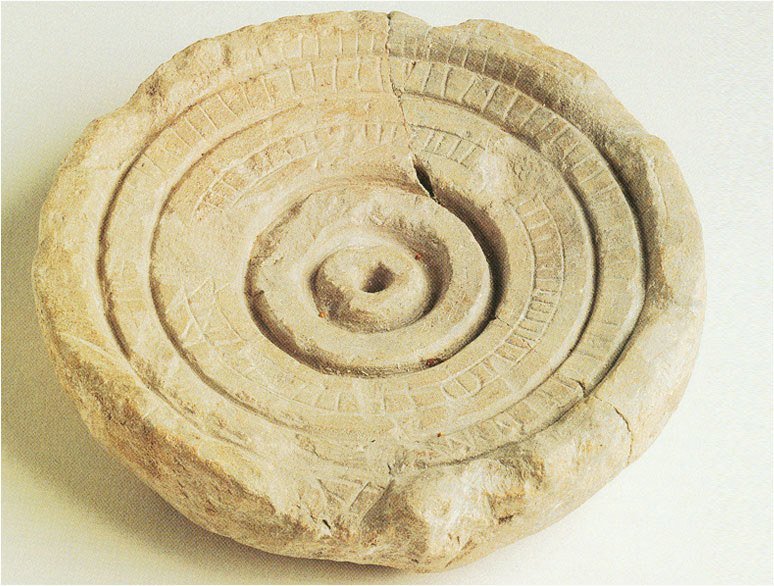
A yearly “sundial”, unique of its kind, was discovered at Qumran in 1954. It was used to determine the points of the solstices and equinoxes, and the horizontal direction of the sun, through a system of graduated circles corresponding to the seasons. It seems to confirm the Essenes' interest in a solar year based on the spring equinox.
And if one also added a week every 28 years, without otherwise changing the annual calendar, the accuracy would reach 365.25 days. But that is more wishful thinking.
Even if the discovery of that yearly sundial seems to confirm that solstices and equinoxes were monitored, we still have no written trace of any intercalation. Was our 21st-century logic the same as that of the last centuries BCE? A mystery.
And when chapter 73:13 of the Book of Enoch says, speaking of the Moon, "... it is she that regulates the years, so that they do not vary by a single day and are invariably made up of three hundred and sixty-four days...", many questions remain.
While waiting for possible clarification from future discoveries, and since we have brought up the Moon, let us now look at the lunar cycles.
Lunar Cycles
In addition to using a solar calendar, the Qumran community also knew the lunar year.
From the outset, however, studying that lunar year raises a problem: a translation issue in the Dead Sea Scrolls, discussed by M. Wise, M. Abegg and E. Cook in their book Dead Sea Scrolls, where they provide a full translation of all manuscripts (the book itself was translated into French under the title Les manuscrits de la mer Morte - The Dead Sea Scrolls). The issue concerns the word duq, previously unknown. According to the authors, duq may mean either first quarter or full moon. Depending on interpretation, the first lunar month would begin either at full moon or at astronomical new moon (invisible moon). Like them, we will choose the full-moon interpretation, based on a simple idea: when God created the Sun and the Moon on the fourth day, the Moon should still have been visible. Otherwise nothing would have been seen of that birth. And Genesis says: “And God set them in the expanse of the heavens to give light on the earth.” True, we were not there either. But still...
Manuscript 4Q320 gives us the structure of the lunar year: twelve lunar months alternating 29 and 30 days. The first month has 29 days, so the full year has 354 days. This manuscript describes a cycle of lunar phases over three solar years. We can set it out in a table by showing the start date of lunar months within the solar calendar.
| Solar year 1 | Solar year 2 | Solar year 3 | ||||
|---|---|---|---|---|---|---|
| day | month | day | month | day | month | |
| Lunar month 1 | 1 | 1 | ||||
| Lunar month 2 | 30 | 1 | 20 | 1 | 10 | 1 |
| Lunar month 3 | 30 | 2 | 20 | 2 | 10 | 2 |
| Lunar month 4 | 29 | 3 | 19 | 3 | 9 | 3 |
| Lunar month 5 | 28 | 4 | 18 | 4 | 8 | 4 |
| Lunar month 6 | 27 | 5 | 17 | 5 | 7 | 5 |
| Lunar month 7 | 27 | 6 | 17 | 6 | 7 | 6 |
| Lunar month 8 | 25 | 7 | 15 | 7 | 5 | 7 |
| Lunar month 9 | 25 | 8 | 15 | 8 | 5 | 8 |
| Lunar month 10 | 24 | 9 | 14 | 9 | 4 | 9 |
| Lunar month 11 | 23 | 10 | 13 | 10 | 4 | 10 |
| Lunar month 12 | 22 | 11 | 12 | 11 | 2 | 11 |
| Lunar month 1 | 22 | 12 | 12 | 12 | 2 | 12 |
If we consider that the lunar month beginning on 02/12 (black background) has 30 days and is an intercalary month (instead of being the first month of the fourth year), then the first lunar month of the fourth year begins on 01/01 of solar year 4. Thus, the three years we set out in the table form one cycle. Manuscript 4Q319 inventories these conjunctions between start of the solar year and full moon. The first day of this cycle, where the solar year begins and the moon is full, is what the Qumran community calls 'ot. It seems to be a sign sent by God, a kind of synchronization signal.
Should we read this as an interpretation of the phrase that raised questions in the previous section: "... it is she who regulates the years, so that they do not vary by a single day and are invariably made up of three hundred and sixty-four days..."?
Indeed, a lunar year of 354 days x 3 years = 1,062 days; adding one 30-day month gives 1,092 days, which equals 3 solar years of 1,092 days. So the Moon really does regulate the solar year every three years.
And one cannot help asking whether intercalating a week every 7 years in the solar calendar would destroy this elegant arrangement. We come full circle, and the same question returns... still unanswered.
The Cycle of Priestly Service Rotations
The Old Testament, 1 Chronicles 24, says:
“"As for the sons of Aaron, their divisions were these: the sons of Aaron: Nadab, Abihu, Eleazar and Ithamar.
2 But Nadab and Abihu died before their father and had no children; so Eleazar and Ithamar served as priests.
3 And David, with Zadok of the sons of Eleazar and Ahimelech of the sons of Ithamar, divided them according to the offices of their service.4 There were more chief men found among the sons of Eleazar than among the sons of Ithamar, and they were divided accordingly: sixteen heads of fathers' houses of the sons of Eleazar, and eight of the sons of Ithamar.
5 They were divided by lot, one group as another, for there were officers of the sanctuary and officers of God among both the sons of Eleazar and the sons of Ithamar.
6 Shemaiah son of Nethanel the scribe, one of the Levites, recorded them in the presence of the king, the officials, Zadok the priest, Ahimelech son of Abiathar, and the heads of fathers' houses of priests and Levites, one father's house being taken for Eleazar and one for Ithamar.7 The first lot fell to Jehoiarib, the second to Jedaiah;
8 the third to Harim, the fourth to Seorim;
9 the fifth to Malchijah, the sixth to Mijamin;
10 the seventh to Hakkoz, the eighth to Abijah;
11 the ninth to Jeshua, the tenth to Shecaniah;
12 the eleventh to Eliashib, the twelfth to Jakim;
13 the thirteenth to Huppah, the fourteenth to Jeshebeab;
14 the fifteenth to Bilgah, the sixteenth to Immer;
15 the seventeenth to Hezir, the eighteenth to Happizzez;
16 the nineteenth to Pethahiah, the twentieth to Jehezkel;
17 the twenty-first to Jachin, the twenty-second to Gamul;
18 the twenty-third to Delaiah, the twenty-fourth to Maaziah.19 These were their appointed order for serving in the house of the Lord according to the procedure established for them by Aaron their father, as the Lord, the God of Israel, had commanded him."
So there were 24 priests serving each week in the Temple liturgy. Each performed one “priestly watch” for a week, beginning every Saturday at noon.
We find these watches in the same order in the manuscripts related to the Qumran calendar. Manuscript 4Q320 gives the watch rotation. Six years were required before each group had performed the same number of watches as the others. 4Q320 states that the first watch of year 1 was assigned to Gamul, who therefore served from 28/12 of the previous solar month to 03/01 of the first solar month of the year.
| Week | Day | Year 1 | Year 2 | Year 3 | Year 4 | Year 5 | Year 6 |
|---|---|---|---|---|---|---|---|
| 28/12 | Gamul | ||||||
| 1 | 04/01 | Delaïa | Harim | Hakkots | Éliashib | Bilga | Pethakhia |
| 2 | 11/1 | Maazia | Seorim | Abija | Jakim | Immer | Ézéchiel |
| 3 | 18/1 | Jehoïarib | Malkija | Jéshua | Huppa | Hézir | Jakin |
| 4 | 25/1 | Jedahia | Mijamin | Shecania | Jéshébeab | Happitsets | Gamul |
| 5 | 2/2 | Harim | Hakkots | Éliashib | Bilga | Pethakhia | Delaïa |
| 6 | 9/2 | Seorim | Abija | Jakim | Immer | Ézéchiel | Maazia |
| 7 | 16/2 | Malkija | Jéshua | Huppa | Hézir | Jakin | Jehoïarib |
| 8 | 23/2 | Mijamin | Shecania | Jéshébeab | Happitsets | Gamul | Jedahia |
| 9 | 30/2 | Hakkots | Éliashib | Bilga | Pethakhia | Delaïa | Harim |
| 10 | 7/3 | Abija | Jakim | Immer | Ézéchiel | Maazia | Seorim |
| 11 | 14/3 | Jéshua | Huppa | Hézir | Jakin | Jehoïarib | Malkija |
| 12 | 21/3 | Shecania | Jéshébeab | Happitsets | Gamul | Jedahia | Mijamin |
| 13 | 28/3 | Éliashib | Bilga | Pethakhia | Delaïa | Harim | Hakkots |
| 14 | 4/4 | Jakim | Immer | Ézéchiel | Maazia | Seorim | Abija |
| 15 | 11/4 | Huppa | Hézir | Jakin | Jehoïarib | Malkija | Jéshua |
| 16 | 18/4 | Jéshébeab | Happitsets | Gamul | Jedahia | Mijamin | Shecania |
| 17 | 25/4 | Bilga | Pethakhia | Delaïa | Harim | Hakkots | Éliashib |
| 18 | 2/5 | Immer | Ézéchiel | Maazia | Seorim | Abija | Jakim |
| 19 | 9/5 | Hézir | Jakin | Jehoïarib | Malkija | Jéshua | Huppa |
| 20 | 16/5 | Happitsets | Gamul | Jedahia | Mijamin | Shecania | Jéshébeab |
| 21 | 23/5 | Pethakhia | Delaïa | Harim | Hakkots | Éliashib | Bilga |
| 22 | 30/5 | Ézéchiel | Maazia | Seorim | Abija | Jakim | Immer |
| 23 | 7/6 | Jakin | Jehoïarib | Malkija | Jéshua | Huppa | Hézir |
| 24 | 14/6 | Gamul | Jedahia | Mijamin | Shecania | Jéshébeab | Happitsets |
| 25 | 21/6 | Delaïa | Harim | Hakkots | Éliashib | Bilga | Pethakhia |
| 26 | 28/6 | Maazia | Seorim | Abija | Jakim | Immer | Ézéchiel |
| 27 | 4/7 | Jehoïarib | Malkija | Jéshua | Huppa | Hézir | Jakin |
| 28 | 11/7 | Jedahia | Mijamin | Shecania | Jéshébeab | Happitsets | Gamul |
| 29 | 18/7 | Harim | Hakkots | Éliashib | Bilga | Pethakhia | Delaïa |
| 30 | 25/7 | Seorim | Abija | Jakim | Immer | Ézéchiel | Maazia |
| 31 | 2/8 | Malkija | Jéshua | Huppa | Hézir | Jakin | Jehoïarib |
| 32 | 9/8 | Mijamin | Shecania | Jéshébeab | Happitsets | Gamul | Jedahia |
| 33 | 16/8 | Hakkots | Éliashib | Bilga | Pethakhia | Delaïa | Harim |
| 34 | 23/8 | Abija | Jakim | Immer | Ézéchiel | Maazia | Seorim |
| 35 | 30/8 | Jéshua | Huppa | Hézir | Jakin | Jehoïarib | Malkija |
| 36 | 7/9 | Shecania | Jéshébeab | Happitsets | Gamul | Jedahia | Mijamin |
| 37 | 14/9 | Éliashib | Bilga | Pethakhia | Delaïa | Harim | Hakkots |
| 38 | 21/9 | Jakim | Immer | Ézéchiel | Maazia | Seorim | Abija |
| 39 | 28/9 | Huppa | Hézir | Jakin | Jehoïarib | Malkija | Jéshua |
| 40 | 4/10 | Jéshébeab | Happitsets | Gamul | Jedahia | Mijamin | Shecania |
| 41 | 11/10 | Bilga | Pethakhia | Delaïa | Harim | Hakkots | Éliashib |
| 42 | 18/10 | Immer | Ézéchiel | Maazia | Seorim | Abija | Jakim |
| 43 | 25/10 | Hézir | Jakin | Jehoïarib | Malkija | Jéshua | Huppa |
| 44 | 2/11 | Happitsets | Gamul | Jedahia | Mijamin | Shecania | Jéshébeab |
| 45 | 9/11 | Pethakhia | Delaïa | Harim | Hakkots | Éliashib | Bilga |
| 46 | 16/11 | Ézéchiel | Maazia | Seorim | Abija | Jakim | Immer |
| 47 | 23/11 | Jakin | Jehoïarib | Malkija | Jéshua | Huppa | Hézir |
| 48 | 30/11 | Gamul | Jedahia | Mijamin | Shecania | Jéshébeab | Happitsets |
| 49 | 7/12 | Delaïa | Harim | Hakkots | Éliashib | Bilga | Pethakhia |
| 50 | 14/12 | Maazia | Seorim | Abija | Jakim | Immer | Ézéchiel |
| 51 | 21/12 | Jehoïarib | Malkija | Jéshua | Huppa | Hézir | Jakin |
| 52 | 28/12 | Jedahia | Mijamin | Shecania | Jéshébeab | Happitsets | Gamul |
But why did the Essenes, who had broken with the Jerusalem Temple as early as 150 BCE, still keep such a priestly watch rotation?
In fact, for scribes these tables were simply a practical tool for naming weeks. Weekdays themselves had no names; they were identified only by rank counted from the Sabbath (Saturday). This made scribal work much easier and reduced naming errors.
Let us take a random example of this “numbering” in 4Q321: "The full moon falls on the fifth day of Immer's service, on the twenty-third day of the tenth month [of the first year]...". Today we would say Wednesday 23 October. So we still use, like the studious inhabitants of Qumran, this kind of double day-marking.
The Jubilee Cycle and the 294-Year Cycle
A few words about these two cycles, which appear only in manuscript 4Q319. It attempts to correlate jubilee periods, the 'ot already discussed, sabbatical years, and the correspondence between solar and lunar calendars. A broad agenda.
Jubilee? Sabbatical years? Let us briefly turn to the Old Testament (Leviticus, chapter 25) to recall their duration:
“"... For six years you shall sow your field, and for six years you shall prune your vineyard and gather its produce;
10 And you shall consecrate the fiftieth year, and proclaim liberty throughout the land to all its inhabitants: it shall be a jubilee for you..."
4 but in the seventh year there shall be a sabbath of complete rest for the land, a sabbath to the Lord: you shall not sow your field or prune your vineyard.
5 You shall not reap what grows of itself from your previous harvest, nor gather the grapes of your unpruned vine: it shall be a year of rest for the land.
6 The sabbath of the land shall provide food for you: for you, your male and female servants, your hired worker, and the sojourner who lives with you,
7 and for your livestock and the wild animals in your land; all its yield shall be for food.
8 And you shall count seven sabbaths of years, seven times seven years, so that the time of the seven sabbaths of years is forty-nine years.
9 Then in the seventh month, on the tenth day of the month, you shall sound the trumpet loudly; on the Day of Atonement you shall sound the trumpet throughout all your land.
So, the jubilee is the fiftieth year of a cycle (in red in the quote). But text 4Q319 treats the jubilee as a 49-year period (in green).
Sabbatical years recur every 7 years.
And we have seen that 'ot corresponds to a period of 3 years.
To make all these cycles coincide, the “calculating” scribe uses a cycle of 6 jubilees, totalling 294 years. With year 295, everything can start over from zero.
And above all, do not ask me what all these cycle correspondences are for, because I honestly do not know. I just wanted to mention them.
Final Note
Let us note that John P. Pratt, an astronomy graduate and specialist in religious chronology (his website is here), after detailed calculations, believes that the epoch of this Qumran calendar we have tried to understand would be Wednesday 25/03/42 BCE in the Gregorian calendar. I remind you that the epoch (or epact in English usage) of a calendar is the date of the first day of the first month of its first year. It would have ceased to exist in 70 CE, at the time of the Temple's destruction.
All that remains is for the many designers of calendar-conversion software to take up this new challenge.
It may be less useless than it seems, since it could perhaps help:
- to better understand the Dead Sea Scrolls by integrating priestly watch cycles;
- to test several hypotheses suggesting that using two calendars resolves certain date inconsistencies in the Gospels and helps establish a coherent chronology of Passion Week (we will not go further here, as this lies outside the scope of this site);
- and perhaps, through simulation, to determine whether this Qumran solar calendar did or did not include an intercalation system - one of the secrets it still keeps.