If you have read a few pages on this site about calendars, you have probably, like me, thought how difficult it is to navigate chronology when events are dated in different calendars. Difficult to count days from one event to another. Difficult to know which came first.
And yet, for certain events - especially astronomical ones - there is no need to know year, month, weekday or rank within month. A continuous day numbering from a “day zero” would be enough to compare events independently of any calendar.
For example, a total solar eclipse occurred in Paris on day 2,340,880 from day zero. Another occurred on day 2,437,346. That is enough to determine both interval and order.
And yes, this decimal continuous numbering system really exists: that famous “day from zero” exists. It is the Julian Day.
In this study, I suggest we look at how it was born and evolved.
Of course, we all already see how useful this numbering is for calendar-conversion tools. Convert date in first calendar into Julian Day, then convert that Julian Day into a date in the second calendar. Job done.
1) First step: the Julian period
We owe Joseph Justus Scaliger the first foundations of this story.
Brief biographies
J.J. Scaliger was not son of an unknown man. He was son of Giulio Cesare Scaligero (Jules Cesar Scaliger), a tremendous scholar who amazed his contemporaries.
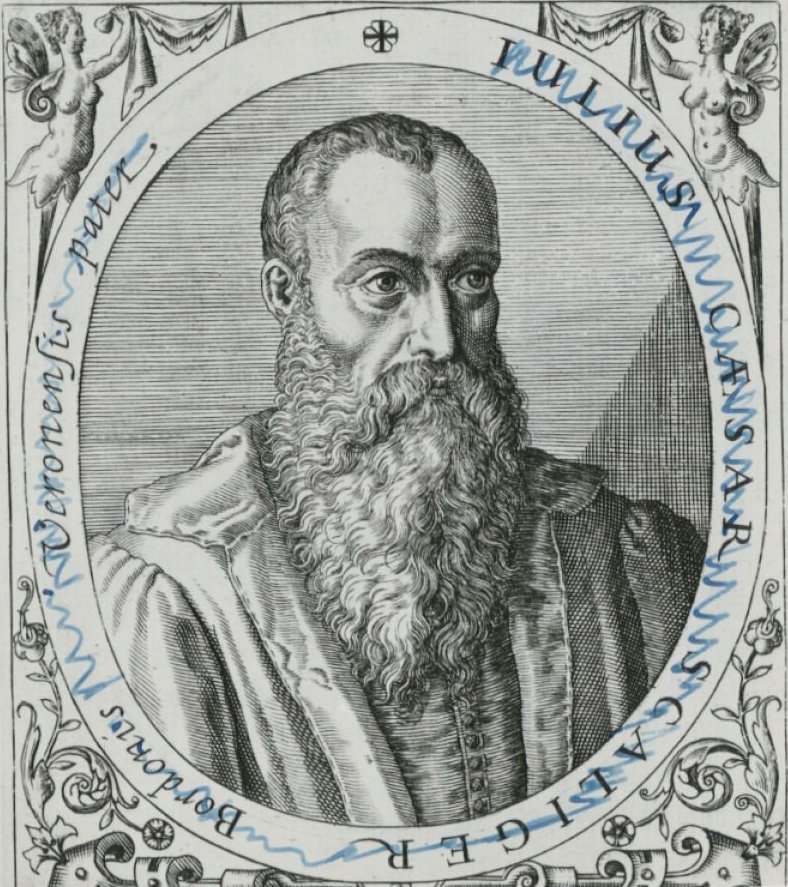
“Agen Tourist Office: Giulio Cesare Scaligero was born on 22 April 1484 in Riva on Lake Garda. He claimed descent from the Della Scala family, which ruled Verona in the 13th and 14th centuries, though this remains highly controversial. Little is known about his youth and training. He left Italy and, accompanying Leonard de La Rovere, bishop of Agen and nephew of Julius II, stayed first in Agen. He settled there permanently in 1525 as physician to Antoine de La Rovere, nephew and heir of the previous bishop, who had been appointed to the episcopal seat. He married young Audiete de La Roque Loubejac and, through this marriage, allied with the Secondat family. He served in turn as consul in 1532 and city jurat (1535-1536). He quickly established himself through vast erudition and sharp intelligence.
He began his humanist career in 1531 by writing two discourses (Oratio pro Cicerone contra Erasmus), a fierce controversy against Erasmus and those criticizing Cicero's style. He translated into Latin scientific works by Hippocrates, Aristotle and Theophrastus. In Agen he wrote several major works: De causis linguae latinae libri (1540), Latin grammar, and Poetices libri (1561), commentary on Aristotle's Poetics.
An eminent botanist, he attached great importance to plant-based medicine and shared knowledge with fellow citizen Nostradamus, whose knowledge in that field was more focused on aesthetics and bodily beauty. Scaliger also argued for abandoning plant classification based on properties in favor of classification based on distinctive characteristics.
Jules Cesar Scaliger died on 12 November 1558 and, according to his will, was buried in the chapel of the Augustinian convent (today Saint-Hilaire church). In May 1792, revolutionaries violated his tomb; his remains were collected by an Agen physician, Riviere, and preserved by his family until 1871. In 1951, the Academic Society of Agen transferred the relics to a mausoleum still located in the Gaillard cemetery.
His immense body of work had a major influence on formation in France of classical literary doctrine and tragedy rules, and Boileau drew inspiration from his poetic art.
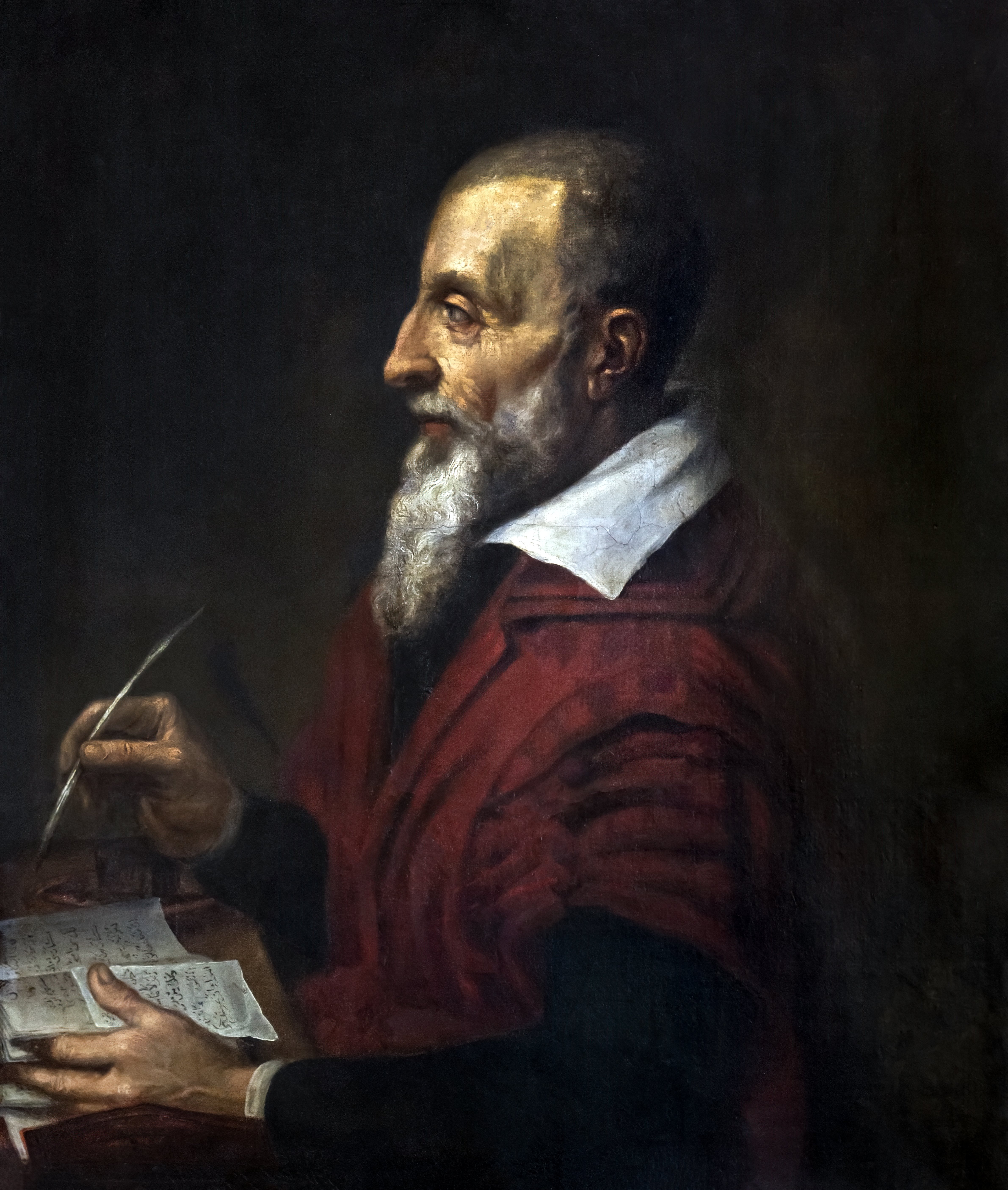
Then comes the man who interests us most: Joseph Justus Scaliger, born 5 August 1540.
He took some time to arrive in the world: he was tenth child of the Scaliger family and fifth son. Born in Agen.
At age 11, his father sent him with his brothers to study at the College of Guyenne in Bordeaux. For three years he studied Latin there. He then went to Paris, where he learned Greek, Hebrew and Arabic.
In 1563 he became tutor to Louis de Chasteigner de La Roche-Posay d'Albian, who remained his protector for over 30 years. He then traveled through Europe and converted to Protestantism.
After St. Bartholomew's Day, he took refuge in Geneva where he taught philosophy for two years (1572-1574).
Back in France, under protection of the d'Albian family, he edited and commented Latin and ancient authors (Catullus, Tibullus, Propertius) and among others Astronomica by Marcus Manilius.
In 1593 he was appointed professor of history at the University of Leiden in Holland. He taught there until his death on 21 January 1609.
Two of his works concern us here: De Emendatione temporum (1583), where he defines his notion of the Julian period, and Thesaurus temporum (1606), where he establishes chronology as a historical science.
Scaliger's Julian period
What was J.J. Scaliger's contribution to creation of Julian Day? Simple: he imagined the Julian Period.
He started from three cycles, two of which were used in Easter-date calculation in the Julian calendar.
-
The solar cycle of 28 years, representing in the Julian calendar the interval needed for a given date to return to the same weekday.
-
The golden number cycle of 19 years, corresponding to Meton's cycle. As a reminder: interval needed for moon phases to return to same dates in the solar year.
-
The Roman indiction cycle of 15 years. It has no astronomical meaning and owes existence to Emperor Diocletian. At its end, land tax was revised. Under Constantine, indiction became a chronological period designating both the 15-year cycle and rank of a year within it. It is not used in Easter-date calculation. Why did Scaliger include it? Most likely because it was widely used and served to date official Church documents.
Incidentally, these three cycles still appear in the French postal calendar.
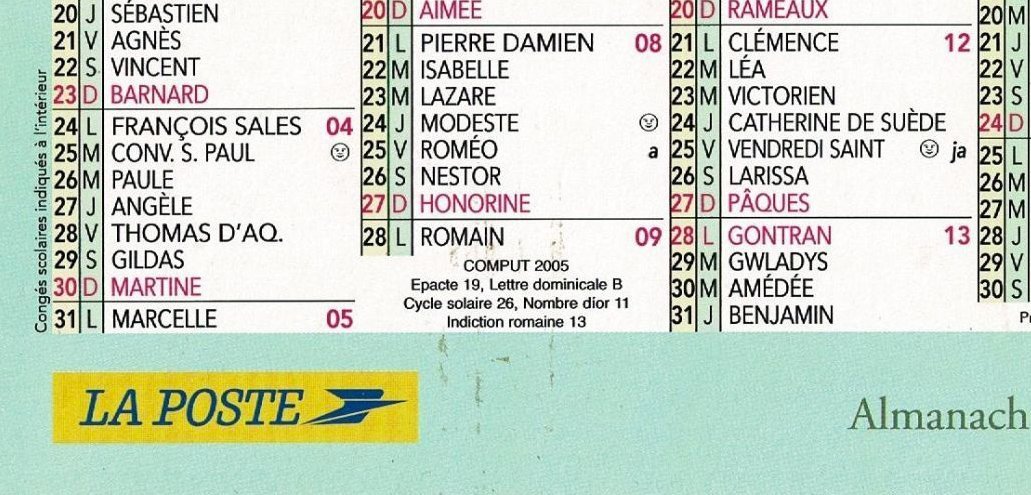
Solar cycle, Golden Number and Roman Indiction still appear in the French postal calendar.
So we have three numbers: 28 - 19 - 15. They are pairwise coprime. Their GCD is 1. Their LCM is 28 X 19 X 15 = 7980. Feel free to tell me if I am wrong: GCD/LCM math is a bit far back in memory.
So we have our Julian period: a period of 7980 years during which a year expressed in these three values appears only once. Example for 2003 (24, 9, 11): 24th year of solar cycle, Golden Number 9, 11th year of indiction.
Scaliger then only had to determine the Julian year corresponding to cycle origin (1,1,1) and to cycle end (28,19,15) to pin down his Julian period. Starting from year of Christ's birth (9,1,3), he determined that year (1,1,1) was 1 January 4713 BC, corresponding now to -4712.
What??? 4713 = 4712?? Yes. Before J. Cassini (1740), astronomers did not use algebraic year numbering and thus had no year zero. A small table illustrates this.
| Before Cassini | After Cassini |
|---|---|
| 5 BC | year -4 leap |
| 4 BC | year -3 |
| 3 BC | year -2 |
| 2 BC | year -1 |
| 1 BC | year 0 leap |
| AD 1 | year +1 |
| AD 2 | year +2 |
The Julian period ends on 01/01/3268 (Julian calendar), i.e. 23/01/3268 (Gregorian calendar).
One can verify boundary years in Excel or elsewhere, using:
- indiction = ((year + 2) MOD 15) + 1. Example for 2003: (2003 + 2) MOD 15 + 1 = 11
- golden number = (year MOD 19) + 1. Example for 2003: (2003 MOD 19) + 1 = 9
- solar cycle = ((year + 8) MOD 28) + 1. Example for 2003: (2003 + 8) MOD 28 + 1 = 24
You might say this is simple and no J.J. Scaliger was needed. I would answer that doing this manually, in Roman numerals, is another matter entirely. That is one reason why it took until the 16th century and solid mastery of decimal numeration to “invent” the Julian period.
That said, J.J. Scaliger does not seem to have been first to mention a 7980-year cycle. In 1176, Roger, bishop of Hereford, wrote in Compotos that “these three cycles ... do not return together before 7980 years.” However, he seems not to have given the period's start year.
According to R.L. Reese et al. (“New evidence concerning the origin of the Julian period”, American Journal of Physics, vol. 58), an earlier bishop of Hereford, Robert de Losinga, in 1086 had already combined the three cycles into a “great cycle [ciclum de magnum]” of 7980 years... Yet Robert de Losinga started it in AD 1086.
And finally, why did J.J. Scaliger call it the “Julian Period”?
Contrary to what is still sometimes written, it was not in honor of his father Julius, but by analogy with the Julian year, because a year of the Julian period has same length as a year of the Julian calendar (365.25 days), so the Julian period contains 7980 X 365.25 = 2,914,695 days.
In De Emendatione Temporum, Scaliger himself writes: “Julianam vocavimus quia ad annum Julianum accommodata...”, approximately translatable as “We called it Julian because it is aligned with the Julian year.”
2) Julian Day
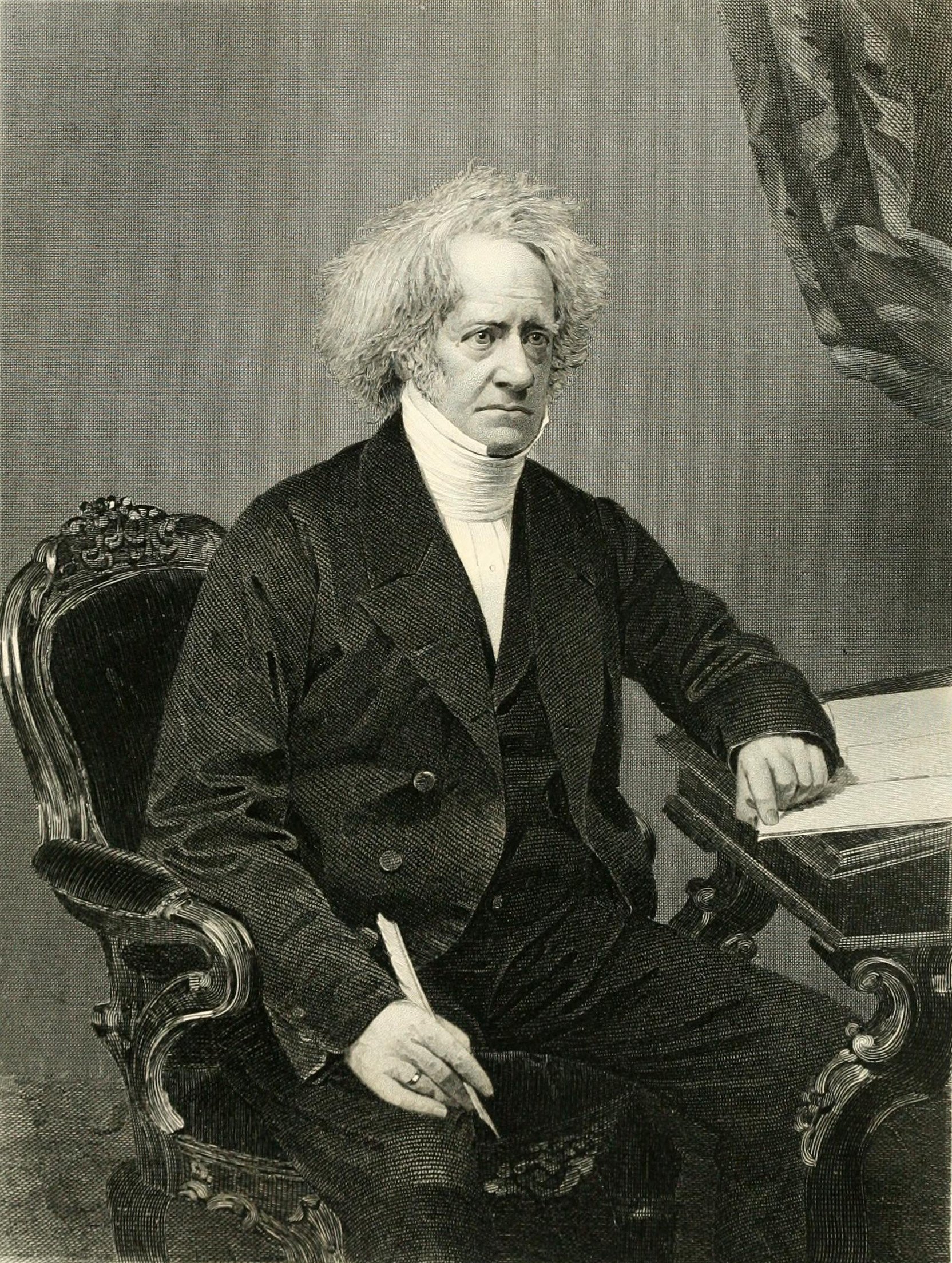
Creation of Julian Day as we know it today is attributed to English astronomer John Frederick William Herschel. He set it out in 1849 in a reference work among astronomers: Outlines of Astronomy.
John Frederick William Herschel (1792-1871), creator of Julian Day, was also not son of an unknown figure.
His father, Sir William Herschel (1738-1822), German-born and naturalized British on 30 April 1793, is regarded as founder of modern stellar astronomy. He discovered Uranus and two of its largest satellites.
Julian Day JD (or JJ in French) is elapsed time since 1 January (Julian calendar) -4712 at 12:00 UT.
Why 12:00 UT? Most likely to avoid astronomers changing “day” in middle of the night.
Julian Day is expressed in decimal days. Integer part is the day; decimal part is time, with 0.5 corresponding to midnight of that civil day.
Examples:

- 25 May 2003, 00:00 UT = 2452784.5
- 25 May 2003, 12:00 UT = 2452785
- 25 May 2003, 18:00 UT = 2452785.25
Remarks:
- Some use “Julian date” for the decimal number and reserve “Julian day” for integer part only. This naming, which creates confusion with Julian-calendar dates, should be avoided. Also, notion of date presupposes day/month/year in a calendar, which is not the case in Julian-period counting.
- What suits some (astronomers) does not necessarily suit others (people working with calendars in various ways): I mean the noon day-change convention.
So naturally a chronological variant appeared, with day beginning at midnight. First chronological Julian day would therefore be 01/01/-4712 at 00:00.
3) Modified Julian Day
Another variant appeared in 1976 (?) with blessing of the International Astronomical Union: Modified Julian Day (MJD). The operation took 17 November 1858, 00:00 UT as time origin.
Why? Let us skip the midnight-start point (more practical for many, except astronomers).
If we compute, all Julian days from 16/11/1858 to 31/08/2132 begin with 24. So if work can be limited to period 1858-2132, one can avoid large numbers by using MJD, which has only 5 digits.
Conversion JD -> MJD is simple: subtract 2,400,000.5.
In the end it is same principle as writing years 1900-1999 as 00-99. I will not remind what happened in the following year. See you in 2133.
Meanwhile, here is an extract from text of the 21st General Assembly of the International Union of Geodesy and Geophysics (13 July 1995), showing that MJD adoption has not been smooth:
"*... Resolution 3 The International Union of Geodesy and Geophysics notes:
- that Resolution C3 adopted by the International Astronomical Union at its 22nd General Assembly in The Hague (1994) recommends withdrawing Resolution No. 4 of its 15th General Assembly (1976), which had established the Modified Julian Day (MJD) system, and using Julian Days as sole time scale for archiving and exchange of time-dependent astronomical data, recognizing:*
1) that Julian Day is not defined as an internationally recognized time scale;
2) that Modified Julian Day is widely used in geodesy and geophysics, especially for slowly varying Earth-science parameters, and that any change will cause confusion and risk of error;
3) that Earth sciences require exchange of geodetic and geophysical data as well as astronomical data, requests of the International Astronomical Union
1) to reconsider its 1994 Resolution C3 concerning use of Julian Days and to maintain the Modified Julian Day scale in geodesy and geophysics where its use is standard.
2) to prepare a recommendation, jointly with the IAU and IUGG, for precise definition of a time scale including a convention for continuous day counting, suitable for archiving and exchange of time data used in analysis of both astronomical and geodetic/geophysical phenomena..."
4) Conversions
I will leave you to the Formulas page to find those allowing conversion from Julian Day to ... and back.