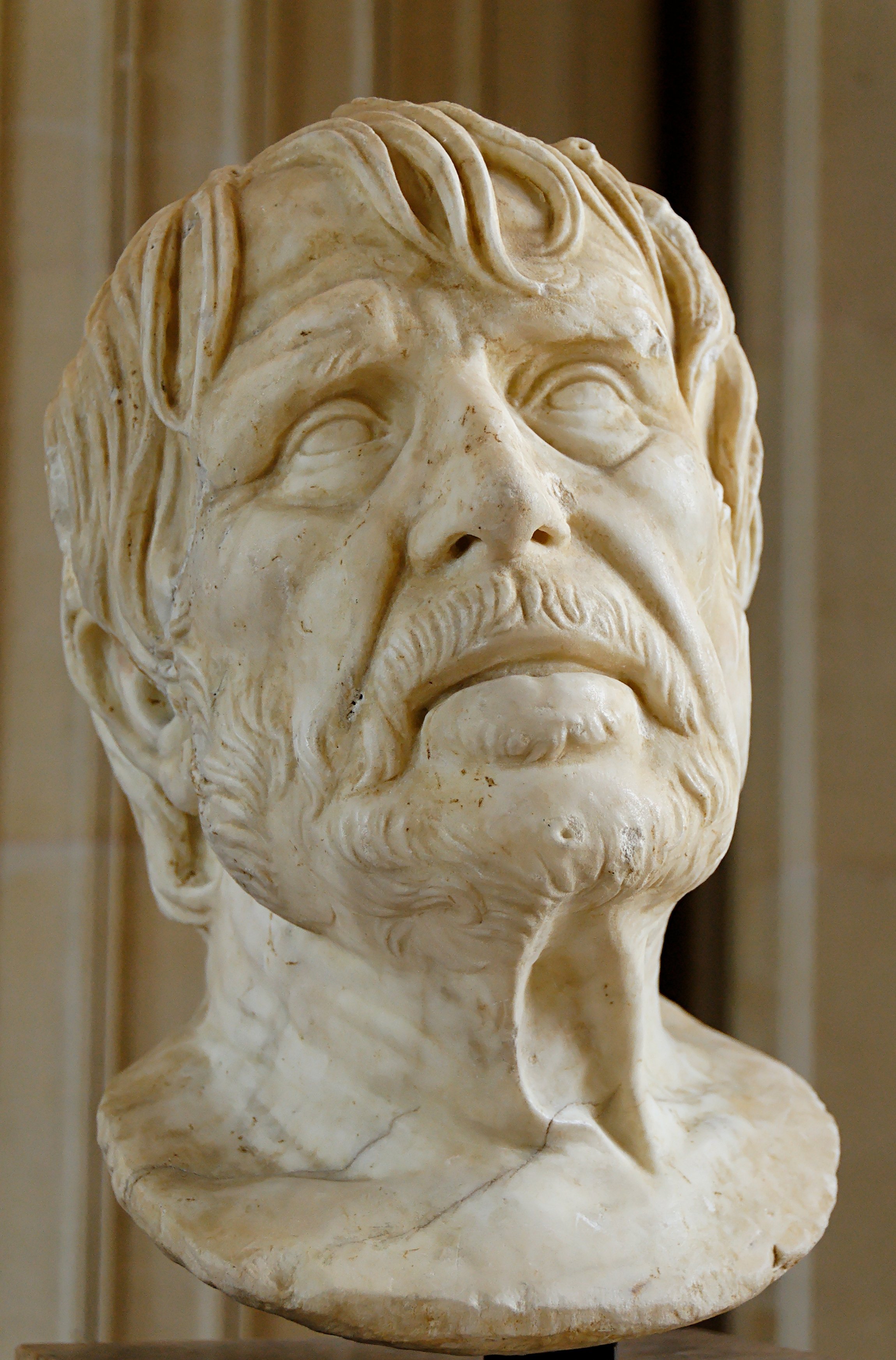
We are not going to say much about Hesiod, because nobody really knows much about him.
As proof, here is what Encarta says:
“Hesiod (8th-7th century BCE), a Greek poet who holds a particular place in Greek literature for his moral precepts and his praise of peace and labor. Hesiod's name is often associated with Homer's, his contemporary. The two poets stand in contrast: while Homer sings of warriors and heroes, Hesiod sings of peace and peasants.
Hesiod was born in Ascra, in Boeotia. After his father's death, he settled in Naupaktos, where he tended sheep and lived as a farmer. Beyond what his work reveals of his life, very little is known about Hesiod...
and what Imago Mundi says:
“Hesiod: famous Greek didactic poet, originally from Cyme in Aeolis, was born, or at least lived, in the village of Ascra in Boeotia, from which he is called Ascræus pœta. On Herodotus's authority, he is believed to have been Homer's contemporary and to have lived at the beginning of the 9th century BCE; the Alexandrians place him more than a century after Homer. In any case, nothing certain is known about his life.
We know little about his appearance. A bust known as “Pseudo-Seneca” is sometimes suspected to represent him, but without confirmation. What we do know is that he is the author of Works and Days and, perhaps, a Theogony.
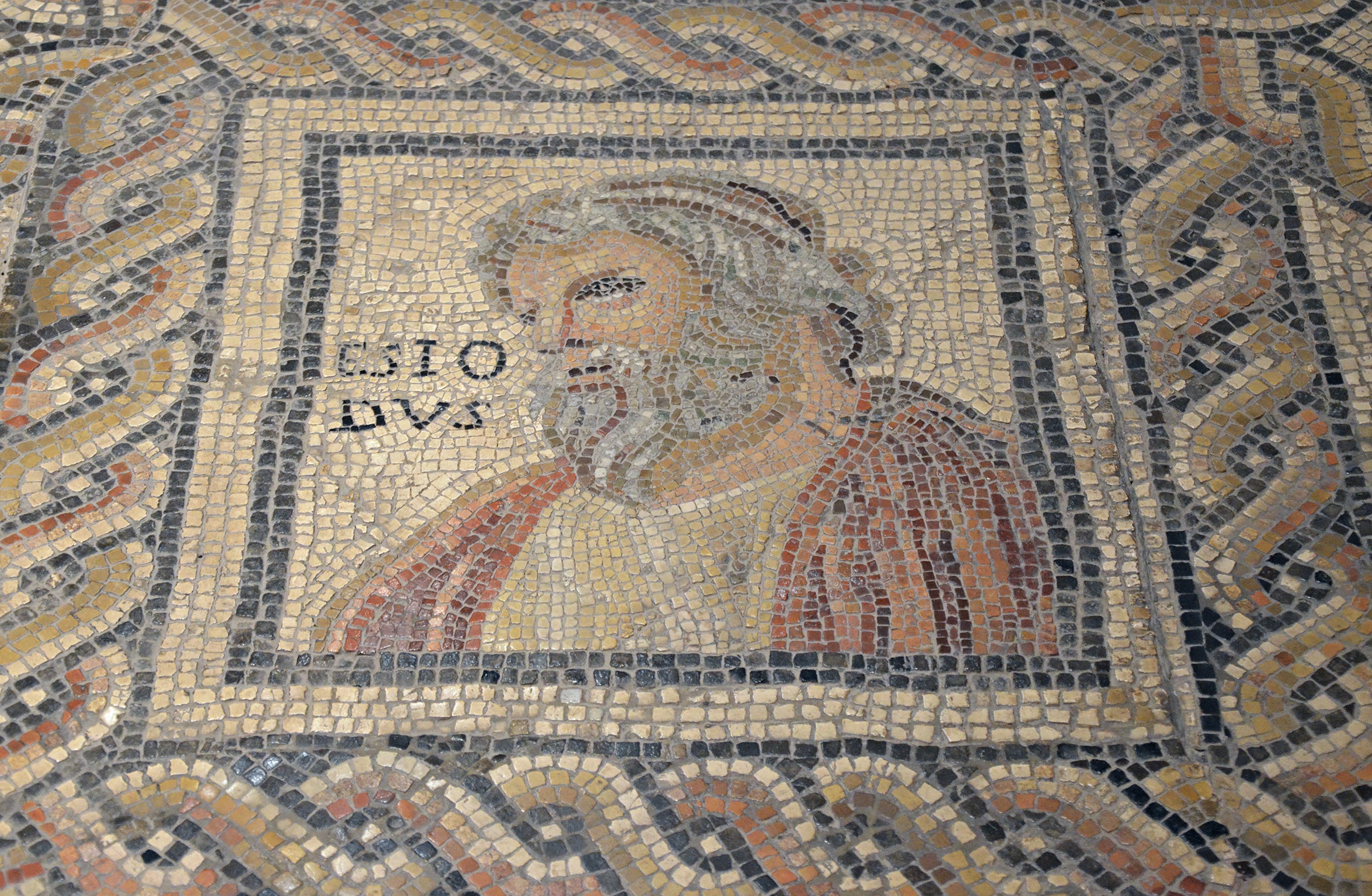
Works and Days
You can read the full text here.
We will focus mainly on the third and fourth parts of Hesiod's Works and Days, the sections that gave the poem its name. Since the poem was most likely written in the 7th century BCE, it gives us an idea of calendars used in that period, called the Orientalising or high archaic age by historians.
1) Works
If we had to define this part quickly, we would call it an “agricultural agenda” or, more precisely, a parapegma.
Why agenda rather than calendar? Because for us today, “calendar” implies a sequence of numbered years. But Works describes an endlessly repeatable cycle of tasks tied to events rather than a linear unfolding of time. Still, in what follows, we will keep saying “calendar” for simplicity.
Agriculture means seasons, and seasons imply a solar year. Strictly speaking, it would be more accurate here to say a stellar year.
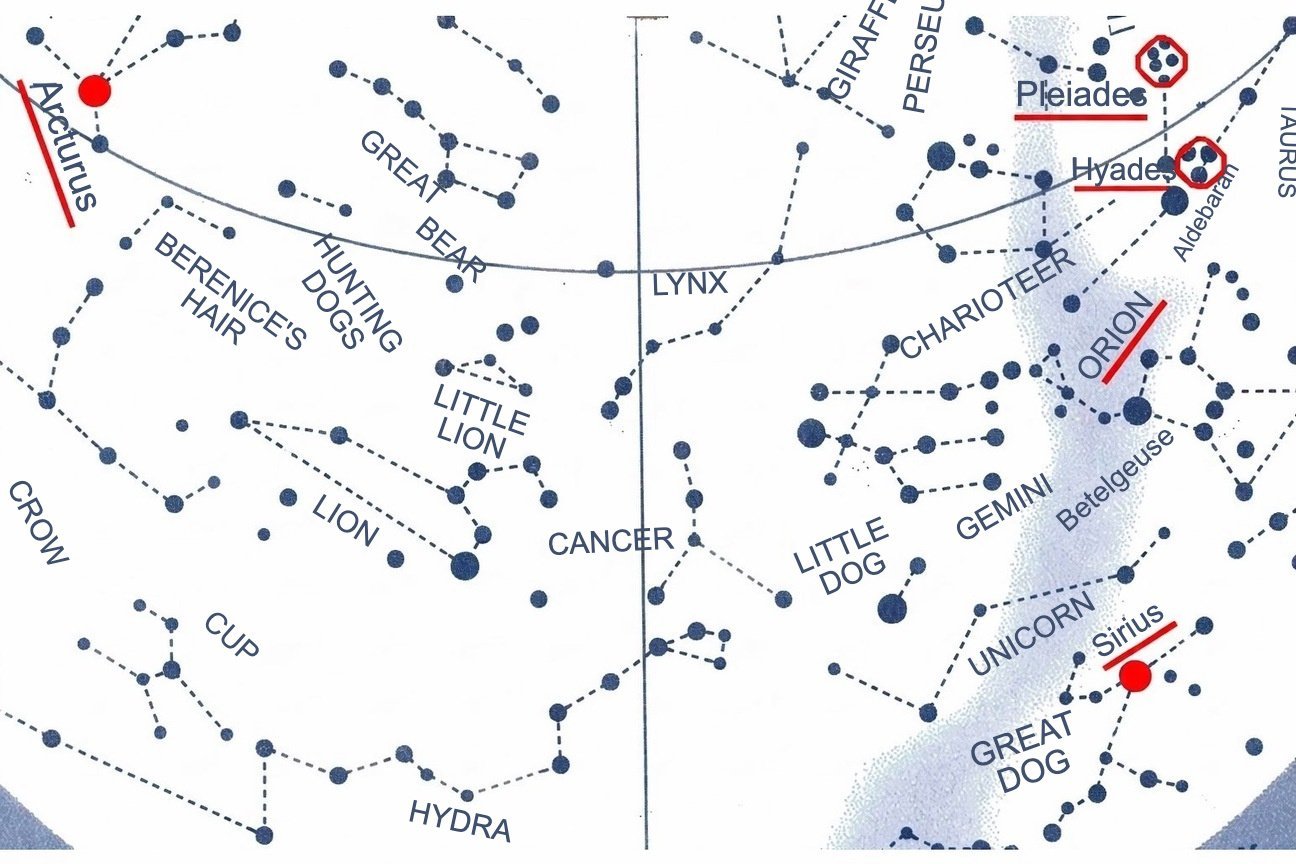
To set in time the start and end of activities as varied as grape harvesting, winnowing, cutting wood, hauling boats ashore, pruning vines, and many others, you need many precise time markers. The Sun alone provides too few of them. So Hesiod uses others to “mark out” his year. In order of importance:
- stars (5 stars, constellations or clusters are mentioned)
- animals (mainly birds) and plants
- the Sun (as a reference point)
Let's look at a summary table of those references.
Stars
| Star or constellation | Description |
|---|---|
| Pleiades (heliacal rising and setting) | (383-384) Begin harvest when the Pleiades, daughters of Atlas, rise in the sky, and ploughing when they set; they remain hidden for forty days and forty nights, and appear again once the year has turned, when iron is sharpened. |
| Sirius | (416) ...the star Sirius rolls for less time by day above the heads of unfortunate mortals and lengthens its night course... |
| Arcturus | (565) ...the star Arcturus, leaving the sacred streams of Ocean, rises first and shines at nightfall. |
| Orion (heliacal rising) | (599) As soon as mighty Orion begins to appear... |
| Orion, Sirius (at the meridian) Arcturus (heliacal rising) | (609) ...When Orion and Sirius have reached mid-sky, and rosy-fingered Dawn looks upon Arcturus, |
| Pleiades, Hyades, Orion (heliacal setting) | (615) When the Pleiades, the Hyades and mighty Orion have set... |
| Pleiades, Orion (heliacal setting) | (618) Beware the season when the Pleiades, fleeing mighty Orion, plunge into the dark Ocean... |
We can see that named stars (in the broad sense) are mostly mentioned at their heliacal rising or setting. See the astronomy page for more on these phenomena.
We can also note that Hesiod once attributes to stars a property usually attributed to the Sun: warming (588): Sirius weighs down their heads and knees, and dries all their bodies with its burning fire.
Animals and plants
| Animal | Description |
|---|---|
| Crane | (448) Each year, watch for the time when you hear the crane's cries ring out from the clouds above. |
| Cuckoo | (487) As soon as the cuckoo sings in the oak leaves... |
| Swallows | (568) Soon after, Pandion's daughter, the plaintive swallow, appears again in the morning before men's eyes... |
| Snails | (572) ...the snail, fleeing the Pleiades, climbs from the ground onto the plants... |
| Thistle | (583) When the thistle flowers, when the clear-voiced cicada, perched atop a tree, lets out its song while shaking its wings... |
| Fig tree | (678) when one sees first leaves budding on the top of the fig tree, still barely noticeable... |
Of course, we did not include flowering or germination that would simply be consequences of agricultural work itself.
A parallel can be drawn between heliacal rising of stars and bird migration or plant flowering. These are all events that can be marked precisely.
We should also mention that Hesiod describes various weather phenomena. But they are more seasonal consequences than precise time markers. For instance:
“506: mighty Boreas stirs with his breath the waves of the wide sea, tightens earth and woods, and unleashed on this fertile land uproots in mountain gorges tall oaks and huge firs, making vast forests roar in the distance.
or:
“417: When the sun no longer casts rays of burning heat, when in autumn the rains of great Zeus make the human body more supple and lighter...
The Sun
| Solstice | Description |
|---|---|
| Winter solstice | (479) If you plough fertile land only at winter solstice... |
| Winter solstice | (565) When, sixty days after the turning of the sun, Zeus has completed winter's course, the star Arcturus, leaving the sacred streams of Ocean... |
| Summer solstice | (663) Fifty days after the turning of the sun, when hard-working summer reaches its end, this is the favorable season for navigation. |
One cannot fail to notice that only solstices are mentioned. Equinoxes are absent.
Also, aside from late ploughing at winter solstice, solstices are not used as direct calendar markers, but as counting starting points: 60 days from the winter solstice, 50 days from the summer solstice.
Hesiod's seasons are not our astronomical seasons fixed by solstices and equinoxes. Their beginnings lie between those points and correspond to notable risings and settings of stars.
The seasons in Hesiod's calendar are all identifiable either by their start or by their end:
Spring: late February to early March. (565) "When Zeus, after the solstices, has completed sixty winter days, the constellation Arcturus, leaving the sacred current of Ocean, begins to appear, shining, at nightfall. Soon after, Pandion's sharp-voiced daughter, the swallow, rises toward the light, and for men the new spring begins."
Summer: more uncertain, and may be placed around mid-May at the heliacal rising of the Pleiades. In any case, one is in summer by the heliacal rising of Sirius. (565) "When the thistle flowers, when the clear-voiced cicada, perched atop a tree, lets out its soft song while shaking its wings, in hard-working summer, goats are fattest, wines are best, women most lustful and men weakest, because Sirius weighs down their heads and knees and dries all their bodies with its burning heat."
Autumn: logically the end of summer around mid-August. (663) "Fifty days after the turning of the sun, when hard-working summer reaches its end, this is the favorable season for navigation."
Winter: morning setting of the Pleiades at the end of October. (384) "Begin harvest when the Pleiades, daughters of Atlas, rise in the sky, and ploughing when they set; they remain hidden forty days and forty nights, and reappear when the year has turned."
We find this same approach, linking star influence and seasons, in later authors. In Natural History, Book 2, Pliny writes:
“(XXXIX) [1] It is clear that among the causes of seasons and phenomena some are fixed, others accidental, or at least governed by laws still unknown. Who can doubt that summers, winters, and all periodic alternations are determined by the motion of the stars? Just as the sun's influence appears in the changes of the year, each of the other stars has its specific force and accordingly produces specific effects. Some bring moistures poured as rain, others moistures hardened as frost, compacted as snow, frozen as hail; others bring winds, mild heat, burning heat, dew, cold. Their greatness must not be judged by apparent size; considering their immense height, clearly none is smaller than the moon.
We can now draw up a table of activities by season, using the seasons we defined and the celestial and natural markers.
| Months | October | November | December | January | |
|---|---|---|---|---|---|
| Season | Late autumn - early winter | Winter | Winter | Winter | |
| Sky | Stars | Pleiades (384) Pleiades-Hyades-Orion (615) Pleiades-Orion | |||
| Sun | Winter solstice (479) | ||||
| Nature | Birds Plants | Crane migration (448) | |||
| Weather | Autumn rains (417) | Winter rains (440) | Boreas wind, snow (535) | ||
| Man | Agriculture | Begin ploughing and planting (384 315) | Final ploughing (479) | Keep oxen in the stable (462) | |
| Navigation | Do not sail (618) | Haul the boat ashore (624) | |||
| Misc. | Agricultural cycle. Start and end of new-wine season | Leneon (493) Keep busy (504) | Make clothing (563) | ||
| Months | February | March | April | May | |
| Season | late winter - early spring | spring | spring | Late spring - early summer | |
| Sky | Stars | Arcturus (566) | Pleiades disappear for 40 days (383) | Heliacal rising of the Pleiades (383-571) | |
| Sun | Winter solstice + 60 days (565) | ||||
| Nature | Birds Plants | Arrival of swallows (568) | Cuckoo sings (487) | Fig trees bud (581) | |
| Weather | 3 days of rain (486) | ||||
| Man | Agriculture | Leave fallow (462) Prune vines (571-572) | Harvest (383_573) | Winnow, store safely (598-600) | |
| Navigation | Spring navigation (680) | ||||
| Misc. | |||||
| Months | June | July | August | September | |
| Season | Summer | Late summer - early autumn | Autumn | ||
| Sky | Stars | Orion rises (383-571) | Heliacal rising of Sirius (585) | Arcturus rises when Orion and Sirius are at the meridian (609-414) | + 15 days |
| Sun | Summer solstice + 50 days (663) | ||||
| Nature | Birds Plants | Thistles in bloom (581) | |||
| Weather | Zephyros (594) | ||||
| Man | Agriculture | Sit in the shade (587) | Bring in fodder (606) | Grape harvest (610) | Press grape clusters (613) Cut wood (419) |
| Navigation | Summer navigation (663) | ||||
| Misc. | |||||
Before finishing this section on works, we need to examine one word from the text that matters a lot from a calendrical perspective: Leneon, found here:
“493: Fear the month of Leneon, its harsh days all fatal to oxen, and the dangerous frost that covers the countryside when mighty Boreas, coming from horse-rearing Thrace, stirs with his breath the waves of the vast sea, tightens earth and woods, and unleashed on this fertile land uproots in mountain gorges tall oaks and huge firs, making vast forests roar in the distance.
This word is interesting for two reasons:
- First, it is the name of a month in the Greek “civil” calendar, which was lunar. The fact that Hesiod places this month at a fixed period of his agricultural calendar supports the idea that Greeks regularly inserted an intercalary month into their lunar calendar to keep it aligned with the tropical year.
- Second, it raises a question for which we have no clear answer. From what little is known, Hesiod came from Boeotia.
Yet Leneon, equivalent to Gamelion in Athenian month names, was a month name used in Miletus (Ionia) and on Delos, not in Boeotia, where the corresponding month seems to have been called Hermaios, according to E. J. Bickerman in Chronology of the Ancient World.
So? Either our knowledge of month names across Greek city-states is still incomplete, or Hesiod did not originally write this month name and it was a later addition, or he had his own reasons for using it. Everyone can make up their own mind.
2) Days
The text on days is short enough to reproduce here, in Claude Terreaux's translation.
“Be attentive to the days wisely distributed by Zeus: tell your servants that the thirtieth day of the month is the best for inspecting work and allocating provisions, provided one identifies it correctly.
Here are the days as given by wise and crafty Zeus. First of all, the first, the fourth and the seventh, the day when Leto gave birth to Apollo of the golden sword, are sacred days. So too are the eighth and the ninth; these two days, while the month is in its ascending phase, are particularly suited to mortal labor. Sacred also are the eleventh and twelfth, both good, moreover, for shearing sheep and for the joyful harvest of earth's fruits. But the twelfth is more favorable than the eleventh: on that day, at midday, the spider hanging in the air spins its web, while the prudent woman gathers her store; on that day too a woman should set up her loom and begin work. Avoid beginning sowing on the thirteenth day of the month's beginning. Yet it is a very good day for planting. The sixth day in the middle of the month is in no way favorable to plants. It is good neither for the birth of a boy, nor for the birth or marriage of girls. The sixth day at the beginning of the month is not suitable for the birth of girls; but it is favorable for castrating kids and rams, and for building the sheepfold; it is also a good day for a boy to be born, one who will enjoy mockery and lies, cunning speech and secret talk. On the eighth day of the month, castrate pig and bellowing bull; on the twelfth, the sturdy mule. On the twentieth day, an important date, a man born at midday is wise and thoughtful. The tenth day of the month is good for the birth of a boy; the fourth of the middle third for a girl. On that day, by laying hand on them, tame sheep, horned cattle that tread in circles, sharp-toothed dog, and sturdy mule. On the fourth day at the beginning or middle of the month, do not let worries consume your heart: it is a day reserved for divine mysteries. On the fourth day of the month, bring a wife home after consulting the proper birds. Beware fifth days: they are harsh and fearsome. On a fifth day, it is said, the Erinyes assisted at the birth of Oath (Orkos), whom Eris (Strife) brought forth as a scourge for perjurers. On the seventh day of the middle third, be on your guard. Throw Demeter's sacred grain on a very smooth threshing floor. Let the woodcutter cut planks for the wedding bed and plenty of timber for shipbuilding. On the fourth day, begin to build light boats. The ninth day of the middle third is favorable in the evening; the ninth day from the beginning is free from all evil for men; it favors planting and the birth of both boy and girl. It is never an unlucky day. Few know that the twenty-ninth day is excellent for opening a jar, putting the yoke on oxen, mules and swift-footed horses, and launching a broad, fast ship onto the wine-dark sea. Few also call it by its true name. On the fourth day, open a jar; the fourteenth day is the most sacred of all. Few know that the twenty-fourth day, at dawn, is the best of the month, though less good in the evening.
Such are the days of great profit for earth's inhabitants. The others are neither good nor bad, they bring nothing. One praises one day, another a different day, but few truly know: a day that is stepmother to one man is mother to another.
Notes and comments
After “works”, where we dealt with a purely solar (or stellar?) calendar, we find in “days” a lunar month. One clue is expressions like the month is in its ascending phase, which should be read as the moon is waxing.
As this is a “model” month, it has thirty days, whereas the Greek calendar alternated hollow and full months of 29 and 30 days.
In his translation, Claude Terreaux notes that the last day of the month was always called the thirtieth. Hence confusion between the “real” thirtieth and the “false” one. That gives us two Hesiod comments: one about the real thirtieth (provided one identifies it correctly) and one about the false one (few also call it by its true name).
Alongside counting from the noumenia, we find two other ways of counting days in this text:
- Straight counting, familiar to us: first to last.
- Counting by decades (more often used by Hesiod): beginning, middle and end. Note that reverse Greek counting in the final decade (last to first) is not used by Hesiod.
One can also notice some disorder in the sequence of days discussed, even if sometimes one rank is treated across all three decades, as with day four: On the fourth day, open a jar; the fourteenth day is the most sacred of all. Few know that the twenty-fourth day, at dawn, is the best of the month, though less good in the evening.
What does Hesiod discuss in this section?
- Whether the day is sacred or not from a religious point of view.
- Days favorable or unfavorable for agriculture and navigation.
- Auspicious or inauspicious days for conception or birth.
A small remark in passing about the line Beware fifth days: they are harsh and fearsome. Why fifth days in the plural and not the fifth day? Is Hesiod referring to the fifth day of each decade, which would mean three such days per month?
To conclude this study, let us draw up Hesiod's month table.
| Rank | Type | Good for | Bad for | Moon phase |
|---|---|---|---|---|
| 1 | sacred | Noumenia | ||
| 2 | Waxing | |||
| 3 | ||||
| 4 | sacred | bring a wife home start building a light boat open a wine jar | ||
| 5 | inauspicious | harsh and fearsome day | ||
| 6 | castrate kids and rams build a sheep enclosure birth of boys | birth of girls | ||
| 7 | sacred | |||
| 8 | sacred | work of mortals castrate pigs and bulls | ||
| 9 | harmless sacred | work of mortals birth of boys and girls planting | ||
| 10 | birth of boys | |||
| 11 | sacred | shearing sheep harvesting fruits of the earth | ||
| 12 | sacred | shearing sheep harvesting fruits of the earth women weave castrate mules | ||
| 13 | plant | sow | full | |
| 14 | especially sacred | birth of girls tame sheep, oxen, dogs, mules | Waning | |
| 15 | ||||
| 16 | conceive boys | planting birth and marriage of girls | ||
| 17 | throw Demeter's sacred grain cut boards for the bed cut wood for shipbuilding | |||
| 18 | ||||
| 19 | ||||
| 20 | conceive a wise man | |||
| 21 | ||||
| 22 | ||||
| 23 | ||||
| 24 | ||||
| 25 | ||||
| 26 | ||||
| 27 | ||||
| 28 | ||||
| 29 | open a wine jar yoke oxen, mules, horses launch a ship | new | ||
| 30 | inspect work distribute provisions |