A Brief History
What is sometimes, wrongly, called the Maya empire belongs to this “Middle America” referred to as Mesoamerica (or Meso-America) by ethno-historian Paul Kirchhoff. Mesoamerica is defined by shared cultural traits spread across a vast territory. That territory roughly corresponds to central and southern Mexico and a large part of Central America, down to southern Costa Rica. A revised interpretation has since included Panama, a northern strip (up to the United States border), and various Caribbean elements of the “American Mediterranean”, islands and coastlines from Florida to the Guianas. (Source: Encyclopædia Universalis).
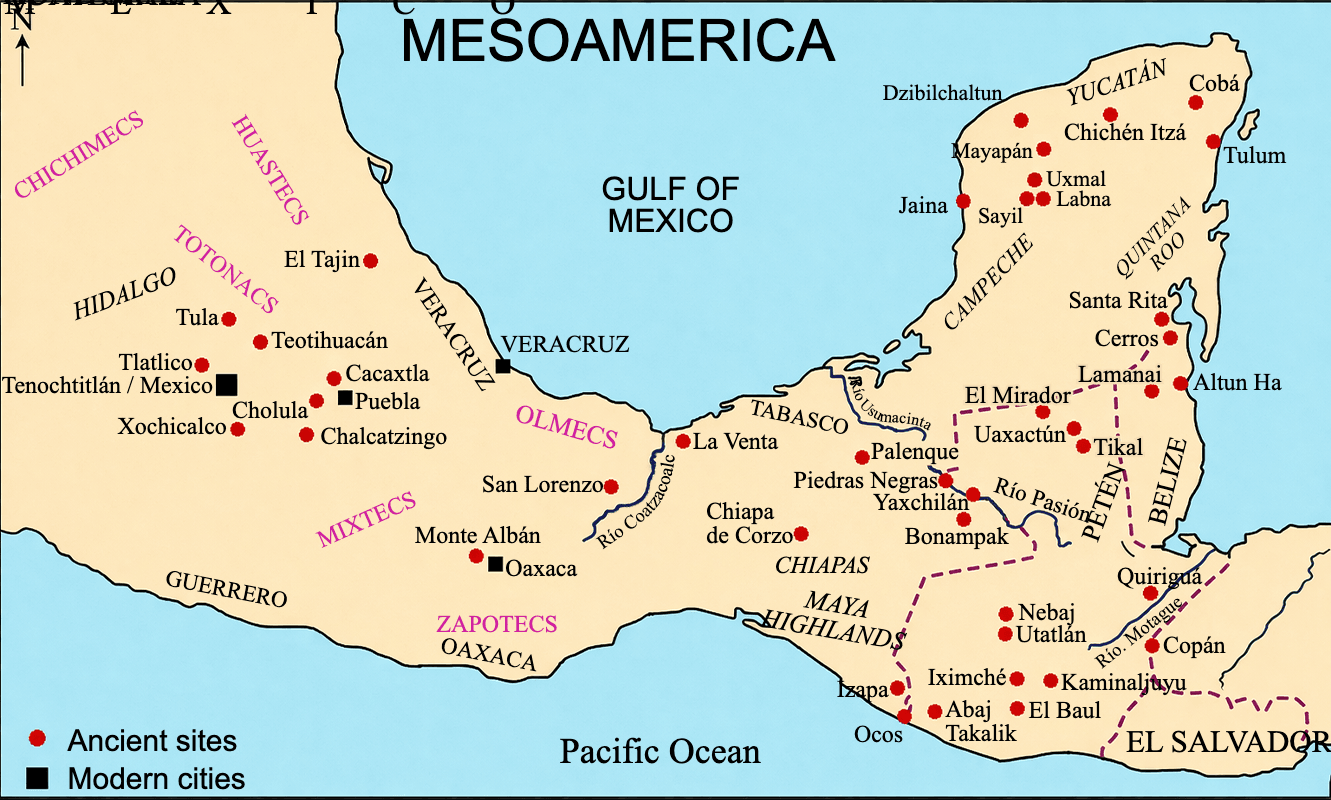
The civilizations that occupied this part of the world were as follows:
- Olmecs (-1200 to -400): the parent civilization that occupied the shores of the Gulf of Campeche.
- Zapotecs (-800 to -500): successors to the Olmecs.
- Teotihuacan (300 to 750): civilization living in the city of the same name.
- Toltecs (1000 to 1150): came from the North.
- Chichimecs: group of semi-civilized northern tribes whose lands were later taken by the Aztecs.
- Tarascans: tribe that resisted the Aztec invasion led by Axayacatl. Tlaxcalans: tribe that allied with the Spanish against the Aztecs.
- Totonacs: another tribe that allied with the Spanish.
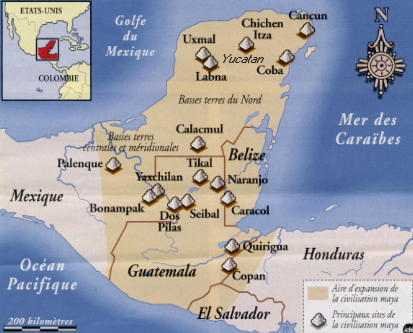
The Maya region corresponds to the Yucatán Peninsula, Guatemala, Belize, and part of present-day El Salvador and Honduras. Maya civilization appeared as early as -1600. They are thought to have descended from the Olmecs, yet they were still contemporaries and traded with them. Their peak stretched from 250 to 700. Unlike almost all other pre-Columbian civilizations, they developed a writing system. Once deciphered, this very complex system made it possible to better understand Maya dynasties and major historical periods.
The Toltecs, coming from the North, settled north of present-day Mexico City. Under the dominance of Tezcatlipoca, the Toltec empire dominated all of central Mexico and influenced the Maya.
The Aztecs settled in southern present-day Mexico around 1200 AD. In 1345, they founded the city of Mexico. They also had a writing system.
Astronomy and Mathematics
In astronomy, the Maya had a very precise understanding of the movement of the Sun, Earth, and other planets. They estimated the solar year at 365.242000 days, a figure very close to the tropical year. They achieved similar precision for a lunation, estimating the average lunation at 29.53086 days.
Let us briefly look at how the Maya counted, which helps us better understand their calendar. Like other pre-Columbian peoples of Central America, the Maya used a vigesimal numbering system, base 20 rather than base 10: twenties and powers of twenty. The reason is said to be that they counted on their ten fingers... then on their ten toes. At least, that is the common explanation. Up to and including 10, numbers had their own names; from 12 to 19, 10 served as the base (10 = lahun; 13 = ox-lahun (3+10); 14 = can-lahun (4+10), etc.). The number 11 is an exception to avoid confusion with “one ten”. For the specifics of this vigesimal system, see the note at the bottom of the page after reading the full page for context.
Also note that the Maya had invented zero, whereas the West had to wait until the Middle Ages to “inherit” it from the Arabs, who themselves had received it from Indian scholars.
Calendar(s)
The Maya actually used two calendars:
- The first is the Tzolkin calendar (divinatory cycle), mainly for religious use. It is also called the “sacred almanac”, “magic calendar” or “ritual calendar”.
- The second is the Haab calendar for agricultural use. It is also called the “secular calendar”, “civil calendar” or “vague year calendar”.
To make this study complete, we should also add:
- The sacred 52-year cycle called the Calendar Round (calendar count), combining the two previous calendars.
- The long cycle or Long Count, which, somewhat like the Julian system, made it possible to count days linearly from a “zero date”. These days could be counted up to... 23 billion years.
1) The Tzolkin Calendar
The Maya religious year consisted of thirteen periods of twenty days, for a total of 260 days.
The 20 days were associated with 20 different glyphs and linked to deities, animals, or sacred objects.
These 20 base days were cyclically assigned a numeral sign.
| Days | Numeral signs | ||
|---|---|---|---|
| Glyph | Day | Association | |
 | IMIX | Crocodile |  |
 | IK | Wind |  |
 | AKBAL | House |  |
 | KAN | Lizard |  |
 | CHICCHAN | Serpent |  |
 | CIMI | Death |  |
 | MANIK | Deer |  |
 | LAMAT | Rabbit |  |
 | MULUC | Water |  |
 | OC | Dog |  |
 | CHUEN | Monkey |  |
 | EB | Grass |  |
 | BEN | Reed |  |
 | IX | Jaguar | |
 | MEN | Eagle | |
 | CIB | Vulture | |
 | CABAN | Movement | |
 | EZNAB | Flint knife | |
 | CAUAC | Rain | |
 | AHAU | Flower | |
How were days and numbers associated? By listing the calendar days in sequence and assigning each one a new number. When number 13 was reached, numbering started again at 1. After 260 days, the cycle was complete.
The easiest way to visualize this sequence is to imagine two meshing gears turning:
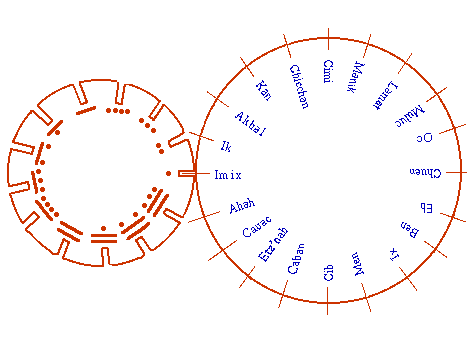
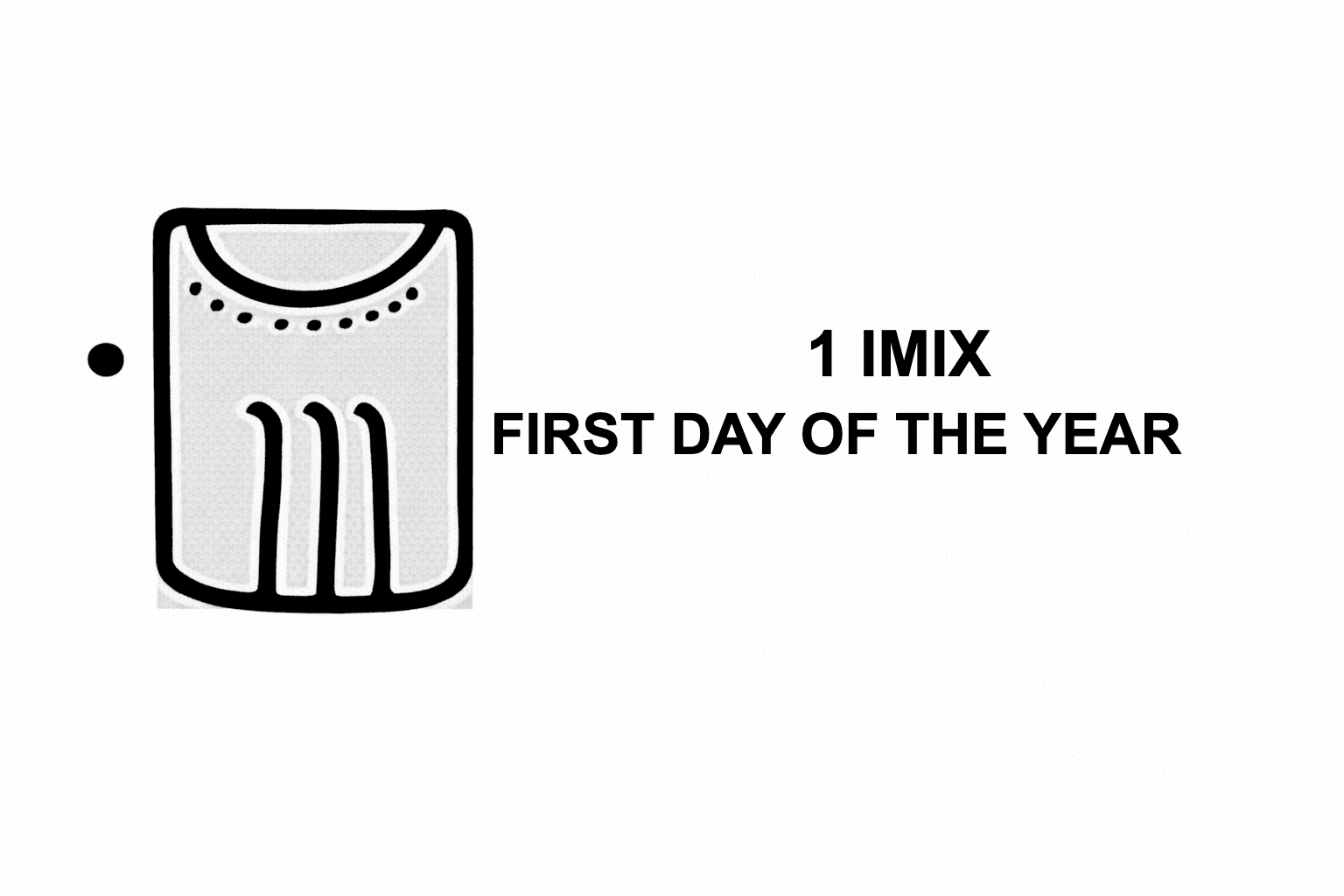
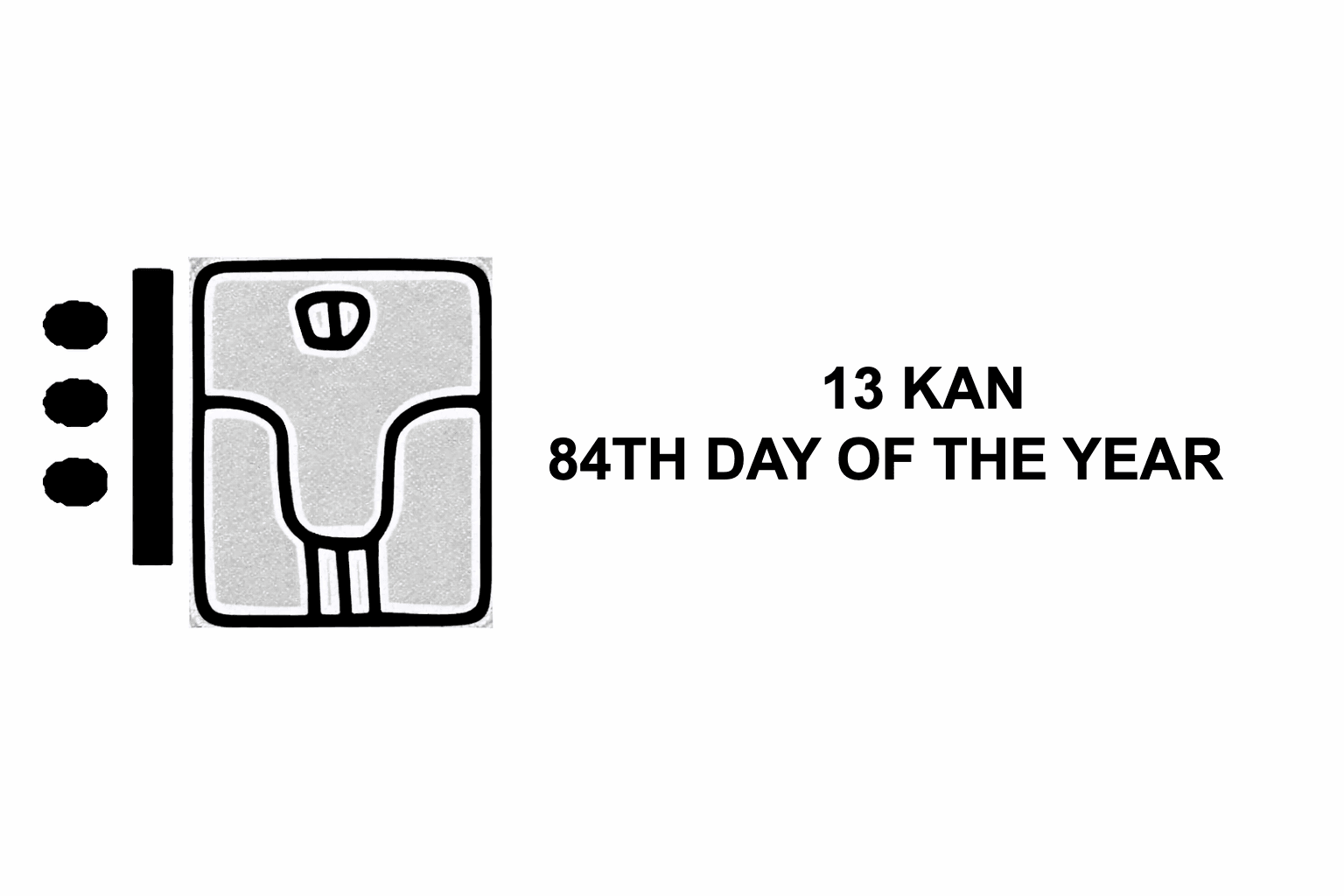
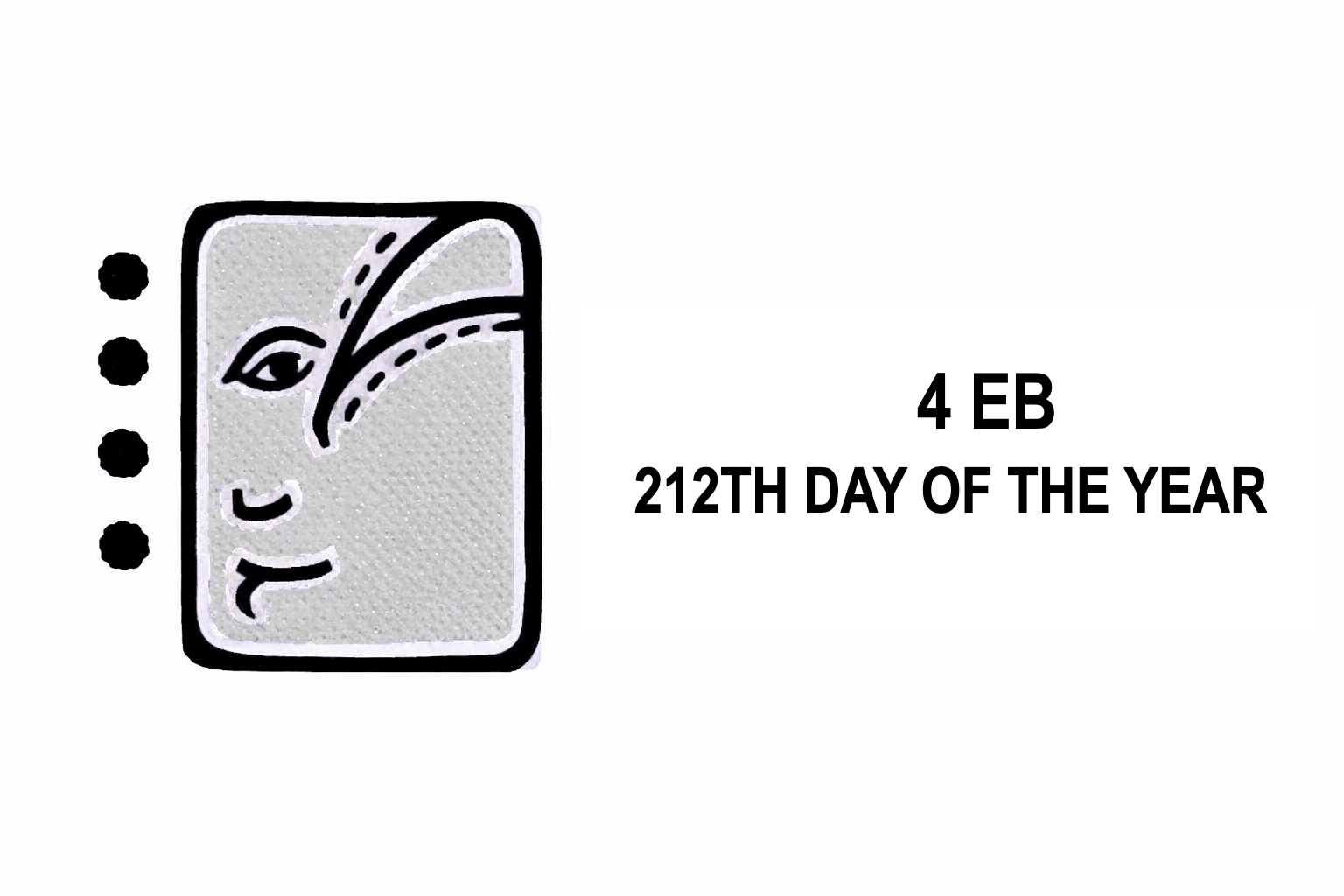
Examples of day “numbering”
The table below is read by crossing rows and columns. The number shown in blue indicates the recurrence period of the days. The number found at the intersection is the one associated with the day name (1 Imix; 2 Ik; 3 Akbal... 8 Imix; 9 Ik...). Thus, Kan can only be associated with numbers 4, 11, 5, 12, 6, 13, 7, 1, 8, 2, 9, 3, 10.
Incidentally, while the choice of 20 days is easy to understand in a base-20 system, the use of base 13 for periods remains a mystery.
| 1 | 2 | 3 | 4 | 5 | 6 | 7 | 8 | 9 | 10 | 11 | 12 | 13 | |
|---|---|---|---|---|---|---|---|---|---|---|---|---|---|
| IMIX | 1 | 8 | 2 | 9 | 3 | 10 | 4 | 11 | 5 | 12 | 6 | 13 | 7 |
| IK | 2 | 9 | 3 | 10 | 4 | 11 | 5 | 12 | 6 | 13 | 7 | 1 | 8 |
| AKBAL | 3 | 10 | 4 | 11 | 5 | 12 | 6 | 13 | 7 | 1 | 8 | 2 | 9 |
| KAN | 4 | 11 | 5 | 12 | 6 | 13 | 7 | 1 | 8 | 2 | 9 | 3 | 10 |
| CHICCHAN | 5 | 12 | 6 | 13 | 7 | 1 | 8 | 2 | 9 | 3 | 10 | 4 | 11 |
| CIMI | 6 | 13 | 7 | 1 | 8 | 2 | 9 | 3 | 10 | 4 | 11 | 5 | 12 |
| MANIK | 7 | 1 | 8 | 2 | 9 | 3 | 10 | 4 | 11 | 5 | 12 | 6 | 13 |
| LAMAT | 8 | 2 | 9 | 3 | 10 | 4 | 11 | 5 | 12 | 6 | 13 | 7 | 1 |
| MULUC | 9 | 3 | 10 | 4 | 11 | 5 | 12 | 6 | 13 | 7 | 1 | 8 | 2 |
| OC | 10 | 4 | 11 | 5 | 12 | 6 | 13 | 7 | 1 | 8 | 2 | 9 | 3 |
| CHUEN | 11 | 5 | 12 | 6 | 13 | 7 | 1 | 8 | 2 | 9 | 3 | 10 | 4 |
| EB | 12 | 6 | 13 | 7 | 1 | 8 | 2 | 9 | 3 | 10 | 4 | 11 | 5 |
| BEN | 13 | 7 | 1 | 8 | 2 | 9 | 3 | 10 | 4 | 11 | 5 | 12 | 6 |
| IX | 1 | 8 | 2 | 9 | 3 | 10 | 4 | 11 | 5 | 12 | 6 | 13 | 7 |
| MEN | 2 | 9 | 3 | 10 | 4 | 11 | 5 | 12 | 6 | 13 | 7 | 1 | 8 |
| CIB | 3 | 10 | 4 | 11 | 5 | 12 | 6 | 13 | 7 | 1 | 8 | 2 | 9 |
| CABAN | 4 | 11 | 5 | 12 | 6 | 13 | 7 | 1 | 8 | 2 | 9 | 3 | 10 |
| EZNAB | 5 | 12 | 6 | 13 | 7 | 1 | 8 | 2 | 9 | 3 | 10 | 4 | 11 |
| CAUAC | 6 | 12 | 7 | 1 | 8 | 2 | 9 | 3 | 10 | 4 | 11 | 5 | 12 |
| AHAU | 7 | 1 | 8 | 2 | 9 | 3 | 10 | 4 | 11 | 5 | 12 | 6 | 13 |
The 260 days of the Maya Tzolkin calendar
Note that the 13 numbers were associated with the Oxlahuntiku, thirteen Maya deities of the upper world. They therefore had their own ritual value.
2) The Haab Calendar
In this solar-type “civil” calendar, the year had 365 days, distributed across 18 months (uinal) of 20 days each, plus a complementary five-day period at year-end. The 18 months were dedicated to deities and took the names of religious or agricultural observances. The associated glyph represented the god or sacred animal symbolizing that observance.
As for the additional five-day period, it was called Uayeb, meaning “the one without a name”, and was considered unlucky.
All days were numbered from 0 to 19, but the first one (our zero) was called “end of month” or “start of the next month”, and its glyph was accompanied by a “zero” glyph. The other days of each “monthly” period were numbered 1 to 19. Thus, 5 Mol was actually the sixth day of the month of “Mol”.
| 1 |  | POP | 11 |  | ZAC |
| 2 |  | UO | 12 | 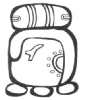 | CEH |
| 3 |  | ZIP | 13 | 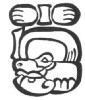 | MAC |
| 4 | 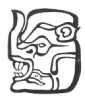 | ZOTZ | 14 | 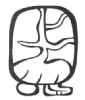 | KANKIN |
| 5 |  | TZEC | 15 | 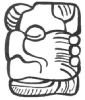 | MUAN |
| 6 | 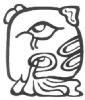 | XUL | 16 |  | PAX |
| 7 |  | YAXKIN | 17 | 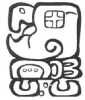 | KAYAB |
| 8 |  | MOL | 18 | 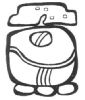 | CUMKU |
| 9 |  | CHEN | UAYEB | 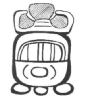 | UAYEB |
| 10 | 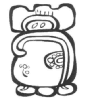 | YAX |
Glyphs and names of the 18 uinal + 5-day period
In this calendar, each of the 20 days of the Imix, Ik, Akbal... Ahau series appeared in the same position in each of the 18 uinal of a given year. A bit as if, for example, every Tuesday in the year 2002 always fell on the 5th of each month.
However, because there were 5 additional days, each day changed number each year compared with the previous year. Every year, the 20 days shifted by sets of 5. So it was only after 5 years that names returned to their starting number. As a result, only four days could appear at the start of the year and define the “new year”: Eb, Caban, Ik, Manik.
3) The Calendar Round
The Maya used both calendars simultaneously, and a full date included both the “civil” and “ritual” dates. So a full date could be, for example, “13 AHAU 18 CUMKU”. This “double” day recurred only after 18,980 days, i.e. 52 “vague” years (or 73 Tzolkin years).
4) The Long Count
Like the Calendar Round, the Long Count cannot really be considered a calendar. It is a way of dating days linearly from an origin point.
The system included several “periodic units” that the Maya “stacked” (see note at the bottom of the page) to mark the desired date. Each period was associated with a special representation that could take different forms, just like all the glyphs we have already seen.
Let us look at one of these representations, which will help us understand the different units of this reckoning system:
| Unit order | Glyph | Names | Equivalence | Number of days |
|---|---|---|---|---|
| 1 |  | Kin Day | 0 | 1 |
| 2 |  | Uinal 20-day month | 20 kin | 20 |
| 3 |  | Tun "18-month year" | 18 uinal | 360 |
| 4 | 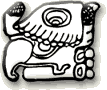 | Katun 20-"year" cycle | 20 tun | 7 200 |
| 5 |  | Baktun 400-"year" cycle | 20 katun | 144 000 |
| 6 |  | Pictun 8,000-"year" cycle | 20 baktun | 2 880 000 |
| 7 |  | Calabtun 160,000-"year" cycle | 20 pictun | 57 600 000 |
| 8 |  | Kinchiltun 3,200,000-"year" cycle | 20 calabtun | 1 152 000 000 |
| 9 |  | Alautun 640,000,000-"year" cycle | 20 kinchiltun | 23 040 000 000 |
What was the origin of this reckoning? The Long Count used the date 13 baktun, 4 ahau, 8 cumku as its origin, corresponding to 12 August 3114 BC in our Gregorian calendar (12 August -3113). At least, that is one possible date (see the study on eras and cycles for the various hypotheses, the most commonly retained today being 11, 12, or 13 August 3114 BC).
This date breaks down as follows: Long Count: 0.0.0.0.0; Tzolkin calendar: 4 Ahau; Haab calendar: 8 Cumku. It is also sometimes written as 13.0.0.0.0 instead of 0.0.0.0.0, likely marking the end of a previous cycle. The current cycle ended when it reached 13.0.0.0.0 again, in 2012. According to some hypotheses, the date 0.0.0.0.0 corresponded, for the Maya, either to the creation of the world or to the birth of certain deities.
Using one example, the Leiden Plate, we can see the Long Count dating system in practice.


The Leiden Plate was discovered in 1864 at Puerto Barrios (Guatemala), outside an archaeological context.
It is thought to have been engraved at Tikal.
Flat, rectangular with rounded corners, 21.7 cm high, made of finely polished pale green jade, and engraved on both sides like a miniature Maya stela, the “plate” kept in Leiden (Rijksmuseum voor Volkenkunde) is in fact a sumptuous rattle ornament, worn in clusters on the belt masks of Maya rulers, like those worn by the figure shown on the front of the Leiden Plate.
On the front side, one can see a richly dressed Maya figure trampling a prisoner.
On the reverse, an incised date can be seen.
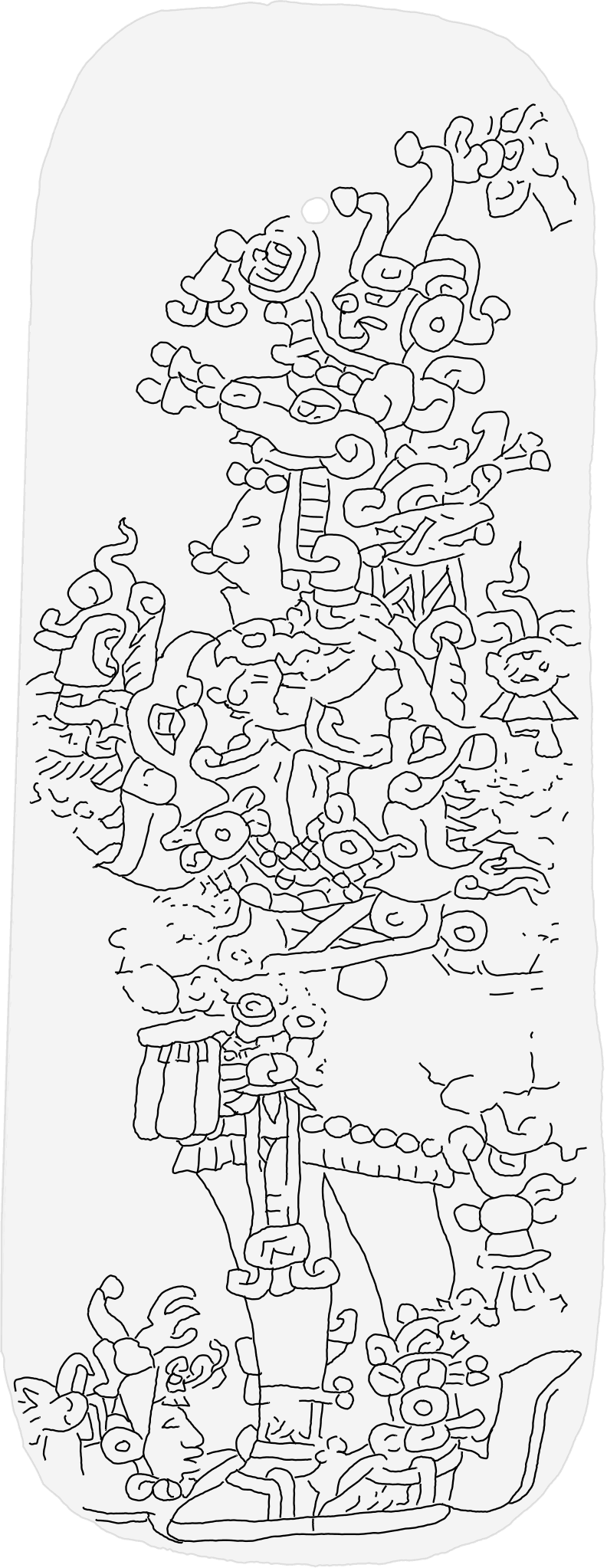
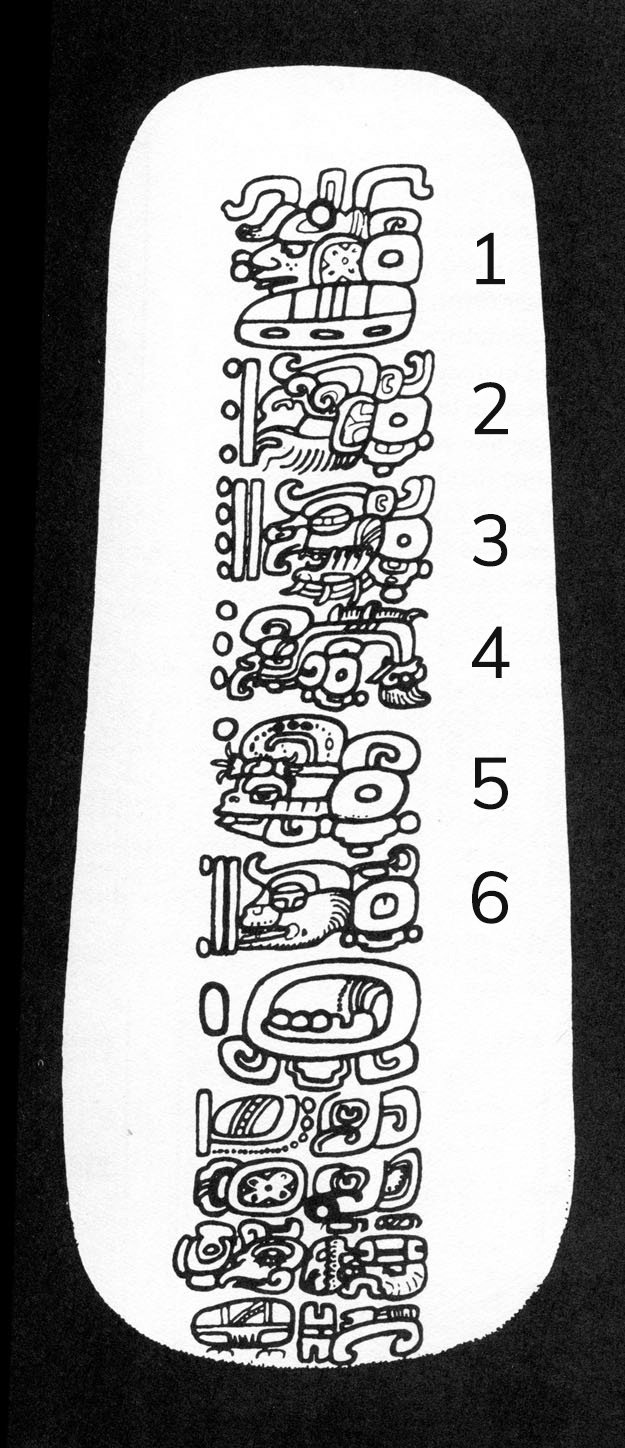
The glyphs on the reverse side are read from top to bottom.
First comes (1) the introductory glyph of the initial series, corresponding to the deity presiding over the “month” of the civil year in which the inscription date falls: YAXKIN
Then comes the Long Count date:
(2) 8 baktum
(3) 14 katum
(4) 3 tun
(5) 1 uinal
(6) 12 kin
which gives:
8 baktum = 8 X 144,000 days......1,152,000 days
14 katum = 14 X 7,200 days.........100,800 days
3 tun = 3 X 360 days.................1,080 days
1 uinal = 1 X 20 days...................20 days
12 kin = 12 X 1 day....................12 days

that is...................... 1,253,912 days
which corresponds to AD 320
In fact, the Long Count glyphs were most often accompanied by a host of other glyphs forming almost as many associated cycles. To avoid overloading this page, if you want to learn more, I invite you to consult the appendix dedicated to these cycles through the study of a stone lintel from Yaxchilan.
Note on Vigesimal Numbering
The only evidence we have of the Maya numbering system relates to astronomy and time reckoning.
As seen above, this numbering system was vigesimal. It was also positional. Similar to ours, except ours orders place values from right to left (... hundreds, tens, units), whereas the Maya placed them vertically, with units at the bottom.
For example, 89 (8 * 10 + 9 in our system) was written as:
| 4 x 20 | |
| 9 | |
Just as in our system each higher place value is a multiple of 10 (11,450 = 110101010 + 1101010 + 41010 + 510 + 0), or [1; 1; 4; 5; 0], giving a sequence 0, 10, 100, 1000, 10,000, in the Maya system it should have been multiples of 20. That would give a sequence 0, 20, 400, 8,000, 16,000, and our number 11,450 would be written 1202020 + 82020 + 1220 + 10, i.e. [1; 8; 12; 10].
However, as seen above in the Long Count, the different reckoning units are 0, 20, 360, 7,200, 144,000. So 360 instead of 400. Pure vigesimal progression is interrupted at the third level and then resumes regularly (7,200 = 360 * 20; 144,000 = 7,200 * 20; etc.).
As a result, our number 11,450 is written 136020 + 11360 + 1420 + 10, or [1; 11; 14; 10]. As for 400, which should have been 12020 + 0, or [1; 0; 0], it becomes 1360 + 220 + 0, or [1; 2; 0].
The Maya vigesimal system was therefore almost vigesimal. So we should not accept everything said here and there. I am thinking in particular of what was written in the Science et Vie special issue of December 2003, which describes a strict counting progression by 20s.
But why 360 instead of 400? One explanation may be linked to the length of the year. In the absence of a better one, we may have to settle for it.
This feature has an important consequence: Maya zero no longer has full operational value. In pure base-20 notation, adding a zero to a number would multiply that number by 20. Thus, [1; 0; 0] in base 20 corresponds to the square of [1; 0]. Because of this 360 “break” in the system, zero mostly becomes a placeholder rather than an operational digit.
Maya zero therefore does not have the same meaning as our modern zero.