As we will see, the traditional Japanese calendar is very close to the Chinese calendar. So we will mainly focus on the differences between them. Before reading this page, it is essential to first read the page devoted to the Chinese calendar.
A bit of history
Let us start with a chronology of Japan's emperors, so we can better navigate the dates:
| Period | Reign dates | No. | Names |
|---|---|---|---|
| -13000 to -300 JOMON -300 to 300 YAYOI | Legendary Emperors | 1 | Jimmu |
| 2 | Suizei | ||
| 3 | Annei | ||
| 4 | Itoku | ||
| 5 | Kôshô | ||
| 6 | Kôan | ||
| 7 | Kôrei | ||
| 8 | Kôgen | ||
| 9 | Kaika | ||
| 10 | Sujin | ||
| 11 | Suinin | ||
| 12 | Seimu | ||
| 13 | Keikô | ||
| 14 | Chûai | ||
| 300 to 710 YAMATO | Late 4th to early 5th century | 15 | Ôjin |
| First half of the 5th century | 16 | Nintôku | |
| 17 | Richû | ||
| 18 | Hanzei | ||
| Mid-5th century | 19 | Ingyô | |
| 20 | Ankô | ||
| Late 5th century | 21 | Yûryaku | |
| 22 | Seinei | ||
| 23 | Kenzô | ||
| 24 | Ninken | ||
| 25 | Buretsu | ||
| Early 6th century | 26 | Keitai | |
| 27 | Ankan | ||
| 28 | Senka | ||
| 531 or 539-571 | 29 | Kimmei | |
| 572-585 | 30 | Bidatsu | |
| 585-587 | 31 | Yômei | |
| 587-592 | 32 | Sushun | |
| 593-628 | 33 | Suiko | |
| 629-641 | 34 | Jomei | |
| 642-645 | 35 | Kôgyoku* | |
| 645-654 | 36 | Kôtoku | |
| 655-661 | 37 | Saimei* | |
| 661-672 | 38 | Tenji | |
| 672 | 39 | Kôbun | |
| 672-686 | 40 | Temmu | |
| 686-697 | 41 | Jitô* | |
| 697-707 | 42 | Mommu | |
| 707-715 | 43 | Gemmyô* | |
| 710 to 794 NARA | 715-724 | 44 | Genshô* |
| 724-749 | 45 | Shômu | |
| 749-758 | 46 | Kôken* | |
| 758-764 | 47 | Junnin | |
| 764-770 | 48 | Shôtoku* | |
| 770-781 | 49 | Kônin | |
| 781-806 | 50 | Kammu | |
| 794 to 1185 HEIAN | 806-809 | 51 | Heizei |
| 809-823 | 52 | Saga | |
| 823-833 | 53 | Junna | |
| 833-850 | 54 | Nimmyô | |
| 850-858 | 55 | Montoku | |
| 858-876 | 56 | Seiwa | |
| 876-884 | 57 | Yôzei | |
| 884-887 | 58 | Kôkô | |
| 887-897 | 59 | Uda | |
| 897-930 | 60 | Daigo | |
| 930-946 | 61 | Suzaku | |
| 946-967 | 62 | Murakami | |
| 967-969 | 63 | Reizei | |
| 969-984 | 64 | En'yû | |
| 984-986 | 65 | Kazan | |
| 986-1011 | 66 | Ichijô | |
| 1011-1016 | 67 | Sanjô | |
| 1016-1036 | 68 | Go-Ichijô | |
| 1036-1045 | 69 | Go-Suzaku | |
| 1045-1068 | 70 | Go-Reizei | |
| 1068-1073 | 71 | Go-Sanjô Shirakawa | |
| 1073-1087 | 72 | Shirakawa | |
| 1087-1107 | 73 | Horikawa | |
| 1107-1123 | 74 | Toba | |
| 1123-1142 | 75 | Sutoku | |
| 1142-1155 | 76 | Konoe | |
| 1155-1158 | 77 | Go-Shirakawa | |
| 1158-1165 | 78 | Nijô | |
| 1165-1168 | 79 | Rokujô | |
| 1168-1180 | 80 | Takakura | |
| 1185 to 1333 KAMAKURA | 1180-1183 | 81 | Antoku |
| 1183-1198 | 82 | Go-Toba | |
| 1198-1210 | 83 | Tsuchimikado | |
| 1210-1221 | 84 | Juntoku | |
| 1221 | 85 | Chûkyô | |
| 1221-1232 | 86 | Go-Horikawa | |
| 1232-1242 | 87 | Shijô | |
| 1242-1246 | 88 | Go-Saga | |
| 1246-1260 | 89 | Go-Fukakusa | |
| 1260-1274 | 90 | Kameyama | |
| 1274-1287 | 91 | Go-Uda | |
| 1287-1298 | 92 | Fushimi | |
| 1298-1301 | 93 | Go-Fushimi | |
| 1301-1308 | 94 | Go-Nijô | |
| 1308-1318 | 95 | Hanazono | |
| 1318-1339 | 96 | Go-Daigo | |
| 1333 to 1573 MUROMACHI | 1339-1368 | 97 | Go-Murakami |
| 1368-1383 | 98 | Chôkei | |
| 1383-1392 | 99 | Go-Kameyama | |
| 1331-1333 | 1** | Kôgen | |
| 1336-1348 | 2** | Kômyô | |
| 1348-1351 | 3** | Sukô | |
| 1351-1371 | 4** | Go-Kôgen | |
| 1371-1382 | 5** | Go-En'yu | |
| 1382-1412 | 100 | Go-Komatsu | |
| 1412-1428 | 101 | Shôkô | |
| 1428-1464 | 102 | Go-Hanazono | |
| 1464-1500 | 103 | Go-Tsuchimikado | |
| 1500-1526 | 104 | Go-Kashiwabara | |
| 1526-1557 | 105 | Go-Nara | |
| 1557-1586 | 106 | Ôgimachi | |
| 1573 to 1603 AZUCHI-MOMOYAMA | 1586-1611 | 107 | Go-Yôzei |
| 1603 to 1867 EDO | 1611-1629 | 108 | Go-Mizunoo |
| 1629-1643 | 109 | Meishô* | |
| 1643-1654 | 110 | Go-Kômyô | |
| 1655-1663 | 111 | Gosai | |
| 1663-1687 | 112 | Reigen | |
| 1687-1709 | 113 | Higashiyama | |
| 1709-1735 | 114 | Nakamikado | |
| 1735-1747 | 115 | Sakuramachi | |
| 1747-1762 | 116 | Momozono | |
| 1762-1771 | 117 | Go-Sakuramchi* | |
| 1771-1779 | 118 | Go-Momozono | |
| 1780-1817 | 119 | Kôkaku | |
| 1817-1846 | 120 | Ninkô | |
| 1846-1867 | 121 | Kômei | |
| 1868 to 1911 MEIJI | 1867-1912 | 122 | Emperor Meiji (Mutsuhito during his lifetime) |
| 1912 to 1925 TAISHO | 1912-1926 | 123 | Emperor Taisho (Yoshihito during his lifetime) |
| 1926 to 1988 SHOWA | 1926-1989 | 124 | Emperor Showa (Hirohito during his lifetime) |
| 1989 to ... HEISEI | 1989 | 125 | Akihito |
| * = empress | |||
| ** = These five emperors are considered usurpers by the Japanese imperial house. Go-Komatsu, who inherited the throne usurped from Go-En'yu in 1382, was not officially recognized as emperor until 1392, when Go-Kameyama abdicated in his favor. | |||
Calendar(s)
Like the Chinese calendar, the Japanese calendar has a solar part and a lunar part.
The solar part of the Japanese calendar
The Japanese solar year is divided into 12 periods (or markers), called ki, each corresponding to a precise position of the Sun on the ecliptic (solar ecliptic longitude). If we divide the ecliptic into 360 degrees, each marker is 15 degrees from the next.
So the principle of dividing the sky into 15-degree markers is strictly identical to that of the Chinese solar calendar.
There are still two differences:
1) Longitude calculations are made from Japan. Until 1888, the reference longitude was 139 degrees 46. Since 1888, it has been 135 degrees.
2) The solar markers use Chinese ideograms, but with Japanese pronunciations of those characters. This gives the following table:
| Name | Date | Longitude | |||
|---|---|---|---|---|---|
| S1 |  | Risshun | Beginning of spring | 4 or 5 February | 315 |
| P1 |  | Usui | Rains | 18, 19 or 20 February | 330 |
| S2 |  | Keichitsu | Awakening of insects | 5 or 6 March | 345 |
| P2 |  | Shunbun | Spring equinox | 20 or 21 March | 0 |
| S3 |  | Seimei | Clear light | 4 or 5 April | 15 |
| P3 |  | Koku-u | Hail rains | 19, 20 or 21 April | 30 |
| S4 |  | Rikka | Beginning of summer | 6 or 7 May | 45 |
| P4 |  | Shouman | Seed appearance | 20, 21 or 22 May | 60 |
| S5 |  | Boushu | Rising ears of grain | 5, 6 or 7 June | 75 |
| P5 |  | Geshi | Summer solstice | 21 or 22 June | 90 |
| S6 |  | Shousho | Lesser heat | 6, 7 or 8 July | 105 |
| P6 |  | Taisho | Greater heat | 22, 23 or 24 July | 120 |
| S7 |  | Risshu | Beginning of autumn | 8 or 9 August | 135 |
| P7 |  | Shosho | End of heat | 22, 23 or 24 August | 150 |
| S8 |  | Hakuro | White dew | 7, 8 or 9 September | 165 |
| P8 |  | Shuubun | Autumn equinox | 22 or 23 September | 180 |
| S9 |  | Kanro | Cold dew | 8 or 9 October | 195 |
| P9 |  | Soukou | White frost | 23 or 24 October | 210 |
| S10 |  | Rittou | Beginning of winter | 7 or 8 November | 225 |
| P10 |  | Shousetsu | Light snow | 22 or 23 November | 240 |
| S11 |  | Taisetsu | Heavy snow | 6, 7 or 8 December | 255 |
| P11 |  | Touji | Winter solstice | 21, 22 or 23 December | 270 |
| S12 |  | Shoukan | Lesser cold | 5, 6 or 7 January | 285 |
| P12 |  | Taikan | Greater cold | 20 or 21 January | 300 |
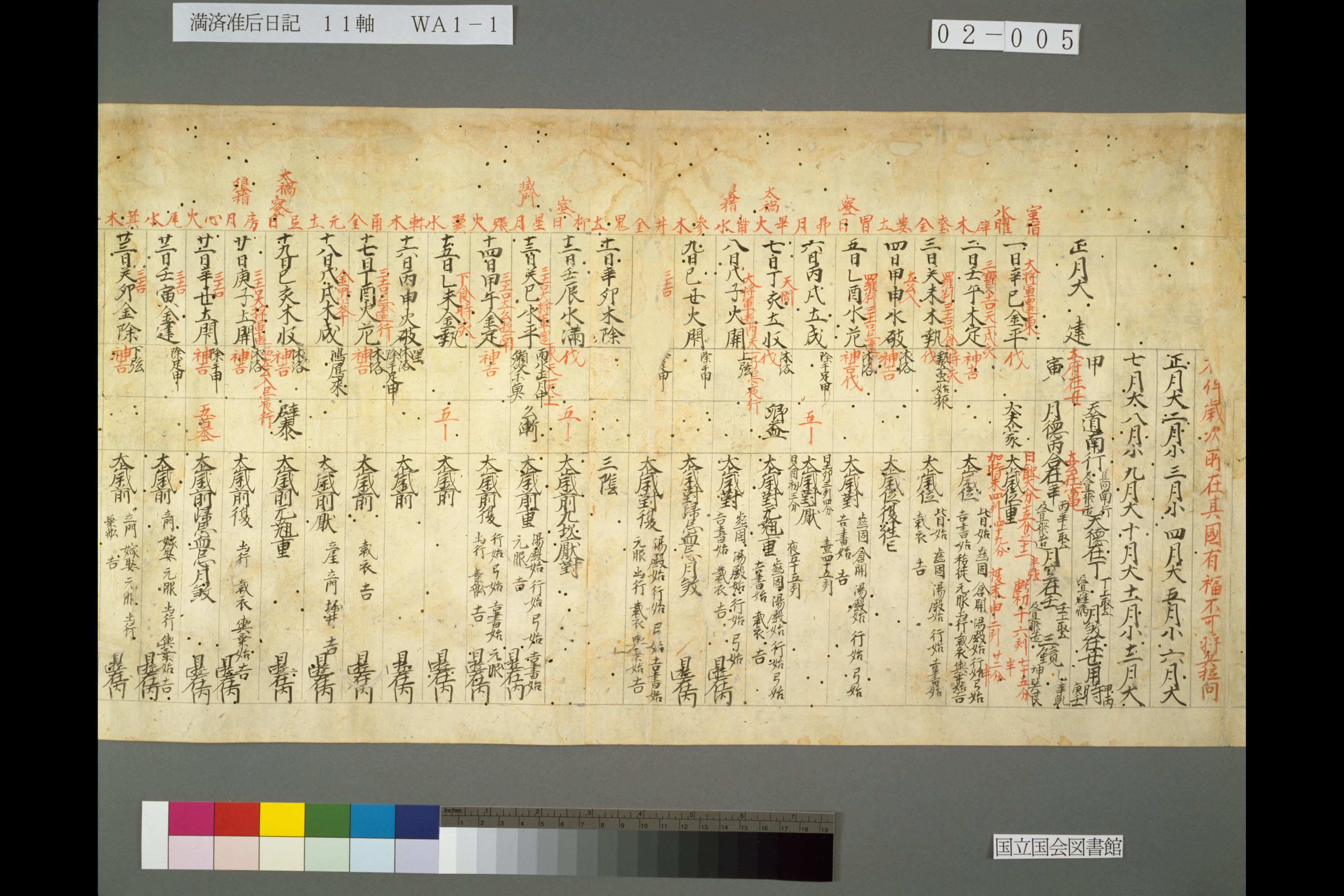
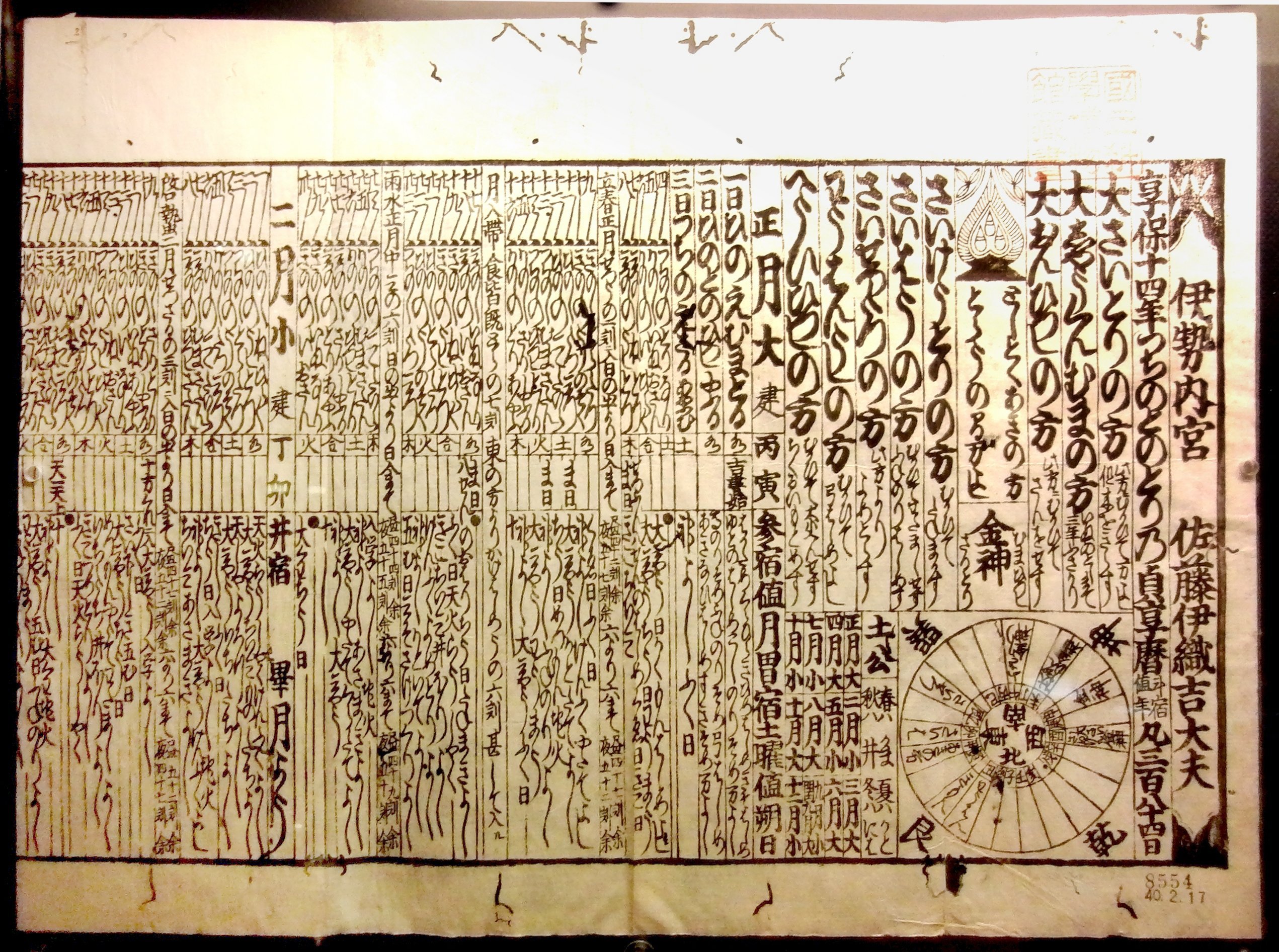
The lunar part of the Japanese calendar
Months
Unlike the Chinese, who had used true calculations to determine the lunar month since 1645, the Japanese adopted that method only in 1798.
As far as months are concerned, there are no major differences between the Chinese and Japanese calendars, except that before the Meiji period, months had agriculture-related names. This naming was later abandoned in favor of simple numbering.
| Month | Old name | Ideogrammes | Current name | Ideogrammes | Meaning |
|---|---|---|---|---|---|
| January | MuTsuki | 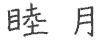 | IchiGatsu | 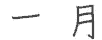 | Harmony, happy spring |
| February | KisaTsuki |  | NiGatsu | 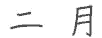 | Change of clothing |
| March | YaTsuki | 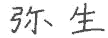 | SanGatsu | 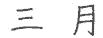 | Thickening of grass |
| April | UTsuki | 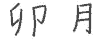 | ShiGatsu | 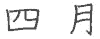 | Summer, rice planting |
| May | SaTsuki | 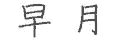 | GoGatsu | 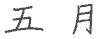 | Rice germination |
| June | MinaTsuki | 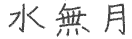 | RokuGatsu | 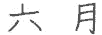 | Month of irrigation |
| July | FuTsuki | 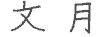 | ShichiGatsu |  | Month of letters |
| August | HaTsuki | 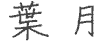 | HachiGatsu | 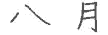 | Month of leaves |
| September | NagaTsuki | 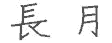 | KuGatsu | 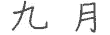 | Long month of autumn |
| October | KanaTsuki | 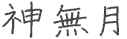 | JuuGatsu | 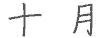 | Month of the gods |
| November | ShimoTsuki |  | JuuIchiGatsu | 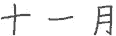 | Falling frost |
| December | ShiHasu | 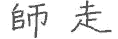 | JuuNiGatsu | 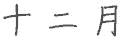 | Winter sadness |
Also note that month is called Zuki  , the intercalary month is called Uruu
  , a "long" month is called Dai
  , and a "short" month is called Sho
  .
.
Days
The existence of a seven-day week is a distinctive feature of the Japanese calendar compared with the Chinese one. The names of these days are rooted in the solar system and appeared around 807.
| Day | Day (Japanese) | Ideogrammes | "Planet" (French) | "Planet" (Japanese) |
|---|---|---|---|---|
| Sunday | Nichi Youbi |   | Sun | Taiyou |
| Monday | Getsu Youbi |  | Moon | Tsuki |
| Tuesday | Ka Youbi |  | Mars | KaSei |
| Wednesday | Sui Youbi |  | Mercury | SuiSei |
| Thursday | Moku Youbi |  | Jupiter | MokuSei |
| Friday | Kin Youbi |  | Venus | KinSei |
| Saturday | Dou Youbi |  | Saturn | DouSei |
Year names and the sexagesimal cycle
The sexagesimal cycle also exists in the Japanese calendar. The ten Heavenly Stems, called E (or Kan), and the twelve Earthly Branches, called TO (or Shi), are represented with Chinese characters. The operating principle is identical to the Chinese sexagesimal cycle.
Here is the Japanese E-to table:
| Heavenly stems | Earthly branches | ||||
|---|---|---|---|---|---|
| Chinese | Name | Ying/Yang | Chinese | Name | Animal |
 | Ko or Kineo | Yang |  | Shi * or Ne * | Rat |
 | Otsu or Kinoto | Ying |  | Chu or Ushi | Ox |
 | Hei or Hinoe | Yang |  | In or Tora | Tiger |
 | Tei or Hinoto | Ying |  | Bo or U | Hare |
 | Bo or Tsuchinoe | Yang |  | Shin or Tatsu | Dragon |
 | Ki or Tsuchinoto | Ying |  | Shi or Mi | Snake |
 | Ko or Kanoe | Yang |  | Go or Uma | Horse |
 | Shin or Konoto | Ying |  | Bi or Hitsuji | Ram/Sheep |
 | Jin or Mizunoe | Yang |  | Shin or Saru | Monkey |
 | Ki or Mizunoto | Ying |  | Yu or Tori | Rooster |
| Ying: even rank Yang: odd rank |  | Jutsu or Inu | Dog | ||
 | Gai or I | Pig | |||
* The first word corresponds to the so-called Chinese reading (“on-yomi”), more or less similar to the pronunciation of the character in China. The second corresponds to the so-called Japanese reading (“kun-yomi”), inherited from ancient Japanese before Chinese characters were introduced.
The year 2002 is also the Year of the Horse in Japan, according to the Chinese sexagesimal-cycle principle.
Japanese chronology
There are several systems for numbering years in Japan:
- The Nengo system
- The Kanshi system
- The Jimmu-tenno system
The Kanshi system is simply Chinese sexagesimal numbering. I must admit I do not know whether Japanese year 1 in this cycle is 2697 BC as in China. I assume so, since this is an “inherited” system, but I welcome any further information on this point.
In the Jimmu-tenno system, years are counted from the reign of the first emperor, Jimmu, in 660 BC. So year 2002 corresponds to Japanese year 2662.
The last system, Nengo, counts years from the start of a period (see chronology table at the top of the page) and restarts at 1 at each new period. Year 2002 corresponds to 14 Heisi. It is the most widely used system in Japan.
Here is the table showing the start of the different periods:
| Year | Name |
|---|---|
| 645 | Taika |
| 650 | Hakuchi |
| 686 | Hakuhou |
| 701 | Shuchou |
| 704 | Taihou |
| 708 | Keiun |
| 715 | Wadou |
| 717 | Reiki |
| 724 | Yourou |
| 729 | Tenpyou |
| 749 | Tenpyou-kanpou |
| 749 | Tenpyou-shouhou |
| 757 | Tenpyou-houji |
| 765 | Tenpyou-jingo |
| 767 | Jingo-keiun |
| 770 | Houki |
| 781 | Ten'or |
| 782 | Enryaku |
| 806 | Daidou |
| 810 | Kounin |
| 824 | Tenchou |
| 834 | Shouwa |
| 848 | Kajou |
| 851 | Ninju |
| 854 | Saikou |
| 857 | Tennan |
| 859 | Jougan |
| 877 | Genkei |
| 885 | Ninna |
| 889 | Kanpyou |
| 898 | Shoutai |
| 901 | Engi |
| 923 | Enchou |
| 931 | Shouhei |
| 938 | Tengyou |
| 947 | Tenryaku |
| 957 | Tentoku |
| 961 | Ouwa |
| 964 | Kouhou |
| 968 | Anna |
| 970 | Tenroku |
| 973 | Ten'en |
| 976 | Jougen |
| 978 | Tengen |
| 983 | Eikan |
| 985 | Kanna |
| 987 | Eien |
| 988 | Eiso |
| 990 | Shouryaku |
| 995 | Choutoku |
| 999 | Chouhou |
| 1004 | Kankou |
| 1012 | Chouwa |
| 1017 | Kannin |
| 1021 | Jian |
| 1024 | Manju |
| 1028 | Chougen |
| 1037 | Chouryaku |
| 1040 | Choukyuu |
| 1044 | Kantoku |
| 1046 | Eishou |
| 1053 | Tengi |
| 1058 | Kouhei |
| 1065 | Jiryaku |
| 1069 | Enkyuu |
| 1074 | Jouhou |
| 1077 | Shouryaku |
| 1081 | Eihou |
| 1084 | Outoku |
| 1087 | Kanji |
| 1094 | Kahou |
| 1096 | Eichou |
| 1097 | Joutoku |
| 1099 | Kouwa |
| 1104 | Chouji |
| 1106 | Kajou |
| 1108 | Tennin |
| 1110 | Ten'ei |
| 1113 | Eikyuu |
| 1118 | Gen'ei |
| 1120 | Houan |
| 1124 | Tenji |
| 1126 | Daiji |
| 1131 | Tenshou |
| 1132 | Choushou |
| 1135 | Houen |
| 1141 | Eiji |
| 1142 | Kouji |
| 1144 | Ten'you |
| 1145 | Kyuuan |
| 1151 | Ninpei |
| 1154 | Kyuuju |
| 1156 | Hougen |
| 1159 | Heiji |
| 1160 | Eiryaku |
| 1161 | Ouhou |
| 1163 | Choukan |
| 1165 | Eiman |
| 1166 | Ninnan |
| 1169 | Kaou |
| 1171 | Shouan |
| 1175 | Angen |
| 1177 | Jishou |
| 1181 | Youwa |
| 1182 | Juei |
| 1184 | Genryaku |
| 1185 | Bunji |
| 1190 | Kenkyuu |
| 1199 | Shouji |
| 1201 | Kennin |
| 1204 | Genkyuu |
| 1206 | Ken'ei |
| 1207 | Jougen |
| 1211 | Kenryaku |
| 1213 | Kempou |
| 1219 | Joukyuu |
| 1222 | Jouou |
| 1224 | Gennin |
| 1225 | Karoku |
| 1227 | Antei |
| 1229 | Kanki |
| 1232 | Jouei |
| 1233 | Tenpuku |
| 1234 | Benryaku |
| 1235 | Katei |
| 1238 | Ryakunin |
| 1239 | En'or |
| 1240 | Ninji |
| 1243 | Kangen |
| 1247 | Houji |
| 1249 | Kenchou |
| 1256 | Kougen |
| 1257 | Shouka |
| 1259 | Shougen |
| 1260 | Bun'or |
| 1261 | Kouchou |
| 1264 | Bun'ei |
| 1275 | Kenji |
| 1278 | Kouan |
| 1288 | Shouou |
| 1293 | Einin |
| 1299 | Shouan |
| 1302 | Kengen |
| 1303 | Kagen |
| 1306 | Tokuji |
| 1308 | Enkyou |
| 1311 | Ouchou |
| 1312 | Shouwa |
| 1317 | Bunpou |
| 1319 | Gen'or |
| 1321 | Genkou |
| 1324 | Shouchuu |
| 1326 | Karyaku |
| 1329 | Gentoku |
| 1331 | Genkou |
| 1334 | Kenmu |
| 1336 | Engen |
| 1340 | Koukoku |
| 1346 | Shouhei |
| 1370 | Kentoku |
| 1372 | Bunchuu |
| 1375 | Tenju |
| 1381 | Kouwa |
| 1384 | Genchuu |
| 1390 | Meitoku |
| 1394 | Ouei |
| 1428 | Shouchou |
| 1429 | Eikyou |
| 1441 | Kakitsu |
| 1444 | Bunnan |
| 1449 | Houtoku |
| 1452 | Kyoutoku |
| 1455 | Koushou |
| 1457 | Chouroku |
| 1460 | Kanshou |
| 1466 | Bunshou |
| 1467 | Ounin |
| 1469 | Bunmei |
| 1487 | Choukyou |
| 1489 | Entoku |
| 1492 | Meiou |
| 1501 | Bunki |
| 1504 | Eishou |
| 1521 | Daiei |
| 1528 | Kyouroku |
| 1532 | Tenmon |
| 1555 | Kouji |
| 1558 | Eiroku |
| 1570 | Genki |
| 1573 | Tenshou |
| 1592 | Bunroku |
| 1596 | Keichou |
| 1615 | Genna |
| 1624 | Kan'ei |
| 1644 | Shouhou |
| 1648 | Keian |
| 1652 | Jouou |
| 1655 | Meireki |
| 1658 | Manji |
| 1661 | Kanbun |
| 1673 | Enpou |
| 1681 | Tenna |
| 1684 | Joukyou |
| 1688 | Genroku |
| 1704 | Houei |
| 1711 | Shoutoku |
| 1716 | Kyouhou |
| 1736 | Genbun |
| 1741 | Kanpou |
| 1744 | Enkyou |
| 1748 | Kan'en |
| 1751 | Houreki |
| 1764 | Meiwa |
| 1772 | An'ei |
| 1781 | Tenmei |
| 1789 | Kansei |
| 1801 | Kyouwa |
| 1804 | Bunka |
| 1818 | Bunsei |
| 1830 | Tenpou |
| 1844 | Kouka |
| 1848 | Kaei |
| 1854 | Ansei |
| 1860 | Man'en |
| 1861 | Bunkyuu |
| 1864 | Genji |
| 1865 | Keiou |
| 1868 | Meiji |
| 1912 | Taishou |
| 1926 | Shouwa |
| 1989 | Heisei |
Japan adopted the Gregorian calendar in 1873, but the traditional calendar is still used for festival observances. Nengo year numbering and the sexagesimal cycle also remain alive.