
The Piedra del Sol

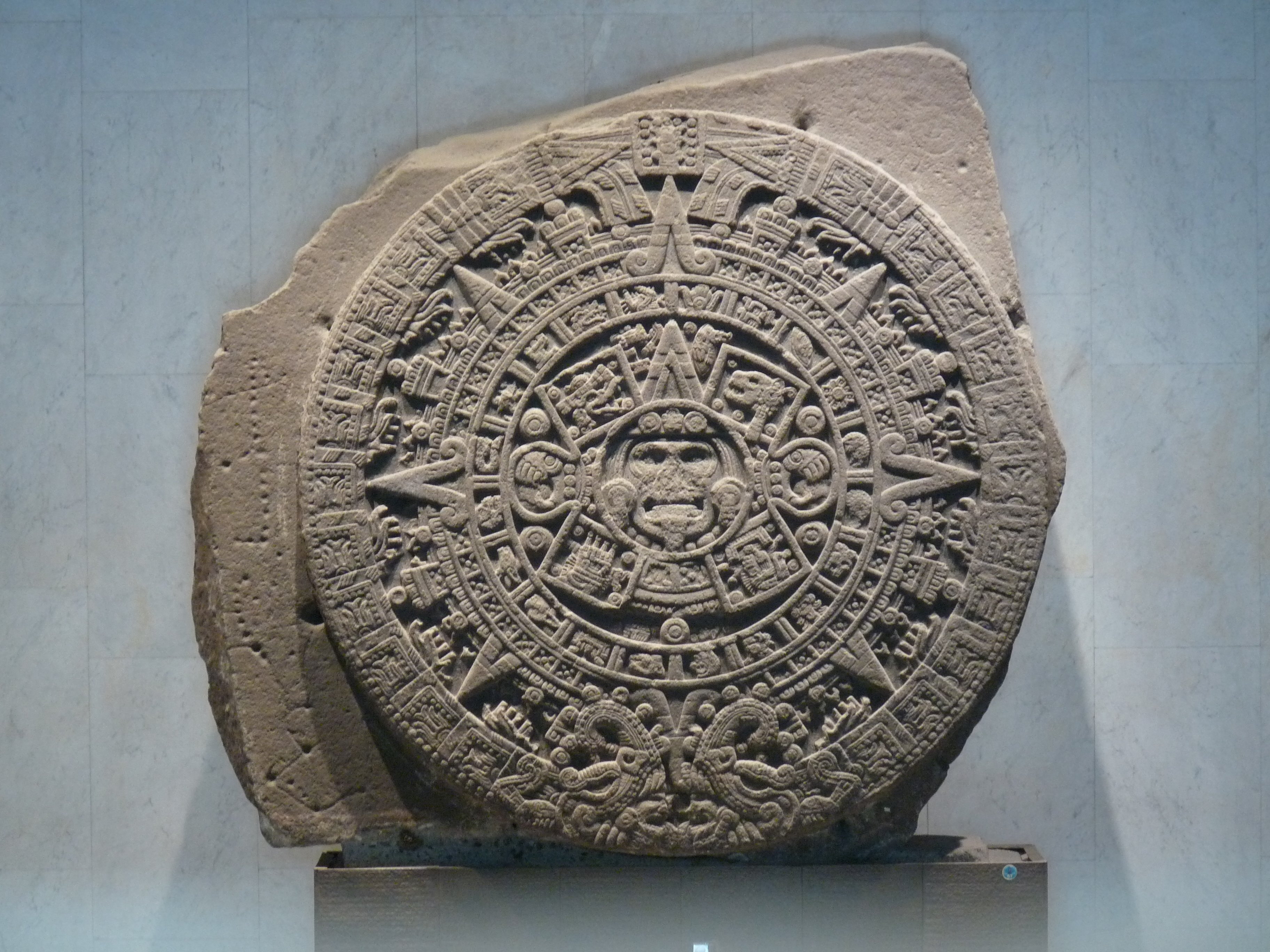
Monolith of the Sun Stone, also known as the Aztec Calendar (National Museum of Anthropology and History, Mexico City)
Monolith of the Sun Stone, also known as the Aztec Calendar (National Museum of Anthropology and History, Mexico City) El Comandante, CC BY-SA 3.0, via Wikimedia Commons
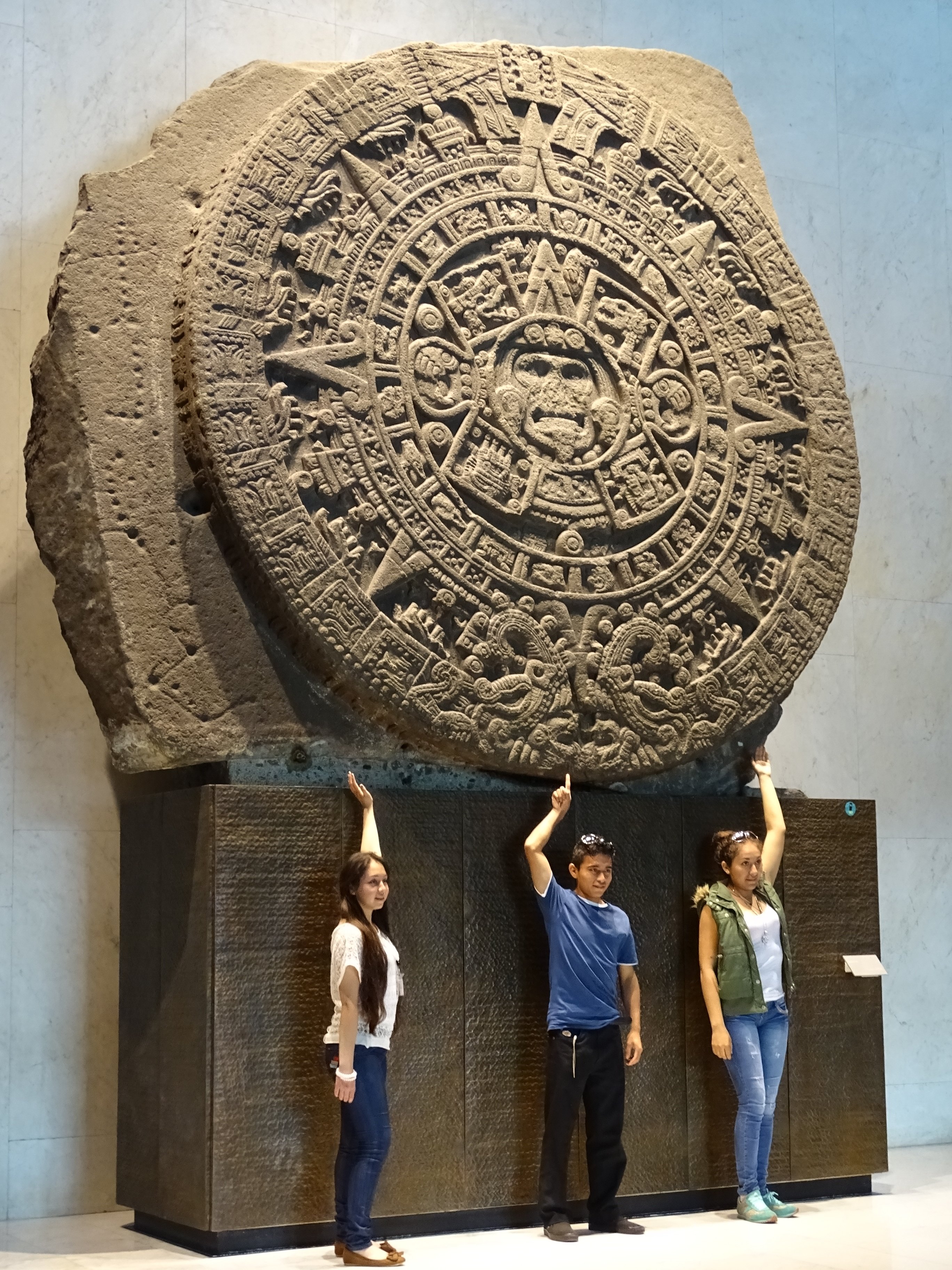
Glimpse of the monumental size of the monolith
Glimpse of the monumental size of the monolith Adam Jones from Kelowna, BC, Canada, CC BY-SA 2.0, via Wikimedia Commons

This 25-ton stone, measuring 3.60 meters in diameter and 1 meter thick, was carved for the New Fire Ceremony of 1479.

It was discovered on 17 December 1760 during construction works in Mexico City.

At first, it was embedded in the wall of the west tower of Mexico City Cathedral, where it remained until 1885.

It was later transferred to the National Museum of Anthropology in Mexico City.

Move your mouse pointer (without clicking) over the stone below to see explanations of the engravings.

One of the 5 "buttons" symbolizing the 5 days added to the calendar One of the 5 "buttons" symbolizing the 5 days added to the calendar One of the 5 "buttons" symbolizing the 5 days added to the calendar One of the 5 "buttons" symbolizing the 5 days added to the calendar One of the 5 "buttons" symbolizing the 5 days added to the calendar eagle claws holding the victim's torn-out heart cartouche giving the completion date of the sculpture, 13 acatl (1479) Solar rays Right serpent tail Left serpent tail day 1: Cipactli Xiuhuitzolli, symbol of the east 1-Tecpatl, symbol of the north Double sun ray First completed era: Nahui Ocelot (Jaguar Sun Second completed era: Nahui Ehecatl (wind) eagle claws holding the victim's torn-out heart Solar rays Serpent body Head of Tonatiuh, sun god, sticking out his tongue shaped like an obsidian sacrificial knife Third completed era: Nahui Quiahuitl (rain of fire) Breastplate of the sun god Fourth completed era: Nahui Atl (flood) Solar rays The heads of the two fire serpents meet here. The heads of the two fire serpents meet here. 1-Quiahuitl, symbol of the south 7-Ozotmatli, symbol of the west Solar rays Solar rays Solar rays Solar rays Solar rays Serpent body Serpent body Serpent body Serpent body Serpent body Serpent body Serpent body Serpent body Serpent body Serpent body Serpent body Serpent body day 2: Ehecatl day 3: Calli day 4: Cuetzapallin day 5: Coatl day 6: Miquiztli day 7: Mazatl day 8: Tochtli day 9: Atl day 10: Itzcuintli day 11: Ozomatli day 12: Malinalli day 13: Acatl day 14: Ocelotl day 15: Cuauhtli day 16: Cozcacuauhtil day 17: Olin day 18: Tecpatl day 19: Quiahuitl day 20: Xochitl Serpent body Serpent body Serpent body Serpent body  Face of Xiutecutli, Saturn Face of Tonatiuh, the sun

There are many interpretations of the Stone of the Sun symbols. I chose the one that seemed most plausible to me. If you have reliable sources on this stone, please do get in touch.

Our pages not to be missed