By way of introduction
If we open the 2005 postal almanac, we find all kinds of information: public holidays, moon phases, school breaks, computus data, sunrise and moonrise times... But nothing, not a word, about daylight-saving change dates. You would almost think the Roman indiction (which is practically useless) matters more than those two yearly clock changes.
And yet that change matters. Twice a year, it sends us looking for every clock in the house to reset it. It has fueled endless debate. Some are in favor, others are against.
In this page, we will follow the history of what has become a tradition and try to understand why it appeared and why it still exists.
We will not take sides, even if some observations do point toward fairly clear conclusions.
Our focus will be the history of daylight saving time in France, with a few words on other countries as well.
A very old idea
The idea dates back to 1784. It came from Benjamin Franklin, who presented it in a slightly tongue-in-cheek letter sent to the Journal de Paris, published on 26 April 1784.

Born in Boston, Benjamin Franklin first worked as a printer-journalist and published the New England Courant with his brother, then the Pennsylvania Gazette in Philadelphia. He also edited an almanac in which, under the pseudonym Poor Richard, he wrote sayings, maxims and practical advice. He was also interested in science and invented the lightning rod.
The young United States sent him to Paris to secure the support of the King of France. The mission succeeded: he won over the enlightened circles of the kingdom and was received by Louis XVI, who recognized the United States. He returned to America in 1785, covered in glory.
That “letter” originally came from a more serious text, An Economical Project, about natural energy savings. He rewrote part of it as a favor to Antoine Alexis-Francois Cadet de Vaux, editor of the Journal de Paris, who wanted a version accessible to his readers.
He begins by describing a demonstration he attended the day before of a new oil lamp. He then recounts the discussion that followed about the ratio between oil consumed and light produced.
With that in mind, he went home and fell asleep around 3 or 4 a.m. A noise woke him around 6 a.m., and he was surprised by the brightness in his room. He first thought it came from those famous lamps, but realized it was the rays of the rising sun. Reading an almanac confirmed that sunrise would keep coming earlier until late June.
“This event made me think of more serious and important matters...”
In short, Franklin concluded that Paris could save an immense sum each year.
He also proposed practical measures:
- Tax residents one louis per window if they keep shutters closed.
- Ration candles to one pound per family per week.
- Stop all traffic after sunset except doctors, surgeons and midwives.
- Ring church bells (and fire cannons if needed) at sunrise to wake everyone.
Replace cannon fire with an alarm clock set earlier, and summer time is basically born. Still, Franklin's plan was to wake people earlier, not to shift official clock time.
The idea, stripped of its eccentric side, was revived in 1907 by William Willett (1857-1915), an English entrepreneur.
Willett's proposal did involve moving clocks forward and backward. In his pamphlet Waste of Daylight, he explained a process in four Sunday steps at 2 a.m. in April and September, 20 minutes each Sunday. He chose 2 a.m. because it disturbed train traffic the least.
His goal was twofold:
- Spend leisure time in daylight.
- Save energy otherwise used for artificial lighting.
Energy savings
Spending more waking time in sunlight was the goal of both Franklin and Willett.
Let us look at France in 2005.
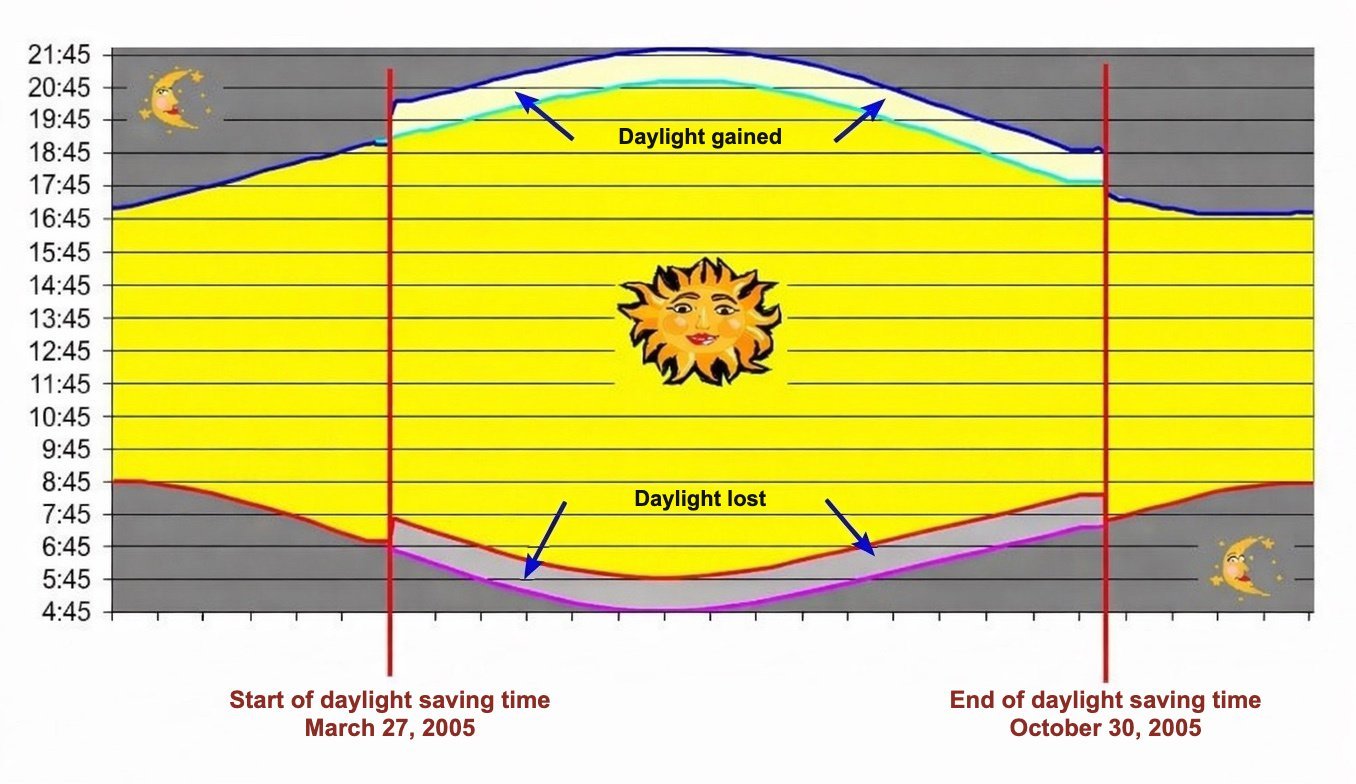
Between late March and late October, we lose morning daylight and gain evening daylight. Strictly speaking, total daylight duration is the same for any given day whether summer time is applied or not, but that daylight shifts toward hours when people are awake.
The objective, however, was never tanning. It was energy savings: candles for Franklin, coal electricity for Willett, then later oil.
The official line in France long remained that summer time, reintroduced after the 1974 oil shock, reduced evening lighting demand and therefore energy use.
Whether fully true or not, we are not taking a political position here.
Summer time / winter time: the best wording?
We say “summer time”, fair enough. But “winter time” is really just a return to standard time. In practice, we enter summer time and exit summer time.
In France, even so-called “winter legal time” is already one hour ahead of UTC for our meridian.
English uses Daylight Saving Time, which is clearer than many local expressions.
Personally, I prefer simple wording: standard time / advanced time.
Origin and brief timeline in a few countries
Europe
| Date | Decision | Start | End | Notes |
|---|---|---|---|---|
| 22/07/1997 | Common date and time for all Member States for 1998-2001 | d D 03 01h00 UTC | d D 10 01h00 UTC | Directive 97/44/CE of the European Parliament |
| 19/01/2001 | Renewed for 5 years | same | same | Directive 2000/84/CE of the European Parliament |
| p, 2, 3... d = first, second, third...last; L...D = Monday...Sunday; 01...12 = January...December | ||||
Since 2001, entry into summer time has taken place on the last Sunday in March, and exit on the last Sunday in October.
United Kingdom
| Date | Decision | Start | End | Notes |
|---|---|---|---|---|
| 1916 | D 21/05 | D 01/10 | Until and including 1980, shift to UTC +2 | |
| 1917 | D 08/04 | L 17/09 | BST (British Summer Time) ends on a Monday | |
| 1918 | D 24/03 | L 30/09 | ||
| 1919 | D 30/03 | L 29/09 | ||
| 1920 | D 28/03 | L 27/09 | ||
| 1921 | D 03/04 | L 03/10 | ||
| 1922 | D 26/03 | D 08/10 | BST ends on a Sunday | |
| 1923 | Summer Time Act 1922 | D 22/04 | D 16/09 | STA: start = day after the 3rd Saturday in April end = day after the 3rd Saturday in October |
| 1924 | D 13/04 | D 21/09 | Start shifted to avoid Easter | |
| 1925 to 1938 | STA 1925 | STA: start = day after the 3rd Saturday in April end = day after the 1st Saturday in October Some starts shifted to avoid Easter: 1927, 1930, 1933, 1935, 1938. | ||
| 1939 | Defense Regulations 1939 | D 16/04 | D 19/11 | |
| 1940 | Amendments by OiC to Defense Regulations 1939 | D 25/02 | Permanent summer time from February | |
| 1941 | D 04/05 | D 10/08 | A limited summer-time period was added on top of permanent summer time (double summer time) | |
| 1942 | D 05/04 | D 09/08 | Double summer time | |
| 1943 | D 04/04 | D 15/08 | ||
| 1944 | D 02/04 | D 17/09 | ||
| 1945 | L 02/04 | D 15/07 D 07/10 | End of limited summer time End of permanent summer time | |
| 1946 | End of Defense Regulations 1939 | D 21/04 | D 06/10 | No more double summer time |
| 1947 | STA 1947 | D 26/03 D 13/04 | D 10/08 D 12/11 | Double summer time returns for this year |
| 1948 to 1968 | Summer time order | Different DST schedules, no continuous long-term rule | ||
| 1968 to 1971 | Summer Time Order 1968 | D 28/02/68 | D 31/10/71 | Permanent summer time during the whole period |
| 1972 to 1980 | Summer Time Act 1972 | STA: start = day after 3rd Saturday in March end = day after 4th Saturday in October | ||
| 1981 to 1995 | Summer Time Order | Different schedules year by year. Shift to UTC +1 | ||
| 1996 | Summer Time Order | Entry into the European framework | ||
| p, 2, 3... d = first, second, third...last; L...D = Monday...Sunday; 01...12 = January...December OiC Order in Council = royal order adopted in the Queen's Privy Council | ||||
As this table shows, implementation was not straightforward and decisions were strongly tied to economic conditions, especially around the two world wars.
France
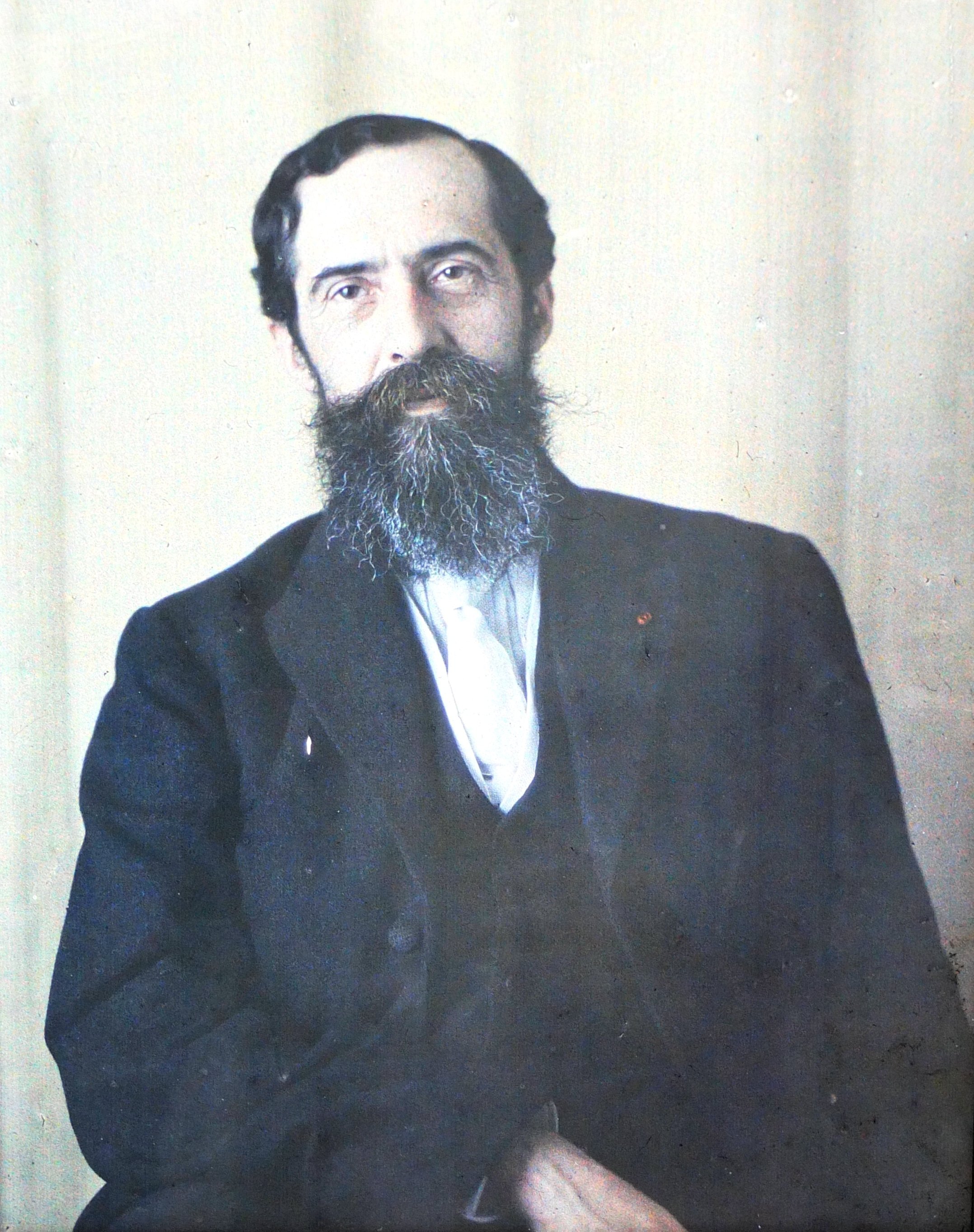
It is sometimes said that the summer-time/winter-time system began in France in 1976 under Valéry Giscard d'Estaing. In reality it is far older: it dates to 1916, initiated by André Honnorat.
The law moving legal time forward by one hour to reduce public energy use was eventually passed on 19 March 1917, by 291 votes to 177.
Below is the evolution of the French system from the beginning (changes shown in red in the original source):
| Year | Legal winter time | Legal summer time | Switch to summer time | Switch back | ||
|---|---|---|---|---|---|---|
| Date | H | Date | H | |||
| 1916 | UTC | UTC+1 | Wednesday 14 June 1916 | 23h | Sunday 1 October 1916 | 23h |
| 1917 | UTC | UTC+1 | Saturday 24 March 1917 | 23h | Sunday 7 October 1917 | 23h |
| 1918 | UTC | UTC+1 | Saturday 9 March 1918 | 23h | Sunday 6 October 1918 | 23h |
| 1919 | UTC | UTC+1 | Saturday 1 March 1919 | 23h | Sunday 5 October 1919 | 23h |
| 1920 | UTC | UTC+1 | Saturday 14 February 1920 | 23h | Saturday 23 October 1920 | 23h |
| 1921 | UTC | UTC+1 | Monday 14 March 1921 | 23h | Tuesday 25 October 1921 | 23h |
| 1922 | UTC | UTC+1 | Saturday 25 March 1922 | 23h | Saturday 7 October 1922 | 23h |
| 1923 | UTC | UTC+1 | Saturday 31 March 1923 | 23h | Saturday 6 October 1923 | 23h |
| 1924 | UTC | UTC+1 | Saturday 29 March 1924 | 23h | Saturday 4 October 1924 | 23h |
| 1925 | UTC | UTC+1 | Saturday 4 April 1925 | 23h | Saturday 3 October 1925 | 23h |
| 1926 | UTC | UTC+1 | Saturday 17 April 1926 | 23h | Saturday 2 October 1926 | 23h |
| 1927 | UTC | UTC+1 | Saturday 9 April 1927 | 23h | Saturday 1 October 1927 | 23h |
| 1928 | UTC | UTC+1 | Saturday 14 April 1928 | 23h | Saturday 6 October 1928 | 23h |
| 1929 | UTC | UTC+1 | Saturday 20 April 1929 | 23h | Saturday 5 October 1929 | 23h |
| 1930 | UTC | UTC+1 | Saturday 12 April 1930 | 23h | Saturday 4 October 1930 | 23h |
| 1931 | UTC | UTC+1 | Saturday 18 April 1931 | 23h | Saturday 3 October 1931 | 23h |
| 1932 | UTC | UTC+1 | Saturday 2 April 1932 | 23h | Saturday 1 October 1932 | 23h |
| 1933 | UTC | UTC+1 | Saturday 25 March 1933 | 23h | Saturday 7 October 1933 | 23h |
| 1934 | UTC | UTC+1 | Saturday 7 April 1934 | 23h | Saturday 6 October 1934 | 23h |
| 1935 | UTC | UTC+1 | Saturday 30 March 1935 | 23h | Saturday 5 October 1935 | 23h |
| 1936 | UTC | UTC+1 | Saturday 18 April 1936 | 23h | Saturday 3 October 1936 | 23h |
| 1937 | UTC | UTC+1 | Saturday 3 April 1937 | 23h | Saturday 2 October 1937 | 23h |
| 1938 | UTC | UTC+1 | Saturday 26 March 1938 | 23h | Saturday 1 October 1938 | 23h |
| 1939 | UTC | UTC+1 | Saturday 15 April 1939 | 23h | Saturday 18 November 1939 | 23h |
| 1940 | From 1940 to 1942, things were confused depending on whether one was in the free zone or not. 1941 and 1942 data correspond to the free zone. | |||||
| 1941 | UTC+1 | UTC+2 | Sunday 4 May 1941 | 23h | Sunday 5 October 1941 | 22h |
| 1942 | UTC+1 | UTC+2 | Sunday 8 March 1942 | 23h | Monday 2 November 1942 | 1h |
| 1943 | UTC+1 | UTC+2 | Monday 29 March 1943 | 1h | Monday 4 October 1943 | 1h |
| 1944 | UTC+1 | UTC+2 | Monday 3 April 1944 | 1h | Saturday 7 October 1944 | 23h |
| 1945 | UTC+1 | UTC+2 | Monday 2 April 1945 | 1h | Sunday 16 September 1945 | 1h |
| 1946 | The summer/winter time system is dropped. Legal time remains UTC +1 all year. | |||||
| 1976 | UTC+1 | UTC+2 | Sunday 28 March 1976 | 0h | Saturday 25 September 1976 | 23h |
| 1977 | UTC+1 | UTC+2 | Sunday 3 April 1977 | 1h | Sunday 25 September 1977 | 1h |
| 1978 | UTC+1 | UTC+2 | Sunday 2 April 1978 | 1h | Sunday 1 October 1978 | 1h |
| 1979 | UTC+1 | UTC+2 | Sunday 1 April 1979 | 1h | Sunday 30 September 1979 | 1h |
| 1980 | UTC+1 | UTC+2 | Sunday 6 April 1980 | 1h | Sunday 28 September 1980 | 1h |
| From 1981 to 1995 inclusive, switch to summer time happened on the last Sunday in March at 1:00, and return to standard time on the last Sunday in September at 1:00. | ||||||
| 1996 | UTC+1 | UTC+2 | Sunday 31 March 1996 | 1h | Sunday 27 October 1996 | 1h |
| 1997 | UTC+1 | UTC+2 | Entry into the European framework (see above). In practice, it was already used from 1996. | |||
Conclusion
We could multiply examples, but it would be long and not very useful.
The examples above are enough to show that one major trigger was wartime context, and that many countries dropped DST between war periods (France being a notable exception).
In the United States, for example, DST was used in 1918-1919, then dropped, then reintroduced from 09/02/1942 to 30/09/1945. From 1946 to 1966, states and cities were free to apply it or not. In 1966, a uniform federal framework was applied (with specific exceptions in 1974 and 1975). In 1986, the start moved to the first Sunday in April.
A quick word on Switzerland (which did not share the same wartime constraints):
- It applied summer time in 1941 and 1942.
- From 1981 to 1995, it used the last Sunday of March / last Sunday of September pattern.
- Since 1996, it has aligned with EU rules.
Advanced time everywhere in the world?
If summer/winter time is meant to align human activity with sunlight during part of the year, can we use it everywhere?
A bit of basic astronomy helps.
At the equator, day length is almost constant all year (around 12 hours), and sunrise/sunset change very little.
As latitude increases, the gap between the longest and shortest day increases. Around the Tropic of Cancer the gap is about three hours. At the Arctic Circle, the sun may not set at summer solstice and winter daylight can be very short.
These day-length changes alone do not answer the practical question. The key issue is evening light during waking hours.
At the Tropic of Cancer, sunset is roughly around 19:40 in summer and 18:00 in winter. A one-hour shift can make sense there. Moving from that latitude toward the equator, it becomes less useful.
So, broadly, advanced-time systems are more relevant between the Tropic of Cancer and the Arctic Circle.
The same reasoning applies in the Southern Hemisphere with seasons reversed (typically October to March).
Countries applying a summer/winter time system are shown in red on the map below.
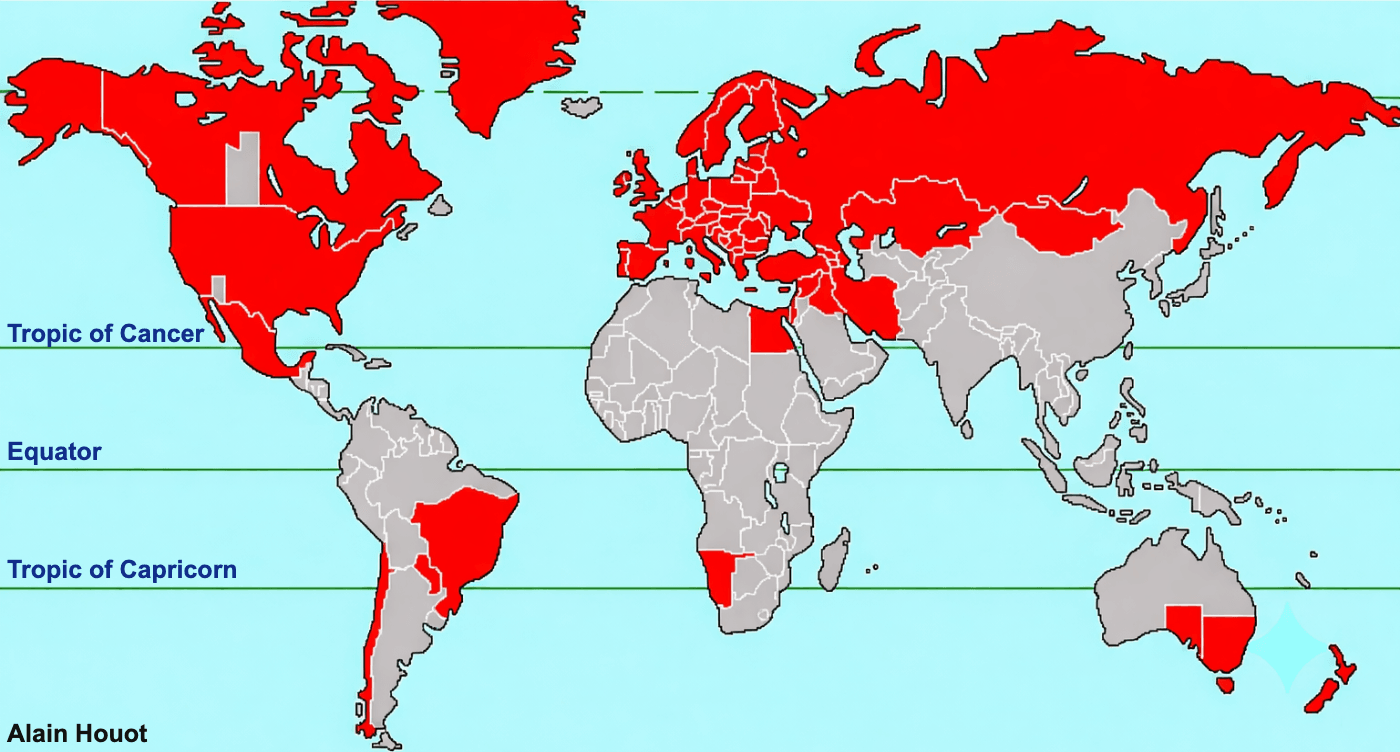
This map is approximate. Note: several countries have changed their policy since then (Russia, Egypt, etc.).