The purpose of this study is not to produce an inventory of almanacs. Who could do that without leaving some out anyway?
More modestly, we will try to see together how they evolved over the centuries. And we will deliberately limit ourselves to France and printed almanacs.
To cover the subject as thoroughly as possible, we will ask a few questions:
- What is an almanac? What does it contain?
- Almanacs: for whom?
- Almanacs: why?
- Almanacs: how?
- Almanacs: by whom?
- Almanacs: when was the first one?
- Almanacs: what format?
And, of course, from one century to another.
But first, let us start with a phenomenon there is no reason to ignore.
Almanacs are still topical
No, not because Pierre Bellemare has just released his own. One quick look at that book is enough to establish that it is many things, but not an almanac.
No, because of something I just read online, reproduced here as it was:
“The FBI fears almanacs
Reference books in general, and almanacs in particular, are in the FBI's sights, according to a document published by Cryptome. A previous SF-Gate article relays the information and explains: these books are packed with data that terrorists could exploit. For instance, the list of the tallest buildings in the United States... but is it really a state secret that Chicago's Sears Tower or Las Vegas's Stratosphere hotel-casino rise far above our suburban rooftops?
At this rate, the Guinness Book of Records will soon be banned, the Almanach Vermot treated as dangerously subversive, and this year's Quid sent to the library's “hell” section, next to Mein Kampf and the script of The Sound of Music.
Breaking news: following disclosure of classified “defense secret” information, we have learned that this HTML page could potentially be condemned by the FBI.
M.O Published on www.reseaux-telecoms.com, 16/01/2004
I admit I did not verify the sources of this information, which would rank almanacs among weapons of mass destruction. I did not verify because I do not care in the least.
May the FBI one day devote the same energy to the hundreds of spam and virus emails coming from the U.S. and poisoning our inboxes.
What is the origin of the word almanac?
Its origin is highly disputed because uncertain.
The 9th edition of the French Academy Dictionary says: "ALMANACH (ch is silent but pronounced k in liaison), noun, 14th century, anemallat. Borrowed from Medieval Latin almanachus (calendar), of Arabic origin." It is the first time an Academy edition gives the etymology of the word.
That Arabic origin would date from the 13th century, either al-mankh (calendar of the sky) or al-manah (the next moon).
A Syriac origin is also mentioned: I-manhac, translated as next year.
What does an almanac contain?
In 1791, Canadian publisher Samuel Neilson described the composition of Canadian almanacs of his time as follows:
“The materials that make up an Almanac have always varied from country to country and seem somewhat arbitrary; yet everyone agrees that it must consist chiefly of a Calendar for measuring time, which, depending on the movement of the stars, makes an Almanac as much a work of astronomy as is needed to regulate human affairs.
But this institution, like most others, has from time to time been judged capable of improvement, and it was thought possible to provide the public with a particular benefit by extending its usefulness, which has since become the common aim of publishers and buyers.
Astronomy, insofar as it concerns the measurement of time, forms the basis of an Almanac; subjects related to this science, viewed more broadly and pursued for other reasons, very suitably formed its second component, which is not the least interesting part of an Almanac.
Another part was very judiciously devoted to matters of public utility, such as brief outlines of political, moral and scientific truths. Items of simple entertainment were also introduced from time to time.
In most countries Almanacs served as a kind of public register, containing the names of public officials of every rank in the country where they were intended to circulate.
And finally, matters of local importance, chiefly related to public affairs in that country.
This description perfectly fits French almanacs.
In short, an almanac:
1) must necessarily include the calendar for the coming year. That year is the tropical year, and the almanac begins on its first day. For that reason, Pierre Bellemare's “Almanac” is one in name only.
This calendar - the mandatory core of the almanac - is usually accompanied by an ephemeris showing the Sun's positions (rise, set...), the Moon's positions (rise, set, phases...), eclipse dates, etc.
2) may contain other information, as varied as it is abundant. It reflects the fashions and concerns of the time, and also serves as the signature of a given almanac.
So one finds weather, farming, medical and culinary notes, maxims, witticisms, practical information such as dates and times of markets, festivals, fairs, places and departure times for post coaches and stagecoaches, etc. One can even find, written or not, information about the year... already passed.
This must be clearly understood: almanacs did not appear by chance. They arose from a need, the need to learn. From the 15th-16th centuries onward, almanacs became key tools for popularizing and simplifying knowledge. They helped ordinary people navigate a “standard” calendar full of complexities: month lengths, dominical letter, major feast days, calculation of Easter date. We must remember that until the first quarter of the 16th century, days of the year were not systematically numbered. Also, perpetual calendars covered several years, and almanacs improved understanding by focusing on a fixed, “natural” period: the civil year.
To this need to understand the calendar, one can add another one: in a time when astronomy and astrology were barely distinguished, people wanted to know what the coming year would bring in meteorological-astronomical-astrological terms.
From this second need emerged, in 16th-century France, prophetic almanacs containing astrological predictions called pronostications. Let us look at two examples.
Nostradamus's pronostications
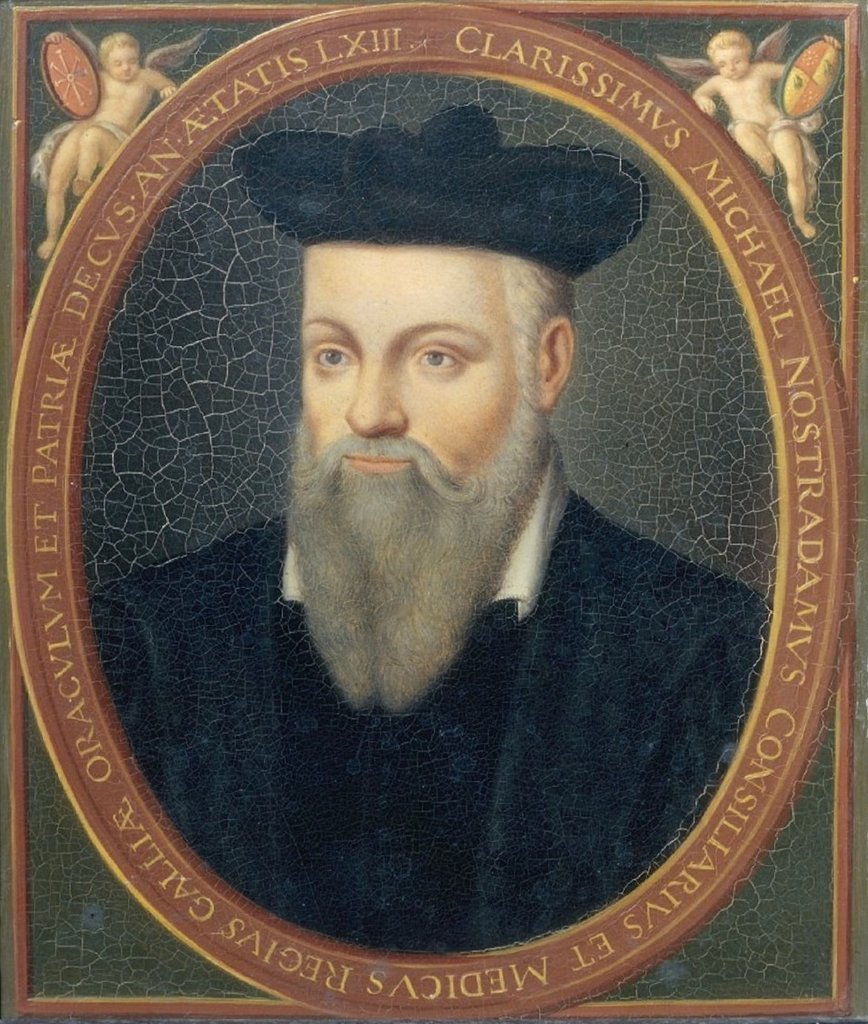
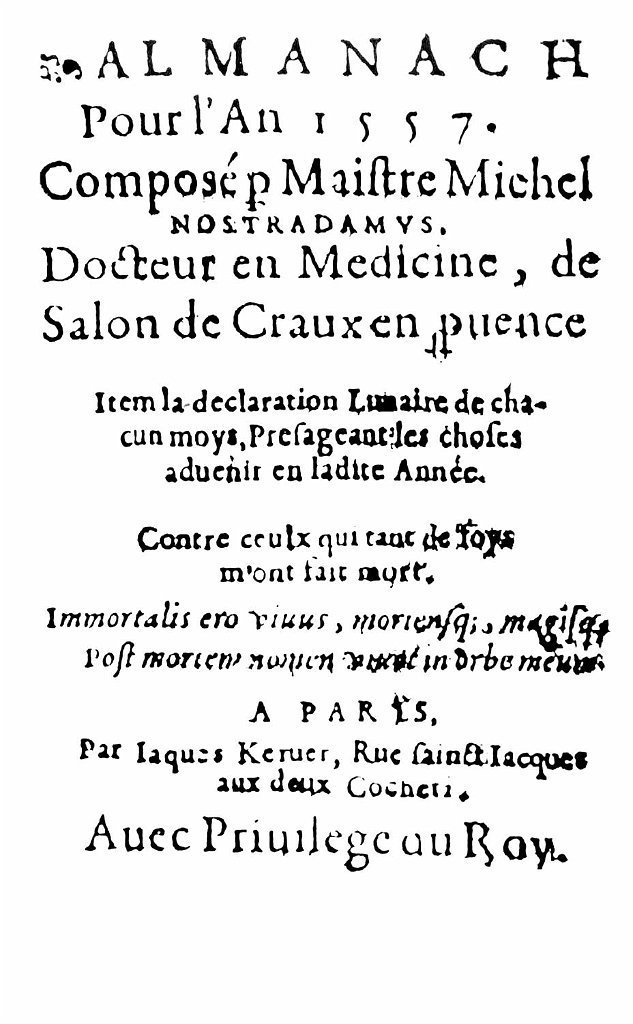
Nostradamus, who needs no introduction, devoted himself from 1550 until his death to producing almanacs. “The lover of stars takes precedence over the physician. Without renouncing the art of a few”exquisite recipes,“including”various kinds of cosmetics and perfumes“and”how to make several kinds of preserves," published at almost the same time as the first prophecies. These prophecies were enigmatic quatrains grouped in hundreds (the Centuries). The 1555 edition contained the first three centuries and fifty-three quatrains of the fourth." Source: Encyclopedia Universalis.
The Centuries made him famous enough to become physician to Charles IX in 1564 at Catherine de Medici's request. His texts, perfectly cryptic, are still subject to the wildest interpretations today.
Rabelais's pronostications
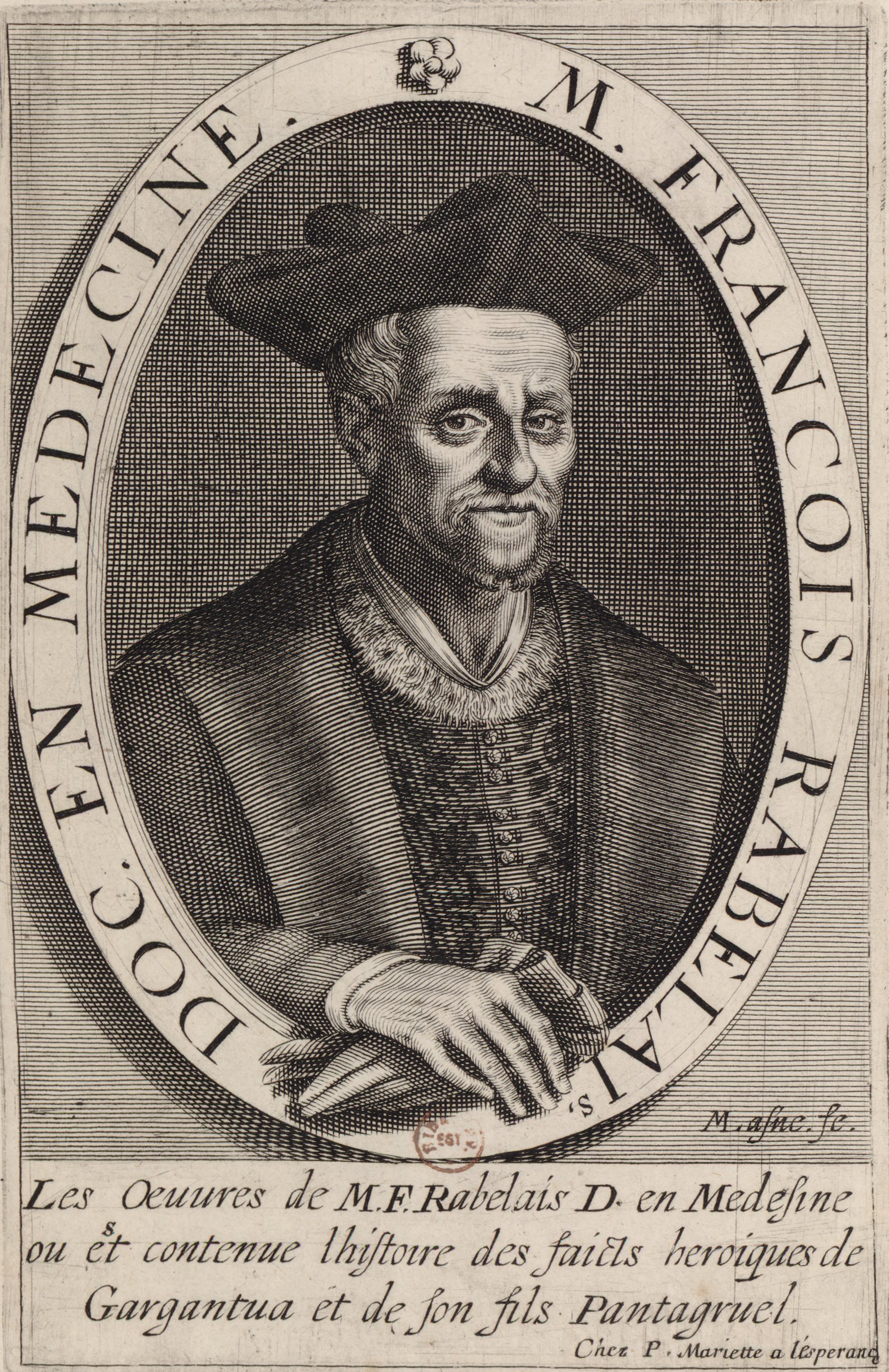
In 1532, Rabelais composed the Pantagrueline Prognostication for the year 1533, a parody of divinatory astrology, from which I cannot resist sharing a few excerpts.
Starting with the title: "Pantagrueline Prognostication. Certain, true & infallible for the perpetual year. Newly composed for the profit & guidance of foolish and idle people by Master Alcofribas, chief butler of the said Pantagruel."
A few words on eclipses: "This year there will be so many eclipses of Sun & Moon that I fear (& not without cause) that our purses will suffer depletion and our senses disturbance. Saturn will be retrograde. Venus direct. Mercury inconstant. And a whole crowd of other planets will not obey your command."
Others on health: "This year the blind will see very little, the deaf will hear badly enough; the mute will scarcely speak; the rich will fare a little better than the poor, and the healthy better than the sick. Many sheep, oxen, pigs, goslings, chickens and ducks will die, and mortality among monkeys and dromedaries will be less cruel. Old age will be incurable this year because of past years."
On astral influence over individuals: "And first those under Saturn: people without money, jealous, dreamers, ill-thinkers, suspicious, mole-catchers, usurers, rent-buyers, rivet-pullers, leather-tanners, tile-makers, bell-founders, loan-composers, rag-menders, melancholic people - they shall not have all they would wish this year; they shall devote themselves to inventing the Holy Cross, not throw their bacon to dogs, and scratch often where it does not itch."
And, to end this reading, a few words on autumn: "In autumn one will harvest grapes, sooner or later, all one to me, provided we have enough wine."
If you want to read the full text, it is here.
We know the success astrologers had - and still have today, far beyond almanacs alone. Even though a declaration by Louis XIV threatened them with banishment in 1682. First-generation astrologers such as Nostradamus and Rabelais disappeared around the end of the first half of the 17th century.
New Year's gift booklets
We can also include among almanacs a number of small publications (in-32 format) offered on New Year's Day with an added calendar.
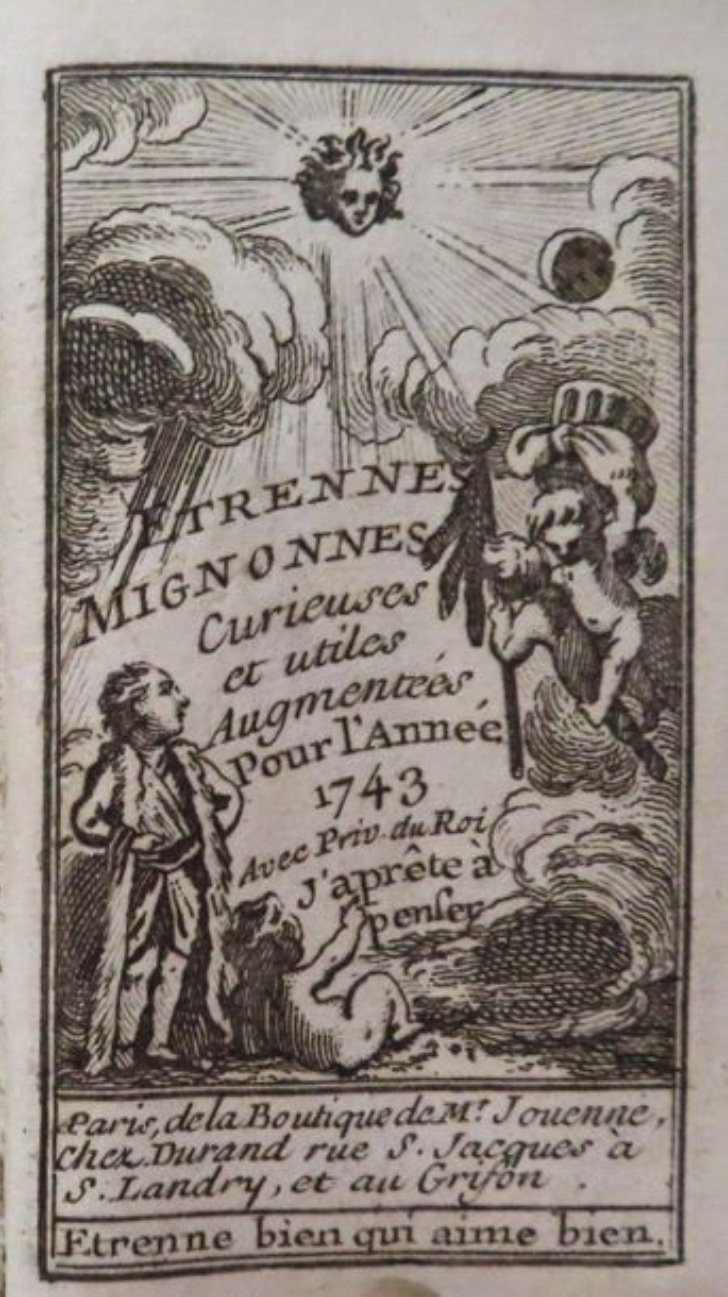
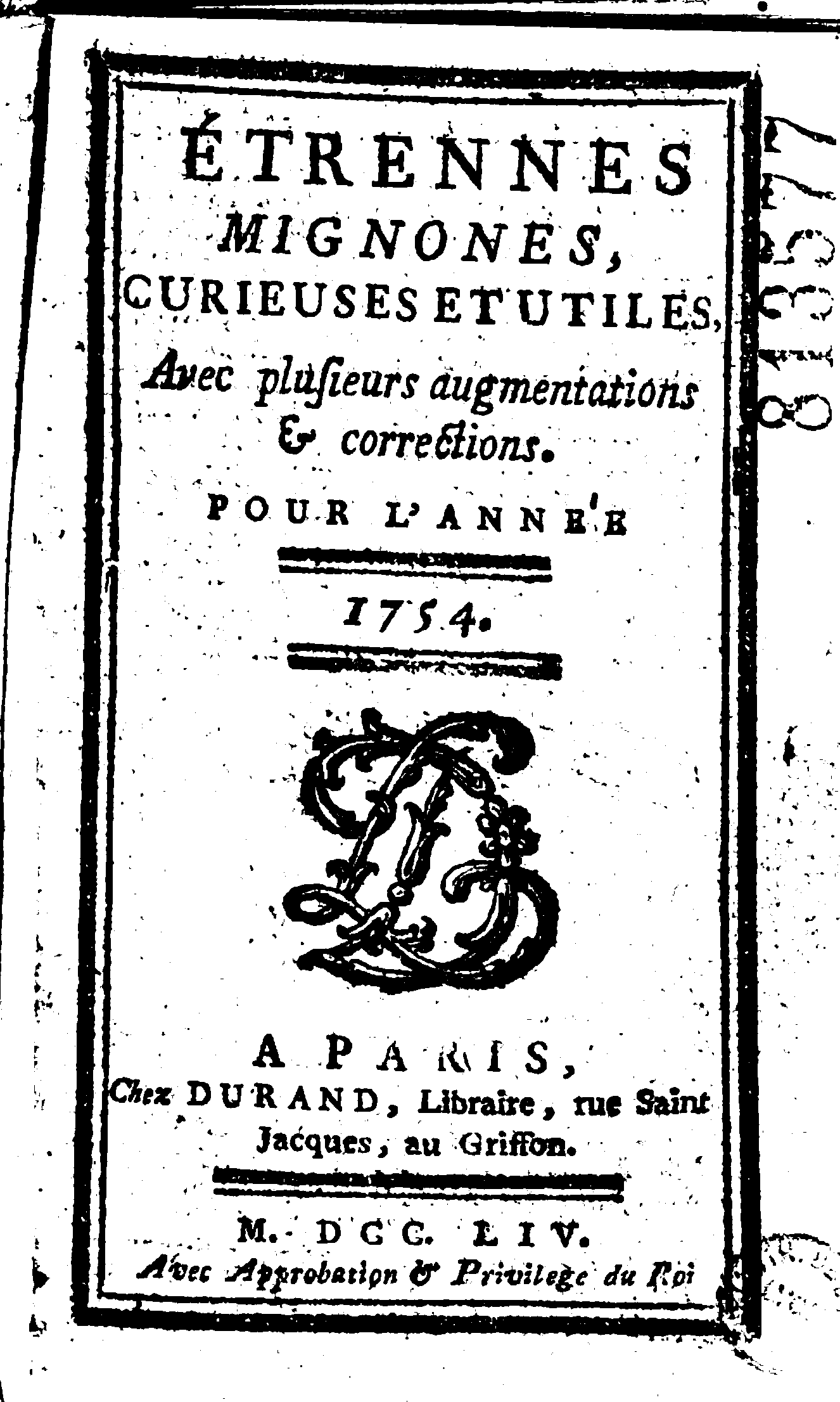
A full almanac in its own right, Etrennes Mignonnes (seen here in 1743 and 1754 editions) was published from 1716 to 1845.
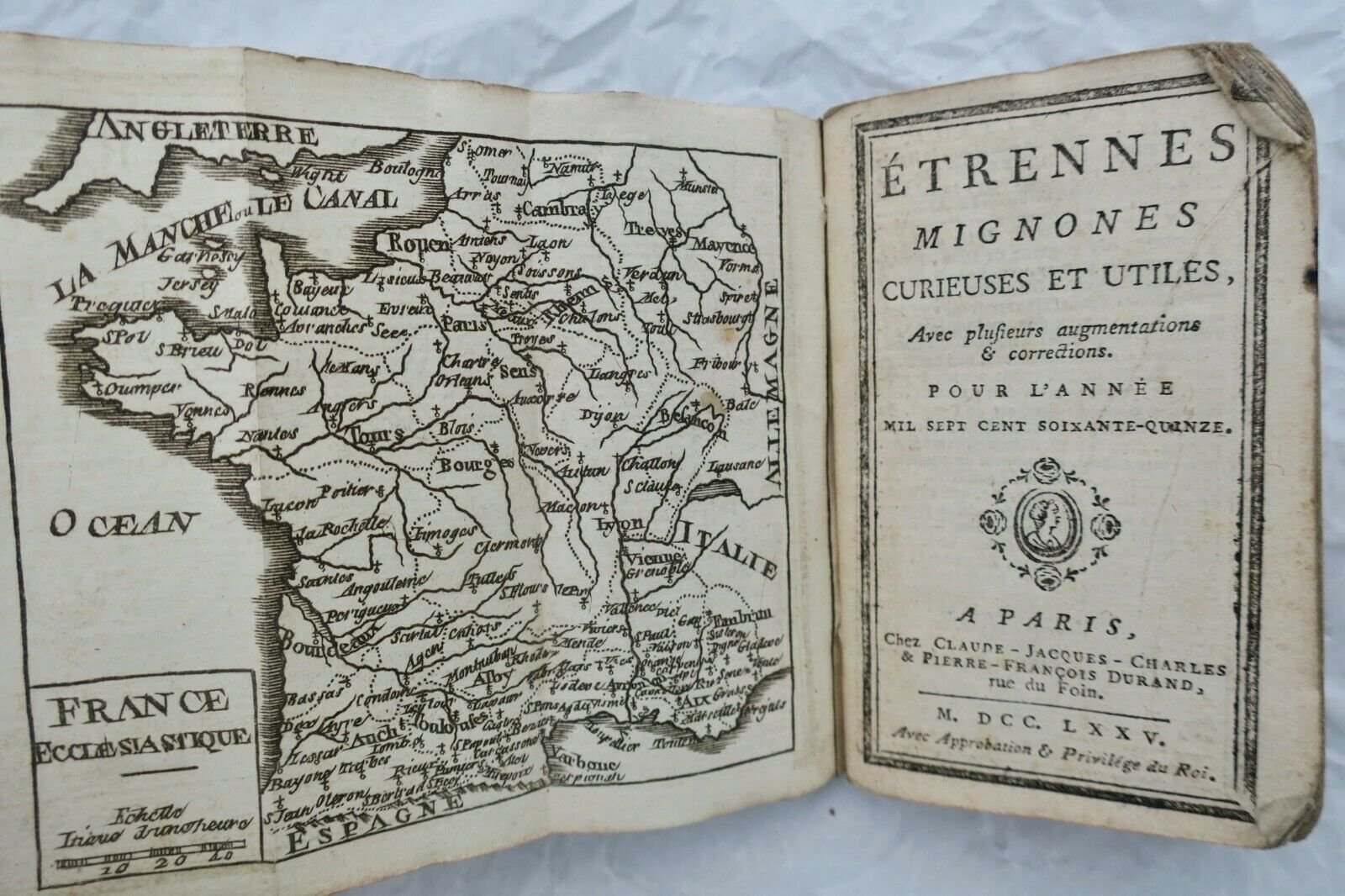
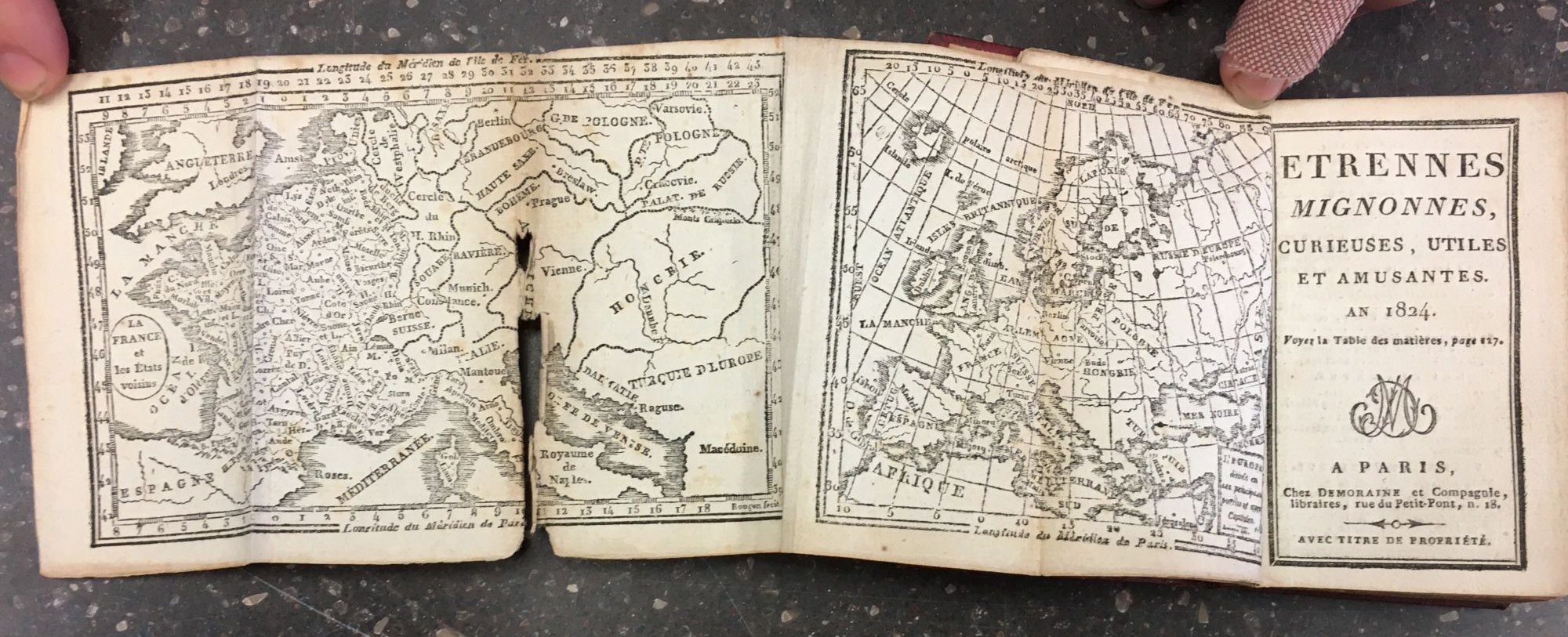
From 1728, the title became Etrennes Mignonnes, Curieuses et Utiles. Various epigraphs were printed beneath the title.
Content varied each year and often included a map of France, Paris or the world. Several changing sections could also be read.
When did the first printed French almanac appear?
It is difficult to answer this precisely. As we have seen, almanacs were born from a need, and they certainly only gradually reached their final form (ephemerides + practical information). So one may consider this or that almanac as “the first,” depending on what one thinks an almanac must contain.
If we follow Emile Beaumont, the oldest printed almanacs were Le Praktic avec souhaits de Nouvel an (1454) - whose French origin I cannot confirm - and L'Armenac des Barbiers (1464), published in Troyes.
Among these early almanacs, one deserves attention, even though it does not bear the word almanac in its title, because its fame matches its longevity: the Compost et calendrier des bergers.
The Compost et calendrier des bergers
Why study the Grand calendrier et compost des bergers (we will call it that regardless of publication year) rather than another?
Quite simply because it is one of the earliest, and its longevity makes it almost THE reference for understanding what an almanac was. Despite some variations, it always stayed true to itself. We will focus particularly on two editions: 1508 (see the full copy on Gallica) and 1640 (?) to compare with the first.
The Grand calendrier et compost des bergers appeared in Paris in 1491, published by Guy Marchand. Despite many changes of publisher (Marchand, Barnalin, Anoullet, Cauterel, Bonfons...), place of publication (Paris, Lyon, Troyes), and title (Cy est le kalendrier des bergers 1491, Kalendrier des bergers 1493, Compost et kalendrier des bergers 1496, Le Kalendrier et Composte des bergiers 1503, Le Grant Calendrier et Compost des bergiers 1518... Calendrier des bergers 1633), it lasted through the centuries and was published until the middle of the 18th century.
Let us leaf through the 1508 version.
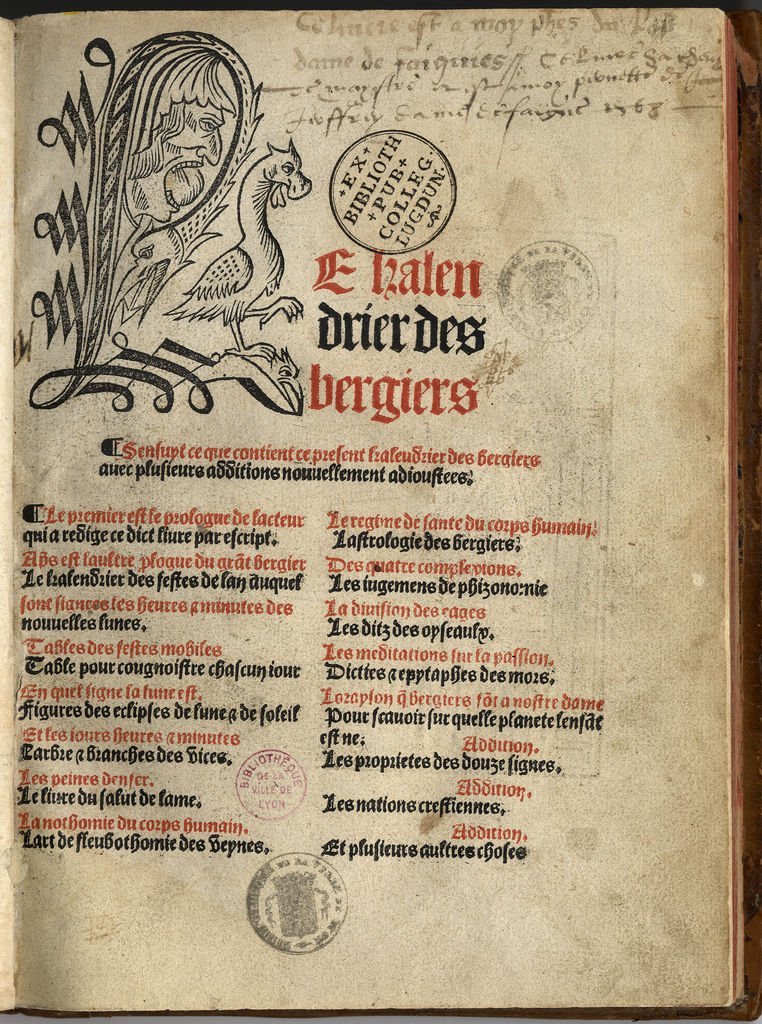
This first page (on the right) contains the table of contents:
- The calendar
- Prologue
- Calendar of yearly feasts + hours and minutes of new moons
- Table of movable feasts
- Table to know the Moon's sign each day
- Table of lunar and solar eclipses
- Tree and branches of vices
- Torments of hell
- Book of salvation of the soul
- Anatomy of the human body
- Art of bloodletting from veins
- Regimen for bodily health
- Astrology of shepherds
- The four temperaments
- Physiognomic judgments
- Division of ages
- Sayings of birds
- Meditations on the Passion
- How to know under which planet a child is born
- Properties of the 12 signs (addendum)
- Christian nations (addendum)
If we had to divide the book into major parts, we would make two:
- Understanding ecclesiastical computus
- Interpreting the world through relations between Man, Moon, zodiac and planets.
The Grand calendrier et compost des bergers addressed shepherds no more than today's postman almanac addresses postmen. The “shepherds” in the title were, by virtue of their supposed knowledge of sky and nature, the inspiration for the texts, not their readers. Inspiration not through scholarly knowledge, but plain common sense, as every preface reminds us (usually at the beginning, unlike this version where it comes after the computus): "A shepherd keeping sheep in fields, no clerk at all, with no knowledge of letters except his natural good sense and understanding, and living thus..."
The calendar preface is in fact a double preface: first that of the computus author, then that of the “master shepherd” explaining that man lives 72 years and that each month (six years) of man's year (72 years) is analogous to months of the civil year. A comparison then follows between months of the year and “months of man.”
The cover carries no date - surprising for a yearly publication. This suggests the computus may have been more a perpetual calendar than a true annual one.
Understanding ecclesiastical computus
Let us look at one page from this calendar: August, with the list of saints.
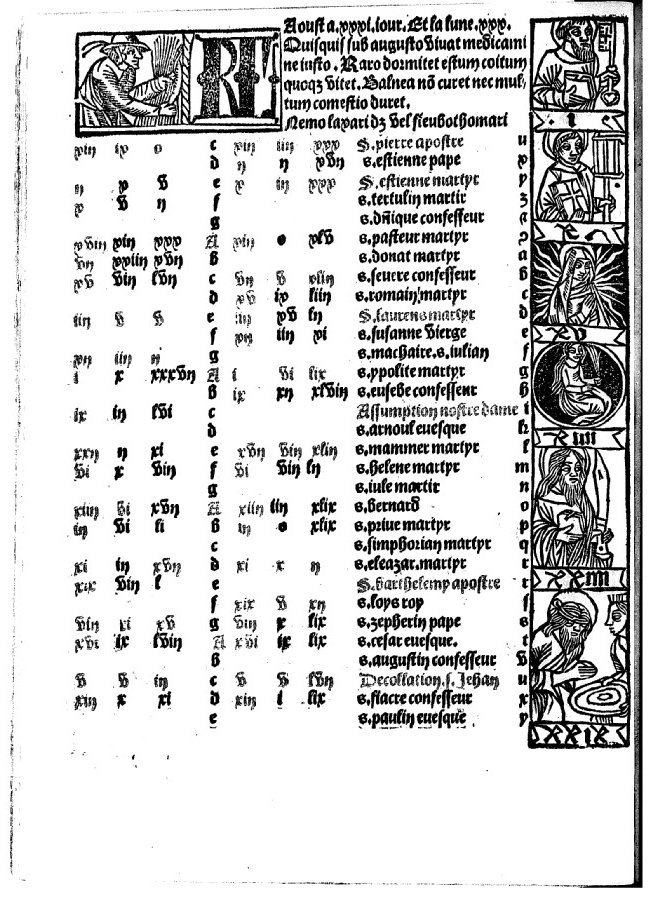
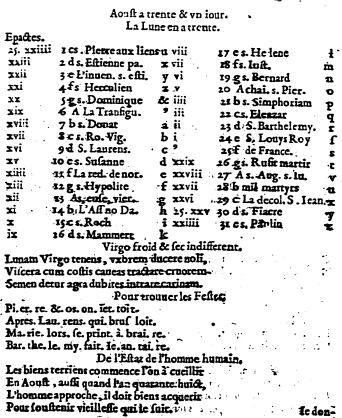
Huge differences between the two pages.
Both are admittedly quite complex - at least for us, no longer used to liturgical calendars. And because they also refer to tables through letters (a to z) and symbols (& and ') on the right, they are even harder to decipher. These tables are meant in particular to determine “in which figure the Moon is” - i.e. which zodiac sign the Moon is in. That lunar sign sets the rules of astrological medicine at the time.
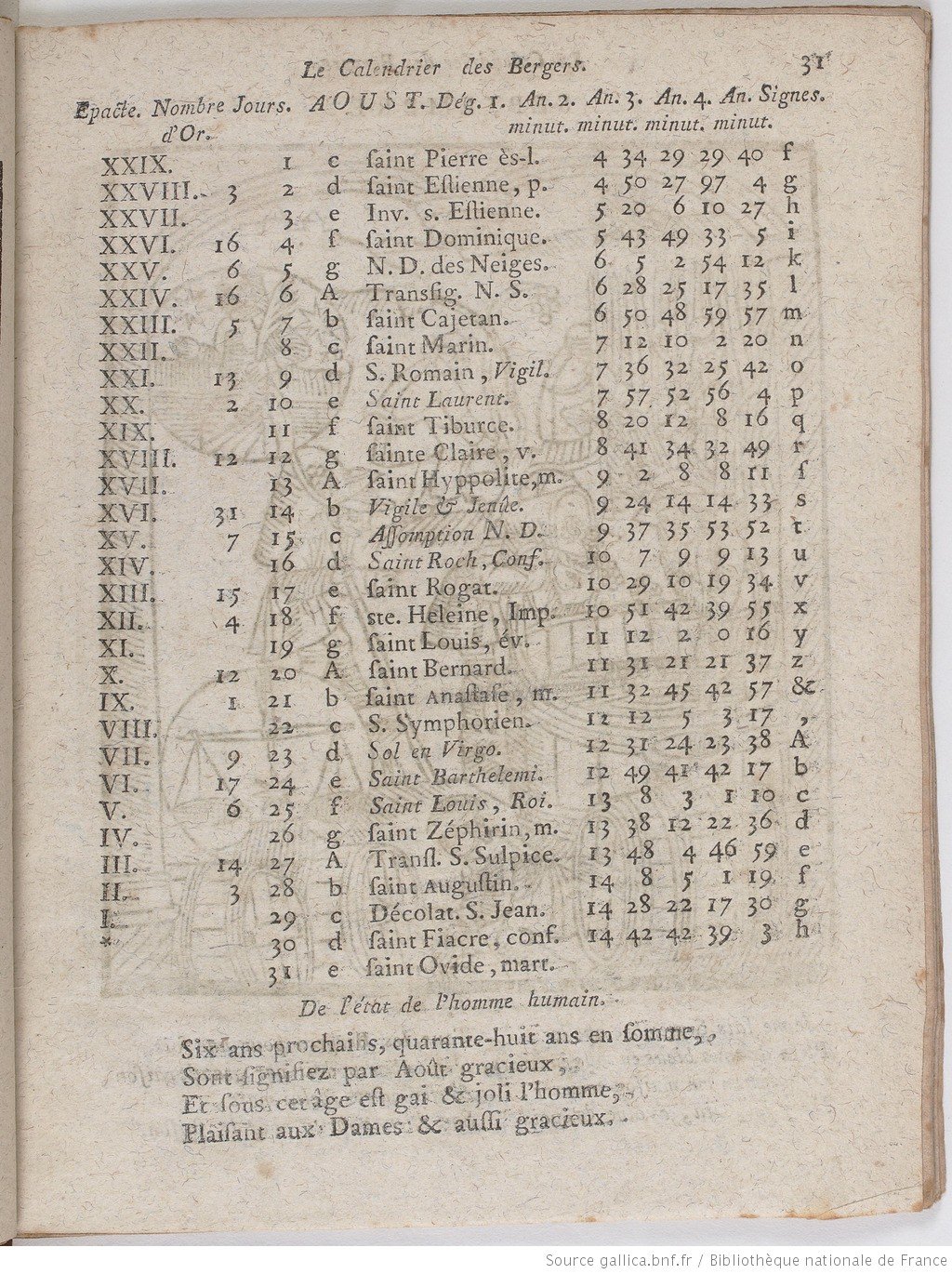
Still, note that in the right calendar, post-Gregorian reform, the concept of epact appears.
But the main difference lies elsewhere: in the left calendar, we are in full strict sanctoral logic. The only way to identify a day is by knowing the saint's name for that day. Proof: the space taken by figures on the right side of the page which, above and below the month's zodiac sign (here Virgo), indicate solemn feasts of the current month (St Peter, St Lawrence, Assumption, St Bartholomew, Beheading of St John the Baptist).
On the right, by contrast, day numbering appears and gradually enters common practice to the point that today it feels indispensable.
What these shepherds' calendars do share, concerning computus, is a strong will to popularize and explain. In both, mnemonic aids are offered to remember feasts (visible at the bottom of the right calendar under Pour trouver les fêtes - How to Find the Feast Days), the solar cycle, or the dominical letter.
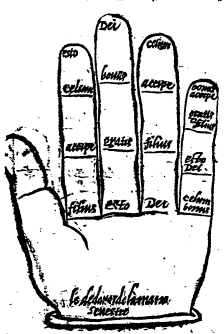
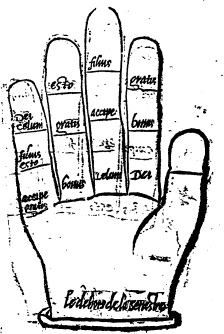
Two pages of mnemonic tools to handle computus properly. Here: determining the solar cycle and dominical letter on finger joints.
Interpreting the world through Man's relation with Moon, zodiac and planets
A few pages on solar and lunar eclipses are followed by many pages devoted to the Tree of Vices. Each page is decorated with branches represented as stems with several offshoots. Then comes the description of the torments of hell as engravings accompanied by text after Lazarus.
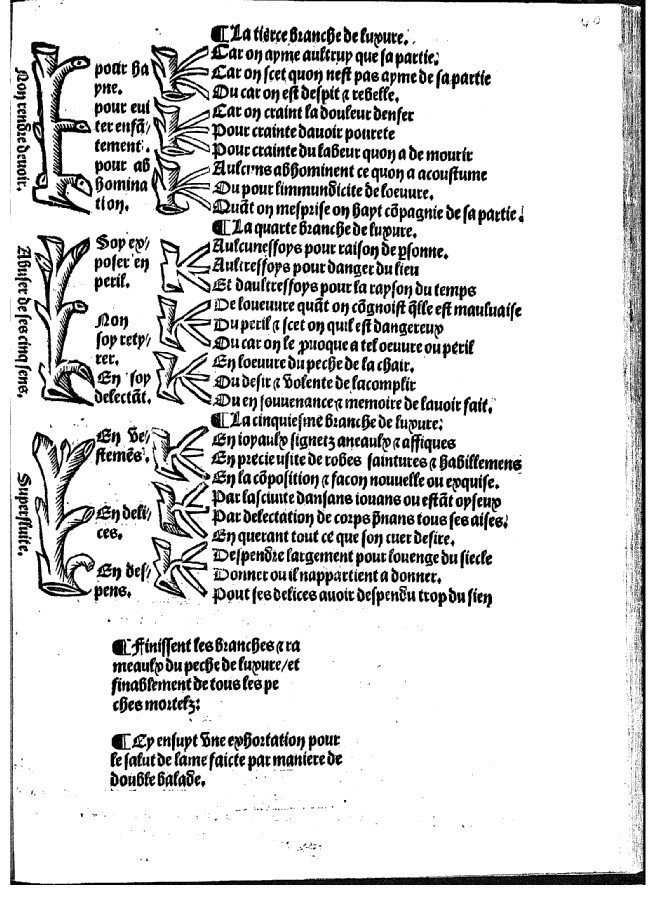
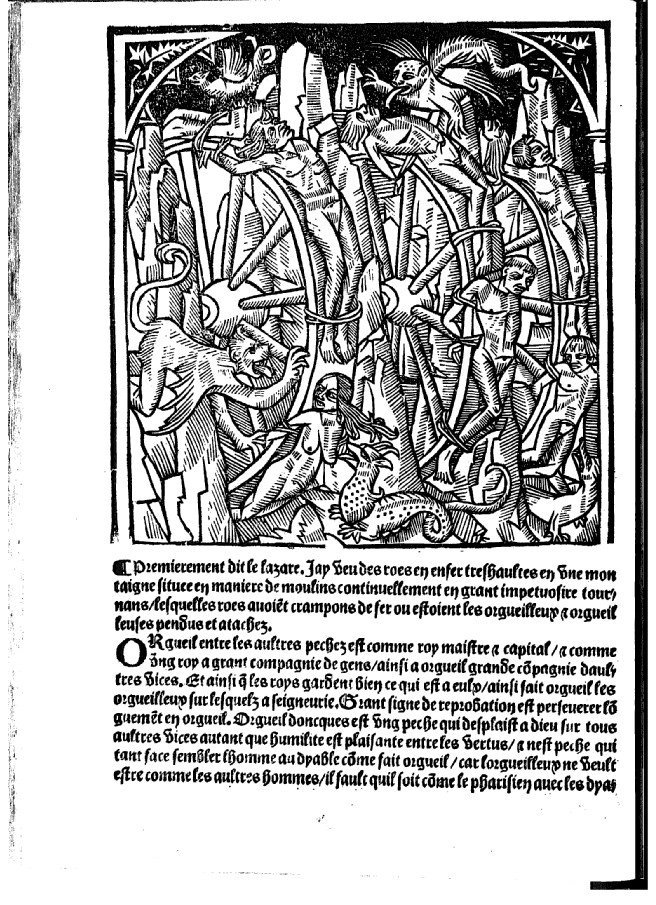
Virtues also receive their own tree, with explanations of each one's traits.
Next comes an anatomical plate whose accompanying text explains in detail where and when to perform bloodletting. We discover the major influence attributed to the Moon on medical practice.
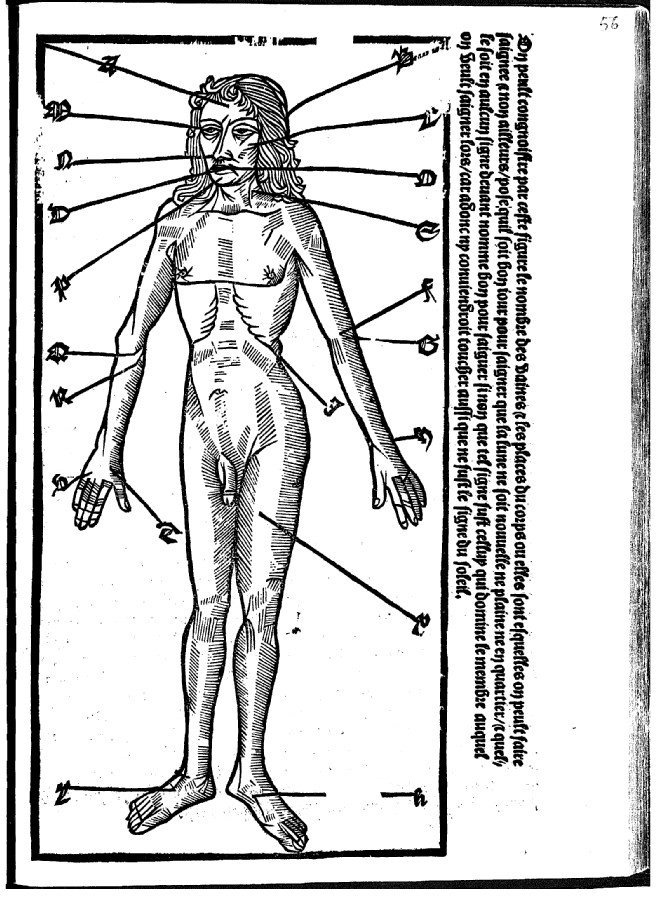
Anatomical plate explaining when to bleed and which vein to open depending on symptoms. It is a good day for bloodletting when the Moon is neither new, nor full, nor in quarter [...], and depending on which sign rules the body part to be bled. One must also consider the Sun's sign. Free translation.
Finally come prophetic chapters beginning with “signs by which shepherds know a man to be healthy and well-disposed in body” and ending with an astrology treatise describing the character of children born under each zodiac sign, after including clothing prescriptions by month: "Regimen for spring, March, April and May. In spring, shepherds should stay properly dressed, neither too cold nor too warm, such as in wool blend, fustian doublets, moderately long robes..."
Other almanacs than the Grand calendrier et compost des bergers went much further in prophecy. For example, La Nature cites an Almanac for the year of grace 1686, by M. Claude Ternet-Champenois, where one can read weather forecasts such as:
“Tuesday 22 January, St Vincent... Rainy weather
Sunday 3 February, St Blaise... Fairly fine weather
or even:
“Wednesday 27 March, Jean d'Eg... Lawsuit won
Sunday 16 June, St Bernard... severe illness
Now that we know the Grand calendrier et compost des bergers a little better, perhaps we can answer the next question: what made this almanac so popular and long-lived?
It is an almanac that seems made by a simple man, a man “of the people,” for people like him, answering daily questions: how to understand nature, what lessons to draw from it, how to reach a harmonious life grounded in common sense, how to treat myself, how to educate my children according to astral influences... In short, the simple recipes of popular success.
Almanac formats
“Reminder about formats
A book is a set of sheets, also called gatherings, bound together. Each sheet is obtained by folding a printed or blank paper sheet. The number of folds determines the format.
If the sheet is used as is, without folding, the format is called “in-plano” (flat) and has only two pages. If folded in two, it becomes two leaves or four pages, called “in-folio.” Folded again in two (four parts), it is in-quarto (in-4), and so on.
Book width and height are generally expressed in centimeters. The format can be portrait (French style) when height exceeds width, or landscape (Italian style) in the opposite case.
The bound format depends on dimensions of the paper used for printing and the number of folds from that initial format. Hence traditional names: in-folio (sheet folded in two), in-quarto (folded in four), in-octavo (folded in eight), in-seize (folded in sixteen, giving 32 pages)... This notation came with traditional press-sheet names: Pot (31 x 41), Couronne (37 x 47), Ecu (40 x 52), Coquille (44 x 56), Carre (45 x 56), Raisin (50 x 65), Jesus (56 x 76), Colombier or Colombus (60 x 80).
Source http://www.imprimeriedespuf.com/base/fiche167.htm (archive)
Over the centuries, almanacs appeared in almost every format, from in-4 to in-32. A few “gadget” mini formats also appeared.
A format chronology - for what it is worth - would show an initial in-4 format, then around 1750, smaller formats such as in-24 and in-32.
It seems that under Louis XIV, in-4 format was more or less monopolized and reserved for official or semi-official publications.
From around the middle of the first half of the 17th century, a new style of almanac flourished, containing predictions of all kinds, far beyond traditional natural astrology linking man with nature through zodiac and weather.
This time predictions, under authors claiming to be both mathematicians and astrologers, touched health, wars and other divinations hidden behind pseudo-scientific language.
Thus appeared in 1637 the Theurgic predictions for eighteen years calculated for our true climate, the pole being elevated 49 degrees, 50 and 6 minutes, all reckoned according to the most secret doctrine of astrology of ancient Arab astrologers and Hebrew Kabbalists, by Master Eustache Noel, priest of Sainte Marthe, professor of divine and celestial sciences. According to John Grand-Carteret, author of Almanachs Français (French Almanacs, bibliography of almanacs from 1600 to 1895), the author says in his preface that astrological science, "true gift of God, is the surest among all others, and knowledge of it is necessary, especially for the physician, to proceed methodically in curing the sick, to discern when it is good or bad to take medicine, to use venesection, and when it is dangerous." In the same line, the almanach historial (historical almanac) for 1636 followed suit. Its author called himself a highly renowned calculator of celestial ephemerides and, for good measure, disciple of Master Eustache Noel.
Neither the King, for political reasons, nor the Church, which saw these works as an attack on divine providence, looked favorably on such almanacs. The King therefore had La Connaissance des Temps published in 1679, containing only purely mathematical and astronomical data, in ephemeris style. Then came the 1682 edict, already mentioned, followed by Almanach Royal, first published in 1699. It adopted a Connaissance des Temps-type calendar and a list of major state bodies, eventually including nearly 500 pages of names. It lasted 93 years, until 1792.
But another Almanach Royal interests us here, sometimes called Almanach parisien (Paris almanac) or wall almanac. It had an unusual format: 50 cm wide by 80 cm high. It was published between 1661 and 1715.
Louis XIV's wall almanac
Let us examine one example and look at its design and content.
Design

Most of the almanac is an engraving produced by intaglio printing (paper and an inked engraved copper plate are pressed between rollers; the engraving then appears on paper).
The almanac is meant to recount major events of the previous year and may therefore rightly be called an almanac.
Since copper plates of the period measured about 50x40, two plates were joined to obtain the desired format. Looking closely, one can see the seam line on the image.
This joining had two advantages:
- first, obtaining a larger format.
- second, allowing diffusion of the main-image theme outside the calendar, and therefore outside any notion of year.
Intaglio engraving took a great deal of time, and copper plates were often begun several months before year-end. To avoid missing late-year major events, cartouches (circles and ovals near the calendar) were left blank as long as possible, then completed just before printing with etched vignettes that were faster to produce.
Names of characters - not always very similar to reality - are indicated directly on the engraving, if you look closely.
As for the calendar proper, it occupied part of the engraving. It too was typeset or pasted at the last moment. It indicated lunar cycles, weekdays and saints' feasts.
Somewhat like our post-office calendars, several themes were available each year. This leads us to look at the content of these themes.
Content
One thing is certain: these engravings are propaganda almanacs. Their themes revolve around one figure: Louis XIV. In a phrase that sounds like a book title, it is Louis XIV: his life, his works.
Knowing that intaglio allowed many copies, that up to six themes per year were created, that engravers were closely watched by royal police, that engravings by nature reached peasants, nobles and bourgeois alike, and that their size made them suitable for wall display, one can easily imagine the weight and impact of royal propaganda in these almanacs - in all directions, every day.
But seeing these almanacs only as propaganda tools is too narrow a view. For ordinary people of the time, they represented much more.
As we will see through a few royal almanacs, they were at once who's who, fashion article, interior-decoration piece, history source, daily-life document, political object and architectural reference.
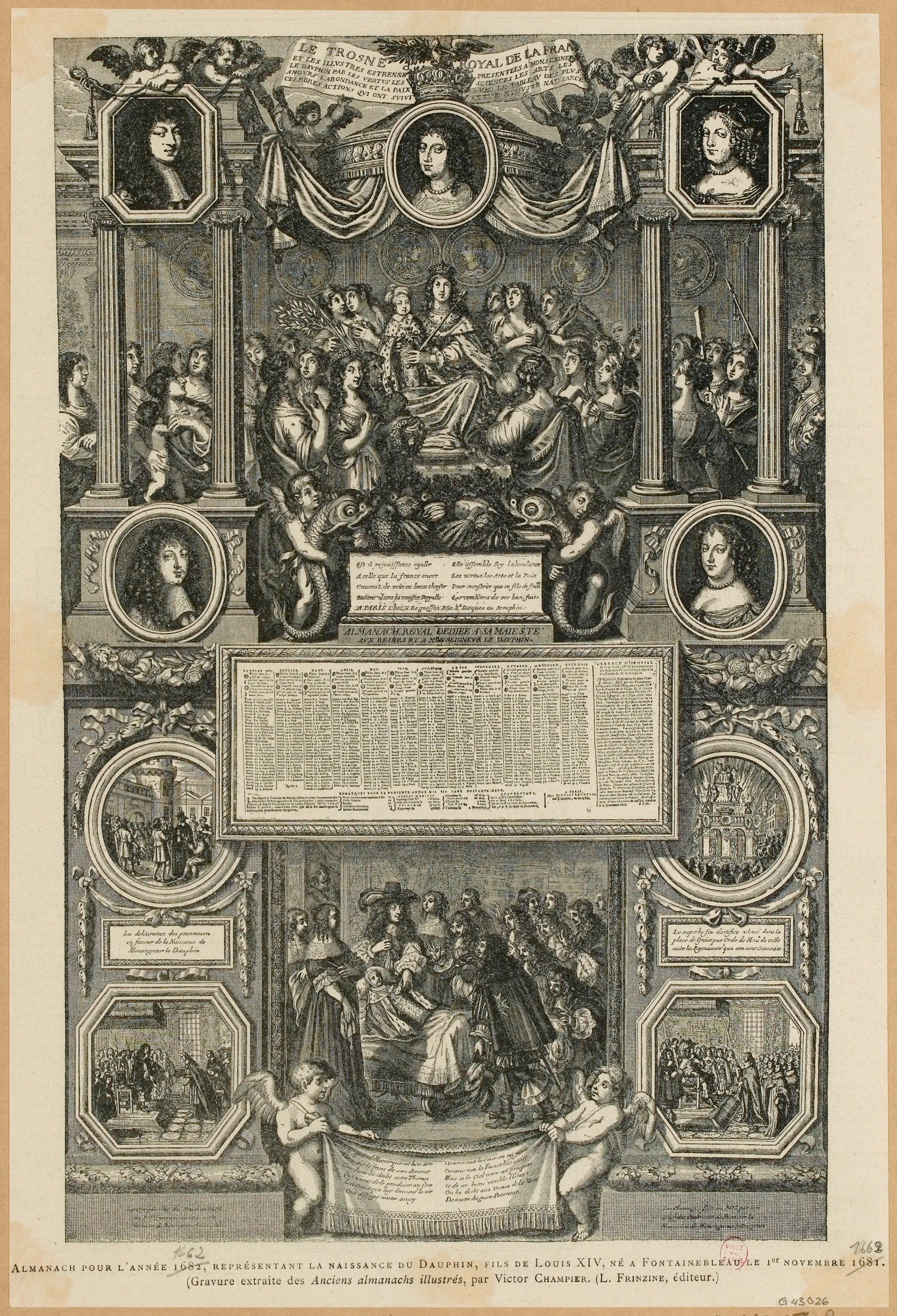
Almanac 1662 - “The Royal Throne of France”.
Family who's who, with vignettes from left to right and top to bottom: the king, Anne of Austria, the queen, Monsieur (Louis XIV's brother), Madame (Henriette of England).
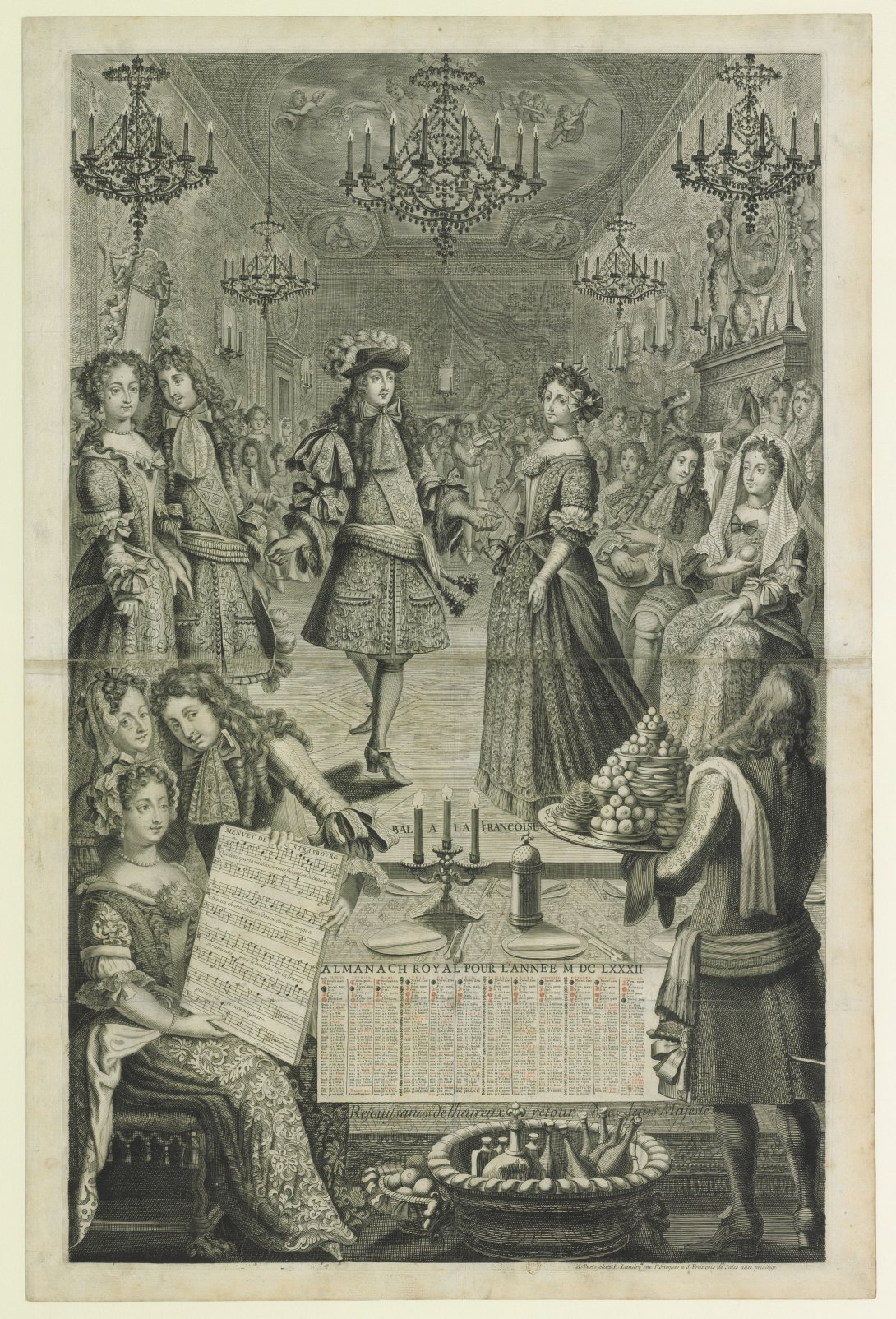
Almanac 1682 - “French-style Ball”.
Art and fashion: Mme de Guise, at lower left, listens to Marc-Antoine Charpentier holding the score he composed. The costumes and dresses document fashion of the time. Learn more.
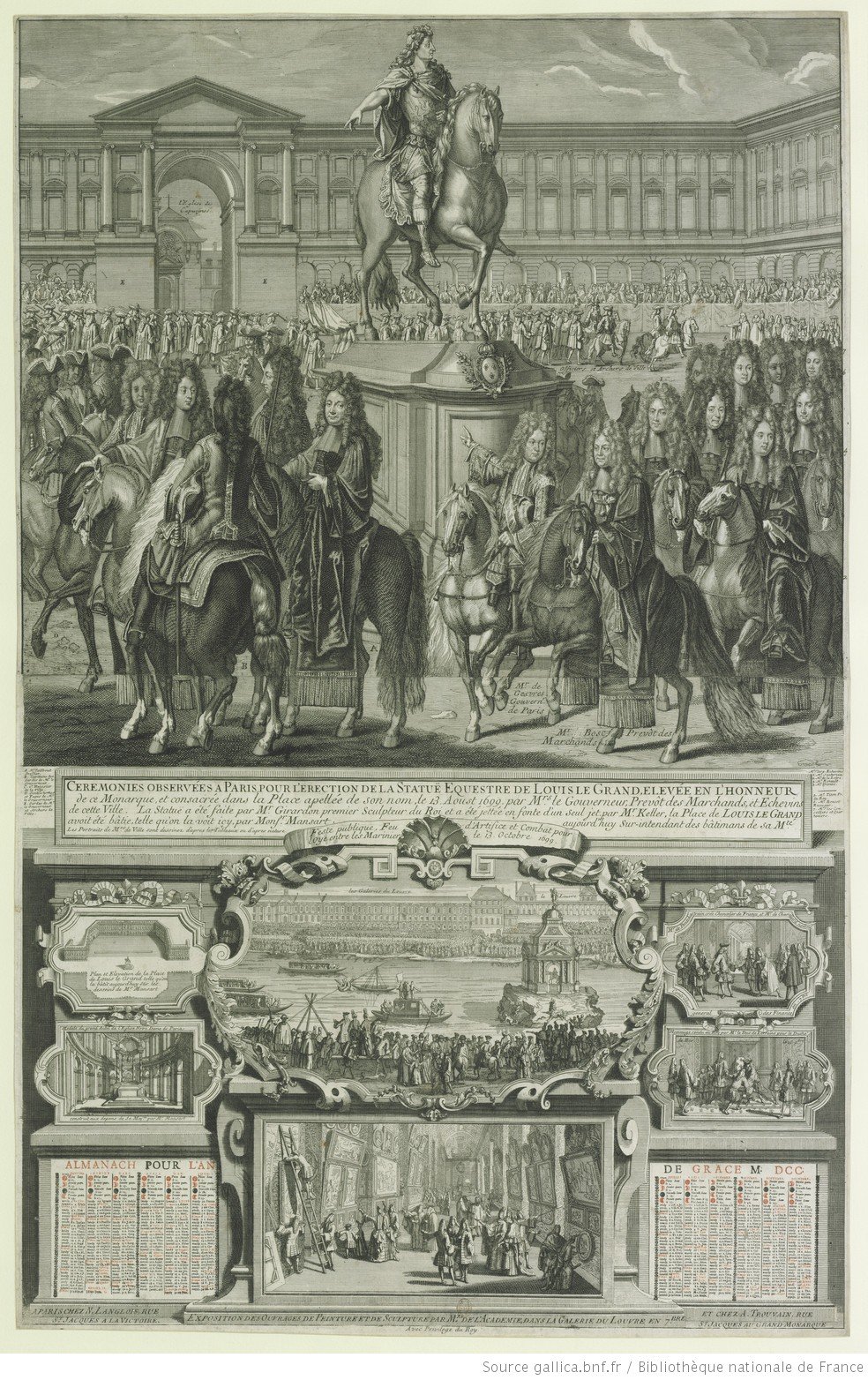
Almanac 1700
Architecture: inauguration of Louis XIV's statue on today's Place Vendome. In the background, one clearly sees the facades around the square, while the top-left vignette gives an overview.
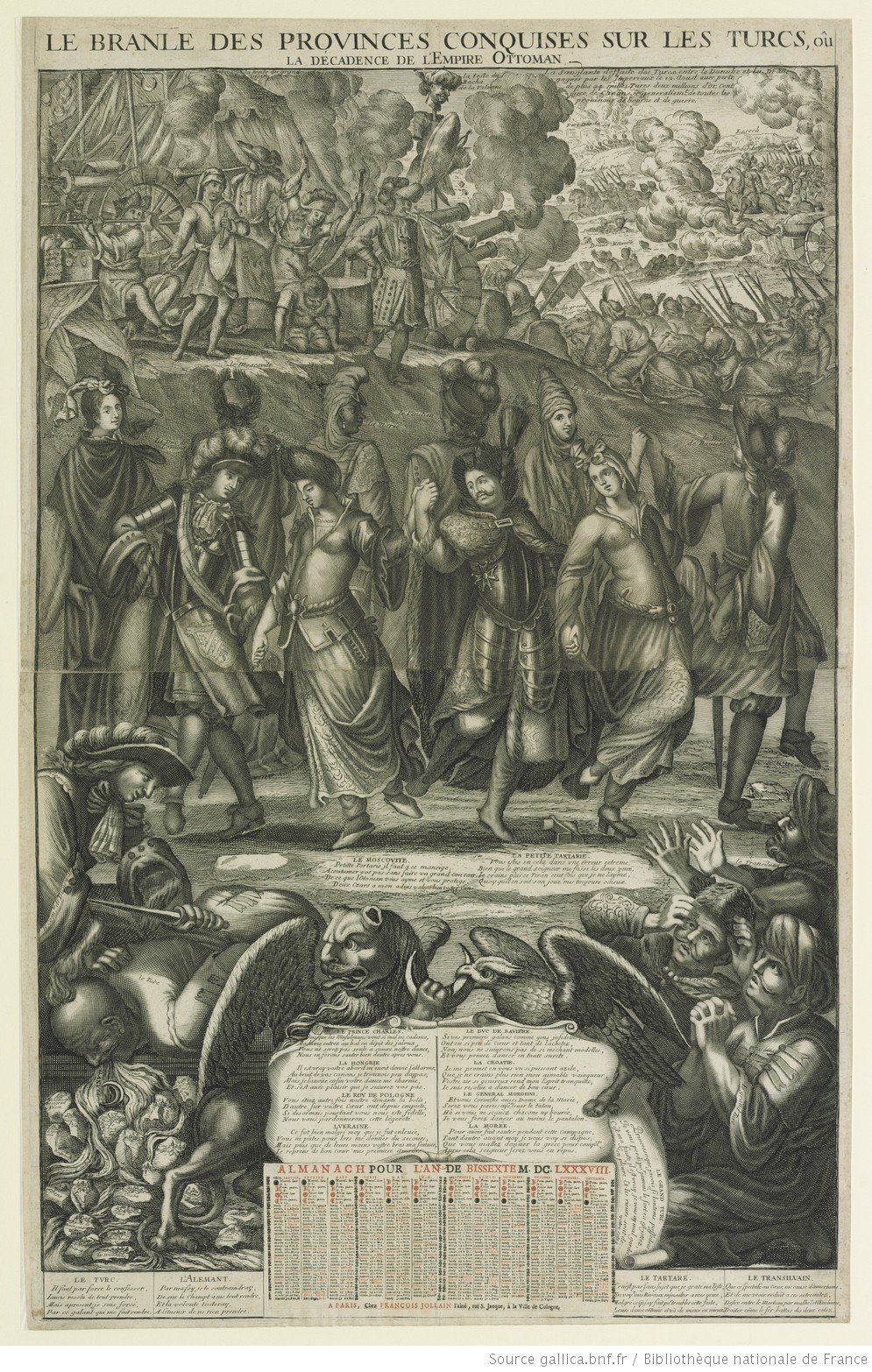
Almanac 1688
History and conquests: Louis XIV's victories in his war against the Turks.
Special issues even appeared, such as this faux 1701 almanac titled Histoire generale du siecle, recalling in dozens of vignettes key events of the past century. In the foreground stand Henri IV, Louis XIV and Louis XIII side by side, while the Pope appears in the background. The place usually reserved for the calendar is occupied by Explication historique de tout le sujet.
Who sold almanacs, and to whom?
Who better to tell us the intended audience of these calendars than John Grand-Carteret, already mentioned. In the preface to his vast bibliography, he writes: "The almanac, true Bible of humanity; the almanac, multiform book that took every shape, every format, now an instrument of propaganda and popularization, now a little luxury jewel; here for country folk, there for gallant abbés and coquettish marquises [...], the almanac that has rightly been called the only book from which people who cannot read may still spell."
That is clear enough: somewhere there is always an almanac someone can consult with benefit, desire to learn, or simple pleasure. The almanac reaches all regions and all social classes.
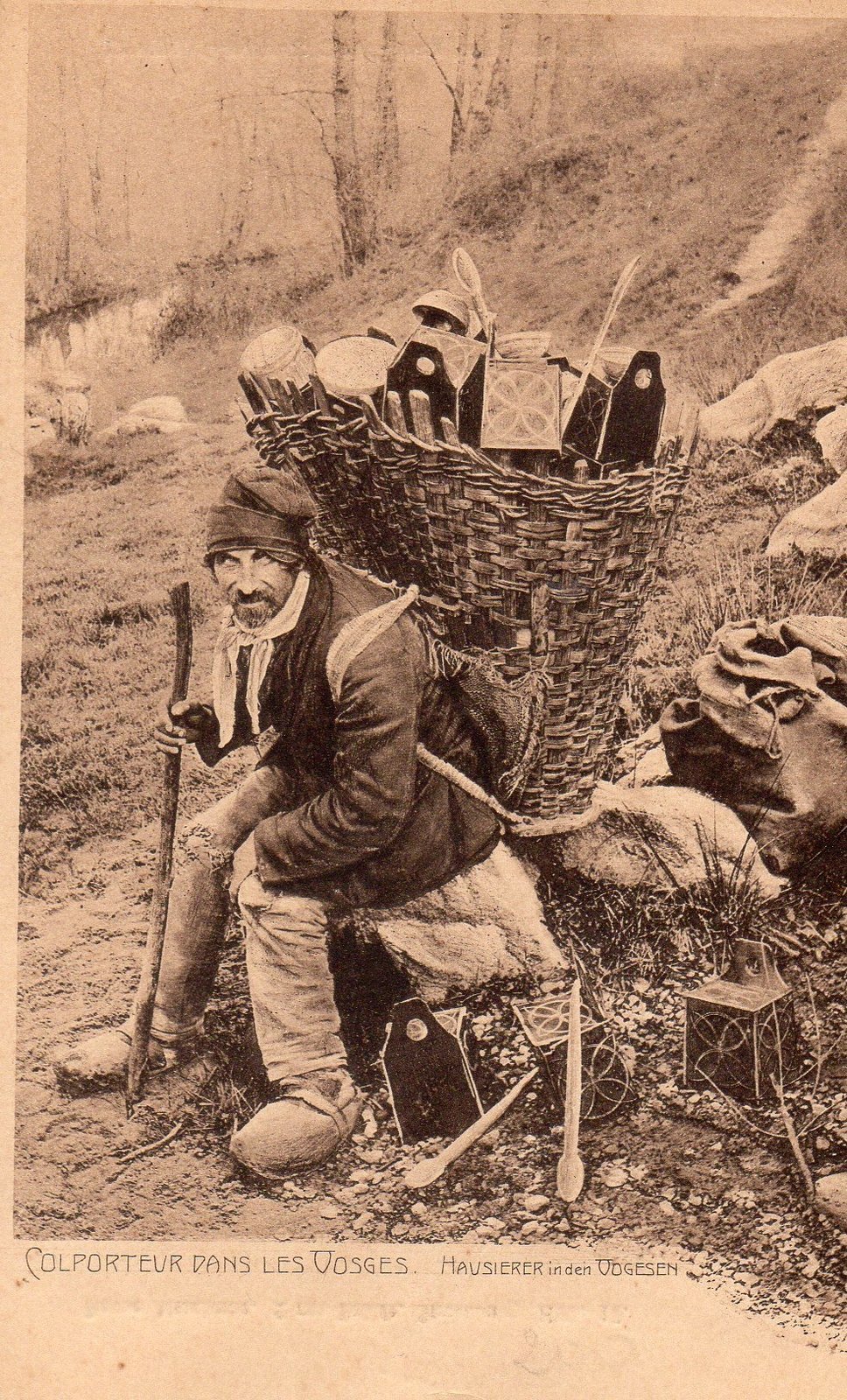
Its broad circulation was largely due to peddlers, for whom it formed part of core stock as they traveled across France from the 17th century onward.
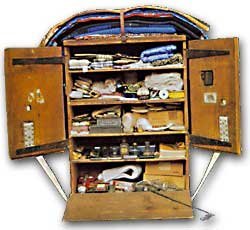
According to Jean-Noel Lallemand, historian and publisher, the word colporteur comes either from carrying all one's goods (com-porteur), or more likely from the box carried around the neck (col-porteur). In a 1997 lecture, he added: "In the classic age of peddling, Auvergnats, Alpines, Normans or Commingeois were called merchants, penny-earners or backpack carriers, from the pack they carried. This traveling shop, made of wicker or wood, with or without drawers, contained all their stock: thread, needles and trimmings, of course, but also ink powder, costume jewelry, stationery and devotional medals, pious objects, cutlery, prints and almanacs."
Here we find our almanacs in pride of place in this heterogeneous mix, alongside cheap books of the Bibliotheque bleue, named after the blue covers used by its Troyes publisher.
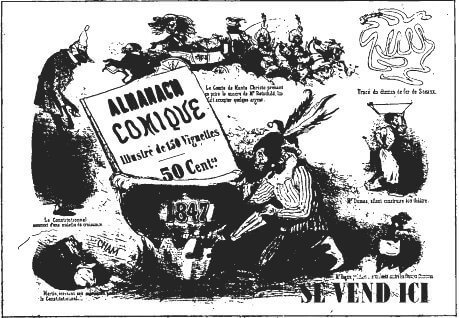
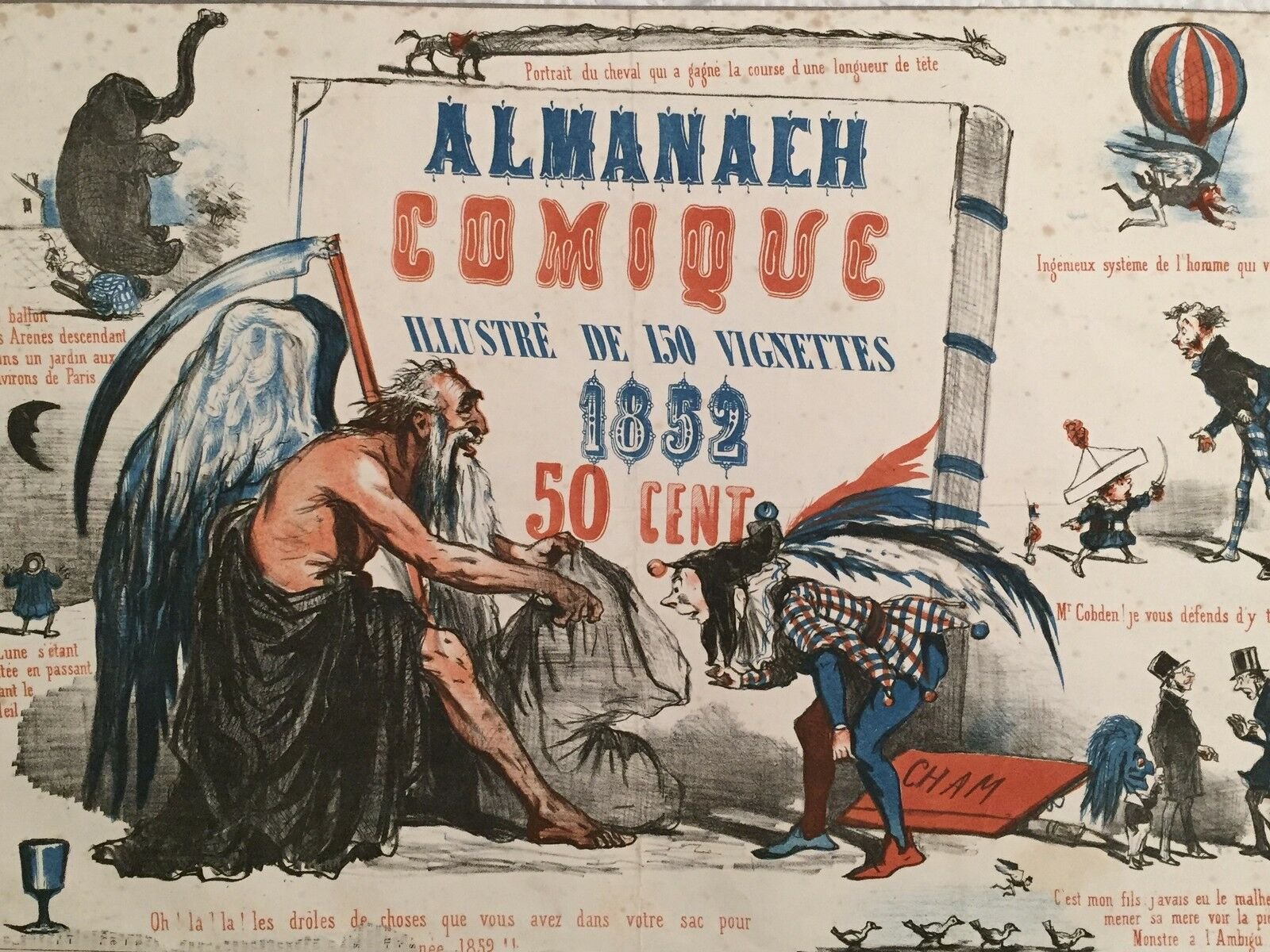
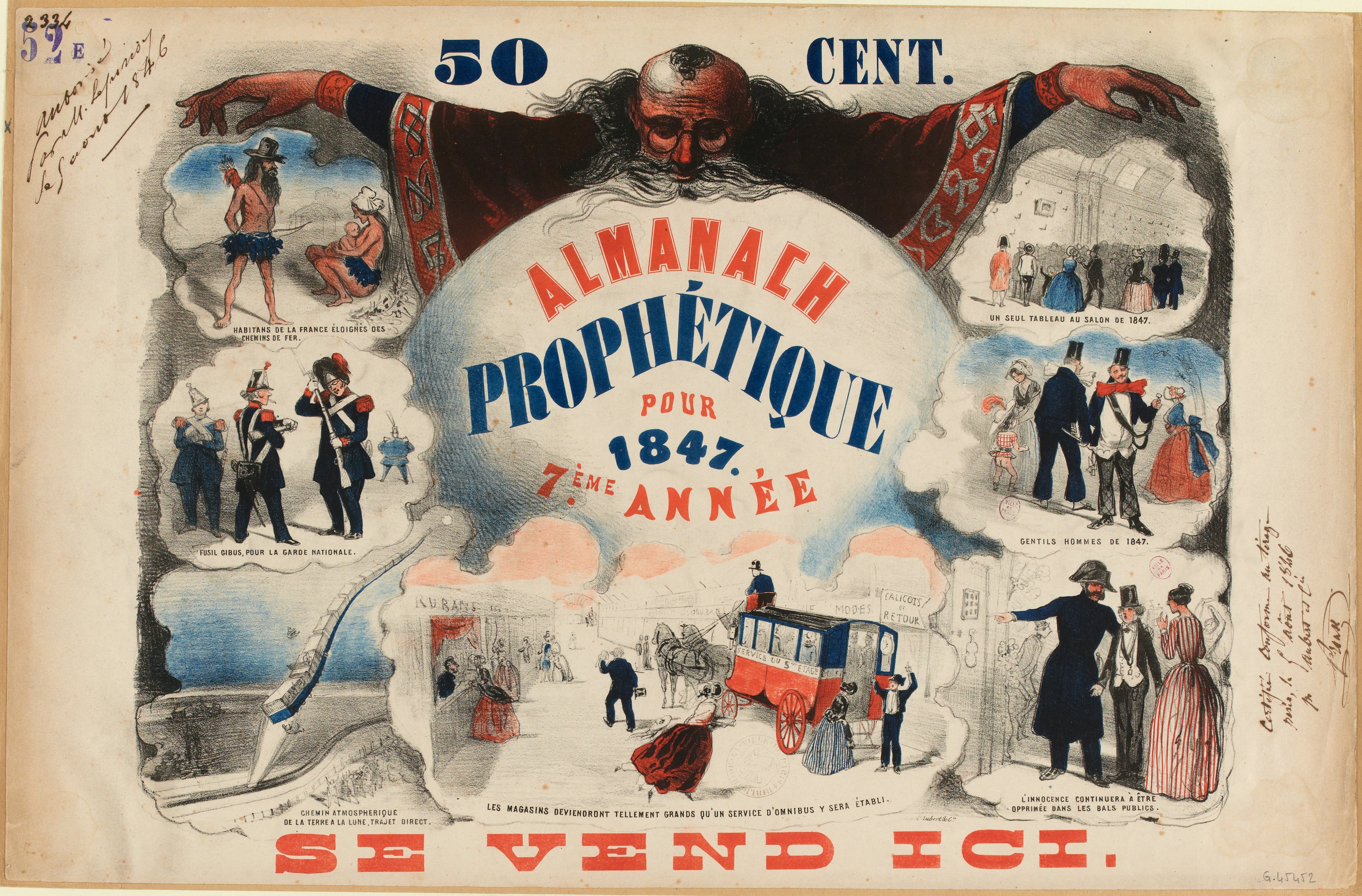
At the Revolution and later, almanacs were also distributed in bookshops and advertised through annual posters displayed at entrances or inside stores.
In conclusion
At the height of their splendor, almanacs were a true institution - and woe to anyone who dared tamper with them, starting with the publisher. Proof can be read in the old scientific journal La Nature, under the pen of an anonymous columnist:
“It should be noted that buyers like to find every year, in their usual almanac, the same appearance and, so to speak, the same imperfections. A curious fact is cited in this respect: the Liege almanacs of Mathieu Laensberg are dreadful little books of awkward format, printed on thick rough paper with nail-head type. One year, the publishers tried to improve them by printing on ordinary paper with new type; to their great astonishment, sales were almost nil. “This is not our almanac,” regular buyers said, and a new edition had immediately to be printed on candle paper with the old nail-head type.
Which newspaper trying to boost sales has not reached the same conclusion?
To conclude, let us once more give the floor to John Grand-Carteret, and read what he wrote in 1896: "The almanac as our fathers conceived it, the almanac lovingly collected today by admirers of past elegance, seems to have disappeared forever, and the yearbook has taken all its ground."
Not so sure. Some almanacs still exist today: Vermot, Vieux Savoyard, and Vieux Dauphinois.