Let's say it right away: the Advent calendar has nothing in common with the other calendars described on this site, which define a “system dividing time into years, months and days.” Source: Le Petit Robert.
It corresponds more to the third definition of calendar given in the same dictionary: “A schedule, date by date, of a set of activities over a given period.” It is in fact just a reuse of part of our calendar, from 1 to 24 December, as a countdown for children before the wonderful day of 25 December, the day of presents.
It comes in different forms (small bags hanging on the tree, a house with 24 little doors, etc.), all based on the same principle: each day offers a small gift to children (usually sweets) while waiting for Christmas Day and its flood of presents.
They also flourish online: when you click on a day, you can read a story or other content. I am surprised the French national lottery has not yet fully taken over the concept.
But let us be honest: this calendar is of little interest for our purposes. That is why this page is not in the section of the site dedicated to calendars.
So should we stop here and close the page?
Admittedly, at the end of November 2003, just a few days before Christmas, it would be a shame not to use the occasion for a short study of Advent, Christmas, and the birth of the Advent calendar.
Because Jesus being born on 25 December - that is pure myth.
Christian feast and pagan feasts
The early Churches knew only one feast: the day of Christ the Lord, that is to say Easter, whether annual or weekly (Sunday).
As we saw on the page about the Julian calendar, in 46 BC Julius Caesar adopted the calendar project proposed by Sosigenes of Alexandria. In it, the spring equinox was set on 25 March and the winter solstice on 25 December.
In ancient Rome, December was marked by several feasts.
First came feasts devoted to the cult of Saturn: the Saturnalia.
They were a kind of carnival characterized by overturning social hierarchies and moral conventions. Masters would serve their slaves.
Originally, the feast itself lasted only one day, 17 December, anniversary of the Temple of Saturn. Caesar and then Caligula each added two days, and the Saturnalia ran from 17 to 23 December. Strictly speaking, only the 17th, 19th, 21st and 23rd were festi, dedicated to the gods; the others were simply feriati, non-working days and occasions for celebration.
“Encyclopaedia Universalis: Crowds poured into the streets shouting ritual cries: Io! Saturnalia! Bona Saturnalia! It was customary to exchange invitations and small gifts (originally ritual objects: wax candles lit at nightfall, and clay figurines, probably first linked to symbolic human sacrifice). Hostilities had to cease, justice was suspended, prisoners were amnestied, schools closed. As in the Golden Age when all men were equal, Saturnalia was meant to abolish distance between free men and slaves: free men refrained from wearing the toga; all, free and slave alike, wore the pileus, freedman's cap and symbol of liberty. In the household, masters offered slaves dapes (ritual meals: roasted meat and wine) before eating themselves, or shared a feast with servants as equals; slaves, naturally, did not work: they were allowed - unlike usual - to drink wine to intoxication and to gamble (often with nuts), and enjoyed relative freedom of speech. It is true that during these days the wealthy often withdrew to the countryside to avoid noise and humiliation.
Then, after the Saturnalia, came the feast of the Sigillaria (seals), during which children received small gifts.
Finally, the most widespread cult in the empire was likely that of Mithras, of Indo-Iranian origin (where Mithra was the sun god), imported to Italy by Roman soldiers. It celebrated the birth of the sun god, natalis solis invicti, reborn as days began to lengthen again.
Knowing that Christianity and Mithraism, as rival religions, did not get along, we can begin to guess what comes next.
Knowing also that emperors readily identified themselves with the sun (they would not be the only ones!), and therefore viewed this natalis invicti as their own glorification, we better understand how large this cult became. So much so that in 274 Emperor Aurelian declared it a state religion and naturally fixed its celebration on 25 December, the supposed date of the winter solstice in the Julian calendar.
At the end of the 2nd century, Easter appeared as a fifty-day period, annual solemnization of what Sunday celebrated each week.
In the following decades, Christianity gained ground and looked more and more critically at these pagan December feasts.
In 325, at the initiative of Constantine the Great, Christian at heart if not always in political compromise, the Council of Nicaea reaffirmed Christ's divine nature.
That was enough to celebrate, if not Jesus' historical birth date (unknown), at least the Lord coming into the world. Since the Bible calls him the Light of the world, the date seemed obvious: the winter solstice.
The pagan winter-solstice feast, also called “Natale of the Sun”, became the Natale of the Savior. And Natale became Noel in French.
The first official mention of Christmas is said to be found in a Roman calendar of 336. It appears again in a calligraphed calendar dated 354, the Chronograph, likely produced by a Greek, Dionysius Philocalus, for a wealthy Venetian named Valentinus. Christmas is noted there on 25 December.
Christmas: solstice or 25 December?
Before continuing our journey through time, let us open a short parenthesis to settle a date problem:
We say the feast of the sun, and therefore Christmas, corresponds to the winter solstice. Yet we know the winter solstice falls between 21 and 23 December. So why Christmas on 25 December?
Quite simply because at the start of the Julian calendar, the winter solstice was indeed on 25 December. But since that calendar was imperfect (see this site's pages for details), it drifted and accumulated 3 extra days every 400 years (the offset measured by the Council of Nicaea). Gregory corrected the error accumulated since Nicaea, but not the one from Caesar to Constantine.
Now Christmas is a fixed feast and is therefore celebrated on 25 December.
That closes our parenthesis.
Epiphany
Alongside Christmas in the Western Church, Epiphany emerged in the Eastern Church. The motive was similar: to counter pagan winter-solstice manifestations. In Egypt, that celebration was set on 6 January.
Epiphany, from Greek epiphaneia (manifestation), was God's manifestation in humanity: birth, angels, shepherds, Magi, Christ's baptism, miracle at Cana...
The issue was resolved by... keeping both feasts:
- In the West, Christmas is Jesus' birth; Epiphany is dedicated to the Adoration of the Magi.
- In the East, except for the Armenian Church which does not celebrate Christmas, Epiphany still gathers the Adoration of the Magi, angels, shepherds and Christ's baptism.
A side note: during Roman Saturnalia, it was customary to send cakes to friends. In the Middle Ages, this tradition continued and, since the period coincided with feudal dues, offering a “king's cake” to one's lord became customary. This is likely the origin of Epiphany's galette des rois.
Following recent reforms of Roman liturgy, Epiphany in countries where it is not a public holiday (such as France) is moved to the Sunday between 2 and 8 January.
Advent
In the 4th century, the Christmas period began to be structured like Easter, with appearance of a “Christmas Lent,” as Hilary of Poitiers called it. Three weeks marked by penance and reflection were set as preparation for Christmas at the Council of Saragossa in 380.
We must wait until the 6th century to find the notion of Advent as we know it.
Adventus designated the coming of an emperor. Gradually, in Christian language, it came to mean the coming of Christ. I do not know whether it is still the case, but during this highly ascetic period, the Catholic Church did not allow marriage ceremonies during Advent.
Advent begins on the Sunday closest to 30 November and continues up to, but not including, Christmas.
In some countries such as Germany, various traditions are tied to this period. For example, a wreath made of evergreen branches (fir, holly, ivy...) is hung or placed. Four red candles are set on it. Each Sunday of Advent, one candle is lit, so that all four are lit by Christmas Day. This wreath is called the “Advent wreath” (Adventkrantz).
A quick tip: in France, how can you tell whether it is an Advent Sunday? Just go into a church during an office. If the priest wears purple vestments, it is Advent.
Other traditions may mark Advent. We will not review them all. Let us mention, for France, 4 December, Saint Barbara's day. Besides being patron saint of miners, firefighters and prisoners (because her father, enraged by her conversion in the 3rd century, beheaded her and... was struck from above as punishment), she is also linked to fertility rites. In Provence, Saint Barbara's day opens Christmas festivities. Lentils are set to germinate. If young shoots appear by Christmas, it is considered a sign of good harvest in the coming year.
To clarify: the Christmas period begins on the first day of Advent and ends on Epiphany. Christmas time itself runs from 25 December to Epiphany.
In the early Christian Church, there was not yet a midnight mass but a daytime mass celebrated at Saint Peter's in Rome. The Urbi et Orbi blessing (“to the city” - Rome - and to the world) only became tradition much later.
Only in the 7th century, under Pope Gregory the Great, were the four Christmas offices established: vigil on the evening of 24 December, midnight mass, dawn service, and morning mass.
Advent calendars
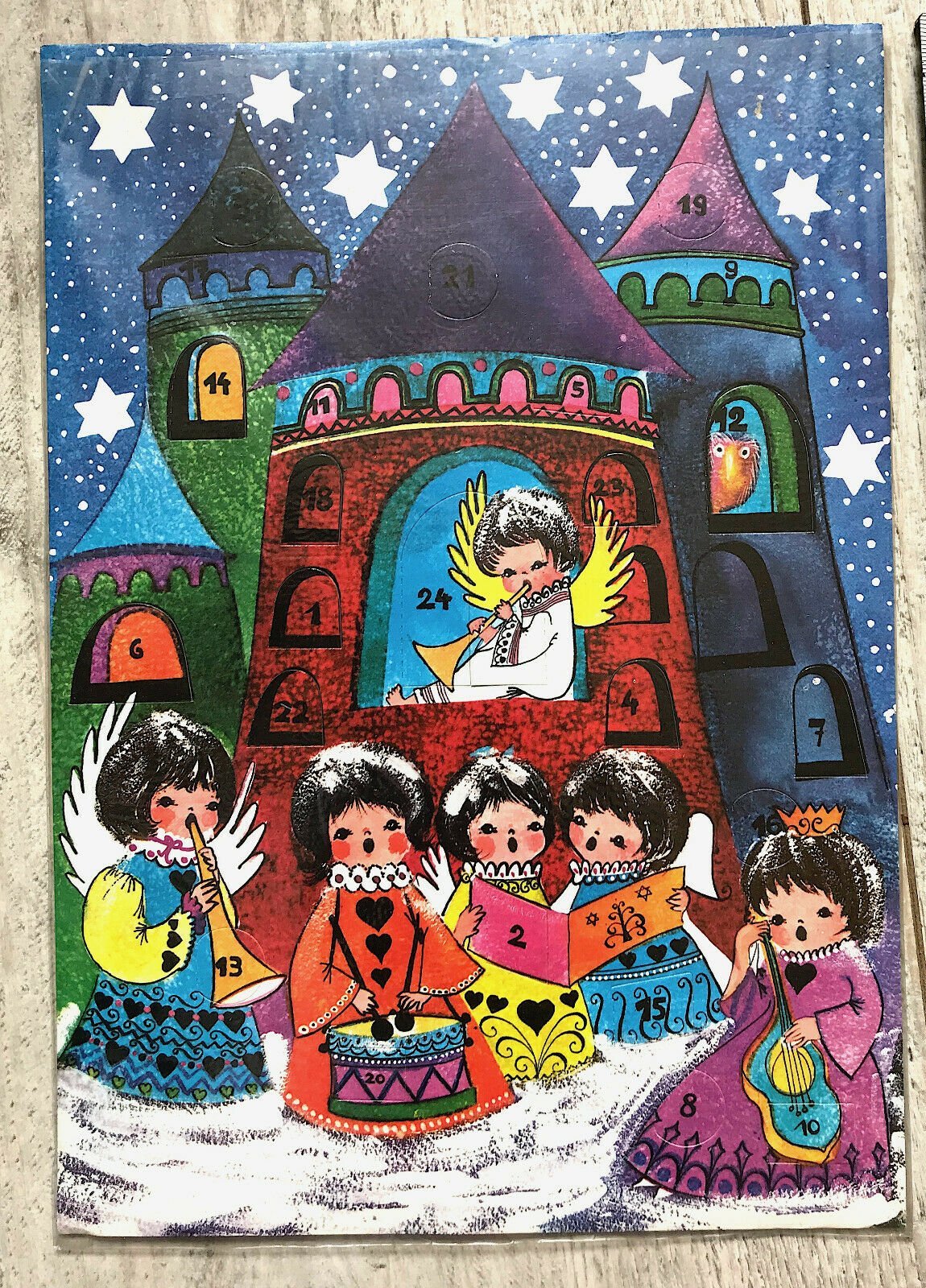
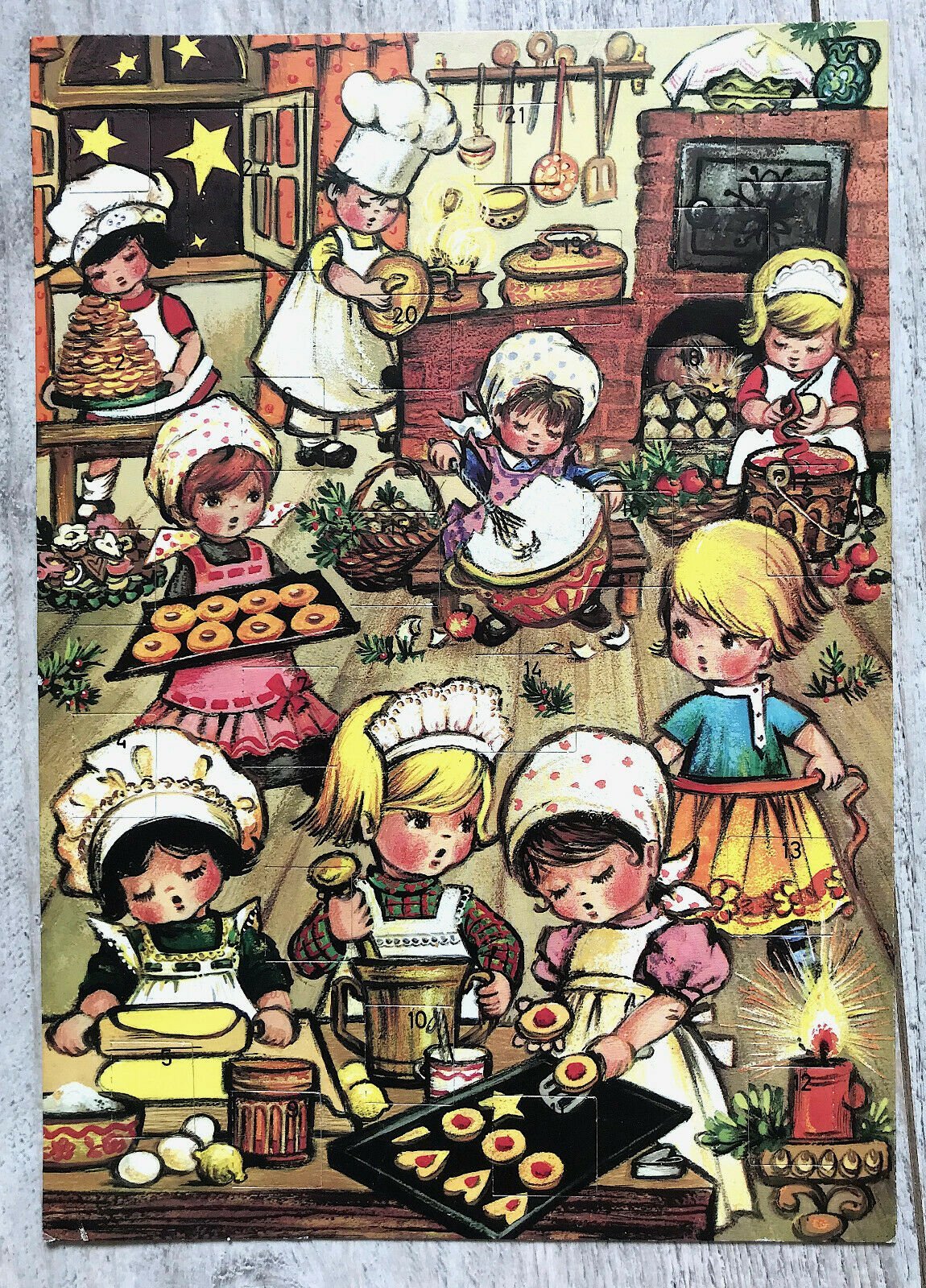
We already discussed the Advent calendar (Adventskalender) at the beginning of this study.
We can now see it does not exactly match the full Advent period, since it always starts on 1 December regardless of Advent's liturgical start.
It appears as early as the 19th century, especially in Protestant families who read the Bible at home, whereas Catholics attended mass. In handmade form - houses with 24 openings hiding sweets for children, or hand-painted clocks whose hand was moved each day - it was artisanal.
Gerhard Lang, a pastor's son, also began with a handmade Advent calendar. Only in 1908 did he publish the first printed one. It consisted of 24 detachable images to paste each day onto a support, forming a religious poem.
In the 1920s, calendars hiding sweets appeared. In 1940, production was banned due to paper shortage, then unfortunately resumed in 1942-43 with Nazi motifs. Since 1946, the popularity of these calendars has never declined, and motifs quickly shifted from religious themes to secular ones. But is that not the fate of Christmas itself, which today is more the children's feast than that of the Christ Child?
The nativity scene
Strictly speaking, a manger is an animal feeding trough. Only over centuries did it acquire the meaning of a full Nativity scene.
Despite what is often written, the Nativity scene does not go back to Saint Francis of Assisi, who merely had a manger filled with hay installed in a cave, with a living donkey and ox.
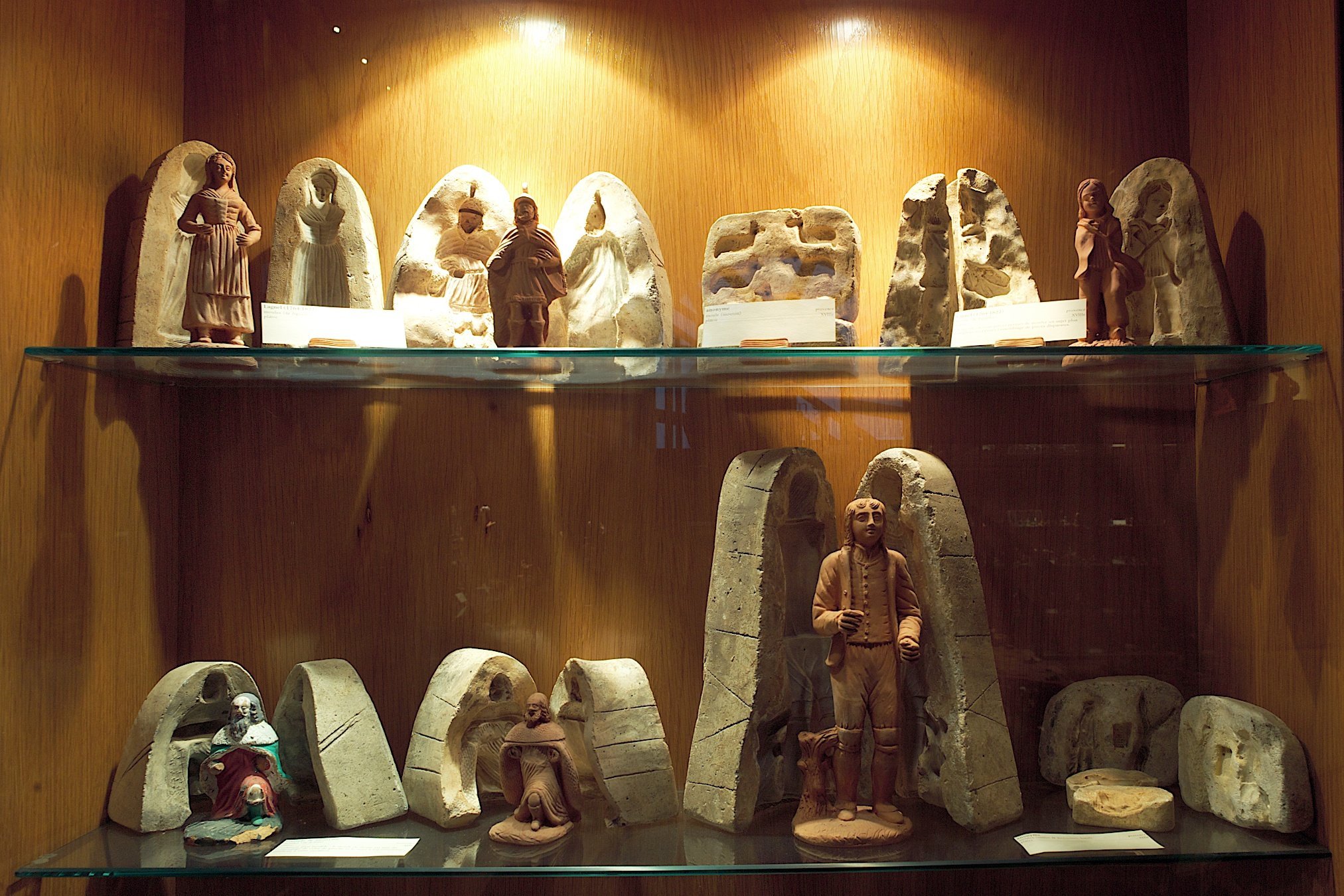
The first nativity scene with small figurines dates to 1562 and was made by Jesuits. Provençal santons date from the 19th century. Their creation is attributed to Jean-Louis Lagnel (1764-1827), born in Marseille, who was successively painter, faience maker, then sculptor and figurine maker.
The Christmas tree
It comes from Alsace, where it is mentioned as early as 1521. Originally, it was decorated with communion wafers.
But in 1605, in Germany, it began to be decorated more widely.
It entered the Tuileries in 1837 through Helene of Mecklenburg, Duchess of Orleans, and in England in 1840 through Albert of Saxe-Coburg, husband of Queen Victoria.
It was adorned with red apples, an allusion to the tree in the Garden of Eden from which Eve picked the forbidden fruit.
At the beginning of the 19th century, fruits were reportedly replaced for the first time, in Alsace, by multicolored glass baubles.
We know what followed, including flashing electric garlands that delight children... and sometimes drive insurers to despair.
SANTA CLAUS
Poor Santa Claus, whose ancestor was probably Saint Nicholas (Santa Claus) distributing gifts on the night of 5 to 6 December in Germany and eastern France, may have older roots going back to Odin who, in Nordic countries, riding a cloud, showered children with treats. I note in passing that Odin was very different from the usual caricature.

I say “poor Santa” because he very quickly became a pure commercial symbol. He did so in 1931, thanks to - or because of - Coca-Cola, which made him a key advertising figure. Who can still believe in the poetry of a character endlessly cloned in every aisle of our department stores?
To learn more, and in images, about Santa and everything around Christmas, I invite you to visit Marie-Alice Maire's site (archive), which through old postcards and remarkable stamps restores a little poetry to traditions eaten away by very bleak commercial interests.