Note: in July 2014, the Baha'i calendar reached a new stage and is now standardized for all Baha'is worldwide. Details are available at the end of this page. Feel free to also visit the official website of the French Baha'is, Bahai.fr.
As with all religion-related calendars on this site, I want to make clear that the “history” section of this page has no purpose other than placing this calendar in its historical context and, perhaps, identifying some motivations behind its creation or structure.
This page is therefore not intended to take a position on any religion.
A little history
I reproduce below, as is, the text of Dr Rouhani from a conference/debate dated 8 December 1999:
"The birth and development of the Baha'i community is one of the paradoxical phenomena of our time. This development can only be properly appreciated if one looks at the state of the society in which it arose, a society marked by political despotism and intolerance, religious fanaticism.
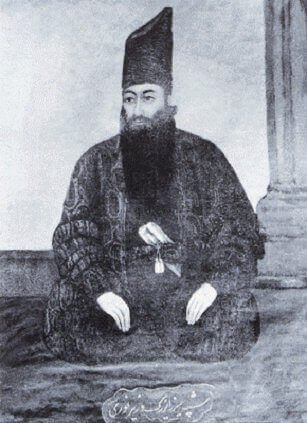
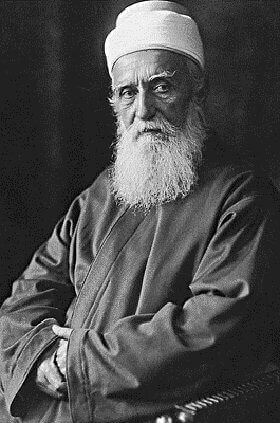
Three personalities marked this history: the Bab (1819-1850) - Baha'Ullah (1817-1892) - Abdu'l-Baha (1844-1922).
1. Origins
Everything begins with the declaration on 23 May 1844 by Ali-Muhammad Shirazi, known as the Bab: the Gate (meaning: opening onto a new era). This young merchant from the Persian city of Shiraz declared himself to be the Mahdi expected by Islam. His teaching first reached an initial circle of 18 people, who received from the Bab himself the mission of carrying the message to the rest of humanity. But as the new faith expanded, persecution struck its followers: the Bab was arrested and imprisoned. The poet Tahirih unveiled herself in public, thereby claiming freedom for women; she was strangled and thrown into a well. The Bab himself was executed after a sham trial.
2. First echoes in the West
The Bab's message had a particular impact in intellectual and artistic circles in Paris. One must mention the book by Count Arthur de Gobineau, head of the French Legation in Tehran, “Religions and Philosophies in Central Asia”, through which he introduced the Bab and the Babis to the French public in 1865. Then came Ernest Renan, who published “The Apostles” in 1866. Finally, Sarah Bernhardt asked for the drama of the Bab's martyrdom to be written and performed.
3. Baha' Ullah, a majestic and solitary figure
Baha'Ullah came from a noble lineage tracing back to the ancient pre-Islamic kings of Persia. His family intended him for high political office, but he preferred to devote himself to relieving the suffering of the poorest, who gave him the nickname “Father of the Poor”.
He was imprisoned in the “Siah Chal” of Tehran, the “Black Pit”, a repulsive place, then exiled, imprisoned again and placed under house arrest. In 1863, he declared himself to be “He whom God shall make manifest”. In Baghdad, he wrote some of his most important works: “The Book of Certitude”; “The Hidden Words”; “The Seven Valleys”; etc.
From 1867 onward, he wrote five letters sent personally to the Pope, Queen Victoria, the Tsar and Napoleon III. Informed of the persecutions suffered by the Baha'is, the Emperor paid no attention to this appeal; in a second letter, Baha'Ullah predicted the collapse of his empire!
The last twenty-five years of his life were spent in Saint-Jean-d'Acre; after yet another imprisonment, he ended his days in a residence near Akka, where he died in 1892. Baha'is consider this place one of their highest holy sites. It was in this residence that he received Prof. E. G. Browne of Cambridge, to whom he predicted the coming of a “supreme peace in the world”.
4. Abdu'l-Baha and the rise of the Baha'i faith in the West
It was thanks to the journeys in Europe and America made by Abd al Baha - another major figure, himself imprisoned for forty years and released after the fall of the Caliphate - that the spread of the Baha'i faith took a decisive turn. Abdu'l-Baha spent long periods in Paris, where he gave more than 50 lectures and met French and foreign personalities such as Romain Rolland and Guillaume Apollinaire.
What is religion for Baha'is?
To answer this question, Baha'is ask another one about human nature in all its complexity: natural being? spiritual being? Aware of this complexity, they believe religion is indispensable to human life. According to Baha'Ullah, "religion should be understood neither as a belief nor as an ideology, but as an authentic relationship between God and man" (Le Monde diplomatique, July 1999). Beyond its individual dimension, religion is also a social reality; it shapes life and, by instilling ethics in believers, shapes the nature of human relationships.
One element of this vision is the necessary complementarity between religious knowledge and scientific knowledge: every discovery and every technique should seek spiritual and ethical guidance for appropriate application.
Another element, a cornerstone of Baha'i teachings, is respect for fundamental human rights. A religion without clergy, the Baha'i faith advocates independent and personal search for truth. This is why Baha'Ullah places so much emphasis on education and on the minimum each person needs in order to become autonomous in spiritual, intellectual, aesthetic and material terms.
Still regarding human rights, and also in economic and social matters, Baha'is advocate full equality of rights between women and men.
As early as the 19th century, Baha'Ullah declared that humanity's movement toward organic unification was inexorable; therefore, concerning “globalization”, one should not passively endure it, but rather master it in order to act upon events and place it at the service of humanity.
In this sense, religion has a humanist and civilizing mission, combining faith and reason, inspiring moderation in all things, and engaging people in methodical and rational action to “save the planet”, “civilize the earth”, and achieve the unity of humankind while preserving its diversity."
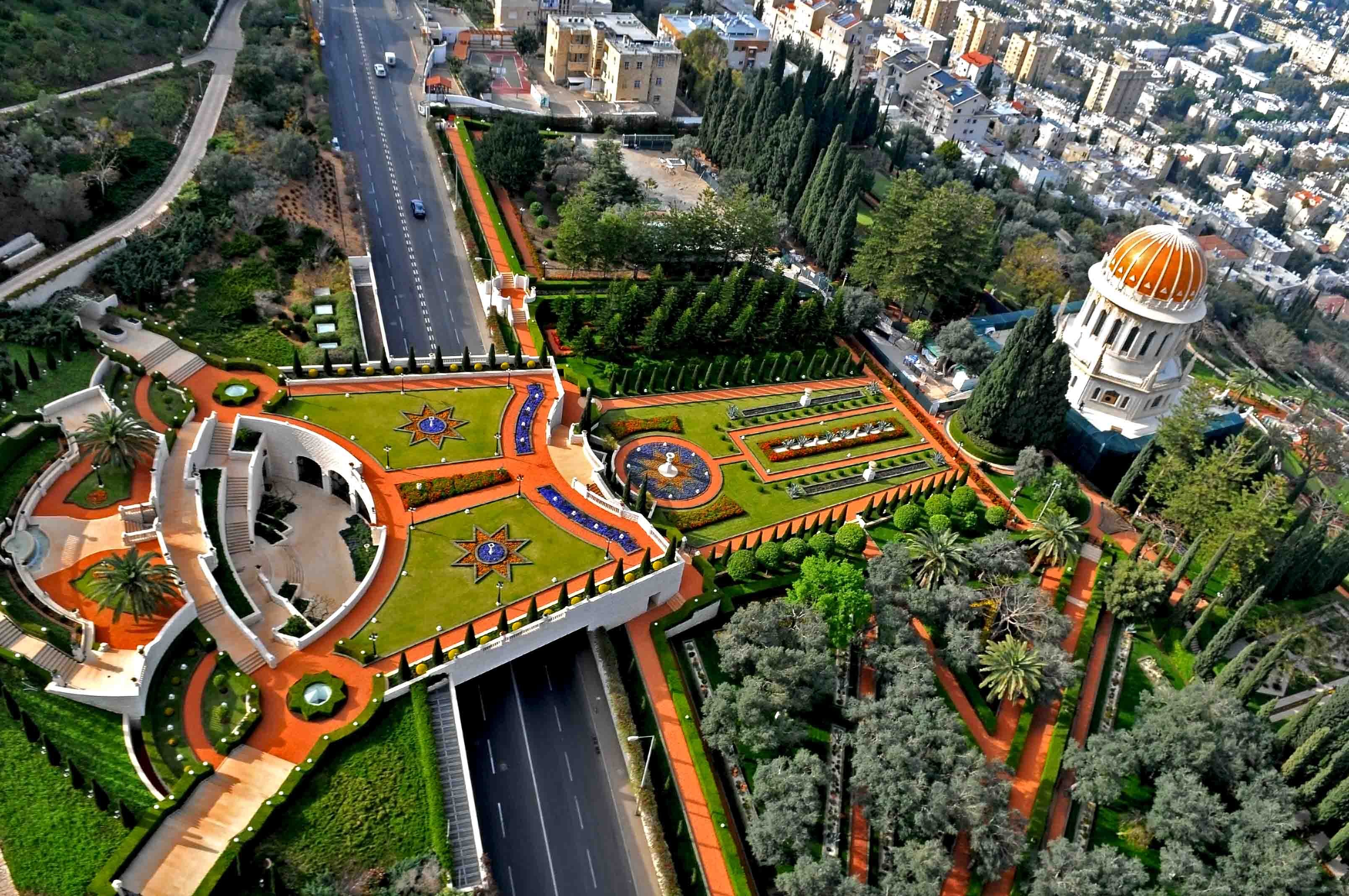
There were 7,660,000 Baha'is in the world in 1998 (source: Britannica Book of the Year 1998). Baha'ism ranks second after Christianity in terms of geographic spread.
The calendar
With the Baha'i calendar (also called Badi), we are dealing with what I would call an atypical calendar, for three reasons:
- Because it is a clearly solar calendar. That in itself would not be surprising,
- except that, given the Bab's family and spiritual origins, one might have expected a lunar calendar.
- Because dividing the year into 19 months of 19 days is uncommon.
- Because its way of handling leap years is, to say the least, original.
In short, I personally find this calendar both appealing and interesting to study. I hope that by the end of this page you will share that view.
1) Year, months, days
The Badi year is aligned with the tropical year and consists of 19 months of 19 days, plus four additional days called Ayyam-i-Ha, giving 19 x 19 = 361 + 4 = 365 days. The arithmetic works, provided we occasionally add a leap day, which we will discuss later.
Months of 30 or 31 days are understandable if viewed as remnants of lunar months adapted to the tropical year.
But why 19-day months? More simply: why 19?
The foundations of the Badi were laid by the Bab himself and "Among the many writings of the Bab, the Bayan (lit. 'Announcement' or 'Explanation'; short text in Arabic, longer in Persian) is the movement's main sacred book. While recognizing the truth of Muhammad's prophetic mission, it sets its term at 1844. It abrogates various provisions of Qur'anic law, gives a spiritual interpretation of Muslim or Judeo-Christian eschatological terms, establishes a new qibla (direction of prayer toward the Bab's residence instead of Mecca), insists on expectation of the 'Promised One', and on the symbolic value of numbers (especially 19), etc."
To this text from Encyclopaedia Universalis, I add that another symbolic number appears in the Bab's writings: 9.
These two numbers clearly symbolize the Baha'i faith. As for 19, its symbolic character may well be linked to the Qur'an, where it has a particular place.
The privileged status of 19 in the Baha'i faith can be seen in examples that could be multiplied endlessly:
- The Bab and his first 18 disciples were called the 19 Letters of the Living.
- Between the Bab's announcement of the Promised One and Baha'Ullah's proclamation as that Promised One, 19 years passed.
- “No marriage may be contracted without payment of a dowry fixed at nineteen mithqals of gold” (Kitab-i-Aqdas, verse 1.66).
- "If someone acquires one hundred mithqals of gold, nineteen belong to God and must be rendered unto Him" (Kitab-i-Aqdas, verse 1.97).
- “You have been instructed to renew the furnishings of your home after every period of nineteen years” (Kitab-i-Aqdas, verse 1.151).
- ...
Naturally, 19 months of 19 days is ideal, since the number 19 appears twice and very few extra days need to be added.
It was the Bab who gave their names to the 19 months of the year. Their origin must be sought in Shi'ism, a particular way of understanding and living Islam that goes back to its very origins, that is, to the lifetime of the Prophet Muhammad. In Shi'a Islam there is a prayer often recited during Ramadan that contains 19 invocations. In each one, God is named by one of His “attributes”. It is these 19 “attributes” that the Bab took over, as they were and in their original order, to name the months of the Badi.
Before looking at the list of months, two points should be noted:
- The day begins at sunset.
- The year begins on the day of the spring equinox (Naw Ruz being the New Year), therefore on 21 March in the Gregorian calendar. If the equinox occurs after sunset (which marks the change of day), then Naw Ruz is celebrated on 22 March. However, this seems not to affect the year's starting point, which remains fixed on 21 March Gregorian. It is a bit like if we celebrated New Year's Day on 2 January.
Let us now look at the month names, their meanings, and equivalent dates in the Gregorian calendar:
| Rank | Name | Meaning | Start and end dates |
|---|---|---|---|
| 1 | Bahá | Splendor | 21 March to 8 April |
| 2 | Jalál | Glory | 9 April to 27 April |
| 3 | Jamál | Beauty | 28 April to 16 May |
| 4 | 'Azamat | Grandeur | 17 May to 4 June |
| 5 | Núr | Light | 5 June to 23 June |
| 6 | Rahmat | Mercy | 24 June to 12 July |
| 7 | Kalimát | Words | 13 July to 31 July |
| 8 | Kamál | Perfection | 1 August to 19 August |
| 9 | Asmá' | Names | 20 August to 7 September |
| 10 | 'Izzat | Might | 8 September to 26 September |
| 11 | Mashíyyat | Will | 27 September to 15 October |
| 12 | 'Ilm | Knowledge | 16 October to 3 November |
| 13 | Qudrat | Power | 4 November to 22 November |
| 14 | Qawl | Speech | 23 November to 11 December |
| 15 | Masá'il | Questions | 12 December to 30 December |
| 16 | Sharaf | Honor | 31 December to 18 January |
| 17 | Sultán | Sovereignty | 19 January to 6 February |
| 18 | Mulk | Dominion | 7 February to 25 February |
| *Ayyám-i-Há* | *Intercalary days* | *26 February to 1 March* | |
| 19 | 'Alá | Loftiness | 2 March to 20 March |
We have seen that the Bab laid the calendar's foundations. However, it was Baha'Ullah who consolidated it and fixed its precise rules, beginning with where intercalary days are placed in the year. He did this in his book of law, written at the end of the 19th century, called the Kitab-i-Aqdas (Most Holy Book).
What does this text say about intercalary days?
“Verse 1.16 of the Kitab-i-Aqdas: O Pen of the Most High! Say: O peoples of the world! We have prescribed unto you fasting during a brief period, at the end of which We have fixed for you the festival of Naw-Ruz... Let the days in excess be placed before the month of fasting... We have decreed that these days, among all days and nights, shall be manifestations of the letter Ha, and thus they have not been included within the limits of the year and its months.
Since the fasting period (19 days) falls in the month of 'Alá, intercalary days are positioned before that month, i.e. from 26 February to 1 March Gregorian.
And here we find the subtlety I mentioned earlier regarding leap years: if a Gregorian year includes 29 February, then 5 days are intercalated in the Badi instead of 4.
The Badi calendar is therefore closely linked to the Gregorian calendar, which keeps it aligned with the tropical year.
The 19 days of each month all have names, identical to the 19 month names. Thus, the first day of the year is the day Bahá of the month Bahá, the second day is the day Jalál of the month Bahá, and so on.
The 4 or 5 intercalary days are called Ayyam-i-Ha, meaning “days of Ha” (see Kitab-i-Aqdas above). The “letter” Ha has the value 5 (number of intercalary days) in the Abjad alphabet.
Let us make a short parenthesis to briefly explain this Abjad alphabet. A full study would go far beyond this page; if you want more, I can only invite you to visit specialized sites, for example here.
The Abjad alphabet, named after the first four Arabic letters (A, B, J, D), is a system assigning numerical values to letters, allowing numbers to be represented by letters.
Shoghi Effendi Rabbani gave a very clear explanation:
"In Semitic languages, each letter of the alphabet has a numerical value, so that numbers may be expressed by letters and words rather than numerals. Thus each word has both a literal meaning and a numerical value. This practice has fallen out of use, but in the time of Baha'u'llah and the Bab it was very common among educated people and is found very often in the Bayan. Since the word 'Baha' is equivalent to '9' (b: 2 + a: 0 + h: 5 + á: 1 + ': 1), it could be used in its place."
Here is the letter-number table to help understand why 5 can be represented by Ha:
| à ' | b | j | d | h | v ù | z | h | t | y ì | k | l | m | n |
|---|---|---|---|---|---|---|---|---|---|---|---|---|---|
| 1 | 2 | 3 | 4 | 5 | 6 | 7 | 8 | 9 | 10 | 20 | 30 | 40 | 50 |
| s | ' | f | s | q | r | sh | t | th | kh | dh | d | z | gh |
| 60 | 70 | 80 | 90 | 100 | 200 | 300 | 400 | 500 | 600 | 700 | 800 | 900 | 1000 |
Let us now return to the Badi calendar.
2) The week
Even if it seems to play only a minor role, the Badi week does exist. It starts on Saturday (Gregorian equivalent), and Friday is the day of rest.
| Rank | Name | Meaning | Gregorian equivalent |
|---|---|---|---|
| 1 | Jalál | Glory | Saturday |
| 2 | Jamál | Beauty | Sunday |
| 3 | Kamál | Perfection | Monday |
| 4 | Fidál | Grace | Tuesday |
| 5 | 'Idál | Justice | Wednesday |
| 6 | Istijlál | Majesty | Thursday |
| 7 | Istiqlál | Independence | Friday |
3) The Baha'i era
It begins in the year when the Bab declared his prophetic mission, i.e. 1844 CE. The Badi calendar therefore begins on 21 March 1844 in Gregorian equivalence.
4) Cycles
There is a 19-year cycle called Vahid (“unity” in Arabic), with numerical value 19 in the Abjad alphabet, which now no longer holds any secrets for you. Here is still the calculation: 6 + 1 + 8 + 0 + 4 = 19. The first cycle begins, of course, in 1844.
Within this cycle, each year has a name whose Abjad numerical value corresponds to its rank. I will leave that verification to you.
| Rank | Name | Translation |
|---|---|---|
| 1 | Alif | A |
| 2 | Bà | B |
| 3 | Àb | Father |
| 4 | Dàl | D |
| 5 | Bàb | Gate |
| 6 | Vàv | V |
| 7 | Àbad | Eternity |
| 8 | Jàd | Generosity |
| 9 | Bahà' | Splendor |
| 10 | Hubb | Love |
| 11 | Bahhàj | Delightful |
| 12 | Javàb | Answer |
| 13 | Àhad | One / Unique |
| 14 | Vahhàb | Liberal |
| 15 | Vidàd | Affection |
| 16 | Badì' | Beginning |
| 17 | Bahì | Splendid |
| 18 | Abha' | Most Splendid |
| 19 | Vàhid | Unity |
19 cycles of 19 years, i.e. 361 years, form a Kull-i Shay' (“totality” in Arabic), whose Abjad value is... 361.
5) Feast days and commemorations
| Day | Month | Gregorian | Feast / Commemoration |
|---|---|---|---|
| 1 | Bahà' | 21 March | Naw-Ruz feast (Baha'i New Year) |
| 13 | Jalàl | 21 April | 1st day of Ridvan (21 April 1863) |
| 2 | Jamàl | 29 April | 9th day of Ridvan (29 April 1863) |
| 5 | Jamàl | 2 May | 12th day of Ridvan (2 May 1863) |
| 7 | 'Azamat | 23 May | Declaration of the Bab (23 May 1844) |
| 13 | 'Azamat | 29 May | Passing of Baha'u'llah (29 May 1892) |
| 16 | Rahmat | 9 July | Martyrdom of the Bab (9 July 1850) |
| 5 | 'Ilm | 20 October | Birth of the Bab (20 October 1819) |
| 9 | Qudrat | 12 November | Birth of Baha'u'llah (12 November 1817) |
| 4 | Qawl | 26 November | Day of the Covenant |
| 6 | Qawl | 28 November | Passing of 'Abdu'l-Baha (28 November 1921) |
Only the first 9 days in this list are holy days of rest. They correspond to events in the life of the Bab and Baha'u'llah. The Day of the Covenant and the day commemorating the passing of 'Abdu'l-Baha are observed but not days off.
Note that the Kitab-i-Aqdas states there are two great festivals and two “associated” festivals:
"All festivals attain their culmination in the two most great Festivals, and in the two other festivals that fall on twin days..." (Verse 1.110).
The two “great festivals” are Ridvan (queen of festivals) and the Declaration of the Bab.
The “two other festivals” are the anniversaries of the births of the Bab and Baha'u'llah.
Standardization in July 2014
The calendar reached a new stage in its worldwide implementation, as clarifications were issued in July 2014 by the Universal House of Justice. These complete the exact rules for calculating Naw Ruz (the annual anniversary date of this calendar) and for commemorating the twin birthdays of the Bab and Baha'u'llah.
The first clarification frees this calendar from Gregorian or lunar references, since the exact determination of Naw Ruz is fixed according to an indisputable astronomical reality.
The second clarification allows Eastern and Western believers worldwide, who until then celebrated these anniversaries according to Islamic or Gregorian calendars, to celebrate the twin-birthday festival in unity, according to rules that are both solar and lunar.
You can consult the translation of the communiqué published by the Universal House of Justice, as well as the table of future Baha'i years. You will also find more detailed explanations of this development in this video (in English).
Table of Baha'i years
Based on the table published by the Baha'i authority, the coming years and major Baha'i dates follow the calendar below:
| Naw-Ruz | Birth of the Bab and the Birth of Baha'u'llah | Ayyam-i-Ha | |||
|---|---|---|---|---|---|
| Baha'i date | Gregorian date | Baha'i dates | Gregorian dates | Baha'i dates | Gregorian dates |
| 1st Bahá 172 | 21 March 2015 | 10, 11 Qudrat | 13, 14 Nov. 2015 | 1-4 | 26 - 29 Feb. 2016 |
| 1st Bahá 173 | 20 March 2016 | 18, 19 ‘Ilm | 1st, 2 Nov. 2016 | 1-4 | 25 - 28 Feb. 2017 |
| 1st Bahá 174 | 20 March 2017 | 7, 8 ‘Ilm | 21, 22 Oct. 2017 | 1-5 | 25 Feb. - 1st March 2018 |
| 1st Bahá 175 | 21 March 2018 | 6, 7 Qudrat | 9, 10 Nov. 2018 | 1-4 | 26 Feb. - 1st March 2019 |
| 1st Bahá 176 | 21 March 2019 | 14, 15 ‘Ilm | 29, 30 Oct. 2019 | 1-4 | 26 - 29 Feb. 2020 |
| 1st Bahá 177 | 20 March 2020 | 4, 5 ‘Ilm | 18, 19 Oct. 2020 | 1-4 | 25 - 28 Feb. 2021 |
| 1st Bahá 178 | 20 March 2021 | 4, 5 Qudrat | 6, 7 Nov. 2021 | 1-5 | 25 Feb. - 1st March 2022 |
| 1st Bahá 179 | 21 March 2022 | 11, 12 ‘Ilm | 26, 27 Oct. 2022 | 1-4 | 26 Feb. - 1st March 2023 |
| 1st Bahá 180 | 21 March 2023 | 1st, 2 ‘Ilm | 16, 17 Oct. 2023 | 1-4 | 26 - 29 Feb. 2024 |
| 1st Bahá 181 | 20 March 2024 | 19 ‘Ilm, 1st Qudrat | 2, 3 Nov. 2024 | 1-4 | 25 - 28 Feb. 2025 |
| 1st Bahá 182 | 20 March 2025 | 8, 9 ‘Ilm | 22, 23 Oct. 2025 | 1-5 | 25 Feb. - 1st March 2026 |
| 1st Bahá 183 | 21 March 2026 | 7, 8 Qudrat | 10, 11 Nov. 2026 | 1-4 | 26 Feb. - 1st March 2027 |
| 1st Bahá 184 | 21 March 2027 | 15, 16 ‘Ilm | 30, 31 Oct. 2027 | 1-4 | 26 - 29 Feb. 2028 |
| 1st Bahá 185 | 20 March 2028 | 5, 6 ‘Ilm | 19, 20 Oct. 2028 | 1-4 | 25 - 28 Feb. 2029 |
| 1st Bahá 186 | 20 March 2029 | 5, 6 Qudrat | 7, 8 Nov. 2029 | 1-4 | 25 - 28 Feb. 2030 |
| 1st Bahá 187 | 20 March 2030 | 14, 15 ‘Ilm | 28, 29 Oct. 2030 | 1-5 | 25 Feb. - 1st March 2031 |
| 1st Bahá 188 | 21 March 2031 | 2, 3 ‘Ilm | 17, 18 Oct. 2031 | 1-4 | 26 - 29 Feb. 2032 |
| 1st Bahá 189 | 20 March 2032 | 2, 3 Qudrat | 4, 5 Nov. 2032 | 1-4 | 25 - 28 Feb. 2033 |
| 1st Bahá 190 | 20 March 2033 | 10, 11 ‘Ilm | 24, 25 Oct. 2033 | 1-4 | 25 - 28 Feb. 2034 |
| 1st Bahá 191 | 20 March 2034 | 10, 11 Qudrat | 12, 13 Nov. 2034 | 1-5 | 25 Feb. - 1st March 2035 |
| 1st Bahá 192 | 21 March 2035 | 17, 18 ‘Ilm | 1st, 2 Nov. 2035 | 1-4 | 26 - 29 Feb. 2036 |
| 1st Bahá 193 | 20 March 2036 | 6, 7 ‘Ilm | 20, 21 Oct. 2036 | 1-4 | 25 - 28 Feb. 2037 |
| 1st Bahá 194 | 20 March 2037 | 6, 7 Qudrat | 8, 9 Nov. 2037 | 1-4 | 25 - 28 Feb. 2038 |
| 1st Bahá 195 | 20 March 2038 | 15, 16 ‘Ilm | 29, 30 Oct. 2038 | 1-5 | 25 Feb. - 1st March 2039 |
| 1st Bahá 196 | 21 March 2039 | 4, 5 ‘Ilm | 19, 20 Oct. 2039 | 1-4 | 26 - 29 Feb. 2040 |
| 1st Bahá 197 | 20 March 2040 | 4, 5 Qudrat | 6, 7 Nov. 2040 | 1-4 | 25 - 28 Feb. 2041 |
| 1st Bahá 198 | 20 March 2041 | 12, 13 ‘Ilm | 26, 27 Oct. 2041 | 1-4 | 25 - 28 Feb. 2042 |
| 1st Bahá 199 | 20 March 2042 | 1st, 2 ‘Ilm | 15, 16 Oct. 2042 | 1-5 | 25 Feb. - 1st March 2043 |
| 1st Bahá 200 | 21 March 2043 | 19 ‘Ilm, 1st Qudrat | 3, 4 Nov. 2043 | 1-4 | 26 - 29 Feb. 2044 |
| 1st Bahá 201 | 20 March 2044 | 8, 9 ‘Ilm | 22, 23 Oct. 2044 | 1-4 | 25 - 28 Feb. 2045 |
| 1st Bahá 202 | 20 March 2045 | 8, 9 Qudrat | 10, 11 Nov. 2045 | 1-4 | 25 - 28 Feb. 2046 |
| 1st Bahá 203 | 20 March 2046 | 16, 17 ‘Ilm | 30, 31 Oct. 2046 | 1-5 | 25 Feb. - 1st March 2047 |
| 1st Bahá 204 | 21 March 2047 | 5, 6 ‘Ilm | 20, 21 Oct. 2047 | 1-4 | 26 - 29 Feb. 2048 |
| 1st Bahá 205 | 20 March 2048 | 5, 6 Qudrat | 7, 8 Nov. 2048 | 1-4 | 25 - 28 Feb. 2049 |
| 1st Bahá 206 | 20 March 2049 | 14, 15 ‘Ilm | 28, 29 Oct. 2049 | 1-4 | 25 - 28 Feb. 2050 |
| 1st Bahá 207 | 20 March 2050 | 3, 4 ‘Ilm | 17, 18 Oct. 2050 | 1-5 | 25 Feb. - 1st March 2051 |
| 1st Bahá 208 | 21 March 2051 | 2, 3 Qudrat | 5, 6 Nov. 2051 | 1-4 | 26 - 29 Feb. 2052 |
| 1st Bahá 209 | 20 March 2052 | 10, 11 ‘Ilm | 24, 25 Oct. 2052 | 1-4 | 25 - 28 Feb. 2053 |
| 1st Bahá 210 | 20 March 2053 | 9, 10 Qudrat | 11, 12 Nov. 2053 | 1-4 | 25 - 28 Feb. 2054 |
| 1st Bahá 211 | 20 March 2054 | 18, 19 ‘Ilm | 1st, 2 Nov. 2054 | 1-5 | 25 Feb. - 1st March 2055 |
| 1st Bahá 212 | 21 March 2055 | 6, 7 ‘Ilm | 21, 22 Oct. 2055 | 1-4 | 26 - 29 Feb. 2056 |
| 1st Bahá 213 | 20 March 2056 | 6, 7 Qudrat | 8, 9 Nov. 2056 | 1-4 | 25 - 28 Feb. 2057 |
| 1st Bahá 214 | 20 March 2057 | 15, 16 ‘Ilm | 29, 30 Oct. 2057 | 1-4 | 25 - 28 Feb. 2058 |
| 1st Bahá 215 | 20 March 2058 | 4, 5 ‘Ilm | 18, 19 Oct. 2058 | 1-4 | 25 - 28 Feb. 2059 |
| 1st Bahá 216 | 20 March 2059 | 4, 5 Qudrat | 6, 7 Nov. 2059 | 1-5 | 25 - 29 Feb. 2060 |
| 1st Bahá 217 | 20 March 2060 | 11, 12 ‘Ilm | 25, 26 Oct. 2060 | 1-4 | 25 - 28 Feb. 2061 |
| 1st Bahá 218 | 20 March 2061 | 19 Mashíyyat, 1st ‘Ilm | 14, 15 Oct. 2061 | 1-4 | 25 - 28 Feb. 2062 |
| 1st Bahá 219 | 20 March 2062 | 19 ‘Ilm, 1st Qudrat | 2, 3 Nov. 2062 | 1-4 | 25 - 28 Feb. 2063 |
| 1st Bahá 220 | 20 March 2063 | 9, 10 ‘Ilm | 23, 24 Oct. 2063 | 1-5 | 25 - 29 Feb. 2064 |
| 1st Bahá 221 | 20 March 2064 | 8, 9 Qudra | 10, 11 Nov. 2064 | 1-4 | 25 - 28 Feb. 2065 |
Other important Baha'i dates
Each year, the various feasts fall on two possible Gregorian dates, with the actual one determined by whether Naw-Ruz falls on 20 or 21 March.
Other holy days
| Baha'i dates | Gregorian calendar | ||
|---|---|---|---|
| Naw-Ruz on 20 March | Naw-Ruz on 21 March | ||
| First day of Ridvan | 13 Jalál | 20 April | 21 April |
| Ninth day of Ridvan | 2 Jamál | 28 April | 29 April |
| Twelfth day of Ridvan | 5 Jamál | 1st May | 2 May |
| Declaration of the Bab | 8 ‘A amat | 23 May | 24 May |
| Ascension of Baha’u’llah | 13 ‘A amat | 28 May | 29 May |
| Martyrdom of the Bab | 17 Raḥmat | 9 July | 10 July |
| Day of the Covenant | 4 Qawl | 25 November | 26 November |
| Ascension of ‘Abdu’l-Baha | 6 Qawl | 27 November | 28 November |
Feast days
| Baha'i dates | Gregorian calendar | ||
|---|---|---|---|
| Naw-Ruz on 20 March | Naw-Ruz on 21 March | ||
| Jalál (Glory) | 1st Jalál | 8 April | 9 April |
| Jamál (Beauty) | 1st Jamál | 27 April | 28 April |
| ‘A amat (Grandeur) | 1st ‘A amat | 16 May | 17 May |
| Núr (Light) | 1st Núr | 4 June | 5 June |
| Raḥmat (Mercy) | 1st Raḥmat | 23 June | 24 June |
| Kalimát (Words) | 1st Kalimát | 12 July | 13 July |
| Kamál (Perfection) | 1st Kamál | 31 July | 1st August |
| Asmá’ (Names) | 1st Asmá’ | 19 August | 20 August |
| ‘Izzat (Might) | 1st ‘Izzat | 7 September | 8 September |
| Mashíyyat (Will) | 1st Mashíyyat | 26 September | 27 September |
| ‘Ilm (Knowledge) | 1st ‘Ilm | 15 October | 16 October |
| Qudrat (Power) | 1st Qudrat | 3 November | 4 November |
| Qawl (Speech) | 1st Qawl | 22 November | 23 November |
| Masá’il (Questions) | 1st Masá’il | 11 December | 12 December |
| Sharaf (Honor) | 1st Sharaf | 30 December | 31 December |
| Sulṭán (Sovereignty) | 1st Sulṭán | 18 January | 19 January |
| Mulk (Dominion) | 1st Mulk | 6 February | 7 February |
| ‘Alá’ (Loftiness) | 1st ‘Alá’ | (see below) | (see below) |
The fast
The month of ‘Alá’, from 1st to 19 ‘Alá’, begins when Ayyam-i-Ha ends. The Ayyam-i-Ha dates are shown in the table of major dates.
Note: A Baha'i day ends, and a new one begins, at sunset; therefore, the day on which a feast or holy day is observed begins at sunset on the day preceding the Gregorian date shown above.